
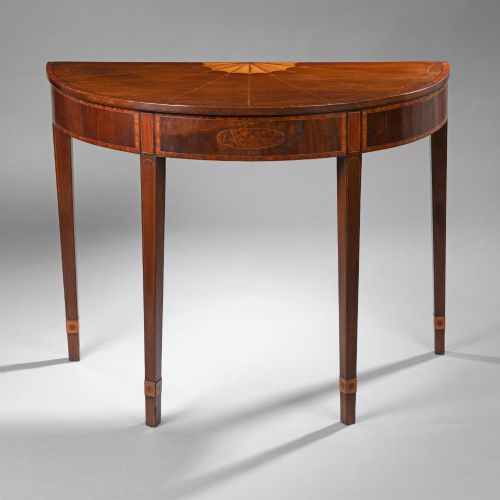
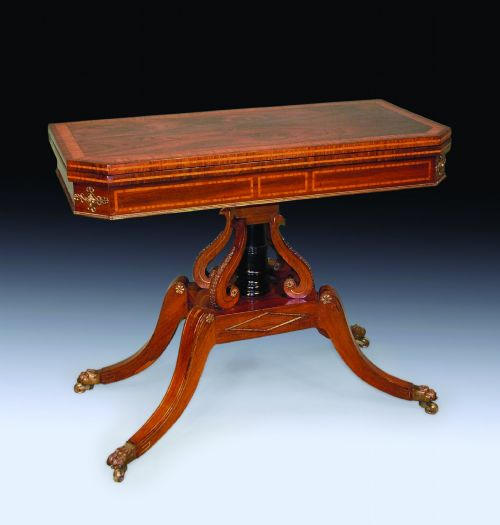
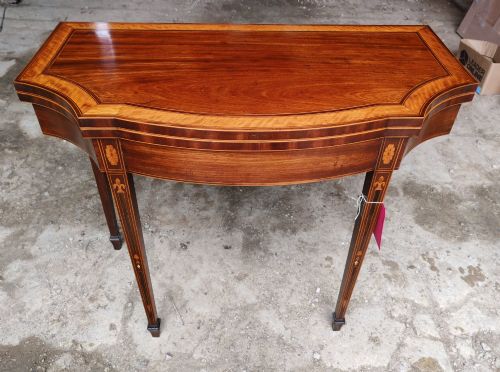
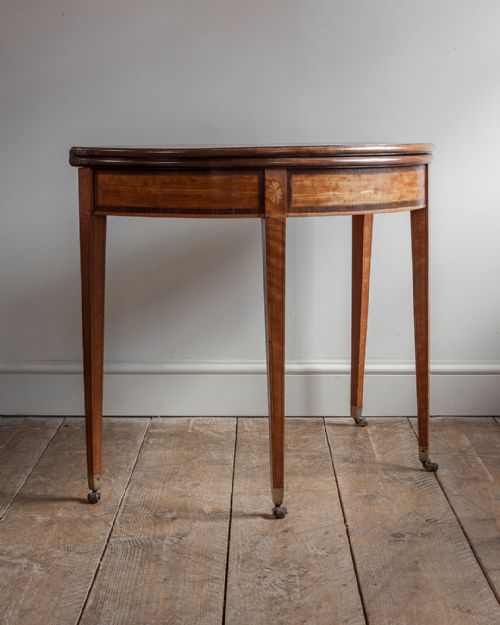
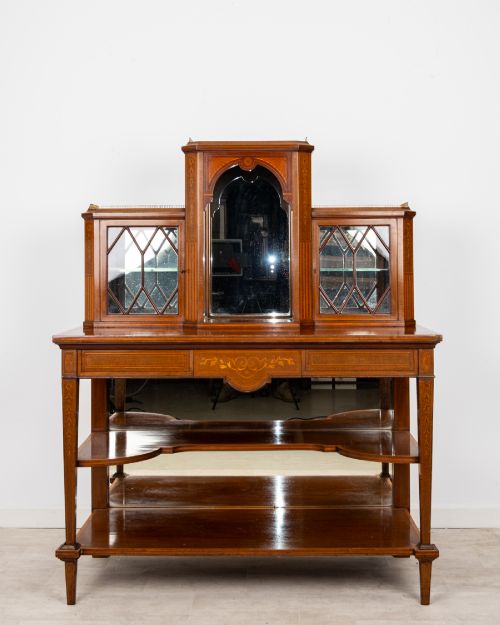
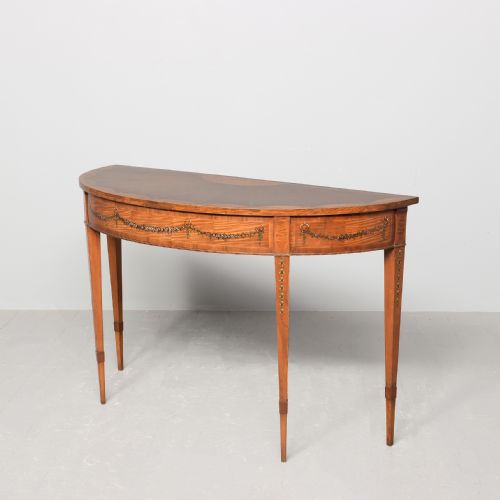


Satinwood Inlaid Console Table
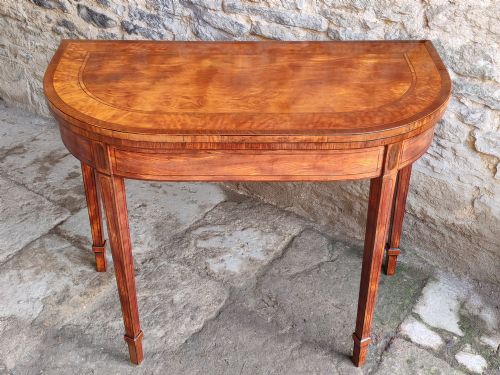
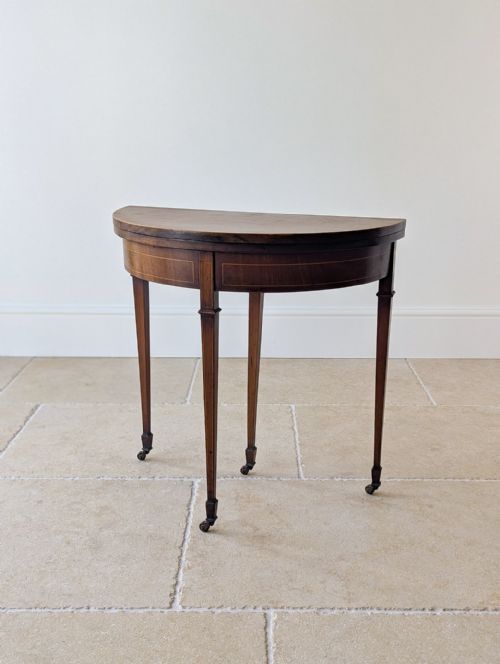
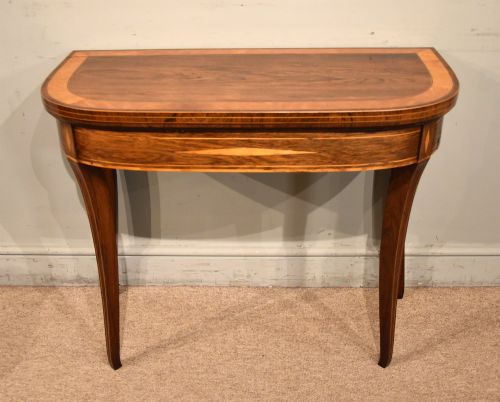
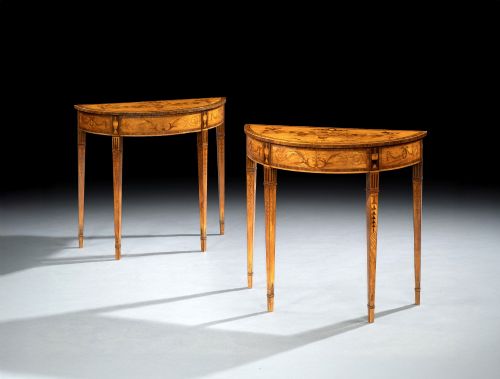
A satinwood inlaid console table brings luminous timber and crisp geometry into a room.
Satinwood Inlaid Console Table
When you search for a satinwood inlaid console table, you are looking at sophisticated furniture designed to sit flat against a wall, frequently taking the form of a demi-lune or half-moon shape.
The versions you are most likely to meet on this page span the 18th century through the Edwardian period, often constructed as versatile fold-over card tables or serving pieces.
Georgian and Sheraton designs predominate, bringing light woods and disciplined neoclassical proportions into domestic spaces.
Materials and construction
Cabinet makers utilised dense native and exotic timbers, pairing glowing satinwood veneers with contrasting mahogany, rosewood, and ebony.
Surface decoration relies on precise marquetry and boxwood stringing, creating geometric borders and delicate floral or neoclassical motifs.
Satinwood Inlaid Console Table Retail Price Guide 2026
Typical asking prices for satinwood inlaid console table among the pieces listed under this phrase on Sellingantiques today, from the lower quarter to the upper quarter. They describe what is for sale here now, not the wider market.
Several tables on offer are clever shapeshifters, doubling as quiet hallway furniture by day and gaming tables by night.
Judging quality
Quality rests upon the crispness of the inlay work and the harmonious grain matching across the demi-lune top.
Superior examples display tighter botanical figuring in the satinwood and finely hand-drawn stringing rather than mechanical shortcuts.
Edwards & Roberts
The Satinwood Inlaid Console Table Glossary
- Satinwood
- A light, hard timber with a natural golden sheen and smooth grain. It forms the primary visual surface for neoclassical and Sheraton revival furniture.
- Demi-lune
- Half-moon shaped, describing tables built to stand flush against a wall. This profile became popular during the Georgian period for card and console use.
- Marquetry
- The art of forming decorative patterns using fitted pieces of wood veneer. Artisans combine contrasting timbers to create pictorial or symmetrical motifs.
- Crossbanding
- A border of veneer laid with the grain running perpendicular to the main panel. This technique frames the top surface of tables and cabinets.
- Stringing
- Thin lines of contrasting wood inlaid into channels in the primary timber. It outlines drawers and table edges with sharp linear definition.
Satinwood Inlaid Console Table: Frequently Asked Questions
What is a satinwood inlaid console table?
It is a decorative wall table surfaced with golden satinwood and detailed with contrasting wood inlay. These pieces served functional roles in formal rooms as side, card, or serving tables.
They reflect the refined tastes of the 18th and 19th centuries, employing lighter woods to brighten domestic interiors.
How were console tables used historically?
Console tables were placed against walls to display decorative objects or serve refreshments during gatherings. Many examples feature fold-over tops that easily converted into card or games tables.
Their versatile proportions allowed them to fit neatly into hallways, drawing rooms, and intimate parlours.
How do I care for antique satinwood?
Keep wooden furniture away from direct sunlight and sudden temperature shifts to prevent veneer lifting. Dust regularly with a soft, dry cloth and avoid modern silicone polishes.
Applying a traditional beeswax occasionally helps preserve the natural lustre of the timber.
How can I tell a Georgian piece from a later revival?
Georgian pieces generally show hand-cut joinery and older secondary woods like oak or pine beneath the veneer. Later Sheraton Revival examples often display machine precision and standardised construction methods.
Examining the underside and drawer linings usually reveals the age of the timber and working methods.