


Pair Georgian Console Tables
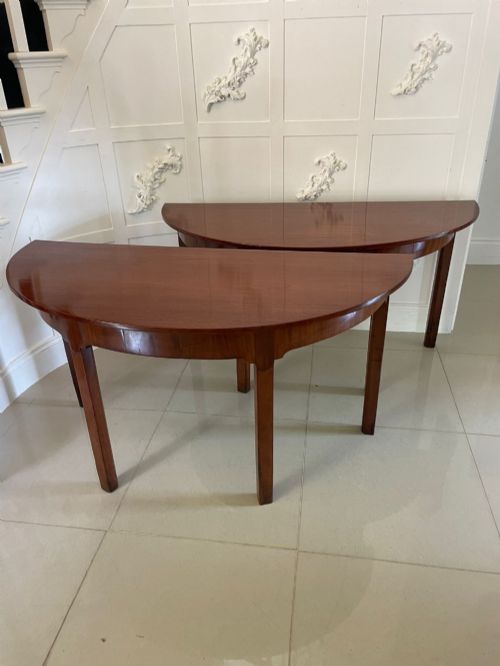
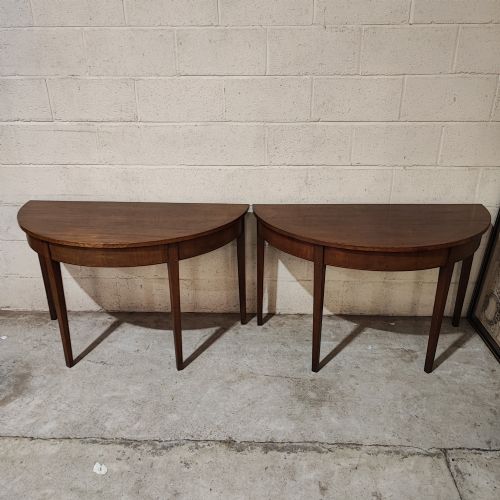
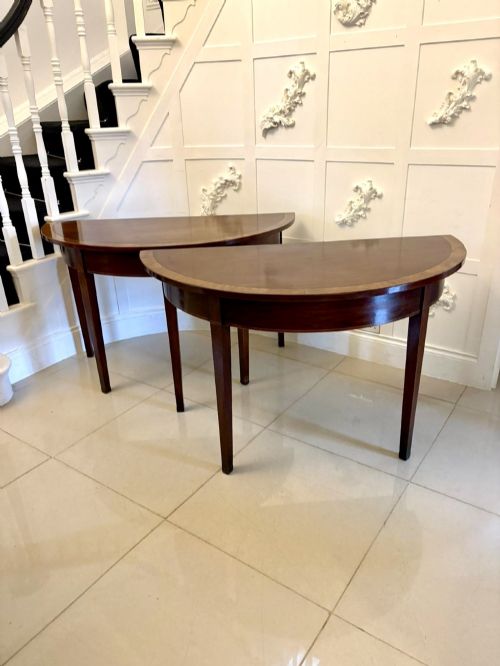
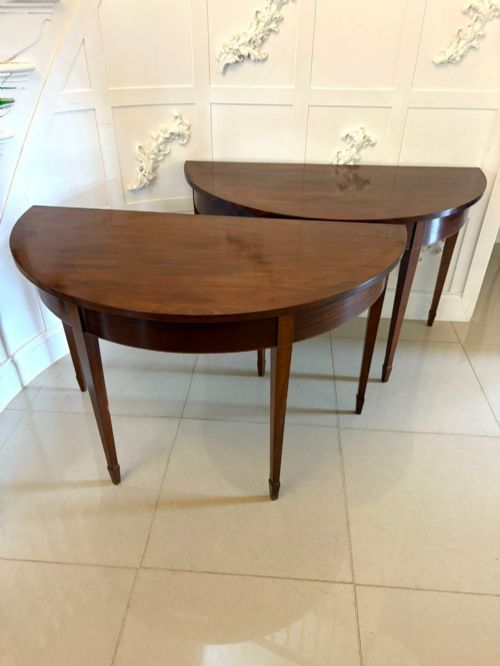
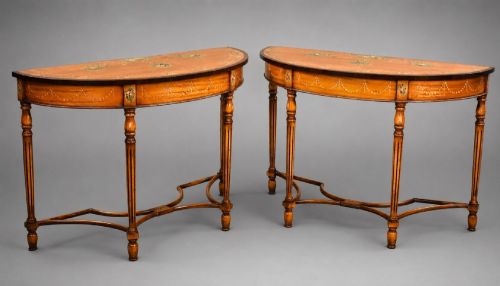
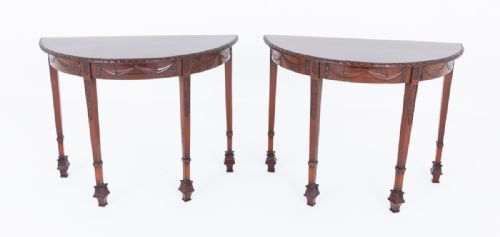
Pair georgian console tables bring symmetrical elegance to a hallway, with the demi-lune form appearing most frequently among these matching pieces.
Pair Georgian Console Tables
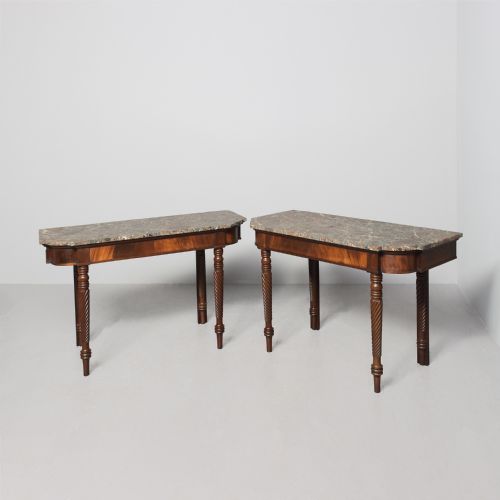
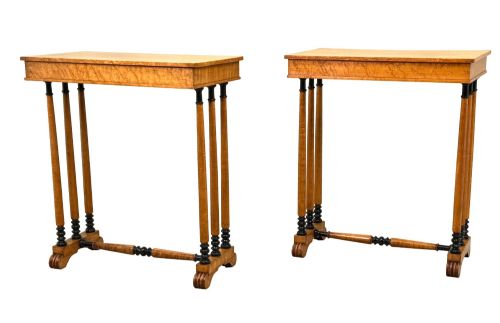
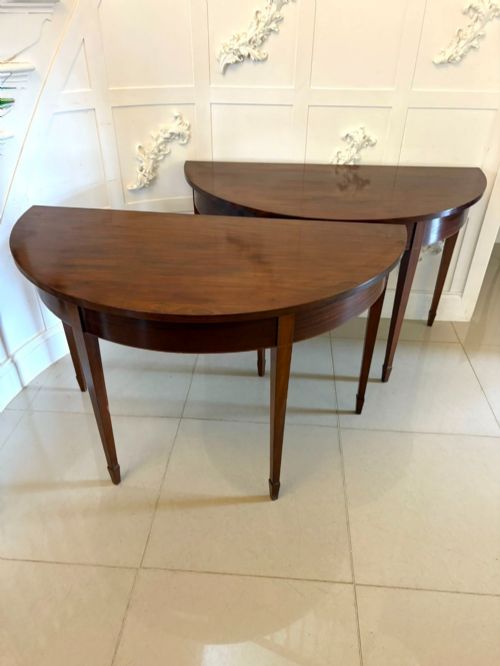
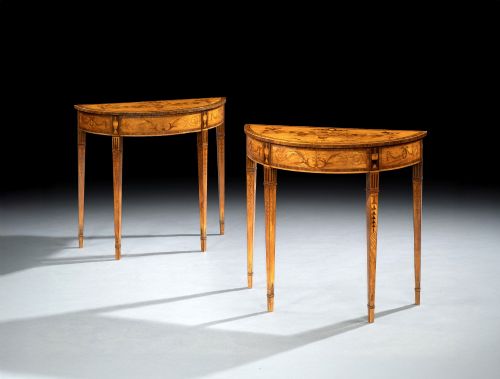
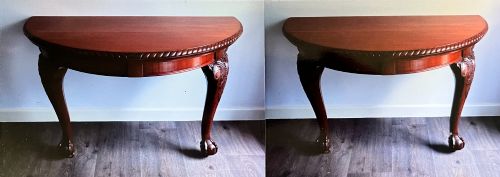
When you search for pair georgian console tables, you encounter matching twin items designed to stand against a wall in formal rooms or entrance halls. The evidence shows these pieces span the eighteenth century and the regency period, often taking a semi-circular or demi-lune shape that allows them to fit neatly into domestic spaces.
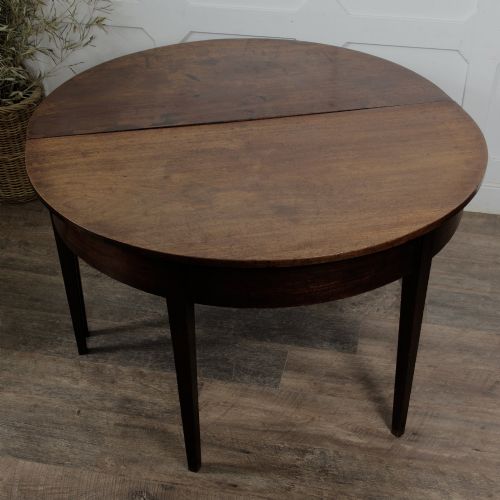
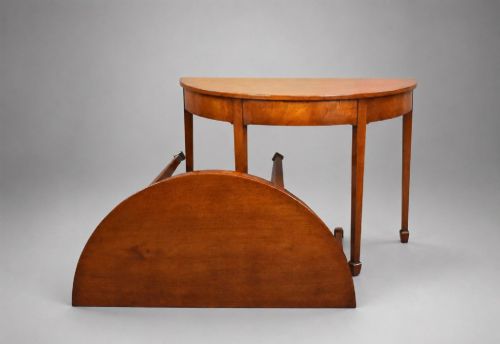
Beyond the standard half-round format, the selection includes D-end tables that join together to form a larger dining surface, alongside side tables and occasional tables. Mahogany dominates the surviving examples, though satinwood, walnut, and painted timber also appear frequently across the listings.
The matching nature of these items means makers produced them as dual components from the outset, intended to balance a room or flank a central architectural feature such as a doorway or fireplace. Finding two pieces that match in timber and proportion remains the primary objective for collectors seeking this specific form.
How they were made
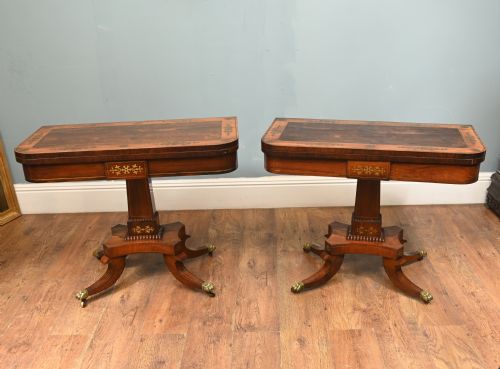
Cabinetmakers utilised dense timbers such as mahogany, rosewood, and satinwood, often selecting figured veneers to create striking patterns across the top surfaces. Workshops applied these thin layers of choice wood over stable secondary timbers, securing the edges with banding and stringing in contrasting materials like boxwood.
Construction techniques included sophisticated joinery for folding tops on game tables and stable framing for console bases, frequently featuring square tapered legs or Marlborough legs. Some examples incorporate brass inlay or marquetry details, while others rely on painted wood finishes and giltwood embellishments to achieve their decorative effect.
Secret compartments occasionally surface inside folding game tables, built to hide stray playing cards from losing opponents.
What varies in quality
Quality rests heavily on the choice of timber figure and the precision of the veneer work across the top surfaces. Examples boasting highly figured mahogany or intricate satinwood marquetry represent the upper tier of cabinetmaking.
The finesse of the underlying structure also dictates value, where crisp carving on the legs and tight, original joinery separate standard production pieces from finer workshop outputs. Matching consistency between the twin tables ensures the pair retains its visual harmony.
The Pair Georgian Console Tables Glossary
- Demi-lune
- A half-moon shape popular for console and side tables designed to stand flat against a wall.
- Marquetry
- Decorative patterns created by fitting thin pieces of wood veneer and other materials into a wooden backing.
- Stringing
- Thin inlaid lines of contrasting timber used to outline panels and borders on furniture tops.
- Marlborough leg
- A heavy, straight, square leg often terminating in a block foot, typical of mid to late eighteenth-century furniture.
- D-end
- A table with one curved end shaped like the letter D, which can be joined with another to form a complete dining table.
Pair Georgian Console Tables: Frequently Asked Questions
Can these tables be used for dining?
Certain versions featuring D-end configurations were specifically built to pull apart and function as console tables when placed against a wall, then combine into a larger dining surface. The records show metamorphic and card table pairs designed to adapt for meals or games.
Checking the mechanism and height ensures compatibility if you plan to sit at them for dining purposes. Most standard console formats, however, remain too shallow for comfortable seating use.
How do I care for antique mahogany tables?
Maintaining these surfaces requires keeping them away from direct sunlight and extreme humidity fluctuations to prevent timber splitting or veneer lifting. Regular dusting with a soft, dry cloth preserves the polished finish without building up heavy wax residues.
Avoiding placement near heat sources protects the old adhesives and timber from drying out. Gentle application of traditional beeswax helps nourish the wood periodically.
What defines the georgian style?
The aesthetic spans the reigns of the first four Georges, encompassing classical proportions, balanced designs, and a transition from heavy walnut to refined mahogany. Cabinetmakers drew inspiration from architectural rules, applying subtle carving and restrained ornamentation.
Later phases within the period introduced lighter satinwood surfaces and neoclassical motifs influenced by designers like Sheraton. This evolution moved furniture from robust structural forms toward more delicate, decorative presentation.