

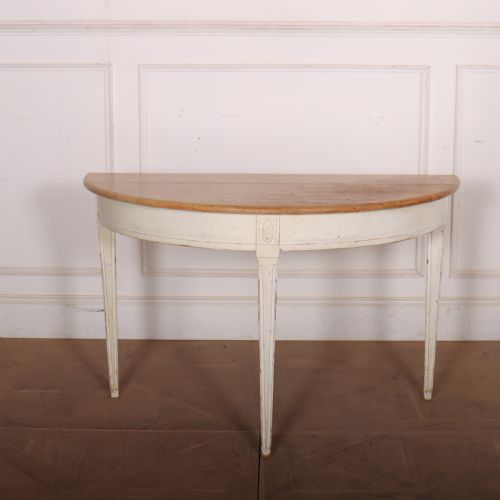


Neoclassical Demi Lune Table
A neoclassical demi lune table brings crisp architectural symmetry and refined timberwork to a hallway or drawing room.
What They Are
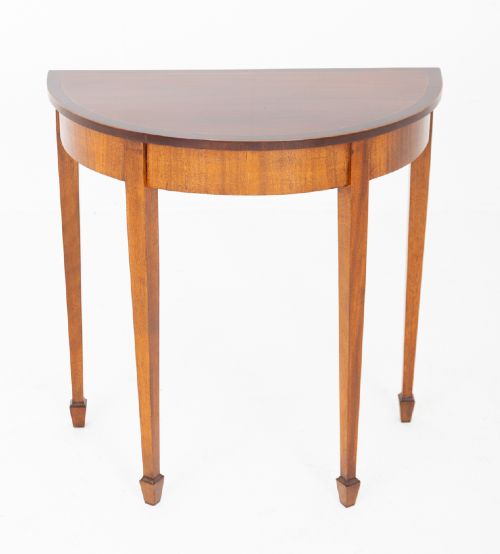
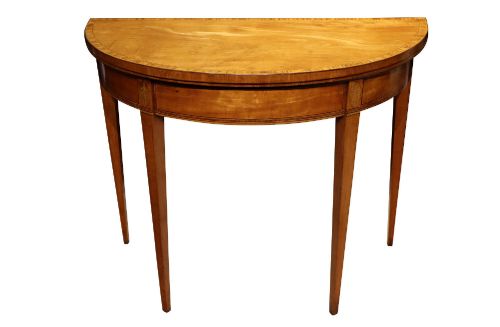
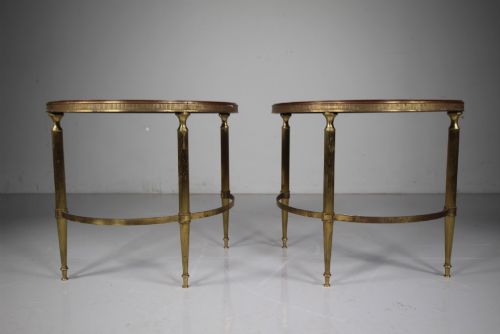
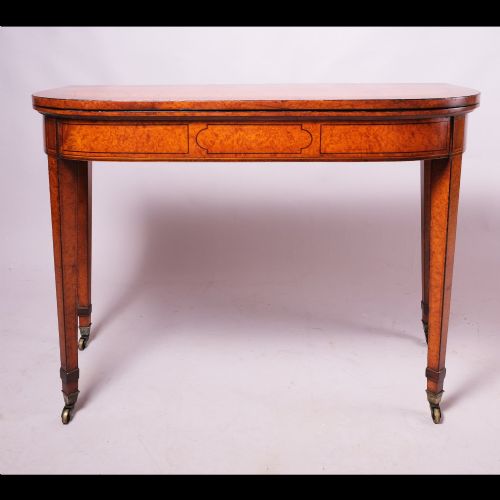
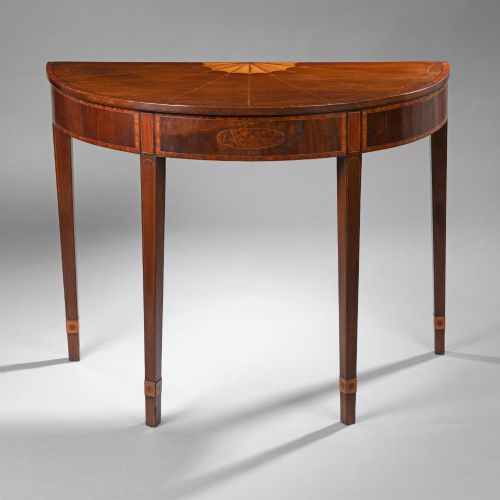
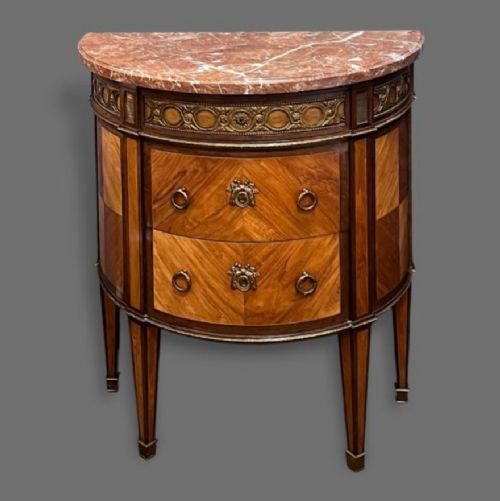
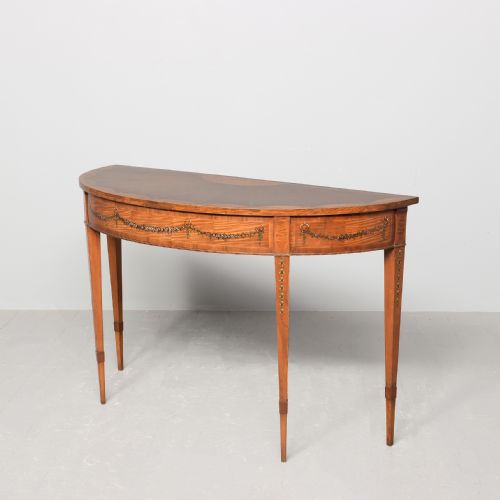
When you search for a neoclassical demi lune table, you encounter half-moon console and card tables shaped for positioning flat against a wall. The examples appearing here span the Georgian style and the George III period, alongside nineteenth-century painted versions and twentieth-century interpretations.
Makers designed these semicircular pieces primarily as side tables, consoles, or folding card tables. The surface often opens to reveal a baize-lined interior, resting on tapering legs characteristic of the neoclassical taste.
How They Were Made
Cabinetmakers constructed these semicircular carcases using timber frames of mahogany, satinwood, kingwood, and painted wood. They applied intricate crossbanding, bone inlay, and brass details to accentuate the geometric form.
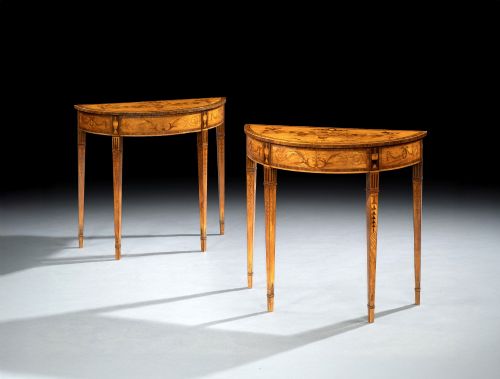
Surface decoration frequently involves delicate satinwood inlays and painted motifs, reflecting the classical ornamentation popular during the eighteenth and nineteenth centuries.
Retail Price Guide 2026
Typical UK retail prices for neoclassical demi lune table, calculated from the Sellingantiques database of over a million retail prices indexed since 2003. This retail price guide relies exclusively on Sellingantiques data; no external sources or auction records are used, so the figures do not describe the wider market.
What Varies in Quality
The distinction between ordinary and exceptional pieces lies in the crispness of the timber inlays and the choice of veneers such as figured mahogany or kingwood. Finer examples display meticulous crossbanding and harmonious proportions that elevate the piece beyond a simple utility table.
Hand-painted surfaces and refined brass mounts indicate higher workshop standards, whereas simpler pine or painted wood constructions cater to more modest decorative requirements.
Maple & Co
The Neoclassical Demi Lune Table Glossary
- Demi-lune
- A half-moon shape used for console and card tables designed to stand flat against a wall. This profile became immensely popular during the neoclassical period for saving floor space.
- Crossbanding
- A strip of veneer applied perpendicularly to the grain of the main surface to create a contrasting border. Cabinetmakers used this technique to frame the semicircular tops.
- Console table
- A table supported by wall brackets or legs, intended to stand against a vertical surface. In neoclassical interiors, these often held decorative ornaments or mirrors.
- Inlay
- A technique where contrasting materials such as satinwood or bone are set into the surface of a timber base to form decorative patterns.
Frequently Asked Questions
Where should I place a demi lune table?
These semicircular tables suit narrow hallways, entrance passages, or beneath a drawing room mirror where rectangular furniture protrudes too far into the space.
Because the flat edge sits flush against the wall, they provide a surface for lamps or ornaments without obstructing household traffic.
How do I identify a George III table?
George III pieces typically employ dense mahogany or satinwood timbers, featuring restrained classical inlays and tapered legs.
Examining the construction methods underneath and within the drawer linings helps confirm the eighteenth-century origin.
Did these function as card tables?
Many demi lune tables feature a hinged top that folds open to reveal a baize-lined playing surface for cards.
When closed, they serve as decorative console tables against the wall.
What is satinwood?
Satinwood is a durable, lustrous timber with a characteristic golden sheen that cabinetmakers used extensively for fine inlays and crossbanding.
Its reflective quality made it a favourite for light-reflecting surfaces in neoclassical interiors.