




Black Painted Console Table
A black painted console table brings architectural presence and a dark, dramatic anchor to a hallway or drawing room.
Black Painted Console Table
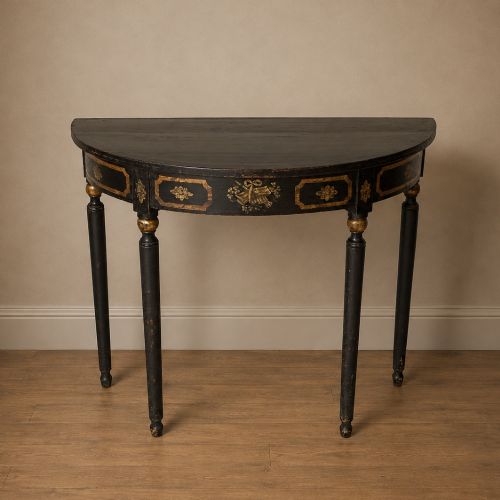
When you search for a black painted console table, you are looking at furniture designed to stand against a wall, frequently featuring demi-lune shapes or rectangular tops supported by carved legs. These pieces range from early examples up to twentieth-century interpretations, appearing in styles that span Regency elegance to provincial country forms.
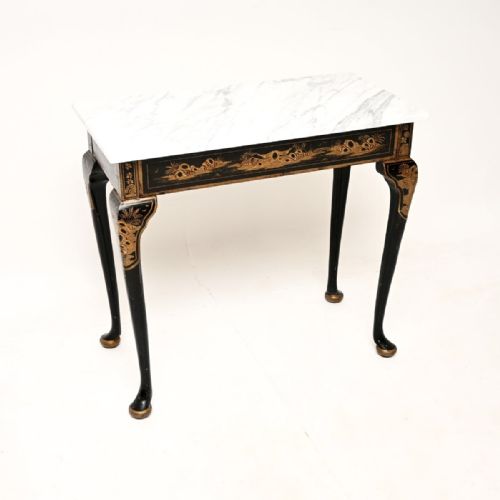
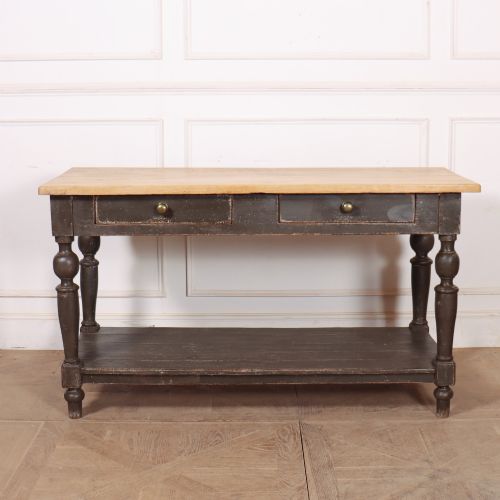
The most common versions on this page originate from the nineteenth and eighteenth centuries, constructed in forms such as side tables, hall tables, and lamp tables. Many combine dark painted finishes with contrasting materials like marble tops or parcel gilt details to catch the light in smaller spaces.
How they were made
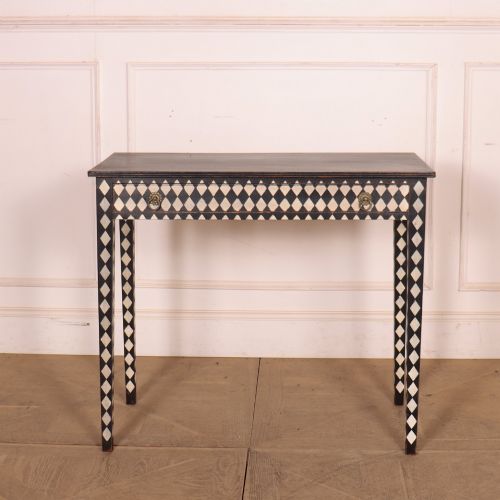
Makers built these tables from timber such as pine and beech, applying layers of dark paint, lacquer, or black finish to the wooden structure. Surface decoration frequently involved hand-painted geometric patterns or Chinoiserie motifs inspired by Asian design traditions.
Many finer examples incorporate heavy stone elements, mounting marble tops directly onto the wooden frames. Gilding in gold leaf or parcel gilt highlights specific carved details, contrasting sharply against the dark painted background.
Black Painted Console Table Retail Price Guide 2026
Typical asking prices for black painted console table among the pieces listed under this phrase on Sellingantiques today, from the lower quarter to the upper quarter. They describe what is for sale here now, not the wider market.
Styles represented across these tables include Regency, Chinoiserie, Neoclassical, and French provincial designs.
What varies in quality
The distinction between ordinary and exceptional tables rests in the depth of the finish and the execution of surface details. Hand-painted Chinoiserie scenes and precise parcel gilding demand skilled artisan work that elevates a simple pine or beech frame.
Structural integrity also separates standard utility pieces from grander salon furniture. Heavy marble tops require substantial joinery and solid timber support to endure decades of domestic use without shifting.
The Black Painted Console Table Glossary
- Console table
- A table designed to stand flat against a wall, often secured to the structure or supported by front legs. These pieces frequently serve entrance halls and narrow reception spaces.
- Demi-lune
- A half-moon shape used for table tops and frames. This curved profile allows tables to sit flush against a wall while projecting less into the room.
- Parcel gilt
- A decorative technique where specific carved elements or details are partially covered in gold leaf. This method highlights particular lines against a darker painted ground.
- Low boy
- A small eighteenth-century English table with drawers, standing on relatively short legs. They function as side tables or dressing surfaces.
Black Painted Console Table: Frequently Asked Questions
Where should I place a console table?
These tables find a natural home in entrance halls, narrow corridors, and behind sofas where surface space is needed without blocking traffic.
Because their depth is typically shallow, they fit comfortably against walls in rooms of almost any proportion.
How do I care for a painted wooden surface?
Dust regularly with a soft, dry cloth and avoid harsh chemical cleaners that can degrade aged paint or lacquer layers.
Keep tables away from direct heat sources and strong sunlight to prevent the timber beneath from drying and cracking.
Can I use a marble top table daily?
Marble provides a durable, heat-resistant surface that handles everyday items like lamps and decorative bowls with ease.
Take care to wipe up acidic spills promptly to protect the polished stone from etching over time.
How do I identify a Regency period table?
Regency pieces often display classical Neoclassical motifs, clean architectural lines, and contrasting parcel gilt details on dark painted surfaces.
Look for proportions and construction methods typical of the early nineteenth century to confirm the era.