





Tiled Back Washstand
A tiled back washstand brings the utility of the Victorian and Edwardian bedroom into modern spaces with ceramic and marble durability.
Tiled Back Washstand
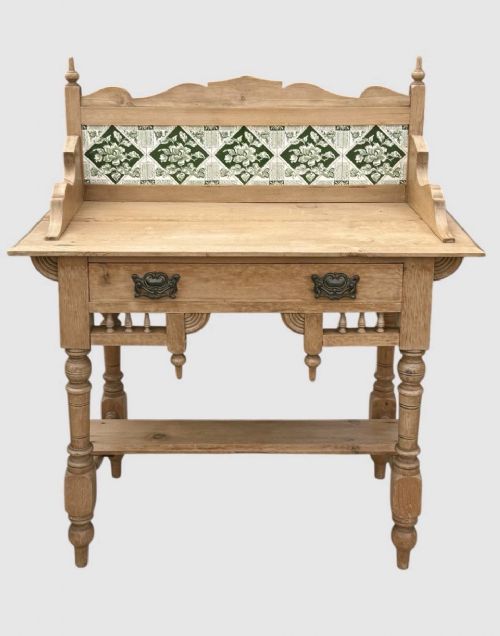
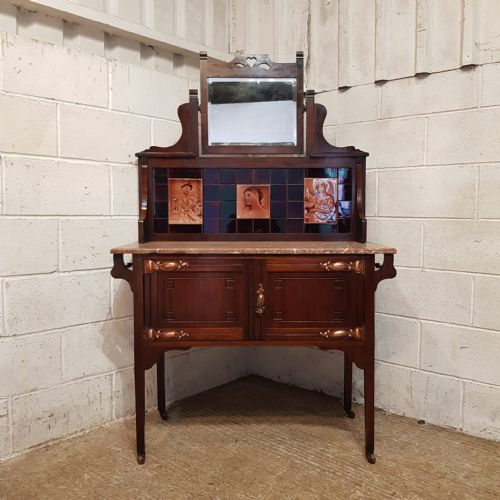
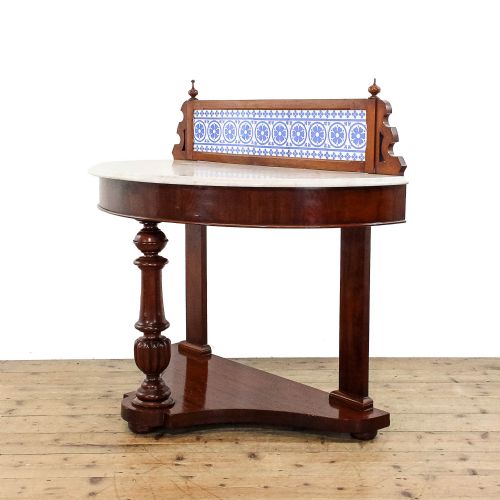
A tiled back washstand is a piece of bedroom furniture designed for washing before plumbing became standard in every room, usually combining a marble or wooden top with a decorative ceramic tile splashback. The examples found here span the Victorian and Edwardian eras, stretching from the late nineteenth century around eighteen eighty up to nineteen hundred.
Most pieces encountered on this page belong to the Victorian or Edwardian periods, constructed in either pine, mahogany, or walnut, and often paired with marble surfaces. These washstands occasionally appear alongside related pieces such as dressing tables or within sets from the aesthetic movement.
Makers and designers of these washstands utilised distinct styles of the period, ranging from the geometric lines of the Arts and Crafts movement to the flowing motifs of Art Nouveau and the eclectic tastes of the Aesthetic Movement. The presence of a tile gallery back protects the wall from splashes while offering a focal point of colourful ceramic design.
Materials and construction
Carpenters built the frames of these washstands using hardwoods like mahogany and walnut alongside softer timbers such as pine, often pairing the wooden chassis with heavy marble tops to withstand daily use. Cabinet makers integrated ceramic tiles, including works by factories like Minton, directly into the rear gallery to create a water-resistant and decorative barrier.
Brass fittings, glass elements, and twin drawers occasionally supplement the primary timber and stone structure, providing storage and utility points for washing apparatus. The combination of glazed ceramic tiles and polished marble created a hygienic surface that resisted water damage far better than plain wood.
Tiled Back Washstand Retail Price Guide 2026
Typical asking prices for tiled back washstand among the pieces listed under this phrase on Sellingantiques today, from the lower quarter to the upper quarter. They describe what is for sale here now, not the wider market.
Listings feature woods including mahogany, walnut, and pine, paired with marble surfaces and ceramic tiles across Victorian and Edwardian periods.
Judging quality and design
Quality in a tiled back washstand rests upon the selection of materials, such as the thickness and figuring of the marble top and the artistic merit of the ceramic tiles set into the gallery. Pieces featuring works by known tile manufacturers like Minton or those exhibiting refined Arts and Crafts and Aesthetic Movement styling sit at the higher end of the scale.
The choice of primary timber also distinguishes individual pieces, with finely grained mahogany and walnut frames demonstrating greater joinery ambition than standard painted or rustic pine carcases. The integrity of the original marble, the retention of matching tiles, and the balance of proportions determine the standing of each washstand.
The Tiled Back Washstand Glossary
- Tile gallery back
- A raised wooden frame at the rear of the washstand holding decorative ceramic tiles designed to protect the wall from water splashes.
- Marble top
- A heavy stone slab fitted to the upper surface of the washstand to provide a waterproof and durable counter for basins and ewers.
- Aesthetic Movement
- A late nineteenth-century design style focusing on art for art's sake, often featuring stylized floral patterns and rich wood tones.
- Arts and Crafts
- A design movement emphasising traditional craftsmanship, simple forms, and visible construction methods in domestic furniture.
- Minton
- A prominent English ceramic factory known for producing decorative tiles frequently integrated into nineteenth-century furniture.
Tiled Back Washstand: Frequently Asked Questions
What is a tiled back washstand?
A tiled back washstand is a piece of nineteenth or early twentieth-century bedroom furniture featuring a stone top and a decorative ceramic tile splashback.
These items served as washing stations before plumbed bathrooms became common in homes.
How were washstands used originally?
They held ceramic basins, water jugs, and washing accessories on their stone or wooden surfaces for morning hygiene.
The lower cabinets and drawers stored chamber pots, towels, and personal washing equipment.
How do I date a washstand?
Dating relies on the stylistic clues of the wood, handles, and tile designs, which span the Victorian and Edwardian periods.
Arts and Crafts, Art Nouveau, and Aesthetic Movement details point toward the late nineteenth or early twentieth century.
Can I use a washstand in a modern bathroom?
Many people adapt these pieces as vanity units for modern bathrooms by mounting basins onto the marble tops.
The stone and glazed tile surfaces naturally resist water, making them practical for contemporary functional spaces.