

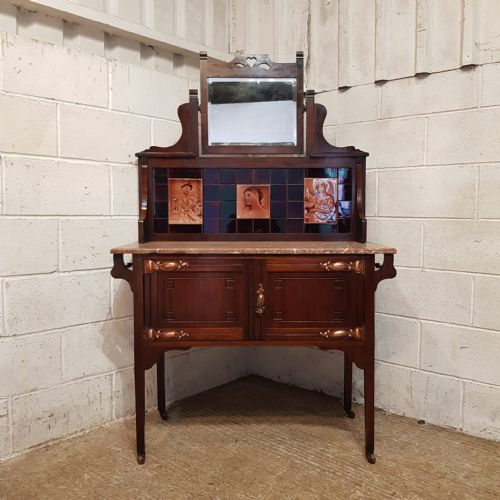


Edwardian Tiled Washstand
An Edwardian tiled washstand brings a practical surface and decorative ceramic backing into a bedroom, offering solid period utility.
Edwardian Tiled Washstand
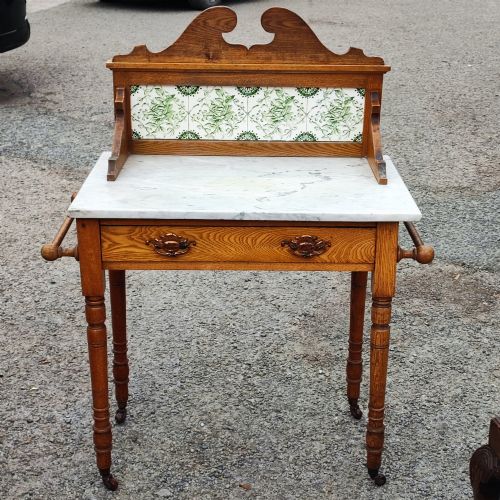
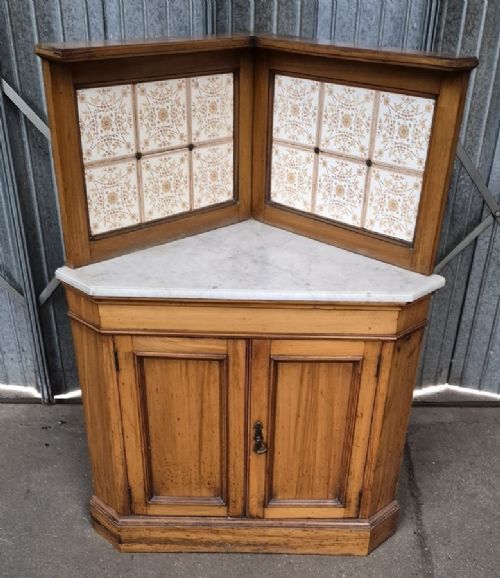
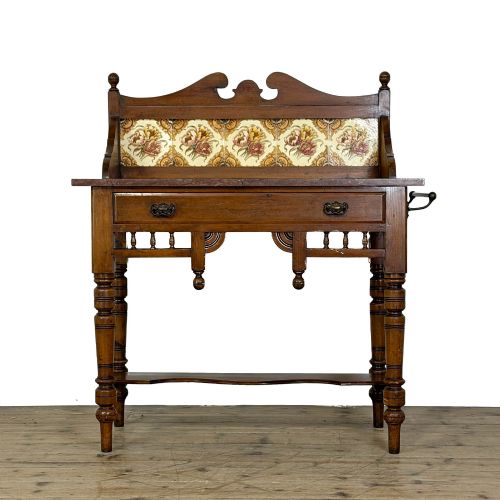
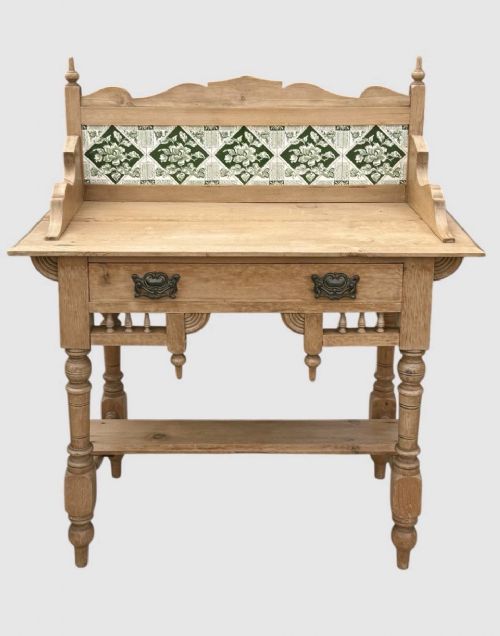
The edwardian tiled washstand is a functional piece of bedroom furniture designed for personal washing before modern plumbing became standard. Buyers seeking this phrase usually encounter mahogany, walnut, or pine examples featuring integrated ceramic tile splashbacks and stone surfaces.
Most pieces seen on this page date from the Edwardian period or the late nineteenth century, often sharing stylistic crossover with Victorian, Arts and Crafts, and Aesthetic Movement designs. These washstands combine timber frames with durable marble tops and decorative tiled galleries to protect the wall behind the basin.
Construction and Materials
These washstands rely on hardwoods like mahogany and walnut alongside pine and oak for their structural frames. Marble is frequently utilised for the top surface to resist water damage during daily use.
Ceramic tiles form the decorative gallery backs, often displaying Arts and Crafts or Art Nouveau patterns. Brass fittings and cabinet hardware occasionally complement the timber and tile assemblies.
Edwardian Tiled Washstand Retail Price Guide 2026
Typical asking prices for edwardian tiled washstand among the pieces listed under this phrase on Sellingantiques today, from the lower quarter to the upper quarter. They describe what is for sale here now, not the wider market.
Listings feature woods including mahogany, walnut, oak, and pine, alongside marble and ceramic tiles.
Assessing Quality
Quality rests in the choice of timber and the integrity of the marble top and ceramic tiles. Superior examples feature well-figured mahogany or walnut and intact, richly glazed tile panels without replacement sections.
The joinery of the frame and the retention of original brass fixtures distinguish finer pieces from simpler utility washstands made of painted pine.
Walker & Sons
The Edwardian Tiled Washstand Glossary
- Washstand
- A piece of bedroom furniture designed to hold a basin, jug, and washing accessories. These units typically incorporate marble surfaces and splashbacks.
- Tile Gallery
- The raised back section of a washstand lined with ceramic tiles. This feature prevents splashing against the wallpaper.
- Arts and Crafts
- A design movement favouring craftsmanship and simple, honest construction. Pieces from this style often emphasise natural materials.
- Aesthetic Movement
- A late nineteenth-century style focusing on visual beauty rather than narrative meaning. It frequently appears on tiled washstands through stylised floral motifs.
Edwardian Tiled Washstand: Frequently Asked Questions
What is an edwardian tiled washstand?
An edwardian tiled washstand is a wooden bedroom cabinet featuring a marble top and a decorative ceramic tile splashback. They were built for washing before plumbed bathrooms became common.
Today, they serve as decorative storage units or characterful bathroom vanities.
How were washstands used originally?
They held a ceramic basin and water jug on the marble surface for morning ablutions. Cupboards and drawers below stored washing accessories and linens.
The tiled back protected the bedroom wall from water splashes during use.
How do I style a washstand at home?
These pieces work well in modern bathrooms or bedrooms as freestanding storage units. The marble top provides a durable surface for plants, toiletries, or decorative bowls.
Pairing the stand with simple accessories lets the original tiles and timber grain stand out.
How do I tell Victorian and Edwardian washstands apart?
Victorian washstands often lean towards heavy timber or stylistic influences like the Aesthetic Movement and Arts and Crafts. Edwardian examples tend to display lighter mahogany frames and brighter tile designs.
Both periods utilise marble tops and tile gallery backs.