






Victorian Tiled Washstand
These Victorian tiled washstand pieces combine marble tops and ceramic tile galleries in practical bedroom furniture.

Victorian Tiled Washstand
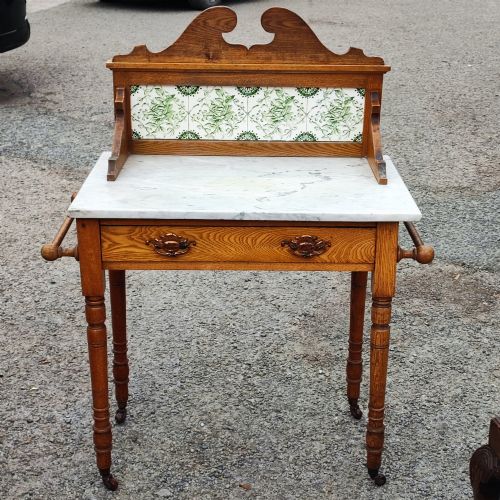
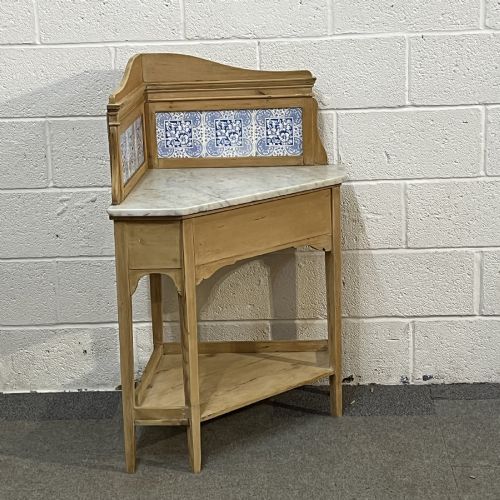
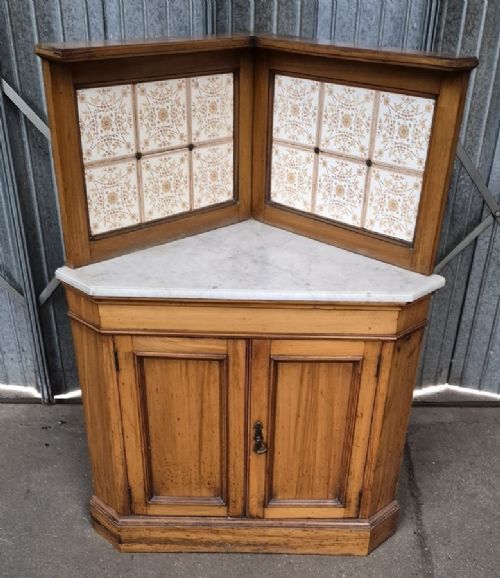
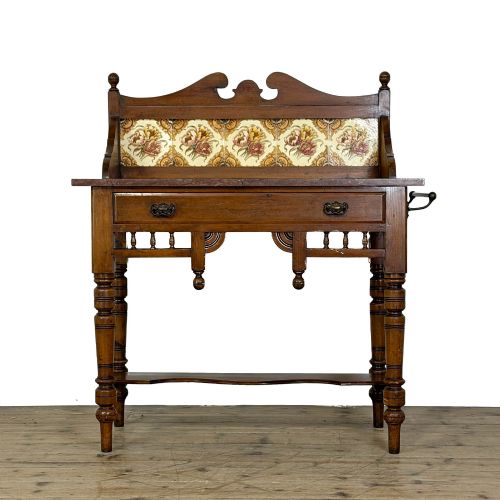
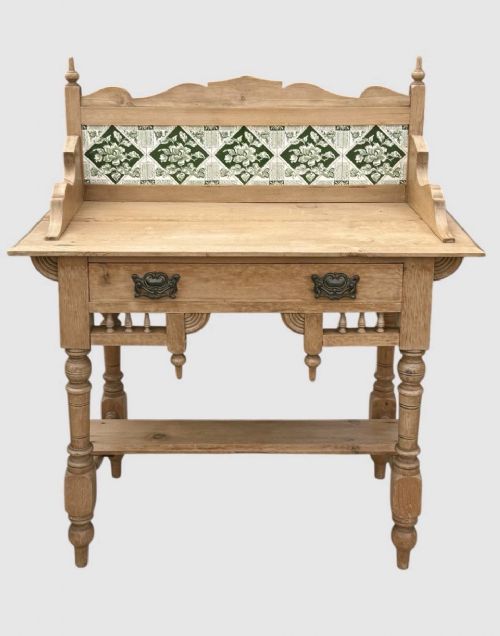
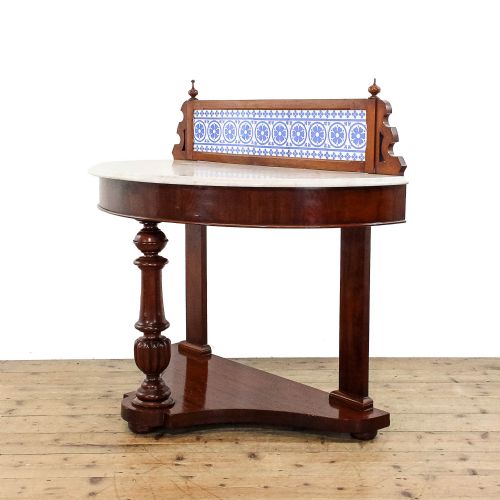
A victorian tiled washstand provides a solid surface for morning ablutions, combining timber frames with protective tiled splashbacks. The examples here include corner models, vanity tables with twin drawers, and pieces featuring marble tops.
Most pieces date from the Victorian and Edwardian eras, incorporating stylistic touches from the Aesthetic Movement and Arts and Crafts design. Woods range from pine and mahogany to walnut, ash, and satin walnut.
Makers utilised ceramic tiles within the backstand to protect bedroom walls from water splashes. These stands frequently integrate marble or wooden surfaces alongside the defining tile gallery.
How they were made
Carpenters constructed the structural frames using hardwoods like mahogany and walnut alongside softer timbers such as pine and ash. These wooden bases often incorporate twin drawers and lower shelves.
Workshops fitted heavy marble slabs to the upper surfaces to withstand water and daily use in the bedroom. Glazed ceramic tiles form the protective gallery back, sometimes supplied by established potteries like Minton.
Victorian Tiled Washstand Retail Price Guide 2026
Typical asking prices for victorian tiled washstand among the pieces listed under this phrase on Sellingantiques today, from the lower quarter to the upper quarter. They describe what is for sale here now, not the wider market.
Design influences span the Aesthetic Movement, Arts and Crafts, and Edwardian periods.
What varies in quality
The choice of primary timber creates a clear distinction across the range, moving from utilitarian painted pine to figured mahogany and walnut. Superior examples employ heavy marble slabs alongside decorative ceramic tile assemblies.
Design ambition separates basic utility washstands from sophisticated aesthetic movement and arts and crafts interpretations. The integration of brass fittings, over-shelves, and specific maker-marked tiles elevates the craftsmanship.
Walker & Sons·Minton
The Victorian Tiled Washstand Glossary
- Tile gallery
- A raised rear section inset with decorated ceramic tiles to protect the wall from splashes. This acts as the primary visual focus of the washstand.
- Upstand
- A vertical barrier rising above the main surface, often combined with the tile gallery. It prevents water from running down the back of the furniture.
- Aesthetic Movement
- A late nineteenth century design style prioritising visual beauty over narrative meaning. Pieces in this style utilise specific decorative motifs and refined proportions.
- Marble top
- A polished stone slab fitted to the washstand surface for water resistance. This provides a cool, durable working area for basins and ewers.
- Arts and Crafts
- A design philosophy championing traditional craftsmanship and honest materials. Washstands from this movement display simpler, sturdier construction methods.
Victorian Tiled Washstand: Frequently Asked Questions
How were they used originally?
These pieces served as the bedroom washing station before dedicated bathrooms were common in every home. A ceramic basin and water jug sat upon the top surface for daily cleaning.
The tiled back and marble surface protected the surrounding bedroom walls and wooden frame from water damage during use.
How do I live with one now?
Many people repurpose these stands as bathroom vanity units or hallway statement tables. The marble surfaces remain well-suited for modern bathrooms and kitchens.
Their compact footprints and built-in storage drawers make them practical for contemporary hallway spaces or bedrooms.
How do I tell periods apart?
Early pieces often lean towards heavy mahogany or simpler pine construction with straightforward tiled upstands. Later examples from the 1890s and Edwardian period incorporate satin walnut or lighter ash frames.
Design details provide the clearest clues, with Aesthetic Movement and Arts and Crafts characteristics appearing on distinctively styled late nineteenth-century models.