






Tiled Splashback Washstand
A tiled splashback washstand brings the practical craft of the Victorian and Edwardian bedroom into a modern interior with genuine period utility.

Tiled Splashback Washstand
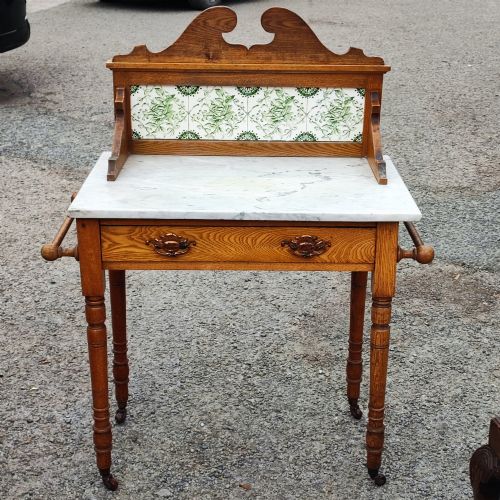
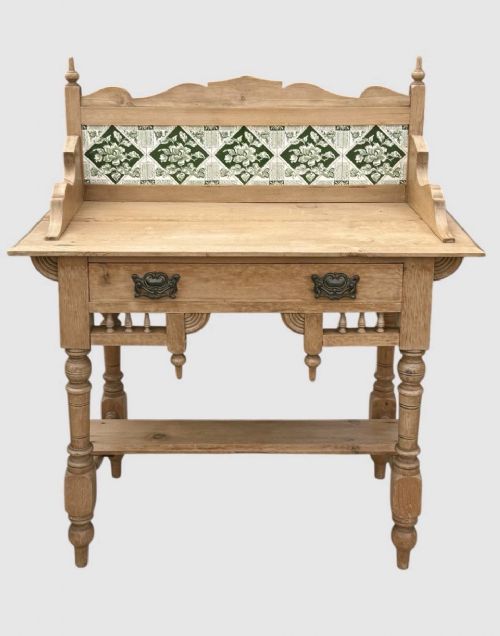
A tiled splashback washstand is a bedroom furniture piece designed for morning ablutions, combining a hygienic ceramic tile gallery with a sturdy basin stand. These pieces date principally from the Victorian and Edwardian eras, spanning the late nineteenth and early twentieth centuries.
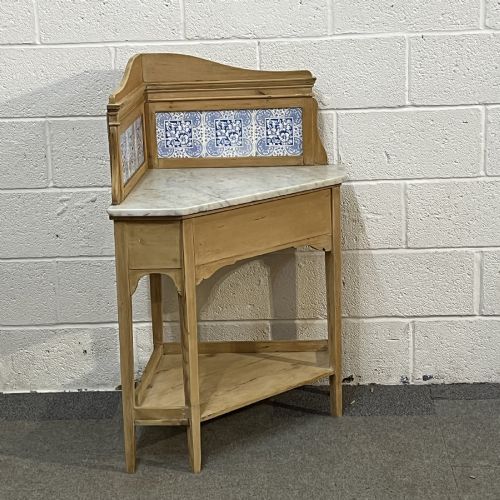
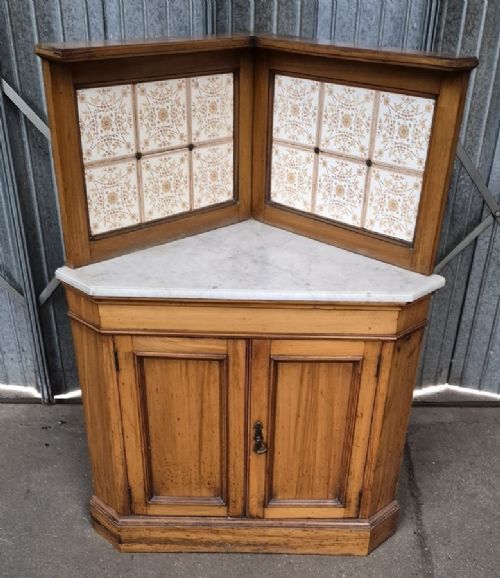
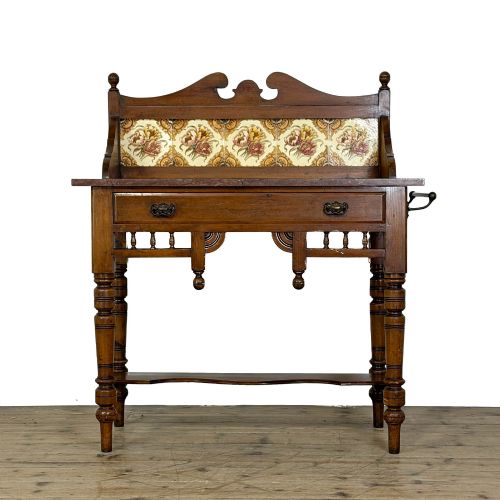
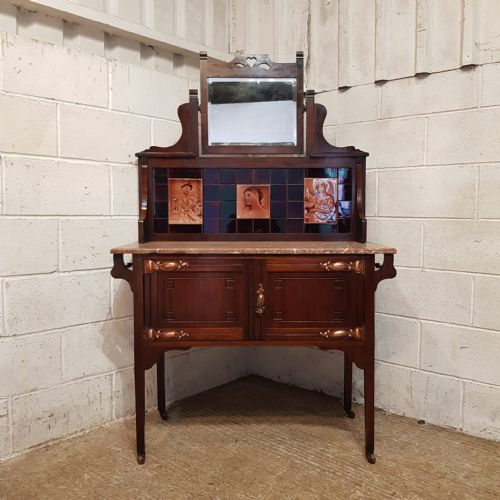
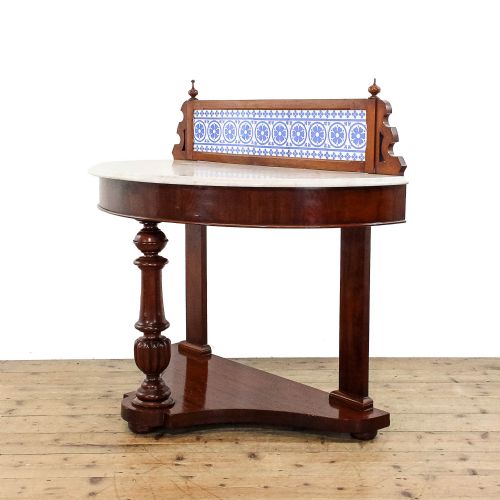
The form appears in various domestic contexts, from compact pine bathroom units to substantial walnut and mahogany bedroom suites. Many examples incorporate a marble top alongside the decorative ceramic tiles to protect the wooden frame from water splashes.
Buyers encounter styles ranging from plain rustic pine and classical mahogany to distinctive Arts and Crafts, Art Nouveau, and Aesthetic Movement designs. Each piece reflects the sanitary requirements of period domestic life before plumbing became fully integrated into the bedroom.
Materials and construction
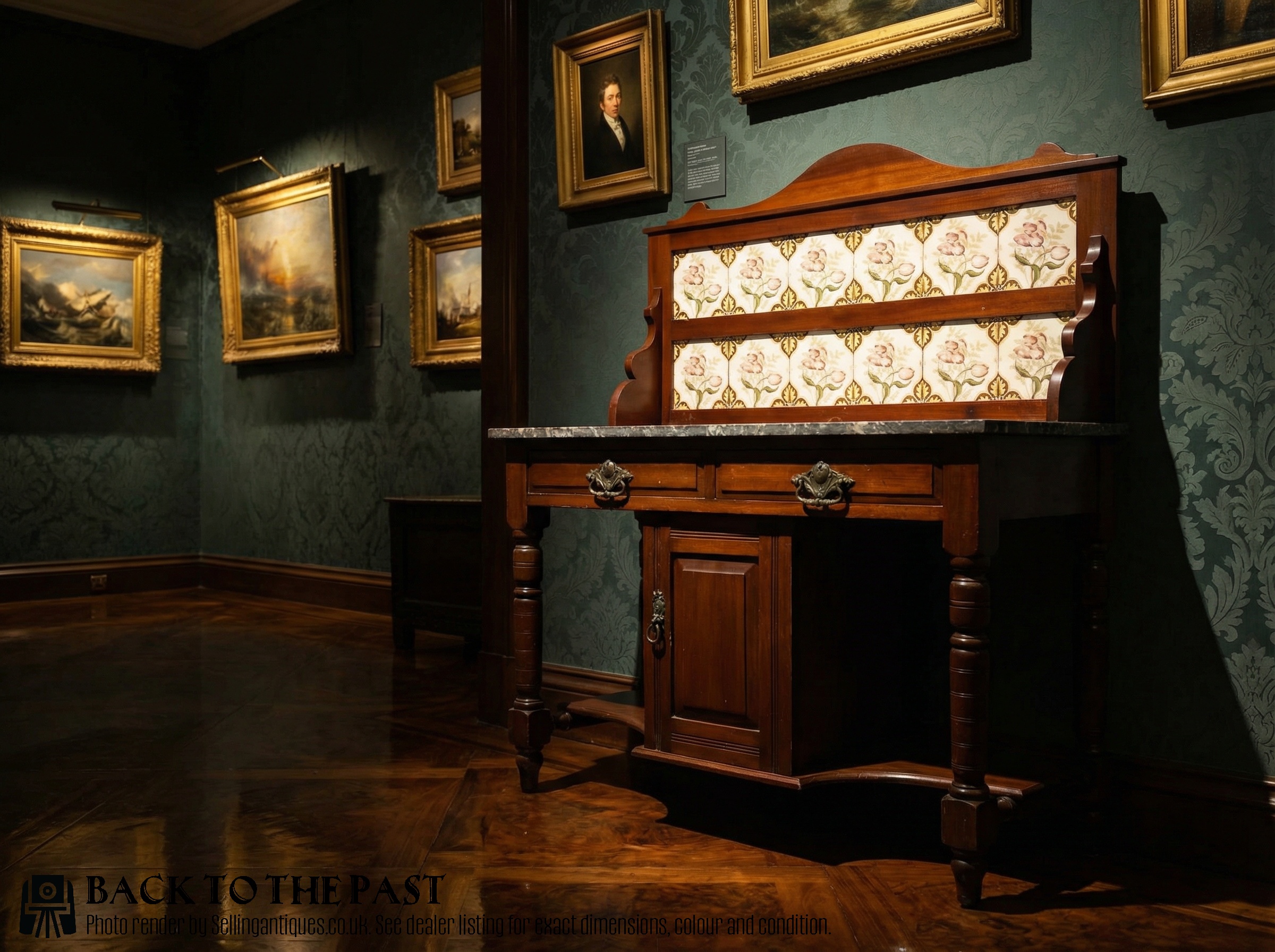
Carpenters built these washstands using a mix of hardwoods like mahogany, walnut, and oak, alongside domestic softwoods such as pine. Timber selection dictated whether the piece received a polished finish or was painted for simpler household service.
The defining feature, the tile gallery, integrates glazed ceramic tiles directly into the wooden superstructure behind the basin shelf. Masons fitted thick marble slabs to the upper surface, providing a durable, waterproof counter that resisted the daily wear of water jugs and basins.
Tiled Splashback Washstand Retail Price Guide 2026
Typical asking prices for tiled splashback washstand among the pieces listed under this phrase on Sellingantiques today, from the lower quarter to the upper quarter. They describe what is for sale here now, not the wider market.
Listings span from 1890 to 1910, encompassing late Victorian, Edwardian, Arts and Crafts, and Aesthetic Movement styles.
Distinguishing quality in period washstands
Quality rests upon the ambition of the timber framing and the integrity of the fitted materials. Finer examples employ choice walnut or mahogany veneers and solid marble slabs, whereas utilitarian versions rely on painted or plain deal pine.
The artistic merit of the ceramic tiles elevates certain pieces significantly, particularly those reflecting Arts and Crafts or Aesthetic Movement ideals. Original brass hardware and well-integrated corner or cabinet configurations further separate standard chamber furniture from superior workshop production.
Walker & Sons
The Tiled Splashback Washstand Glossary
- Splashback
- A vertical barrier rising behind the basin shelf to protect the wall from water. It usually holds the decorative ceramic tiles characteristic of these stands.
- Marble top
- A polished stone slab fitted to the upper surface of the furniture. This heavy stone provided a cool, impermeable workspace for washbasins and ewers.
- Gallery
- A raised wooden or tiled superstructure framing the back and sides of the washstand. It often incorporates small ledges or towel rails.
Tiled Splashback Washstand: Frequently Asked Questions
What is a tiled splashback washstand?
A tiled splashback washstand is a piece of nineteenth or early twentieth century bedroom furniture featuring a ceramic tile barrier and a waterproof top.
These stands were used for washing before permanent indoor plumbing became standard in domestic bedrooms.
How were these washstands used originally?
Households placed ceramic washbasins and water jugs on the stone or wooden tops for morning cleaning routines. The tiled back caught stray water while towels hung from attached rails or side brackets.
Today, many buyers repurpose them as bathroom sink bases or hallway console units.
How do I tell Victorian from Edwardian pieces?
Victorian washstands often display heavier proportions and darker timbers like mahogany or walnut, alongside elaborate turning and carving. Edwardian examples tend to feel lighter in scale, sometimes utilising simpler painted pine or brighter walnut framing.
Design motifs also shift from dense Victorian ornamentation towards cleaner Arts and Crafts lines.
Are the marble tops original?
Most surviving washstands retain their heavy original marble slabs, which were cut specifically to fit the timber framework. The marble matches the overall grade of the furniture, whether simple grey-veined white stone or darker varieties.
Inspectors can usually verify originality by checking the precise fit within the wooden rebate.