

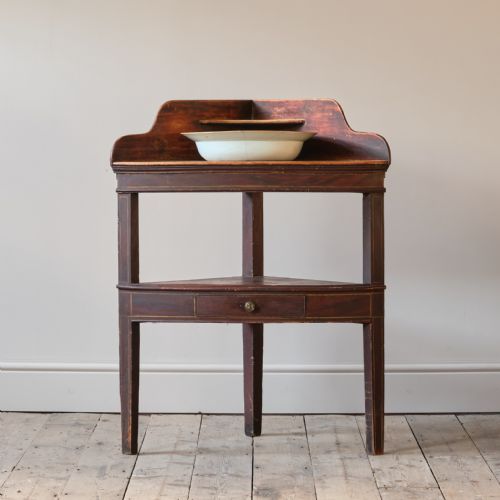
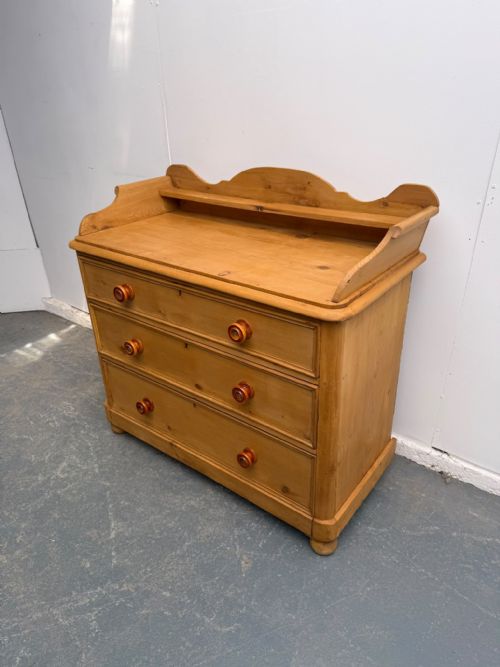
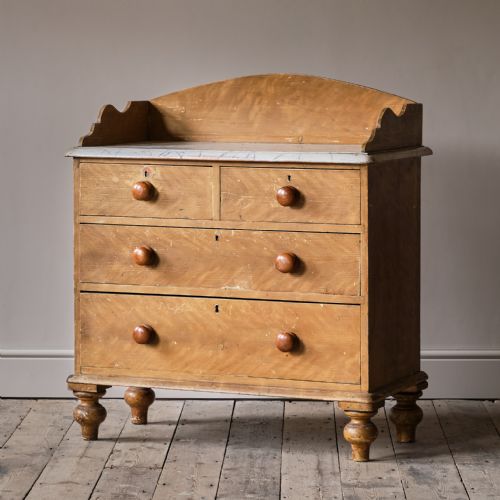
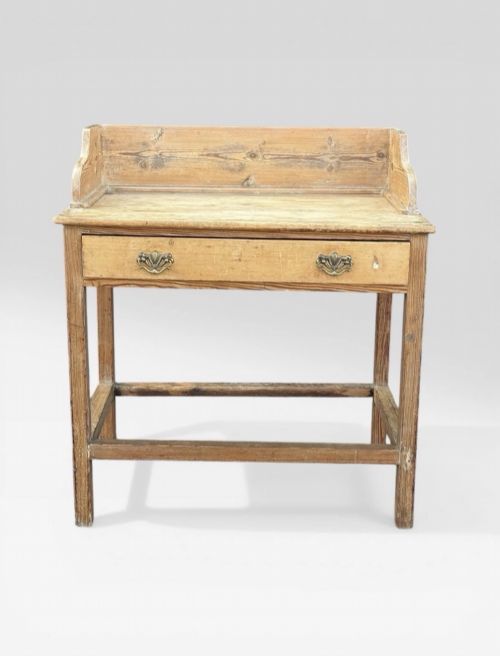


Country Pine Washstand
A country pine washstand brings honest utility and warm timber grain into a bedroom, offering a sturdy surface for daily routines.
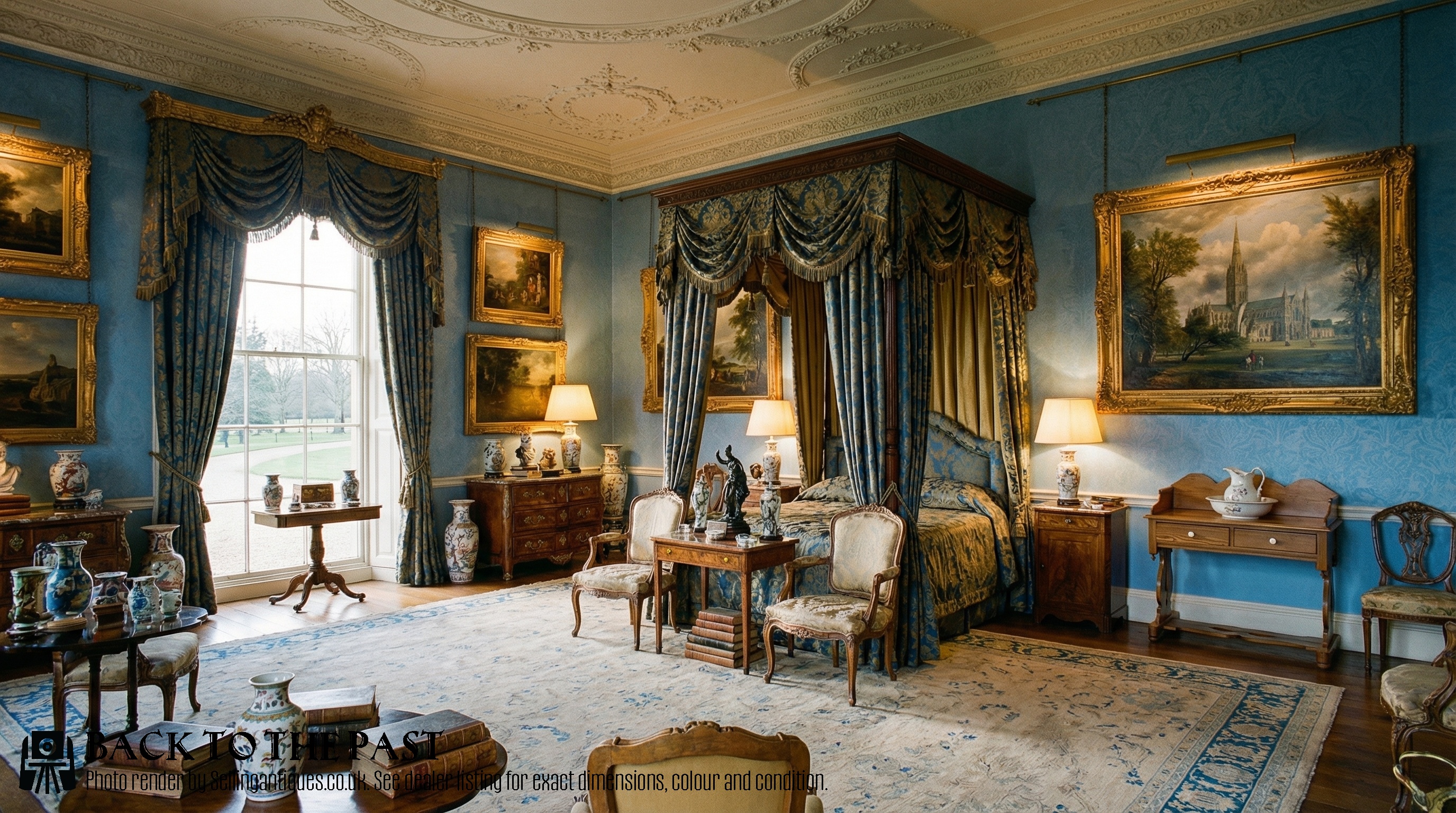
Country Pine Washstand
A country pine washstand is a practical piece of domestic furniture designed for personal washing before indoor plumbing became common. These items serve as functional wash stands, side tables, or small dressing units within domestic settings.
The pieces seen here span the Regency, Victorian, and Edwardian periods, including specific dates such as eighteen eighty and eighteen sixty. Styles range from plain English country and rustic farmhouse to Victorian Gothic and Victorian country.
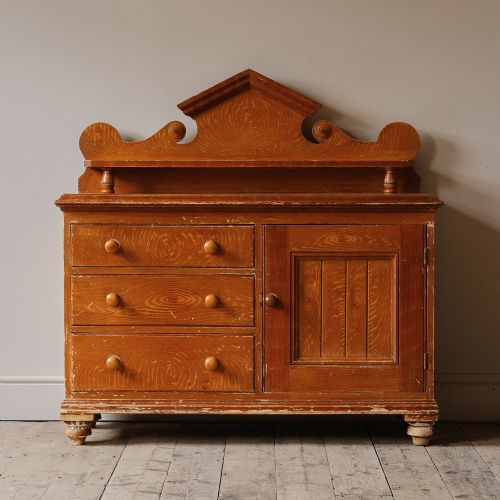
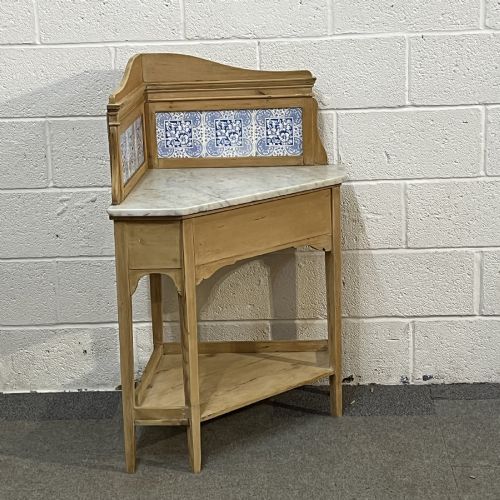
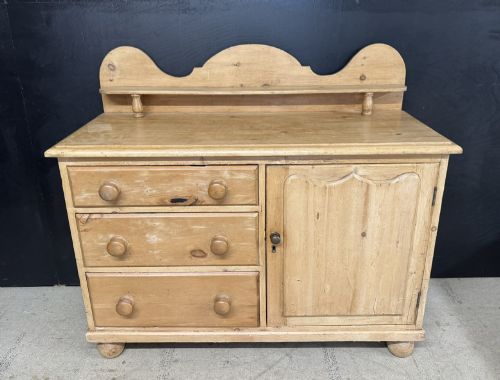
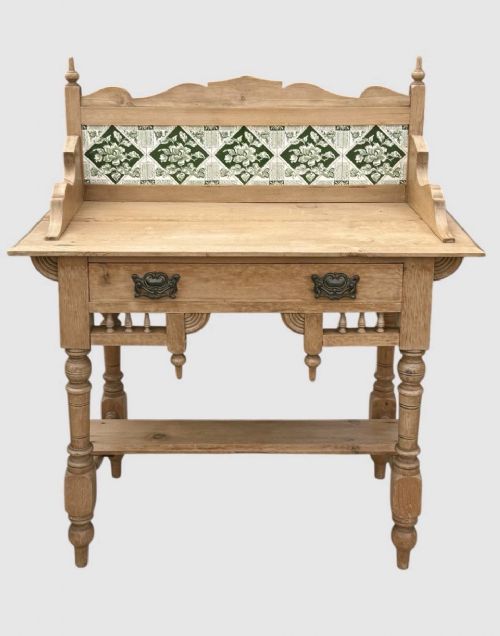
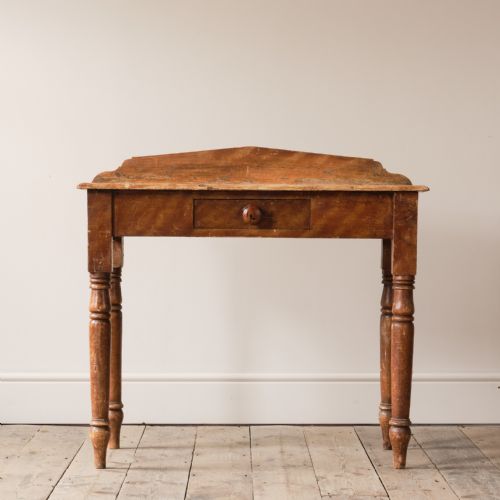
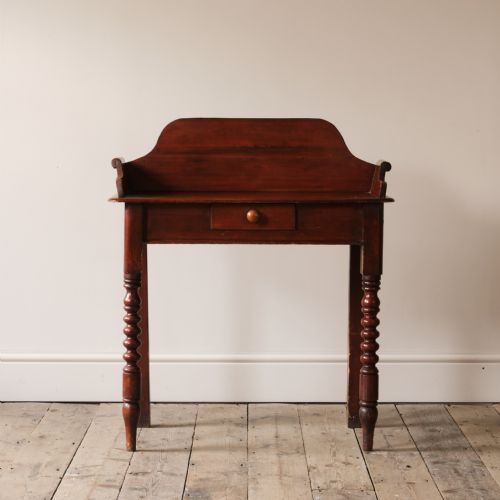
Most examples take the form of washstands, side tables, or chests of drawers with gallery backs. Some variations incorporate painted surfaces, scumble glaze, or tile splashbacks to protect surrounding walls.
How they were made
Makers utilised solid pine and pitch pine, often joining timber planks with traditional methods suitable for everyday household furniture. Surfaces were then finished with clear wax or protected by layers of paint and scumble glaze.
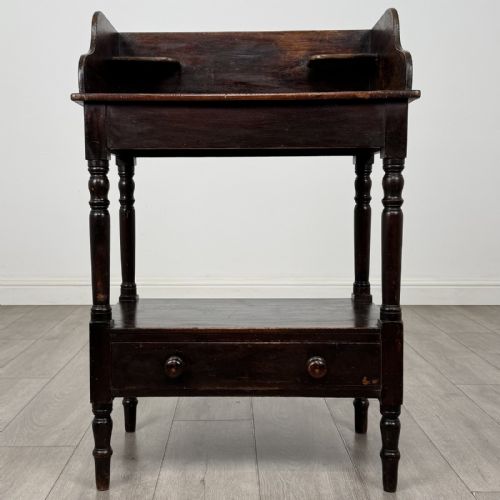
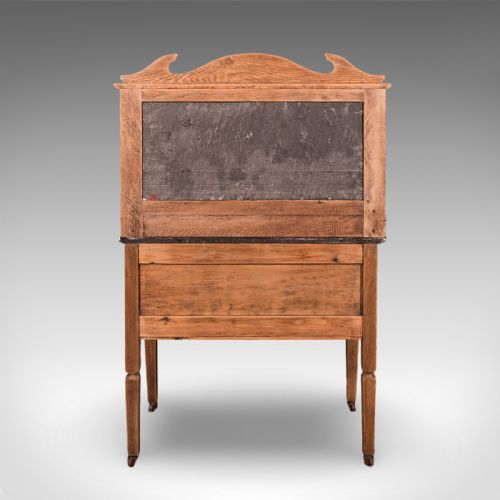
Constructed pieces frequently include fitted gallery backs to prevent water splashes, alongside smaller drawers for storage. Metal and brass hardware or ceramic components appear on handles and fittings where applicable.
Country Pine Washstand Retail Price Guide 2026
Typical asking prices for country pine washstand among the pieces listed under this phrase on Sellingantiques today, from the lower quarter to the upper quarter. They describe what is for sale here now, not the wider market.
Listings feature items spanning the Regency, Victorian, and Edwardian periods, constructed primarily from pine and pitch pine with occasional painted and scumble finishes.
What varies in quality
Quality rests in the original condition of the timber and the survival of early painted or scumble surfaces. Pieces retaining their integrated gallery backs and intact ceramic or wood elements stand apart from altered examples.
Proportions and detailing separate simpler utility items from more resolved Gothic or Regency designs. Construction depth, drawer configuration, and timber selection dictate the standing of individual pieces.
The Country Pine Washstand Glossary
- Scumble glaze
- A translucent oil-based decorative paint technique used to imitate richer timber grains or create patterned finishes on pine. This treatment appears frequently on nineteenth century painted items.
- Gallery back
- A raised wooden border along the rear edge of the top surface designed to protect walls from water splashes and keep wash basins contained. Examples range from simple timber upstands to tiled splashbacks.
- Pitch pine
- A dense, resinous variety of pine timber with pronounced growth rings, chosen for durability in heavy-use furniture. It provides a harder wearing surface than standard softwoods.
- Regency
- An architectural and design period spanning the early nineteenth century characterised by classical restraint and clean lines. Pieces from this era show simpler proportions.
- Victorian Gothic
- A nineteenth century style drawing on medieval architectural motifs, seen in pointed arches or structural detailing on furniture. This aesthetic gives washstands a heavier, architectural presence.
Country Pine Washstand: Frequently Asked Questions
What is a country pine washstand?
A country pine washstand is a nineteenth-century or early twentieth-century wooden furniture item designed to hold a basin and jug for morning ablutions. These wash stands often include drawers and protective gallery backs.
Today, they adapt easily as hallway consoles, bathroom vanity bases, or bedside storage units while retaining their original utilitarian character.
How do I date a pine washstand?
Dating relies on stylistic clues, construction methods, and period characteristics such as Regency simplicity or Victorian Gothic detailing. Specific dates or eras like eighteen eighty and Edwardian help bracket the time of manufacture.
Paint finishes, hardware, and the presence of original scumble glaze further clarify whether a piece originates from the early nineteenth century or later.
Did these washstands come painted?
Many pine washstands were painted or treated with scumble glaze from the outset to protect the softwood and imitate more expensive timbers. Original paint surfaces survive on several pieces from the Regency and Victorian periods.
Other examples were left as waxed or stripped pine, showing the natural grain of the wood according to regional taste and domestic preference.
How can I use one today?
These washstands function well in modern bedrooms as dressing tables or side tables, and fit comfortably into narrow hallways as console tables. Their drawers provide convenient storage for small household items.
In bathrooms, some owners adapt them to support modern basin installations, using the timber top and lower shelf for daily toiletries.