





Georgian Corner Washstand
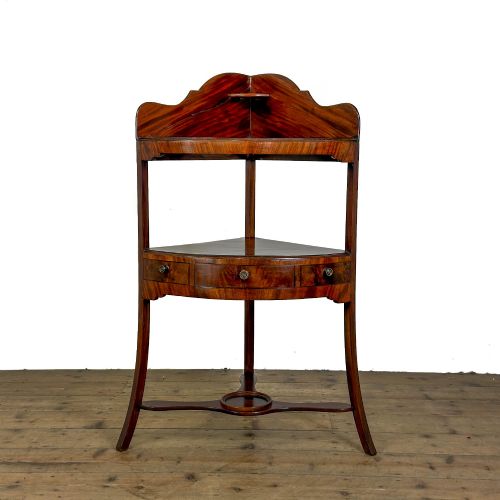
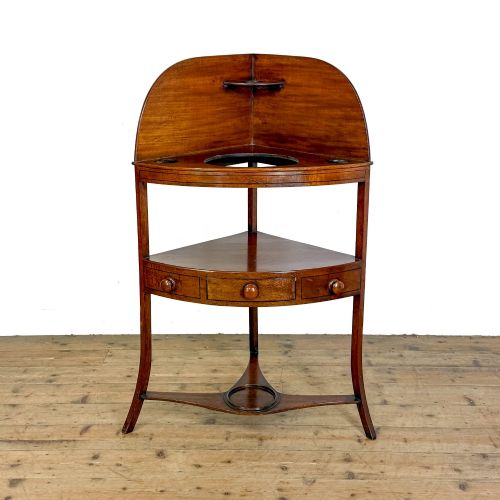
A georgian corner washstand is a clever piece designed to fit neatly into domestic corners for morning ablutions.
Georgian Corner Washstand
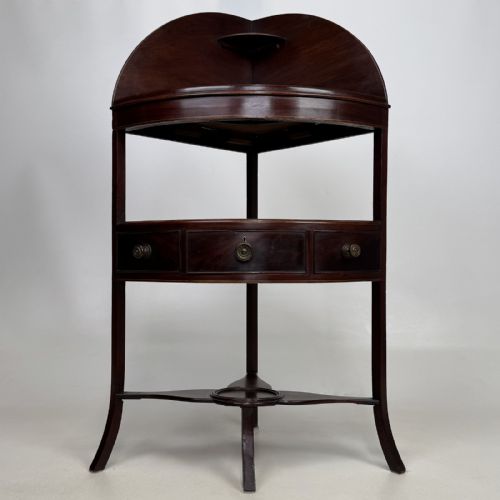
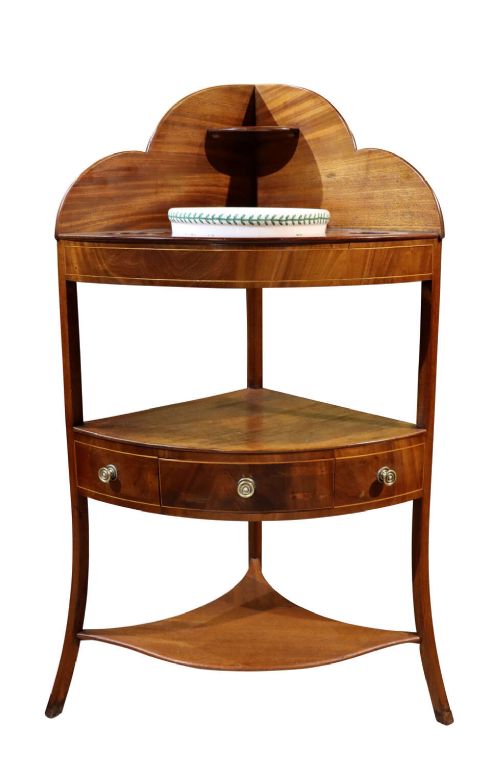
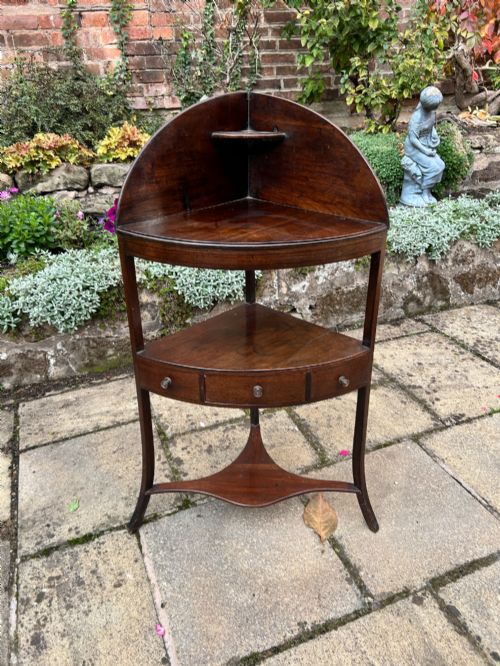
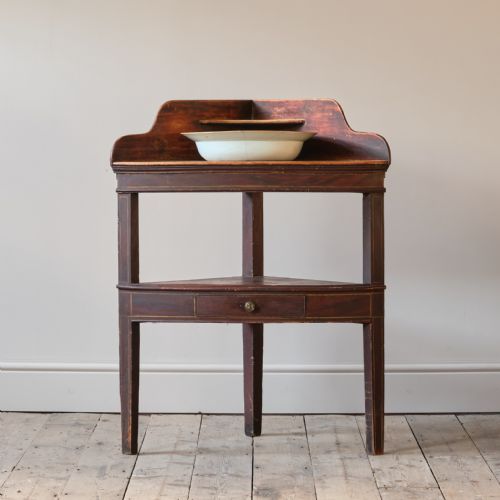
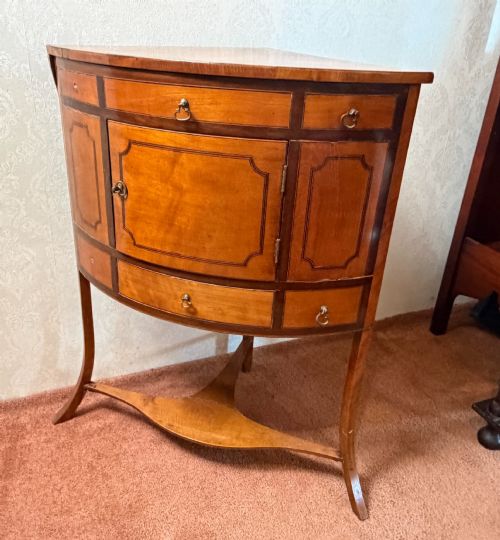
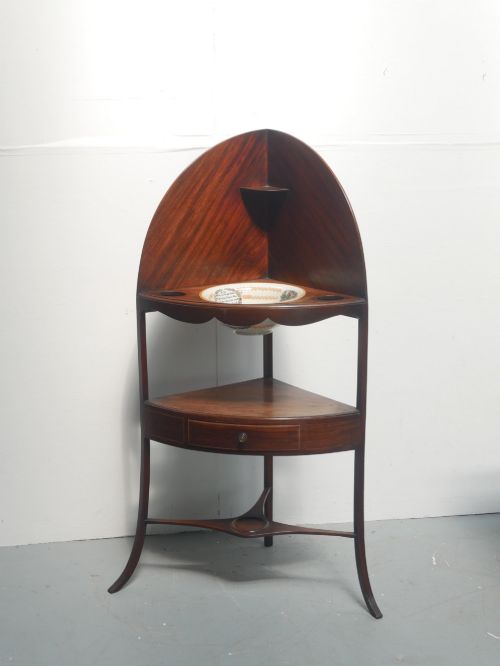
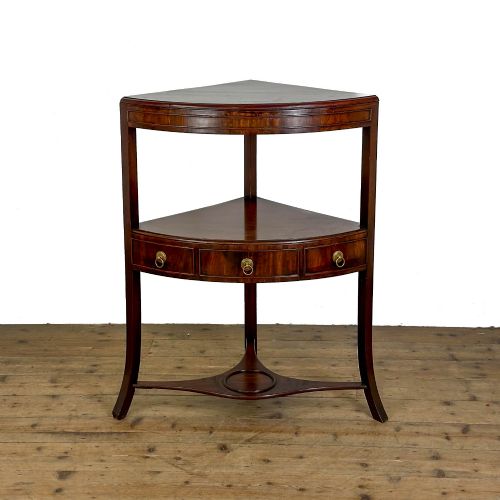
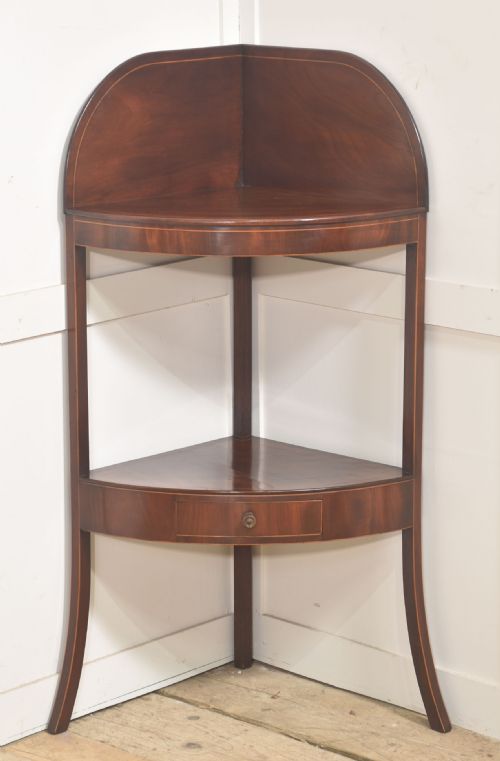
A georgian corner washstand is typically encountered in mahogany, pine, and satinwood, spanning periods from the eighteenth century through the Regency era to later Victorian iterations. These items were built specifically to occupy room angles, serving domestic washing and grooming needs in period bedrooms and dressing rooms.
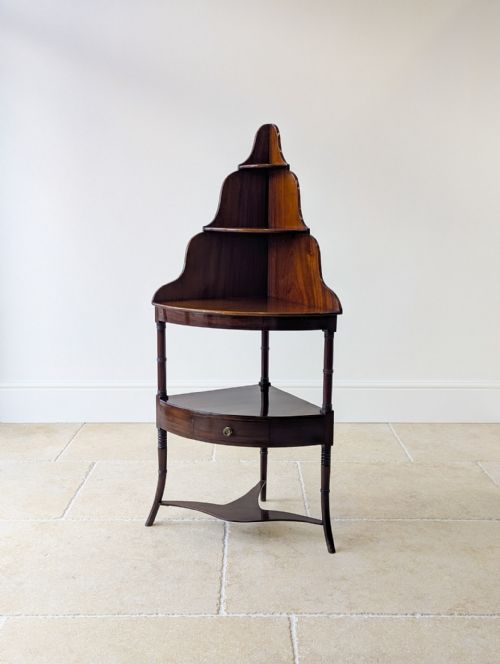
The standard configurations include tiered stands, bow front designs, and units featuring cupboard storage below the basin recess. Some variants incorporate folding tops or shelves designed to hold basins, jugs, and shaving equipment.
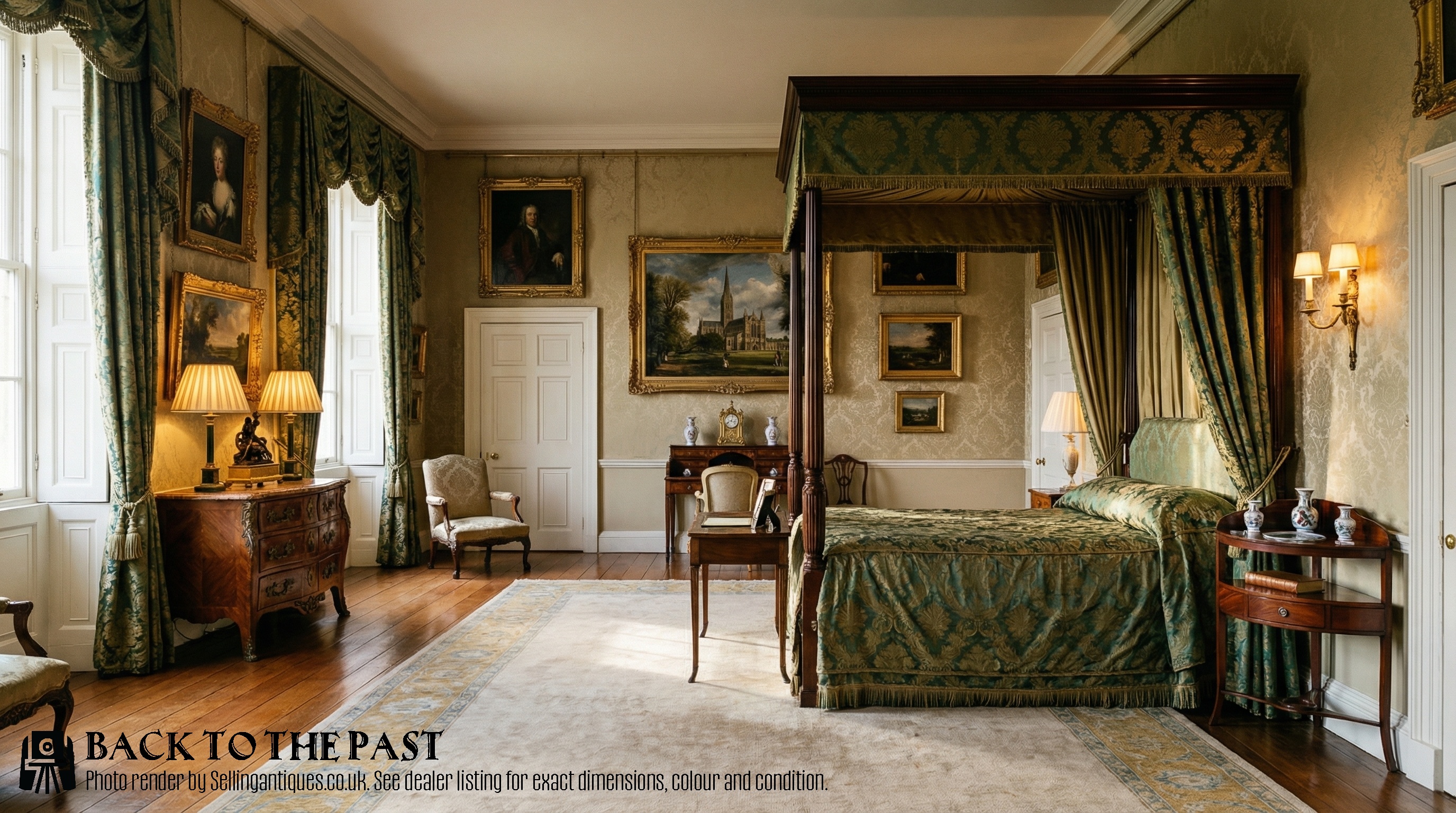
Makers produced these stands for domestic utility, and today they frequently find alternative purpose as plant tables or occasional lamp stands in modern interiors.
Materials and Construction
Cabinet makers utilised solid mahogany and pine as the structural base for a georgian corner washstand, often applying decorative veneers such as flame mahogany to visible surfaces. Inlay work in boxwood and contrasting satinwood provided linear detail along edges and drawer fronts.
Brass fittings, including handles and small support brackets, appeared alongside painted finishes and ceramic basins. Joinery techniques accommodated the triangular footprint required to fit flush against intersecting walls.
Georgian Corner Washstand Retail Price Guide 2026
Typical asking prices for georgian corner washstand among the pieces listed under this phrase on Sellingantiques today, from the lower quarter to the upper quarter. They describe what is for sale here now, not the wider market.
Some clever surviving examples feature hidden folding tops designed to conceal washing water from polite company.
Quality and Distinction
The distinction between standard and superior pieces rests on the choice of timber figure, such as richly grained flame mahogany, and the precision of boxwood inlay. Finer examples retain original painted surfaces, integrated cabinet doors, and specialised folding mechanisms.
Construction integrity in the tiers and legs dictates the durability of the stand, while makers' stamps, such as those from Lancaster workshops, elevate the standing of specific pieces above unmarked vernacular items.
Gillows Lancaster
The Georgian Corner Washstand Glossary
- Bow front
- A convex curved front facade that projects outward, commonly seen on refined corner cabinets and washstands of the period.
- Tiered corner stand
- A piece constructed with multiple open shelves arranged vertically in steps, designed to hold washing accessories.
- Satinwood
- A pale, lustrous timber utilised for decorative veneers and contrasting stringing lines on high-status furniture.
- Boxwood inlay
- Narrow strips of pale hardwood inserted into recesses in darker woods to create geometric borders and decorative motifs.
- Pot cupboard
- A small enclosed cabinet integrated into the lower section of a washstand, originally intended for a chamber pot.
Georgian Corner Washstand: Frequently Asked Questions
What was a georgian corner washstand used for?
These stands provided a dedicated surface for washing the face and hands in bedrooms before plumbed bathrooms existed. The top tier held a ceramic basin and jug, while lower shelves accommodated soap and water containers.
Over time, many of these practical items transitioned into decorative furniture. Today they are frequently utilised in hallways and living spaces as lamp tables or plant stands.
How do I identify a georgian corner washstand?
Look for the characteristic triangular footprint designed to tuck into room corners. They often feature multiple tiers, a cutout aperture on the top shelf for a basin, and occasionally small drawer sections.
Materials typically include mahogany or pine, sometimes with boxwood stringing or painted surfaces. Dates generally span from the late eighteenth century through the Regency period.
Will a modern basin fit inside the top ring?
Period washstands were built for much smaller, antique ceramic bowls rather than modern sanitaryware. Attempting to fit a contemporary basin usually disrupts the historic structure.
Buyers preferring to display pottery generally source period bowls separately to match the aperture diameter. Many owners simply place decorative items or plants on top without inserting a bowl.
Are these stands stable on uneven floors?
Their three-legged or three-sided wall-hugging design inherently provides good contact points against two intersecting walls. However, antique timber can be sensitive to modern floor slopes.
Careful placement ensures the stand rests securely without placing undue strain on the structural joints. Small adjustments to the feet may be necessary on older floorboards.