



Antique Bathroom Vanity
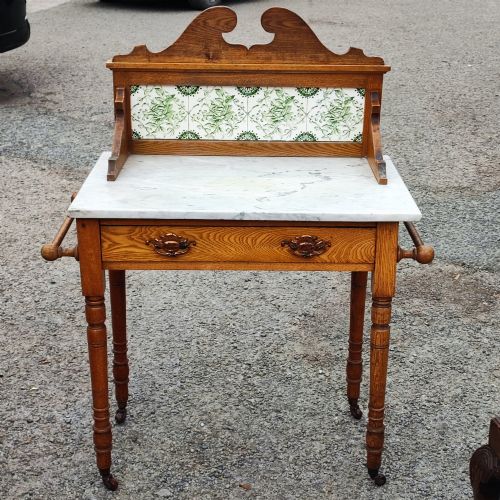
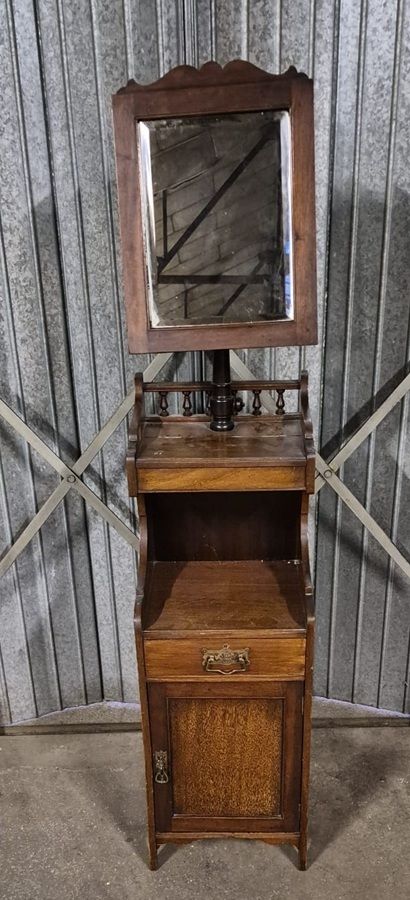
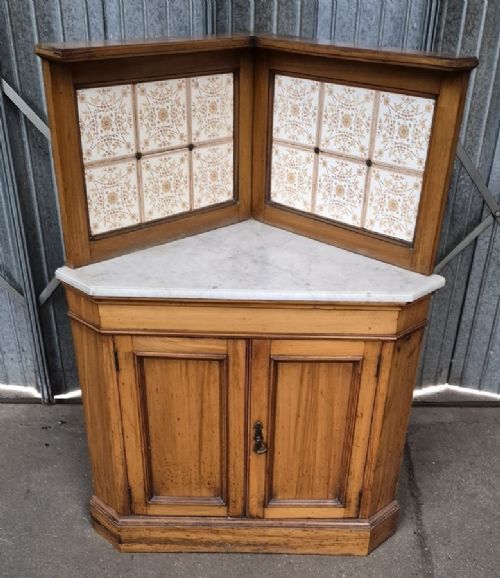
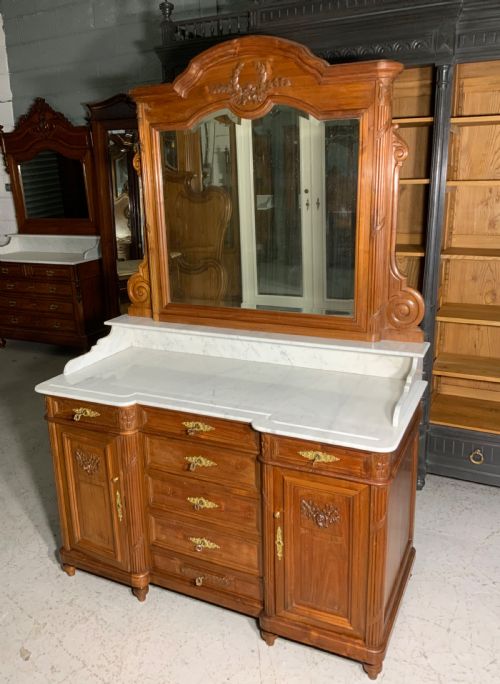
These pieces sold as an antique bathroom vanity are sturdy Victorian and Edwardian washstands and dressing mirrors, offering period character to modern spaces.
Antique Bathroom Vanity
When you search for an antique bathroom vanity, you encounter functional washstands and dressing mirrors dating from the Victorian and Edwardian eras. These pieces bridge historical domestic utility and contemporary interior design.
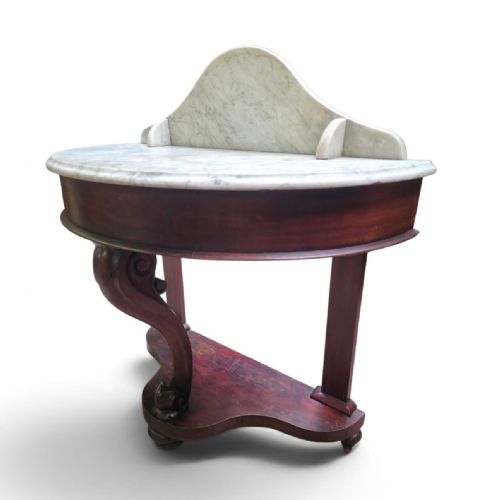
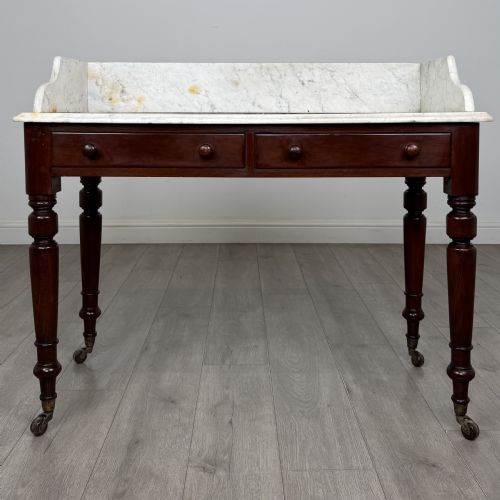
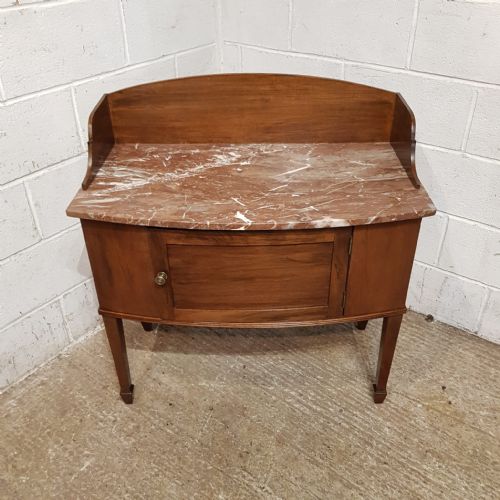
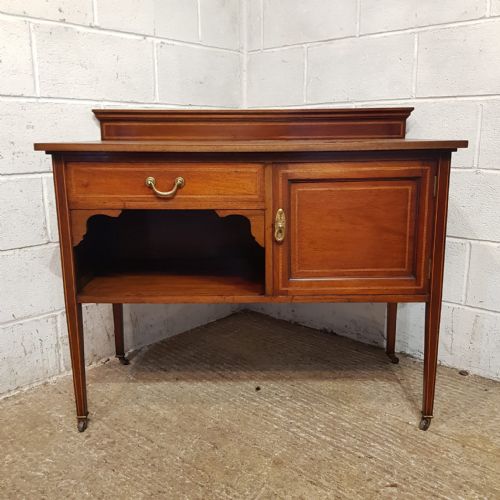
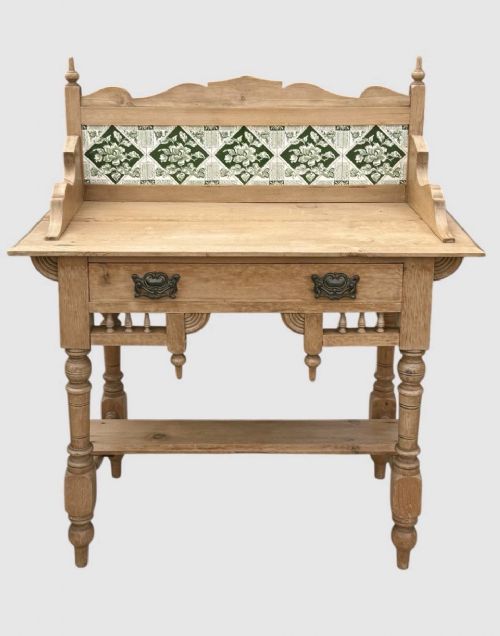
The washstands appear most frequently on this page, taking forms such as bow fronted designs, satinwood inlaid pieces, and aesthetic movement examples. Walnut, mahogany, and satinbirch provide the wooden framework for these functional items.
Earlier pieces in the archive include Georgian dressing vanities and swing cosmetic mirrors featuring oak lined drawers and wall hanging formats. These mirror forms bring intimate scale and polished glass to smaller washing spaces.
How they were made
Cabinetmakers constructed these frames using dense hardwoods like mahogany, walnut, and satinwood, occasionally applying intricate inlay work for visual depth. Marble tops were fitted to washstands to provide a durable, water resistant surface for daily ablutions.
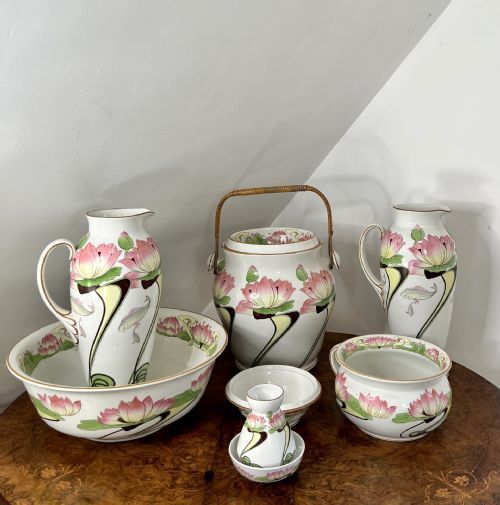
Ceramic tiles were integrated into washstands as splashbacks, glazed to protect surrounding timber from water damage. Brass fittings, metal hardware, and glass elements completed the construction of these utilitarian household fixtures.
Antique Bathroom Vanity Retail Price Guide 2026
Typical asking prices for bathroom vanity among the pieces listed under this phrase on Sellingantiques today, from the lower quarter to the upper quarter. They describe what is for sale here now, not the wider market.
Listings span the Victorian and Edwardian periods, utilising marble, brass, mahogany, ceramic tiles, glass, walnut, metal, and satinwood.
What varies in quality
Quality reveals itself in the selection of timber and the precision of cabinet joinery, separating standard utility pieces from high workshop production. Figure in the walnut and the crispness of satinwood inlay indicate the maker's original investment in materials.
The weight and veining of the marble top, alongside the integration of ceramic tiles and brass hardware, distinguish finer examples. Maker attribution, such as work originating from established firms, elevates a piece beyond basic domestic joinery.
Gillows
The Antique Bathroom Vanity Glossary
- Washstand
- A piece of bedroom furniture designed to hold a basin, jug, and washing accessories before plumbed bathrooms became standard. They form the core of current listings.
- Satinwood
- A luminous, yellowish hardwood utilised for fine cabinetmaking and decorative inlay work during the Victorian period. It catches light effectively in smaller rooms.
- Aesthetic Movement
- A late nineteenth century design style emphasising visual beauty over narrative content, often featuring simplified forms and Japanese influences. Pieces from this movement display distinct artistic ambition.
- Bow fronted
- A convex curved furniture front that softens room angles and demands advanced woodworking skill. This curved shape appears on Victorian examples.
Antique Bathroom Vanity: Frequently Asked Questions
How do I use an antique washstand today?
These pieces adapt readily into contemporary spaces as washbasin stands or hallway storage.
Their marble tops and timber frames withstand modern daily use while adding historical character.
Were these originally made for bathrooms?
Victorian and Edwardian homes generally utilised washstands in bedrooms rather than dedicated bathrooms.
Running water was absent, so basins and jugs sat upon the marble surfaces.
How do I distinguish Victorian from Edwardian pieces?
Victorian examples often employ heavier timbers, rich satinwood inlay, and aesthetic movement styling.
Edwardian pieces tend toward lighter constructions and simpler domestic forms.
Can I fit modern plumbing to a washstand?
Many buyers adapt the marble top and wooden framework to house modern undermount basins.
Plumbers can route pipes through the open underframe with minor internal adjustments.