


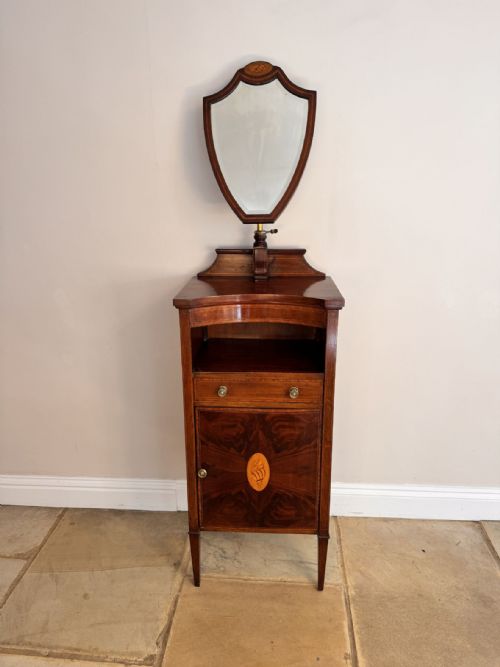
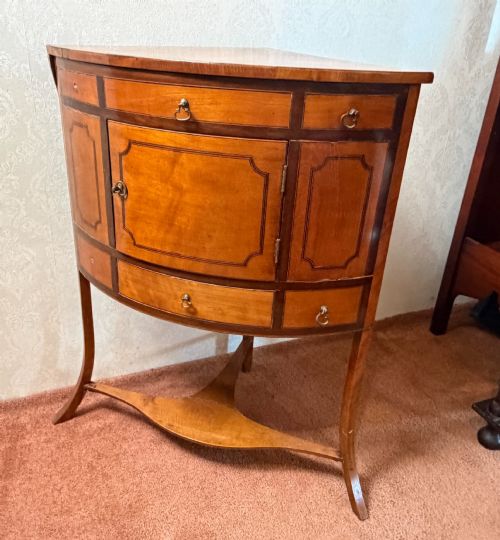


Satinwood Washstand
These satinwood washstand examples bring bright figured timbers and useful bedroom surfaces into period rooms.
Satinwood Washstand
A satinwood washstand is a piece of antique bedroom furniture designed to hold washing basins, ewers, and shaving equipment. Buyers searching this phrase look for timber surfaces that show a characteristic golden sheen and subtle grain movement.
The versions most commonly met on this page range from compact Georgian folding corners to substantial Victorian and Edwardian marble-topped cabinets. Many examples double as dressing tables or incorporate mirrors and tiled backs.
Origins span the eighteenth, nineteenth, and early twentieth centuries, encompassing Georgian, Victorian, and Edwardian aesthetic periods. Pieces often display inlaid decoration or contrasting mahogany and tulipwood crossbanding.
How they were made
Cabinetmakers built these pieces using solid timbers and veneers over secondary woods, selecting satinwood for its luminous yellow-gold decorative qualities. Workshops frequently combined this timber with contrasting mahogany, satinbirch, or tulipwood for banding and inlay.
Later Victorian and Edwardian examples integrated heavy white or Carrara marble tops and mirrored backs to withstand daily washing routines. Brass hardware, such as handles and castors, completed the construction of both corner and standing forms.
Satinwood Washstand Retail Price Guide 2026
Typical asking prices for satinwood washstand among the pieces listed under this phrase on Sellingantiques today, from the lower quarter to the upper quarter. They describe what is for sale here now, not the wider market.
Some gentlemen's washstands include clever concealed compartments specifically sized to keep shaving mugs steady during a morning carriage ride.
What varies in quality
Quality rests primarily on the choice of timber figure, the crispness of any string inlay, and the integration of secondary woods. Superior examples display dense, shimmering grain across the main panels without heavy restoration.
The inclusion of original marble tops, matching tiles, and intact brass fixtures elevates a piece. Structural integrity in folding mechanisms and corner joints further distinguishes finer cabinet work from utilitarian bedroom items.
Gillows
The Satinwood Washstand Glossary
- Satinwood
- A hard, durable timber known for its golden colour and reflective, satin-like sheen. Cabinetmakers valued it for decorative veneers and inlay work.
- Crossbanding
- A strip of veneer applied across the grain of the main surface around the border of a top or drawer. This technique frames the wood figure effectively.
- Carrara marble
- A type of white or blue-grey marble quarried in Italy, frequently used for washstand tops because it resists water damage. It provides a cool, impermeable surface for basins.
- Satinbirch
- A close alternative to satinwood with a similarly pale, rippled grain pattern. It appears often in nineteenth-century bedroom furniture.
- Stringing
- A thin, linear inlay of contrasting wood used to outline drawers, tabletops, and panels. It creates a refined border on formal cabinet pieces.
Satinwood Washstand: Frequently Asked Questions
What was a washstand used for?
These pieces served as the primary washing station in bedrooms before plumbed bathrooms became common. They held basins, water jugs, soap dishes, and sometimes shaving mirrors.
Today, they function as versatile hallway tables, bathroom sink surrounds, or bedroom chests where a durable top surface is useful.
How do I identify a Georgian washstand?
Georgian examples often feature folding tops designed to conceal the basin aperture when not in use. They tend to be lighter in scale, sometimes built for corners to save space.
Cabinetmakers of this period relied heavily on mahogany framing alongside satinwood panels and delicate string inlay.
Did Victorian washstands have marble?
Many Victorian and Edwardian examples incorporate heavy marble slabs to protect the wood from spilled water during washing. These tops are usually white or grey Carrara marble.
Alongside the stone, these later pieces frequently feature mirrored or tiled splashbacks to protect bedroom walls.
How do I care for satinwood?
Satinwood benefits from minimal moisture and regular dusting with a soft, dry cloth. Avoid placing wet items directly on the polished timber surface.
Applying a traditional beeswax polish occasionally helps nourish the grain and maintain the natural golden lustre of the wood.