



Victorian Wash Stand
A victorian wash stand brings sturdy utility and polished timber into the bedroom, offering stone tops and cabinet space built for daily routines.
Victorian Wash Stand
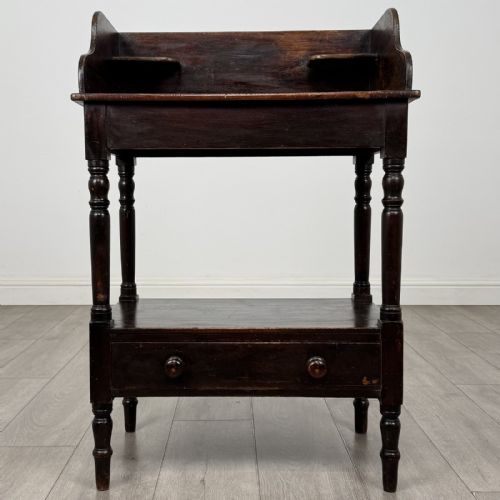
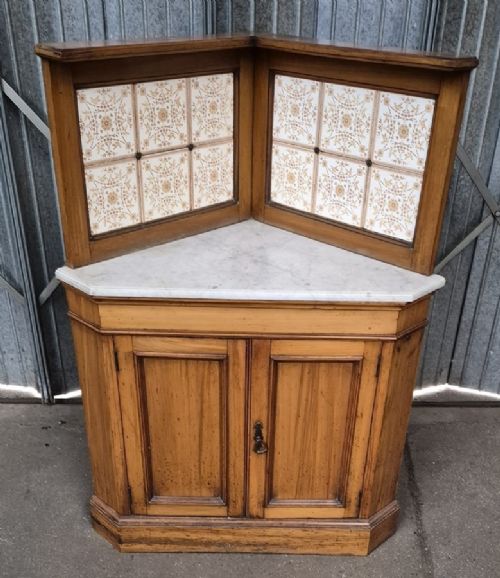
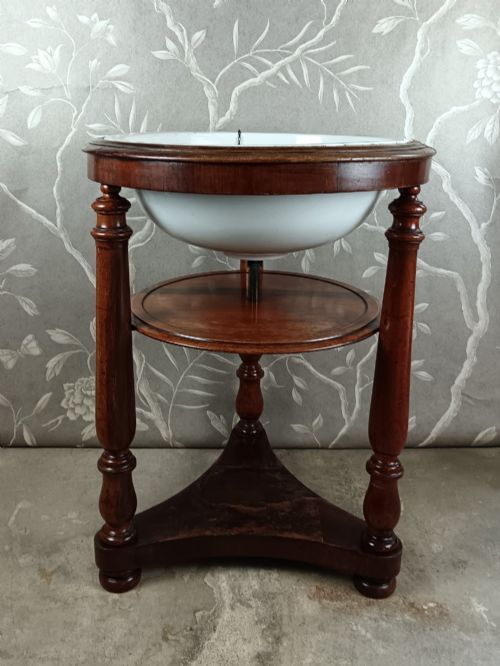
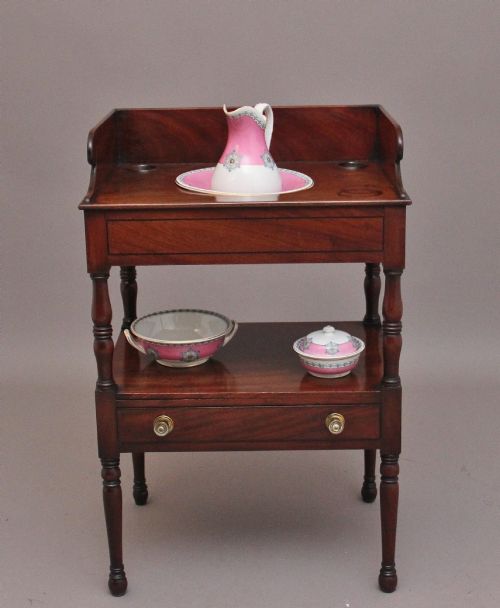
A victorian wash stand is a bedroom furnishing designed to hold basins, ewers, and grooming equipment before plumbed bathrooms became standard. The pieces gathered here range from corner formats and round campaign basins to substantial marble-topped cabinets and painted pine side tables.
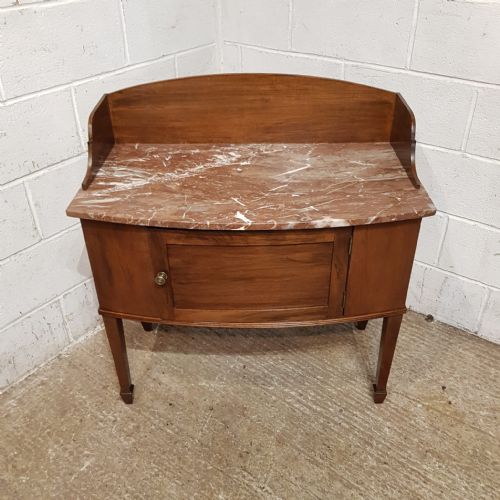
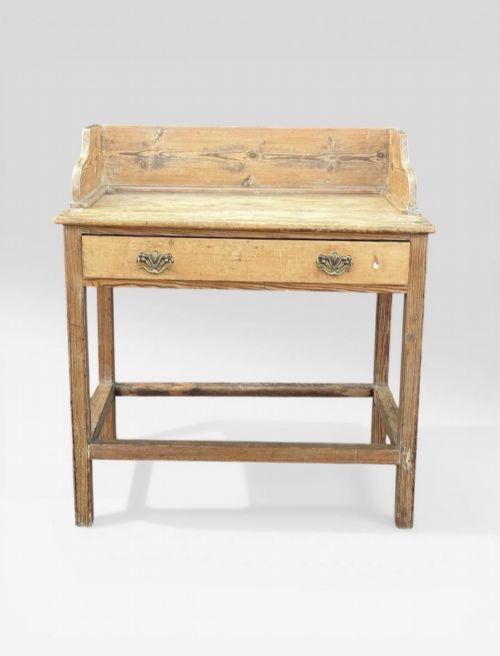
Buyers meet sturdy pine examples meant for cottage bedrooms alongside finely figured walnut and mahogany pieces equipped with rouge marble tops and tiled splashbacks. Variants include bentwood shaving stands, campaign folding frames, and combinations featuring integrated cupboards and drawers.
The material palette spans native timbers and imported hardwoods, paired frequently with stone surfaces designed to resist water splashes during morning ablutions.
How They Were Made
Cabinetmakers utilised dense timbers such as mahogany, walnut, satin birch, and ash to build the structural frames, often applying marquetry inlay or retaining simple painted finishes on pine. Turning, dovetailing, and panel construction defined the cabinet work for pieces housing cupboards and drawers.
Heavy marble slabs in white, grey, or rouge varieties were fitted to upper surfaces to provide a durable, waterproof counter. Ceramic tiles were frequently incorporated into the rear splashbacks, secured into wooden frames to protect walls from water during use.
Victorian Wash Stand Retail Price Guide 2026
Typical asking prices for victorian wash stand among the pieces listed under this phrase on Sellingantiques today, from the lower quarter to the upper quarter. They describe what is for sale here now, not the wider market.
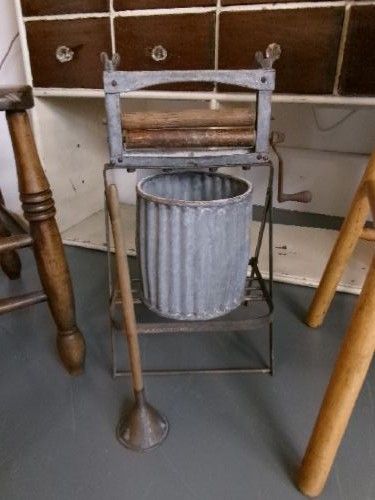
Travellers' sample mangles appear alongside full-sized bedroom stands.
What Varies in Quality
The grade of timber and stone dictates the standing of a piece, moving from utilitarian painted pine built for modest chambers to figured walnut and ornate marquetry paired with heavy rouge marble. Superior examples incorporate fitted cabinetry, matched tiles, and integrated brass or ceramic hardware.
Construction precision separates standard bedroom furniture from workshop output intended for high-end domestic interiors or maritime and campaign use, where folding mechanisms and compact engineering were paramount.
Walker & Sons·Maple & Co
The Victorian Wash Stand Glossary
- Marble top
- A polished stone slab fitted to the upper surface of a wash stand to provide a water-resistant counter for jugs and basins. This feature protects the underlying timber from moisture.
- Splashback
- A vertical panel rising behind the counter, frequently composed of marble or decorative ceramic tiles. It shields the bedroom wall from water splashes during washing.
- Campaign
- Furniture designed to dismantle or fold easily for travel, often constructed with brass corners and carrying handles. These pieces served officers and travellers in the nineteenth century.
- Marquetry
- Decorative woodwork where thin pieces of various coloured veneers are fitted into a wooden panel to form geometric or floral patterns. It appears on premium cabinet furniture.
- Ewers and basins
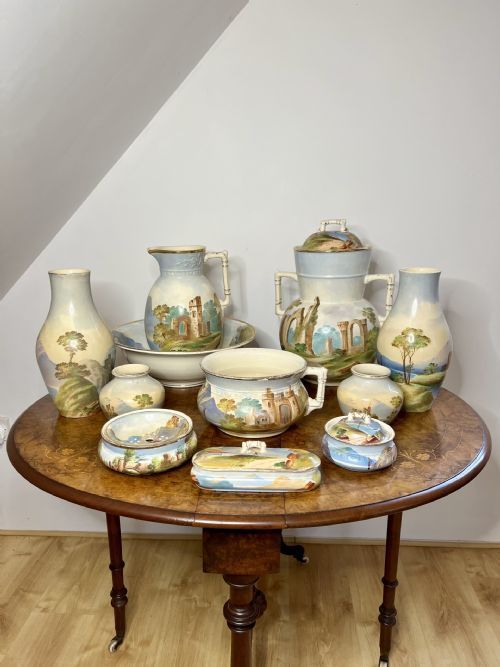
- The ceramic jug and bowl sets placed upon the stand prior to the installation of running water in homes. They formed the central equipment for personal hygiene.
Victorian Wash Stand: Frequently Asked Questions
How were victorian wash stands used?
These pieces served as personal washing stations in bedrooms before running water became common. A ceramic basin and jug sat on the upper surface for morning routines.
Enclosed cupboards and lower shelves held linens, chamber pots, and washing accessories out of sight.
What woods were used for wash stands?
Cabinetmakers utilised sturdy hardwoods including mahogany, walnut, satin birch, and ash for finer chamber furniture. Pine was standard for simpler, painted pieces intended for servants quarters or country homes.
Teak also appeared in specialised travel or maritime contexts where moisture resistance was essential.
How do I tell periods apart?
Early examples often rely on solid mahogany and simpler turned legs without stone tops. Later nineteenth-century versions frequently incorporate heavy marble counters, tiled splashbacks, and aesthetic movement decoration.
Edwardian iterations lean towards lighter satin birch or bentwood formats, reflecting changing interior tastes at the turn of the century.
Can I use them as modern bathroom vanities?
Many buyers adapt these wooden stands to hold modern vessel sinks and plumbing. The stone tops provide a durable surface suited to contemporary bathrooms.
Careful modification of internal shelving is typically required to accommodate modern water pipes and waste traps.