

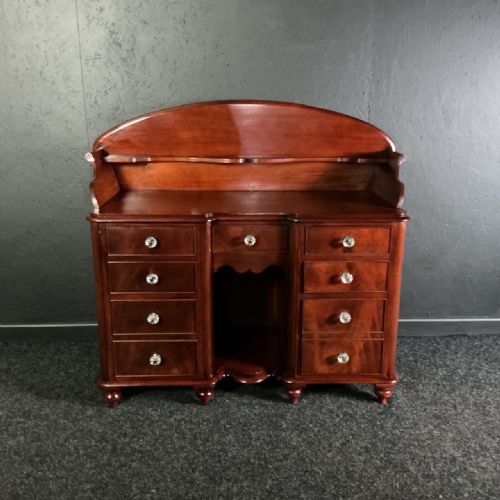
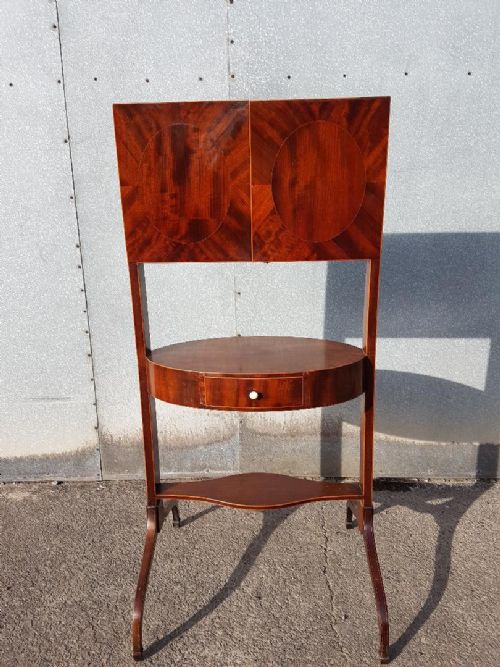


Georgian Style Washstand
A georgian style washstand brings compact utility and cabinet-maker timber into a bedroom or dressing room.
Georgian Style Washstand
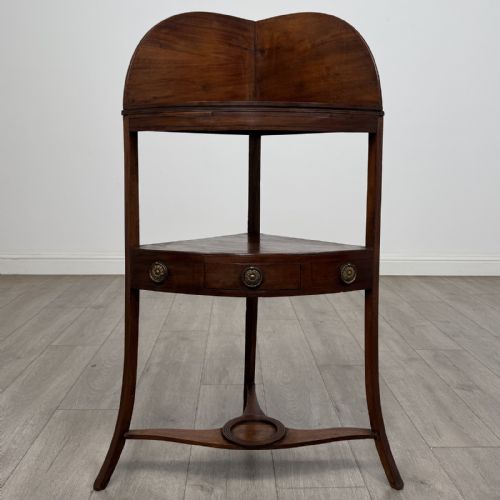
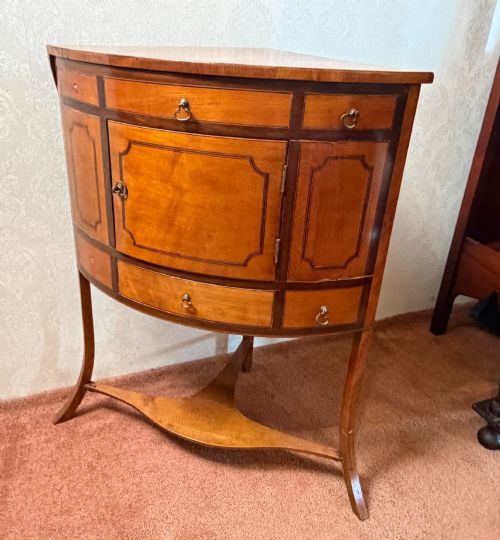
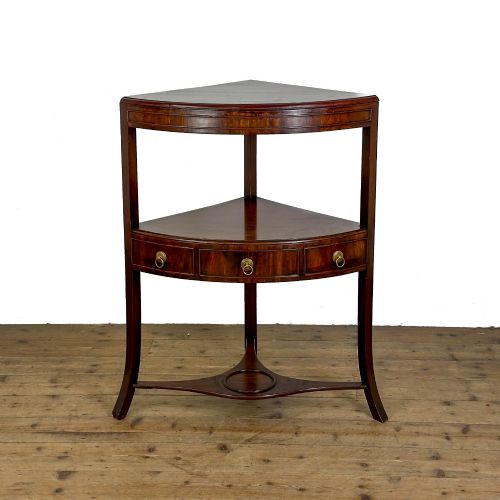
A georgian style washstand is a purposeful piece of furniture designed for personal ablutions, taking the form of a corner washstand, a basin stand, or a washstand cabinet. These pieces bridge the 18th century and the 19th century, drawing on Georgian, Regency, and early Victorian periods.
Buyers browsing this selection will most frequently encounter mahogany corner washstands and dressing tables constructed from timber. Such items often feature satinwood, boxwood inlay, and sometimes marble tops, reflecting the functional demands of domestic dressing rooms.
The objects range from folding corner stands to bowl stands and dressing tables originating across the 18th and 19th centuries. Each variation serves the specific spatial arrangements of period interiors, whether tucked into a corner or set against a wall.
How they were made
Makers utilised solid mahogany and satinwood as the primary structural timbers, often embellishing surfaces with boxwood inlay for visual contrast. Cabinet-makers shaped these woods to fit tight corners or freestanding layouts.
Additional materials such as brass fittings, glass, and marble inserts provided durability and water resistance for daily use. Ironstone and ceramic components, like soap dishes, completed the functional hardware of the basin stands.
Georgian Style Washstand Retail Price Guide 2026
Typical asking prices for georgian style washstand among the pieces listed under this phrase on Sellingantiques today, from the lower quarter to the upper quarter. They describe what is for sale here now, not the wider market.
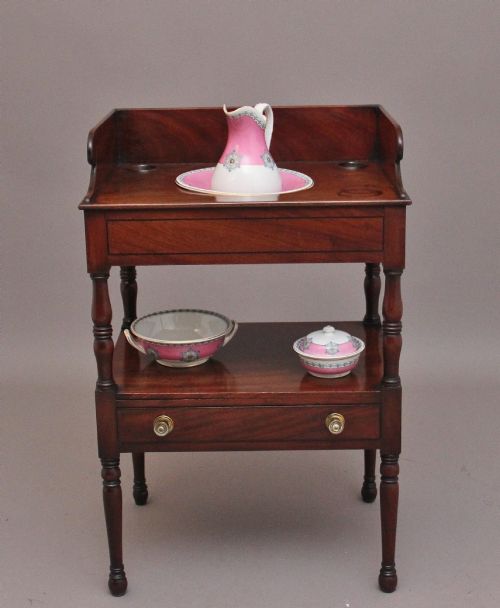
A Mason's ironstone soap dish brings a dash of Japan basket pattern to the washstand ensemble.
What varies in quality
The refinement of the timber selection and the precision of the boxwood inlay separate standard utility pieces from finer examples. Superior specimens display careful matching of grain and disciplined execution of folding mechanisms or triplate mirrors.
The inclusion of original secondary materials, such as marble tops or specific brass hardware, elevates the integrity of a piece. Finer items maintain structural cohesion across their complex tiered or cabinet forms.
The Georgian Style Washstand Glossary
- Corner washstand
- A triangular piece of furniture designed to fit snugly into the corner of a room to save floor space. These typically feature tiers for a basin, jug, and soap.
- Basin stand
- A freestanding circular or square stand made to hold a wash bowl. They often incorporate a lower shelf with a small drawer for washing accessories.
- Satinwood
- A durable, light-coloured timber imported from tropical regions, valued for its natural sheen. It was frequently used for veneers and inlay work on fine furniture.
- Boxwood inlay
- Contrasting light wood inserted into recesses in a darker timber surface to create decorative borders and patterns. This technique highlights the skill of the cabinet-maker.
Georgian Style Washstand: Frequently Asked Questions
How were washstands used?
Washstands provided a dedicated station for morning ablutions in bedrooms and dressing rooms before plumbed bathrooms became common. They held basins, pitchers, and soap dishes close at hand.
Cabinet versions often concealed storage space behind doors, while open stands prioritized quick access to water containers and washing accessories.
What woods are used on these washstands?
Mahogany serves as the primary structural timber for the majority of these pieces, providing a strong and stable framework. Satinwood and boxwood inlay frequently appear for decorative contrast.
Other materials such as marble and ironstone were incorporated into tops and soap dishes to handle moisture during daily use.
How do I date an antique washstand?
Dating relies on observing construction methods, timber choices, and stylistic traits associated with Georgian, Regency, or Victorian periods. Specific forms like triplate mirrors or folding frames often point to exact eras.
Examining secondary woods and hardware helps confirm whether a piece belongs to the 18th century or later 19th-century revivals.