

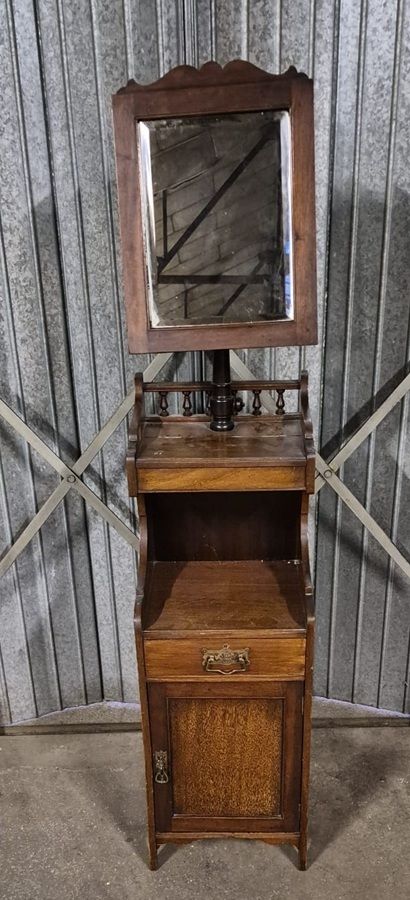
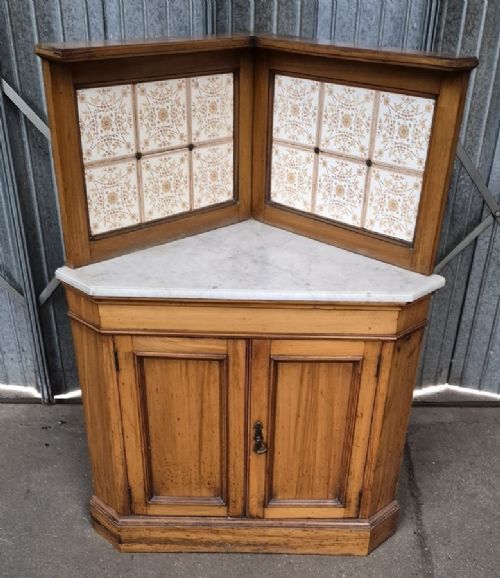
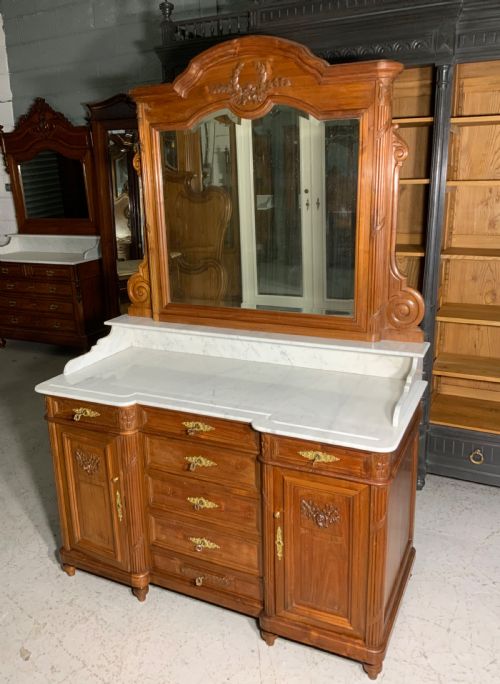
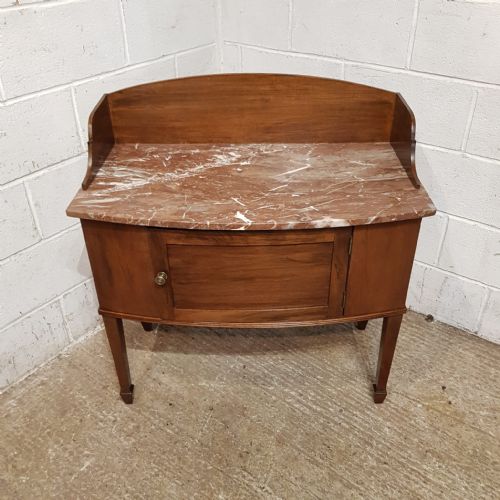
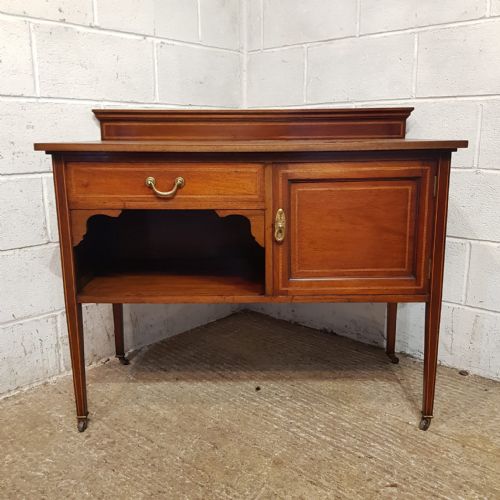


Antique Bathroom Vanity Cabinet
These antique bathroom vanity cabinet pieces are sturdy period washstands repurposed for modern homes, offering durable marble surfaces and rich timbers.
Antique Bathroom Vanity Cabinet
An antique bathroom vanity cabinet is fundamentally a period washstand repurposed for modern homes. When buyers search for this phrase, they encounter robust wooden washstands originating predominantly from the Victorian and Edwardian eras, alongside pieces dated around nineteen-ten and the nineteenth century.
The objects listed on this page appear in various forms including corner units, bow-fronted designs, and larger bedroom furniture variants. Common regional and stylistic expressions include Arts and Crafts, Aesthetic Movement, Sheraton Revival, French Rococo Revival, and nineteenth-century continental interpretations.
Makers and workshops range from notable firms like Gillows to established houses such as Walker and Sons. Timber choices frequently feature mahogany, walnut, satinbirch, satinwood, oak, and pine, often paired with functional storage and preparation surfaces.
How they were made
Construction relies heavily on traditional cabinet timbers such as mahogany, walnut, oak, satinbirch, and pine, selected for structural stability in daily domestic use. Artisans incorporated decorative inlays of satinwood and shaped elements like bow-fronted facades to elevate the visual weight of the furniture.
Marble tops serve as the primary functional surface, paired with ceramic components and glass elements where basins or splashbacks were integrated. Brass and other metals provide durable hardware for handles, towel rails, and cabinet fittings.
Surface detailing spans the geometric simplicity of the Arts and Crafts movement, the stylized motifs of the Aesthetic style, and the elaborate curves characteristic of French Rococo Revival and Sheraton Revival traditions.
Antique Bathroom Vanity Cabinet Retail Price Guide 2026
Typical asking prices for bathroom vanity cabinet among the pieces listed under this phrase on Sellingantiques today, from the lower quarter to the upper quarter. They describe what is for sale here now, not the wider market.
Listings feature Victorian and Edwardian periods alongside pieces dated to nineteen-ten and the nineteenth century, constructed from mahogany, walnut, oak, pine, and satinbirch.
What varies in quality
The caliber of a washstand rests on the selection and figuring of the timber, whether figured mahogany, rich walnut, or patterned satinbirch. Superior examples demonstrate precise cabinetmaking joints and restrained, well-executed inlays such as satinwood detailing.
The quality of the integrated marble top significantly dictates the standing of a piece, with thicker, richly veined slabs representing higher craftsmanship. Furthermore, the presence of original hardware, integrated tiles, and intact ceramic or glass elements preserves the integrity of the design.
Walker and Sons·Gillows
The Antique Bathroom Vanity Cabinet Glossary
- Washstand
- A piece of bedroom furniture designed to hold a basin, jug, and washing accessories before plumbed bathrooms became standard. These serve as the foundational forms for antique bathroom vanity cabinets.
- Marble top
- A stone slab fitted to the upper surface of a washstand to provide a water-resistant counter. This material endures as a practical attribute for modern bathroom conversion.
- Aesthetic Movement
- A late nineteenth-century design style emphasising visual beauty over narrative content. Pieces in this style often feature clean lines and disciplined ornamentation.
- Arts and Crafts
- A design movement valuing traditional craftsmanship, simple forms, and visible construction methods. Furniture from this tradition utilises honest timber construction without excessive ornamentation.
- Bow front
- A convex curved cabinet front that projects outward. This curved profile adds visual depth and refinement to the carcass of the piece.
Antique Bathroom Vanity Cabinet: Frequently Asked Questions
Can I use an antique washstand as a modern sink unit?
Yes, many buyers adapt these pieces by mounting a basin on the marble top and routing plumbing through the wooden carcass.
The sturdy construction of mahogany, walnut, and oak washstands supports the weight of modern stone basins and brass fixtures quite effectively.
How do I protect the wooden cabinet from bathroom moisture?
Applying a durable, water-resistant finish or wax helps safeguard the timber against splashes and high humidity. Ensuring adequate bathroom ventilation preserves both the wooden frame and the marble top over years of daily use.
Regularly wiping down surfaces after use prevents moisture from settling into vulnerable joints or unsealed areas.
How do I tell Victorian washstands from Edwardian ones?
Victorian pieces frequently display heavier proportions, darker timbers like walnut and mahogany, and decorative influences from the Aesthetic or Rococo Revival movements. They often incorporate rich grain patterns and elaborate carved details.
Edwardian examples tend to exhibit lighter construction, cleaner lines, and brighter timbers such as satinbirch or inlaid mahogany, reflecting a shift toward simpler domestic interiors.
What is the purpose of the marble top on these cabinets?
The marble slab provided a waterproof, hygienic surface for washing pitchers, basins, and personal grooming items in nineteenth-century bedrooms. It protected the underlying wooden structure from spilled water.
Today, this historical feature makes the furniture exceptionally well-suited for bathroom use without requiring modification to the main counter surface.