





Tiled Back Vanity
These tiled back vanity pieces are practical washstands bringing period charm to modern spaces, offering decorative ceramic tiles and durable marble surfaces.
Tiled Back Vanity
A tiled back vanity, commonly catalogued as a washstand or wash stand in period inventories, serves as a traditional bedroom or bathroom washing station. These pieces date primarily from the Victorian and Edwardian eras, spanning the late nineteenth century through to nineteen hundred. You will frequently encounter examples from the Aesthetic Movement, Arts and Crafts style, and Art Nouveau design periods.
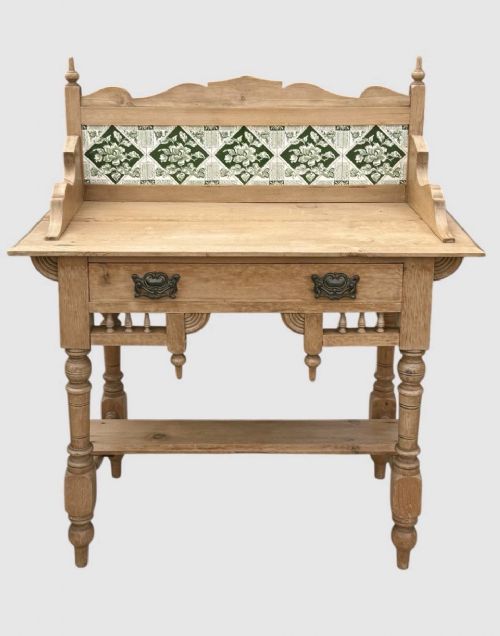
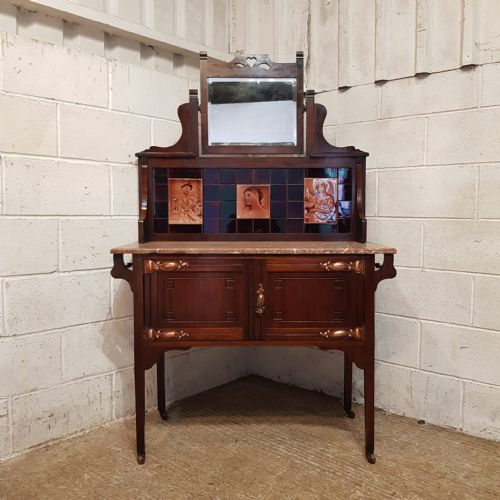
The most common formats on this page combine timber frames in mahogany, walnut, pine, or painted finishes with practical washing surfaces. Many feature a protective tile gallery back and a durable marble top designed to handle water splashes during daily use. Some examples incorporate lower storage shelves or twin drawers for bedroom accessories.
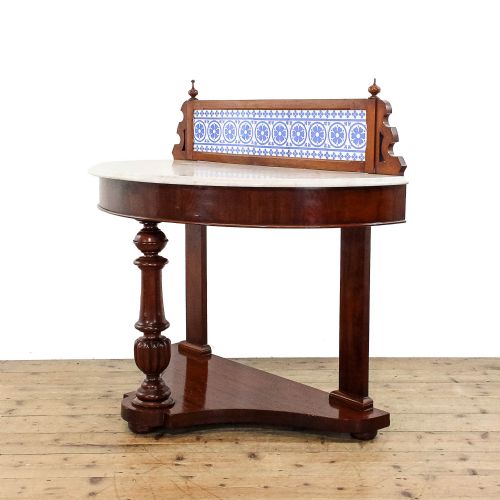
Surviving pieces range from rustic painted pine units to large Edwardian walnut furniture and polished mahogany Duchess washstands. Buyers searching for a tiled back vanity typically find pieces that bridge functional bedroom furniture and decorative Victorian craftsmanship.
How they were made
Cabinetmakers constructed these frames using solid hardwoods like mahogany and walnut alongside softer timbers such as pine. Joinery methods relied on traditional techniques suited to heavy daily use in nineteenth-century bedrooms and dressing rooms.
Upper sections incorporate inset ceramic tiles forming a protective gallery back, paired with thick marble slabs fitted to the top surface. Brass hardware, including handles and towel rails, frequently completes the construction alongside mirrored or glass elements on related dressing tables.
Tiled Back Vanity Retail Price Guide 2026
Typical asking prices for tiled back vanity among the pieces listed under this phrase on Sellingantiques today, from the lower quarter to the upper quarter. They describe what is for sale here now, not the wider market.
Many a Victorian morning started with a frosty splash against these very tiles.
What varies in quality
The choice of primary timber and secondary wood dictates the underlying quality of the frame, with dense mahogany and walnut sitting above simpler pine constructions. Superior examples display refined proportions and cohesive stylistic details associated with the Arts and Crafts or Aesthetic movements.
The execution and artistic merit of the ceramic tiles set the finest pieces apart from standard utility furniture. Quality is further defined by the thickness and figuring of the marble top and the integrity of the integrated tile gallery back.
The Tiled Back Vanity Glossary
- Tile gallery back
- A raised vertical section at the rear of the washstand lined with decorative ceramic tiles to protect the wall from splashes. This feature defines the aesthetic identity of a tiled back vanity.
- Marble top
- A polished stone slab fitted to the upper surface of the washstand to provide a waterproof and durable counter. It is frequently seen in white, grey, or veined varieties across Victorian and Edwardian pieces.
- Aesthetic Movement
- A late nineteenth-century design style focusing on visual beauty rather than narrative or moral function. Pieces in this style often feature stylized floral tiles and refined linear woodwork.
- Arts and Crafts
- A design philosophy championing traditional craftsmanship and honest construction methods. Furniture from this movement prioritises visible handwork and simple, robust forms.
- Washstand
- A traditional bedroom piece designed to hold a basin, jug, and washing accessories before modern plumbed bathrooms became standard. They form the primary category for tiled back vanity pieces.
Tiled Back Vanity: Frequently Asked Questions
What is a tiled back vanity?
A tiled back vanity is a nineteenth or early twentieth-century washstand featuring a decorative ceramic tile splashback and a waterproof top surface.
These pieces were originally used in bedrooms for morning ablutions before fitted plumbing arrived in homes, and they now serve as decorative console or bathroom units.
How do I date a washstand?
Dating relies on examining the timber species, construction joints, and stylistic markers such as Aesthetic Movement or Edwardian design motifs.
Victorian and Edwardian examples often feature specific hardware, tile painting techniques, and wood selections that align with distinct nineteenth-century periods.
Are the marble tops original?
The marble slabs fitted to these washstands are typically original to the piece, selected to provide a durable and waterproof surface for washing.
Inspect the fit against the timber frame and the matching wear patterns to understand the relationship between the stone and the base.
How do I care for marble?
Marble requires gentle cleaning with pH-neutral solutions to protect the polished stone surface from staining and acid etching.
Avoid abrasive cleaners and wipe up moisture promptly to preserve the natural finish of the washstand top.
Can I use these in modern bathrooms?
These washstands adapt well to modern interiors when used as vanity bases or hallway console tables with updated plumbing fixtures.
The original marble tops and tiled splashbacks provide practical water-resistant surfaces suited to contemporary utility.