


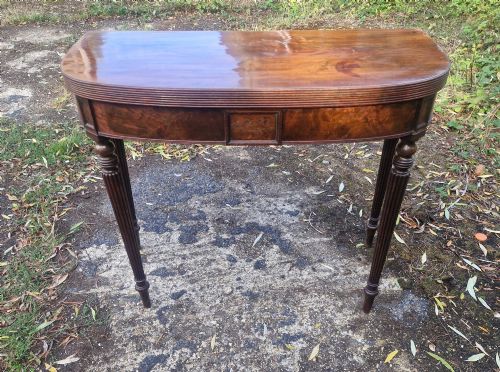
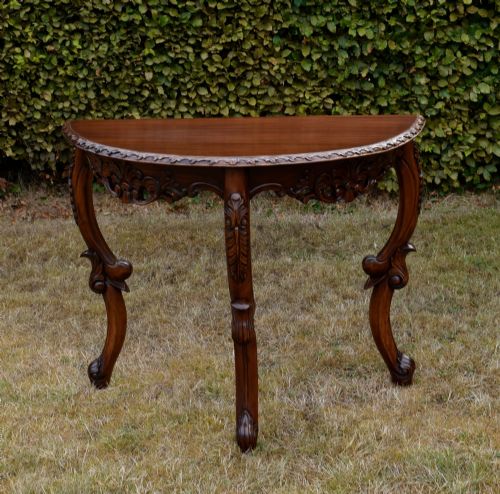
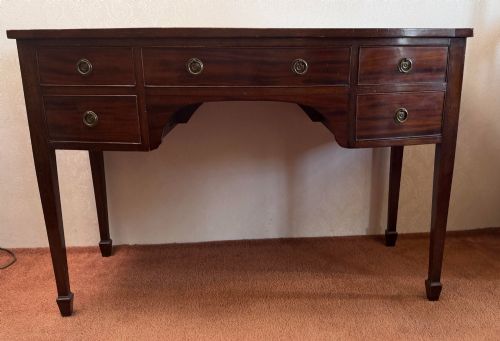

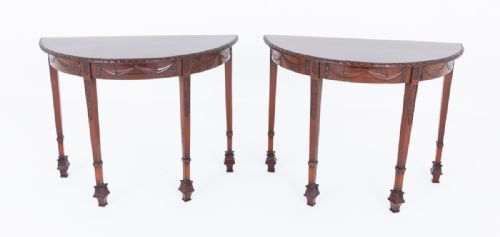


Regency Style Console Table
A regency style console table brings architectural proportion and elegant surface space into a room, offering refined classical lines.

What They Are
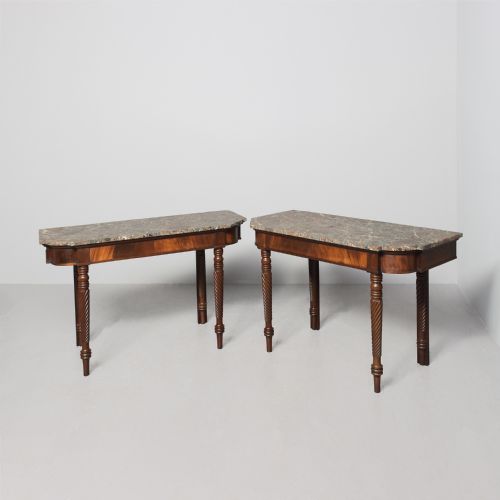
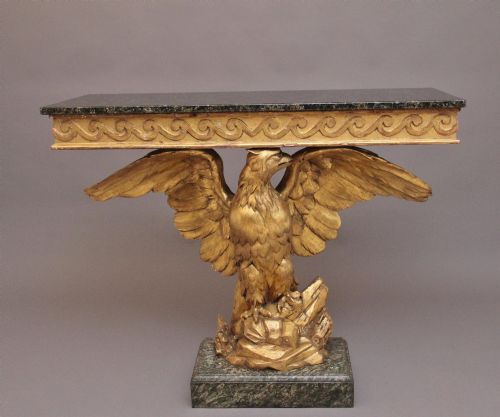
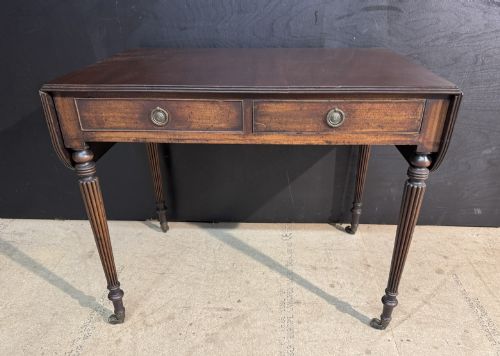
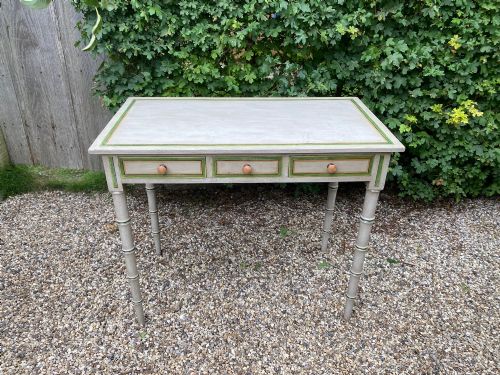
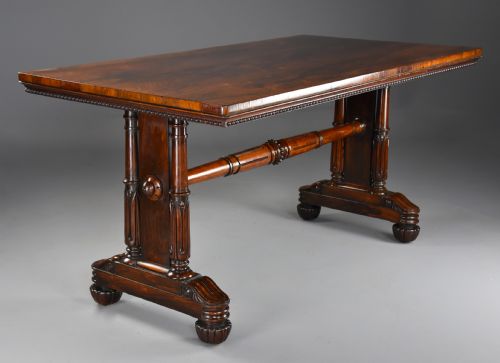
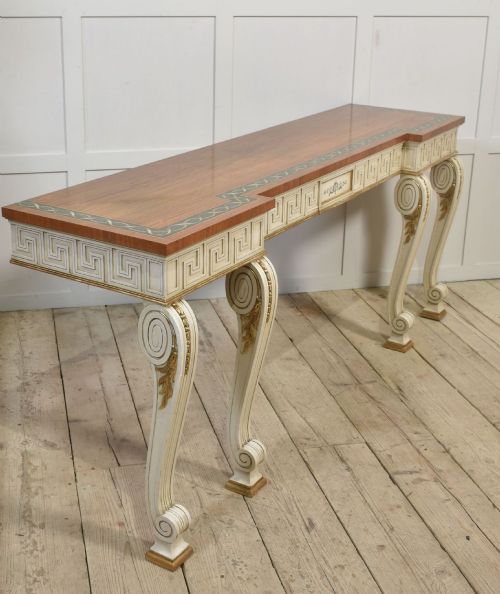
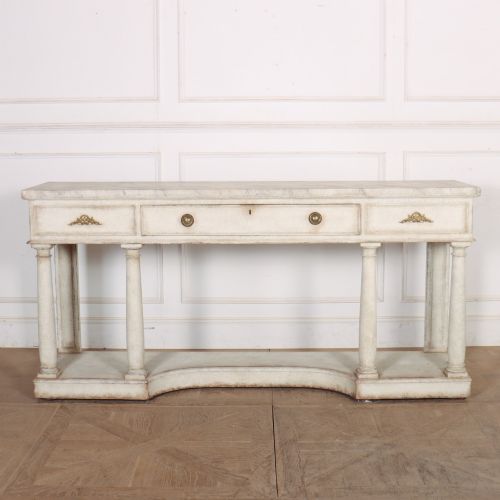
These tables vary in form between console tables, sofa tables, wall table brackets, and side or occasional tables with drawers. You will frequently encounter single pieces alongside matched pairs, rendered in English Regency and broader Regency styles.
The material palette recorded in our listings spans beech and timber alongside mahogany and brass elements. Whether finished in paint or showing the natural grain of mahogany, these tables reflect classical revival tastes across different decades.
How They Were Made
The construction of these pieces relies heavily on solid timber and structural woods such as beech and mahogany. Cabinetmakers shaped these materials into precise architectural silhouettes typical of the style.
Surface treatments vary between natural wood finishes and painted applications. Brass fittings often accent the timber framework, adding functional and decorative detail to the tables.
Some console tables come with wall brackets, ensuring they stay upright even if someone leans a bit too heavily while admiring the hall mirror.
What Varies in Quality
Quality in these console tables is defined by the selection of materials and the precision of the timber work. Superior examples demonstrate careful grain matching in the mahogany and finely executed painted finishes on beech frames.
The refinement of brass hardware and the crispness of classical detailing separate the finer pieces from simpler iterations. Structural integrity in the legs and brackets also determines the standing of a piece within the range.
The Regency Style Console Table Glossary
- Console table
- A table designed to be fixed against a wall, often supported by brackets or legs at the front. These tables provide display space without occupying deep floor areas.
- Sofa table
- A rectangular occasional table traditionally placed in front of or behind a sofa. They typically feature drop leaves and narrow proportions.
- Mahogany
- A durable, reddish-brown tropical hardwood favoured for fine cabinetmaking. Its stability makes it ideal for carving and polished surfaces.
- Beech
- A dense, pale hardwood commonly used for structural framing and painted furniture. It accepts paint finishes smoothly and holds fine detail well.
Frequently Asked Questions
Where should I place a console table?
These tables fit naturally in entrance halls, narrow corridors, or against living room walls where floor space is limited. Their shallow depth allows them to sit comfortably without obstructing pathways.
They also function well beneath mirrors or artwork, providing a convenient surface for lamps and decorative objects.
How do I care for mahogany surfaces?
Dust the timber regularly with a soft, dry cloth to prevent particulate accumulation. Avoid placing the table in direct sunlight or near heat sources to protect the wood and finish.
Apply a quality furniture wax periodically to nourish the mahogany and maintain its natural lustre.
What is the difference between console and side tables?
Console tables are specifically designed to stand against a wall and may rely on wall brackets for support. Side tables are generally freestanding and finished on all sides for versatile room placement.
Both types serve similar utilitarian and decorative functions within domestic interiors.
Are painted and wooden tables from the same period?
Both painted and mahogany examples appear across nineteenth-century and early twentieth-century listings. Finish choice often reflected interior decorating fashions of a specific decade rather than a strict chronological divide.
Craftsmen utilised both treatments to achieve distinct aesthetic effects suited to formal or casual rooms.