



Black Painted Side Table
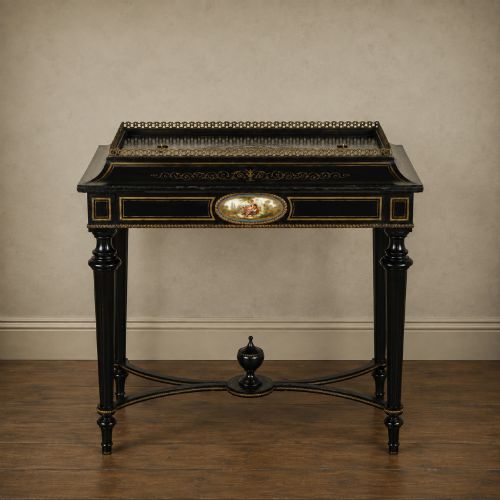
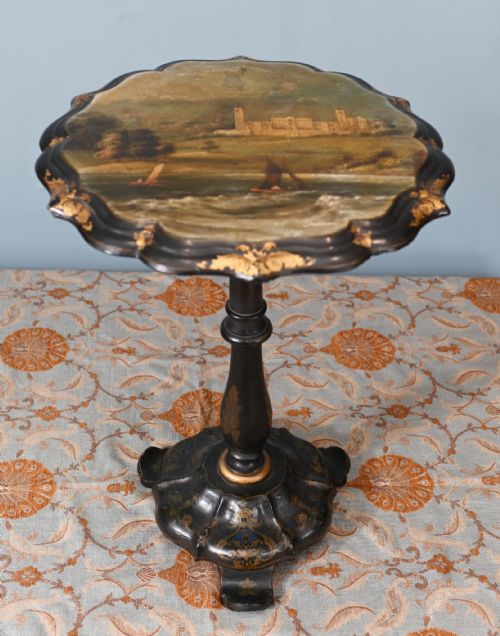
A black painted side table brings dark elegance to a room, spanning styles from Chinoiserie lacquer to Regency gilt.
Black Painted Side Table
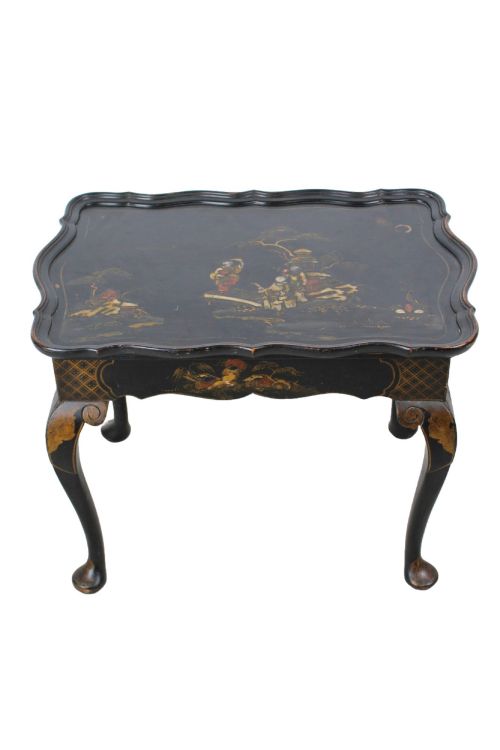
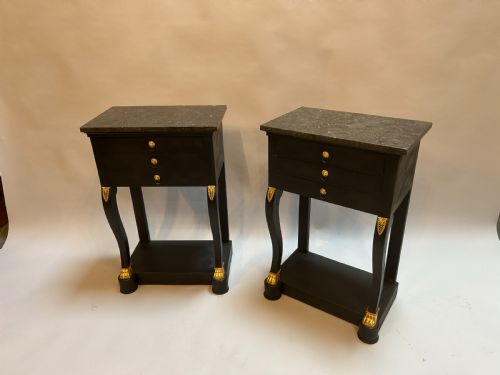
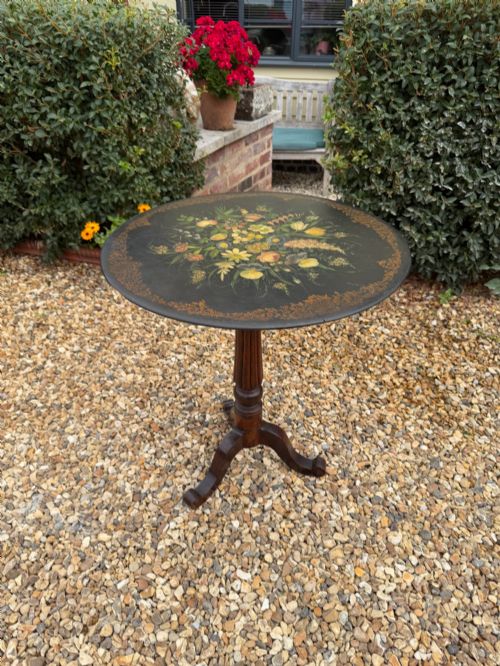
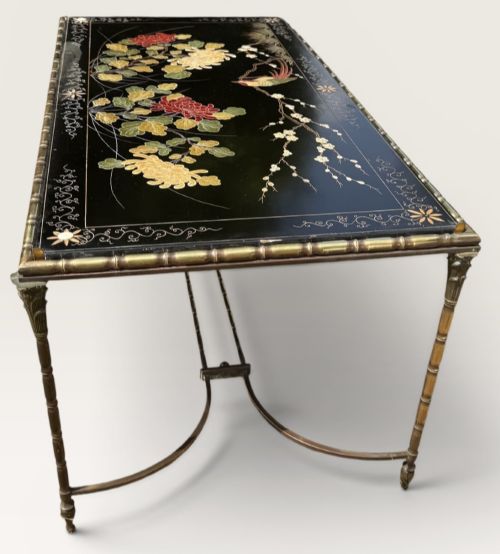
A black painted side table appears across several centuries, taking the form of tripod tables, occasional tables, console tables, and coffee tables. These pieces emerge from English, French, Chinese, and German workshops, reflecting diverse cabinet-making traditions from the eighteenth century through to the early twentieth century.
The nineteenth century yields a large portion of these examples, alongside pieces from the Georgian, Victorian, Edwardian, and Regency periods. Makers utilise pine, beech, oak, and walnut as structural timbers beneath the dark surface finishes.
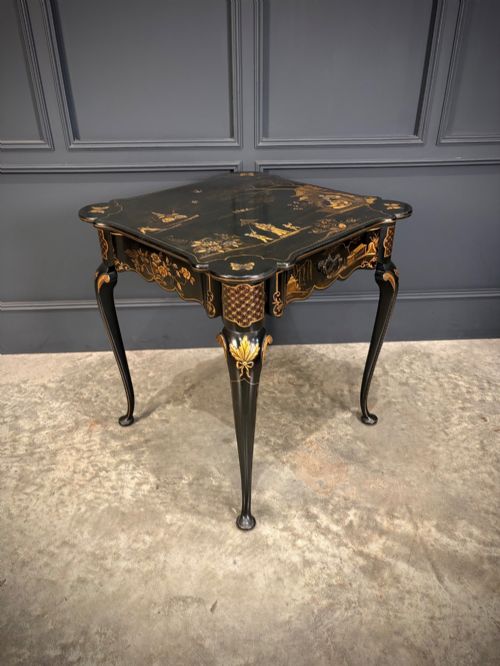
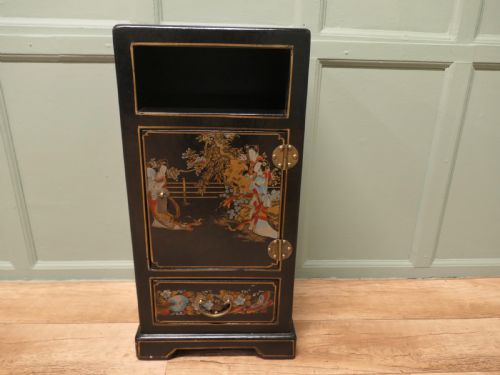
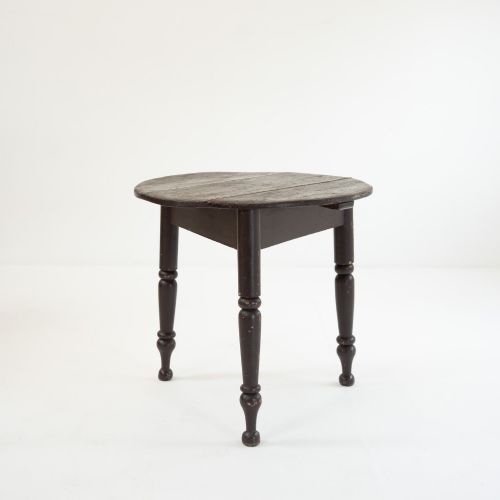
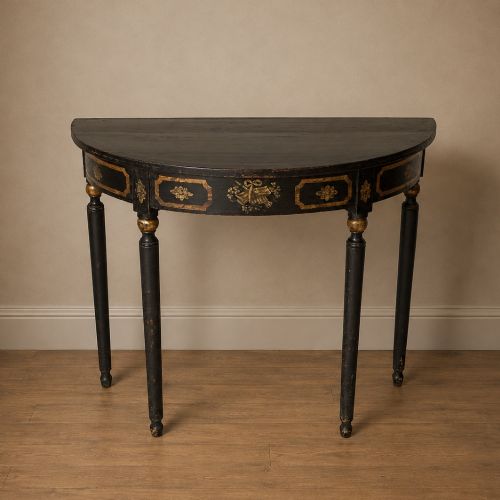
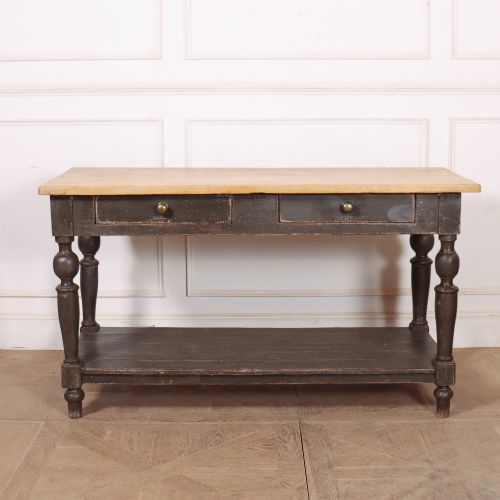
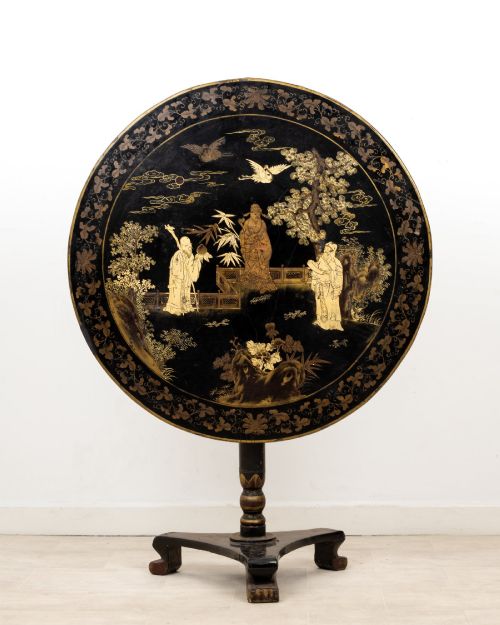
Buyers encounter distinct regional variations, including French ebonised stands, Hungarian bedside cabinets, and English cricket tables. Chinoiserie decoration frequently appears on these forms, alongside simpler painted pine and gilt-accented demi-lune consoles.
Materials and Techniques
Makers construct the carcases of these tables from solid timbers such as pine, oak, beech, and walnut, often employing papier-mâché or lacquer for specific decorative types. Surface preparation involves smoothing the wood before applying black paint, ebonising solutions, or layers of dark lacquer.
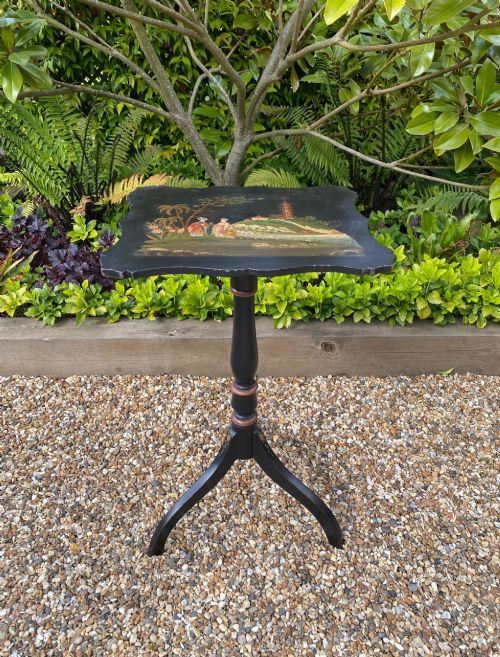
Decoration is achieved through hand-painting, parcel gilt highlights, ink work, and applied porcelain plaques or marble tops. Chinese lacquer and European japanning techniques involve multiple stages of coating and polishing to build a hard, lustrous finish.
Brass fittings, ormolu mounts, and cloisonné details are integrated into specific tables, particularly those originating from French and high-status English workshops. Joinery methods range from traditional dovetails in drawer construction to stable tripod bases and turned columns.
Black Painted Side Table Retail Price Guide 2026
Typical asking prices for black painted side table among the pieces listed under this phrase on Sellingantiques today, from the lower quarter to the upper quarter. They describe what is for sale here now, not the wider market.
Several tables manage to balance royal residences and ink work without spilling a drop.
Craftsmanship and Finish
The distinction between standard examples and finer pieces lies in the execution of the surface decoration and the integrity of the timber beneath. Hand-painted details, delicate parcel gilding, and original lacquer show precise brushwork and depth, whereas lesser pieces feature simpler, flat monochrome coats with minimal artistry.
Structural stability depends on the quality of the original joinery, whether in the turning of a tripod base or the fitting of a marble or tray top. Tables retaining their original hardware, uncompromised painted decoration, and genuine period materials command greater regard among collectors.
Maison Bagues·Louis Majorelle·Osbourne House
The Black Painted Side Table Glossary
- Chinoiserie
- European imitation and adaptation of Chinese artistic traditions, typically featuring raised gold or coloured motifs on a black lacquered ground. This style recurs frequently on nineteenth and early twentieth-century occasional tables.
- Japanning
- European craft technique imitating East Asian lacquer work by applying layers of varnish and heat-drying them before decoration. It is commonly found on tilt-top and occasional tables from the nineteenth century.
- Ebonised
- Wood treated with chemicals or dark stain and polish to resemble expensive ebony. This finish is characteristic of French Napoleon III and nineteenth-century English side tables.
- Parcel Gilt
- Partial application of gold leaf or gilt highlights upon a painted or lacquered surface. This technique emphasises carved details, mouldings, and edges on Regency and Chinoiserie tables.
- Demi-Lune
- Half-moon shape used for console tables designed to sit flush against a wall. These tables often feature painted tops and tapered legs.
Black Painted Side Table: Frequently Asked Questions
How do I identify an ebonised table?
An ebonised table is made from a timber like beech or walnut that has been stained or painted black to imitate solid ebony.
This technique was widely used in nineteenth-century French and English furniture to create a sleek, uniform dark surface.
Where should I place a console table?
A console table is designed to stand against a wall, frequently in a hallway, drawing room, or reception space.
Because many examples feature demi-lune or narrow rectangular shapes, they occupy minimal floor area while providing a surface for lamps or decorative objects.
What is a tilt-top table?
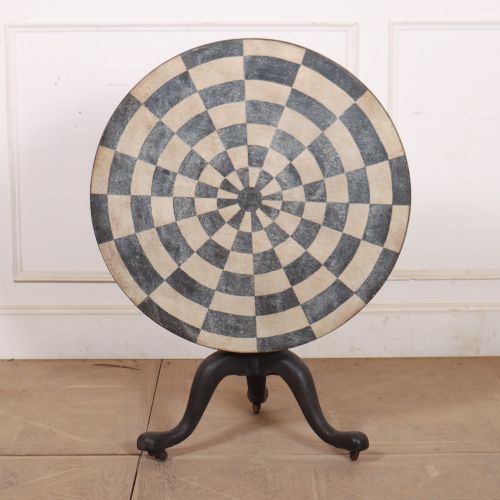
A tilt-top table has a mechanism beneath the surface that allows the top to be pivoted into a vertical position when not in use.
This space-saving design was common for occasional and tripod tables throughout the eighteenth and nineteenth centuries.