

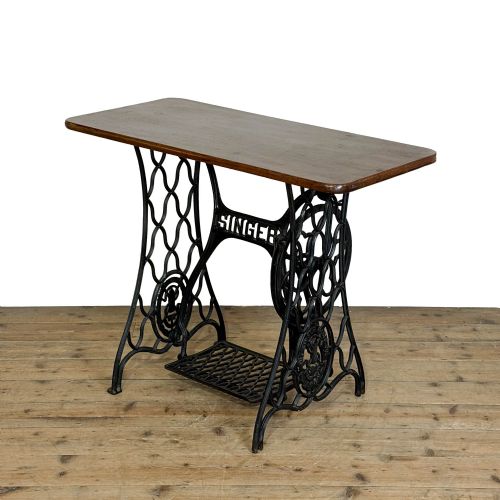
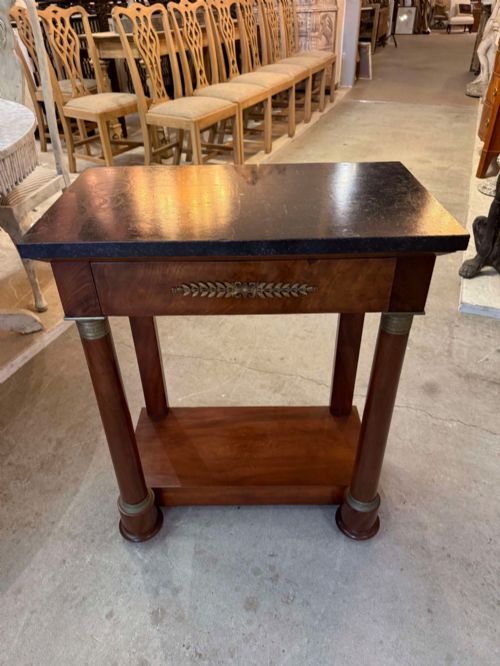
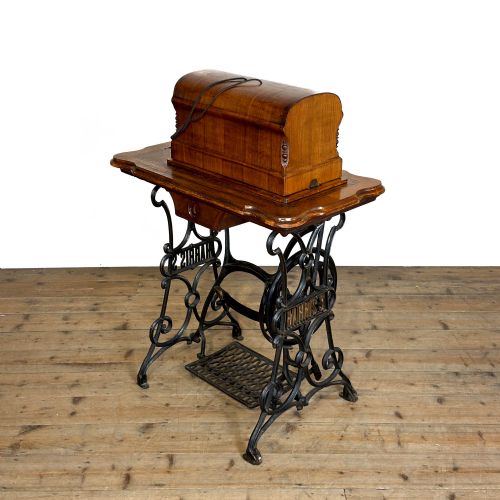
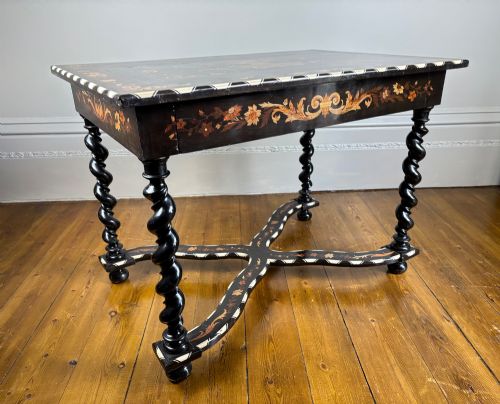
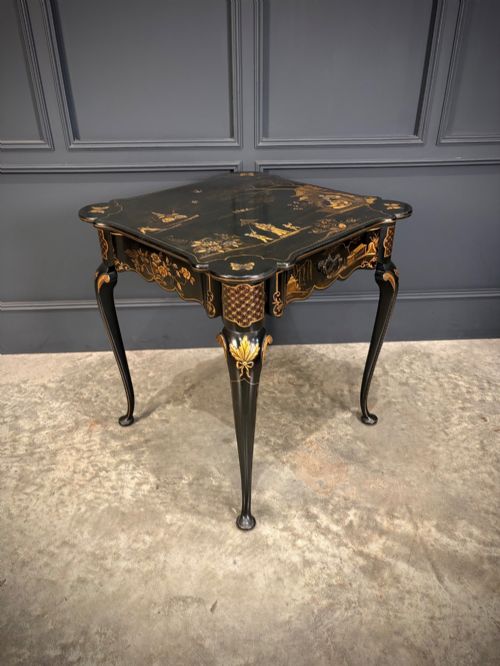

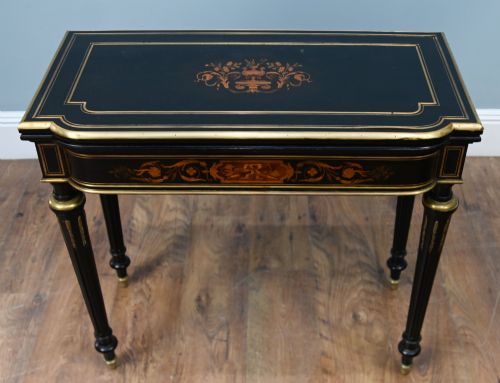
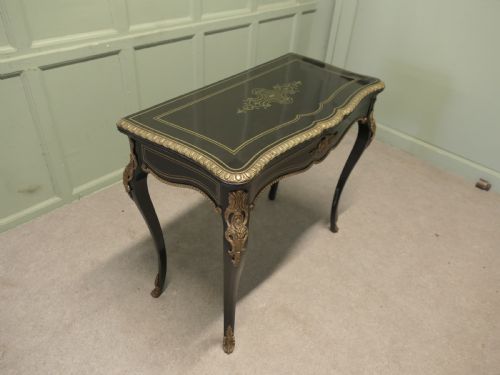
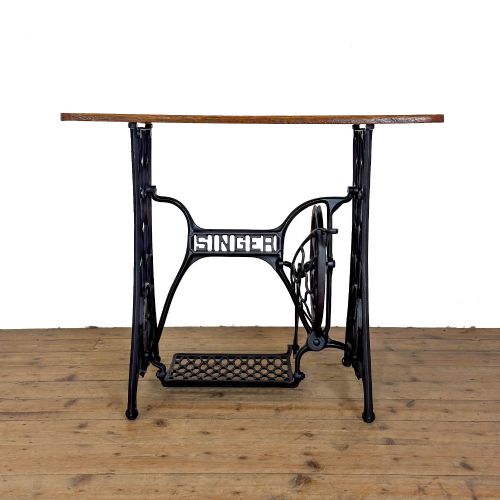


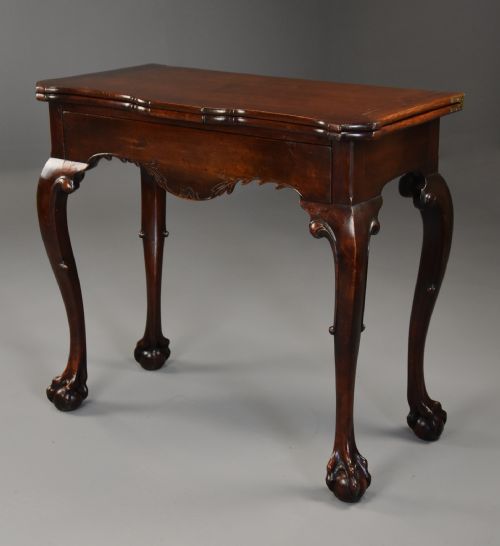
Black Console Table
A black console table brings architectural weight and dark definition to a hallway, anchoring the space with a striking linear silhouette.
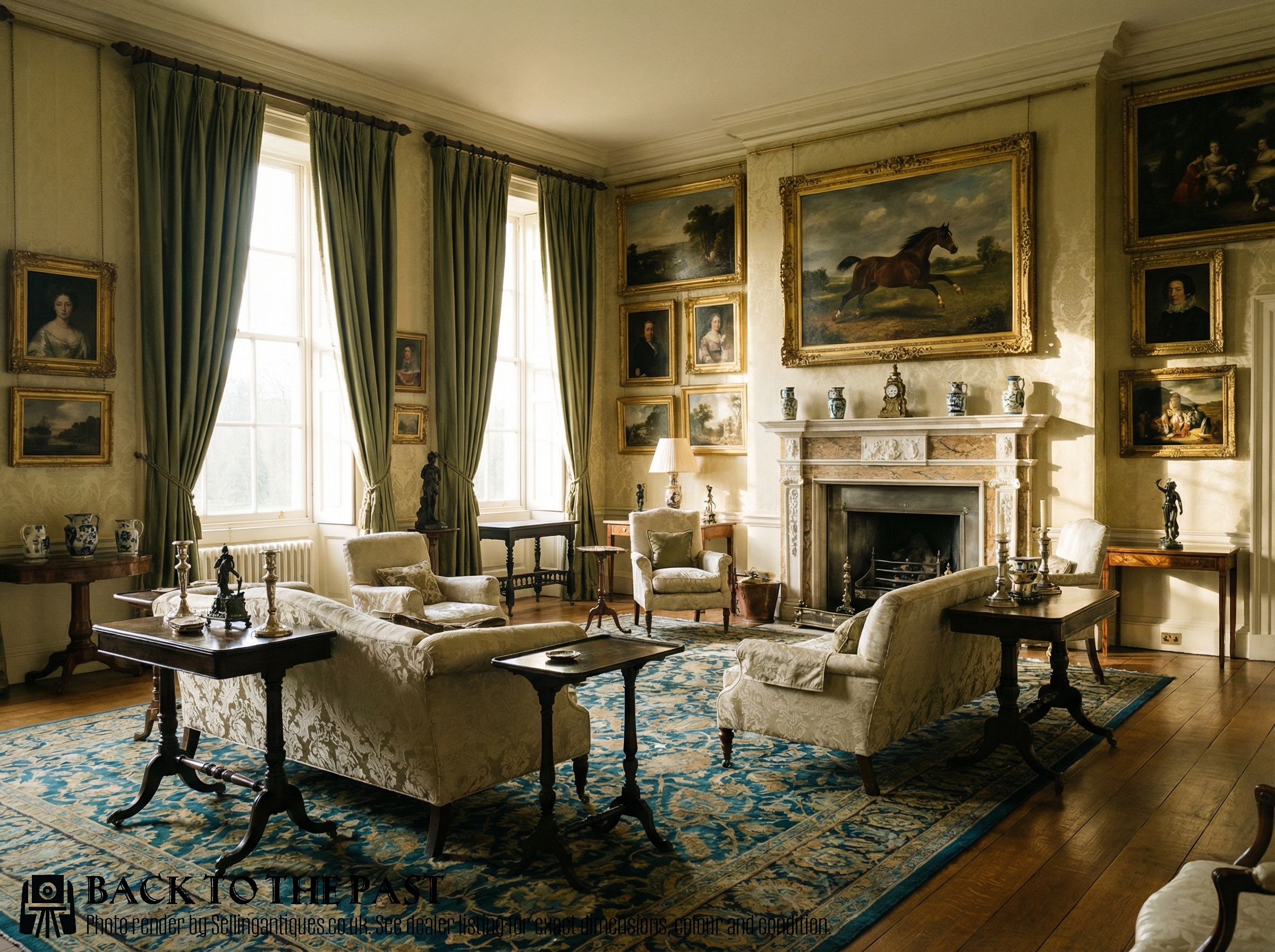
Black Console Table
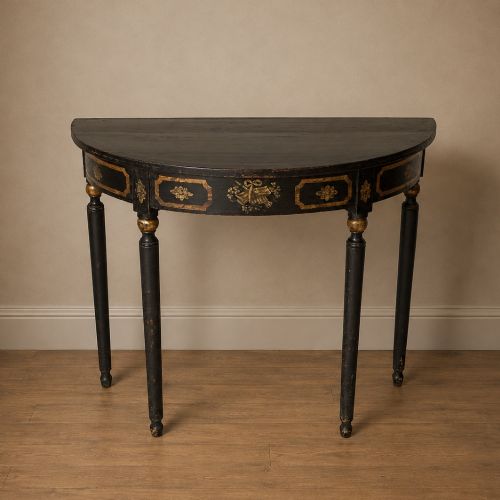
When you search for a black console table, you are looking at narrow wall tables designed to stand against a hall or drawing room wall, often topped with marble or polished timber.
The pieces on this page span the eighteenth, nineteenth, and early twentieth centuries, drawing heavily on Regency, Victorian, and French Empire aesthetics.
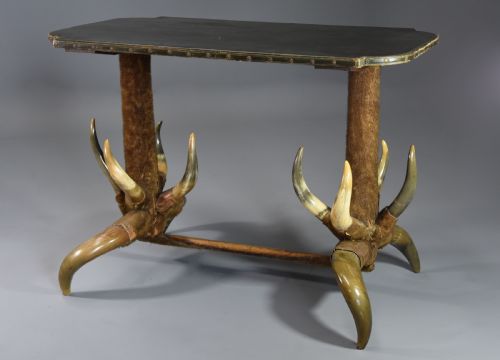
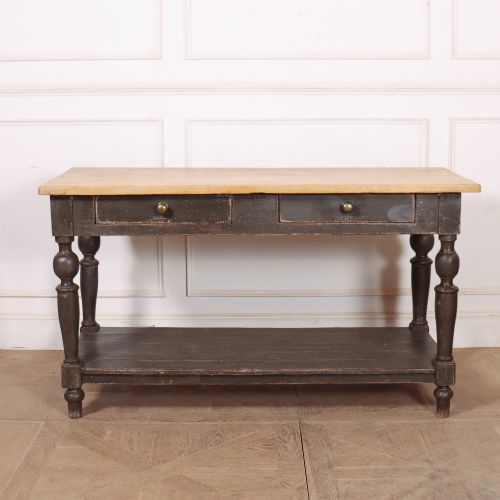
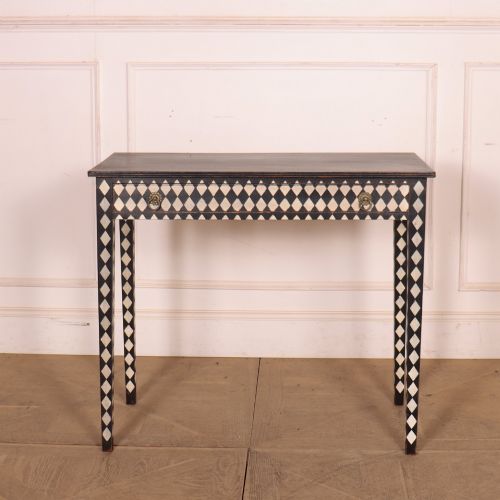
You will encounter ebonised wood, painted finishes, and black lacquer, frequently paired with contrasting gilt, brass mounts, or inlaid bone.
Materials and Construction
Cabinetmakers utilised dense hardwoods like mahogany and beech, applying black paint, lacquer, or ebonisation to mimic expensive exotic woods.
Many surfaces feature heavy white or grey marble slabs inset into the timber frame, while others rely on intricate brass inlay and parcel gilding to highlight the carved details.
Black Console Table Retail Price Guide 2026
Typical asking prices for black console table among the pieces listed under this phrase on Sellingantiques today, from the lower quarter to the upper quarter. They describe what is for sale here now, not the wider market.
Listings feature woods and metals including mahogany, satinwood, iron, and brass alongside painted and ebonised finishes.
Defining Quality
The distinction between standard utility pieces and finer examples rests on the depth of the finish, whether hand-applied lacquer or meticulous ebonisation, and the crispness of any carved parcel gilding.
Subtleties in the hardware, such as original brass mounts or integrated bone inlay, separate straightforward vernacular tables from sophisticated cabinetwork.
Jenks & Woods·Gillows·Krieger
The Black Console Table Glossary
- Ebonised wood
- Timber treated with chemical stains or dark paint to imitate genuine ebony. This finish gained immense popularity during the Victorian and Aesthetic Movement periods.
- Demi-lune
- A half-moon shape used for table tops and frames. These tables sit flush against a wall to save floor space in narrow corridors.
- Parcel gilt
- The technique of applying thin gold leaf to specific raised carved details on a dark painted surface. It creates a sharp contrast against the black ground.
- Marquetry
- Decorative patterns formed by inserting thin veneers of contrasting wood, bone, or metal into a prepared timber surface. It requires considerable skill from the maker.
Black Console Table: Frequently Asked Questions
Where should I place a console table?
These narrow tables suit entrance halls, corridors, and living rooms where floor space is at a premium. They sit flat against a wall, offering a surface for lamps or decorative objects without blocking movement.
Because of their shallow depth, they also function well behind sofas or beneath large mirrors in formal reception rooms.
How do I care for antique ebonised furniture?
Dust surfaces regularly with a soft, dry cloth to prevent grit from scratching the dark finish. Avoid modern chemical sprays and excessive moisture, which can damage aged lacquer and paint.
Feed the wood periodically with a suitable wax to maintain the deep lustre of the ebonisation without leaving a greasy residue.
What is the difference between ebonised and lacquered surfaces?
Ebonisation involves staining or painting timber to achieve a dark, matte or satin black appearance that reveals the underlying wood grain. Lacquering builds up smooth, glossy layers of resin or varnish.
Lacquered pieces, particularly those with Chinoiserie decoration, present a high-gloss finish with hand-painted motifs rather than bare timber texture.
Are marble tops original to these tables?
Many nineteenth-century console tables, particularly French and Regency examples, were specifically constructed with heavy marble slabs to provide a durable and cool surface. The weight of the stone often required robust frames and sturdy legs.
Examine the underside of the table to ensure the wooden support matches the age and wear of the marble inset.