




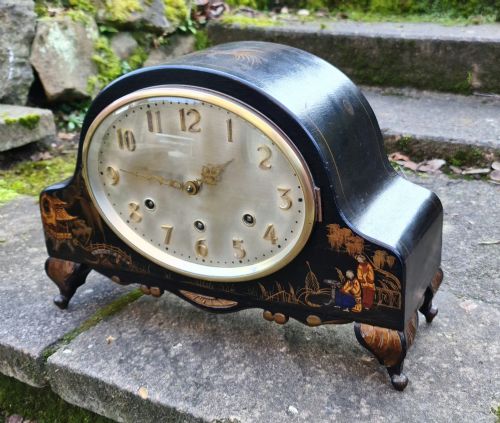

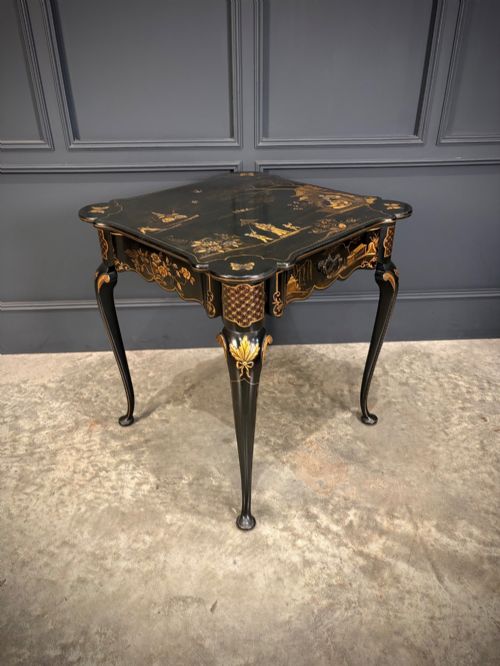
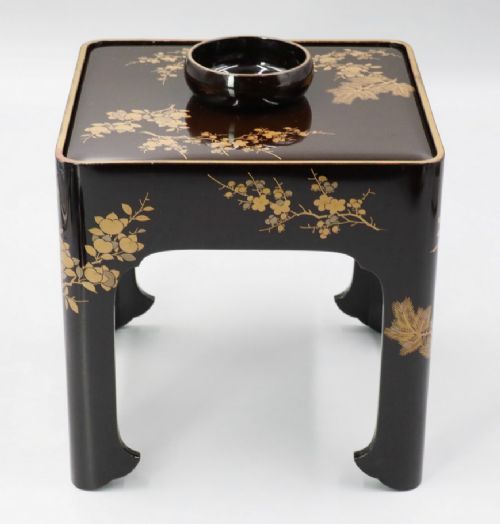
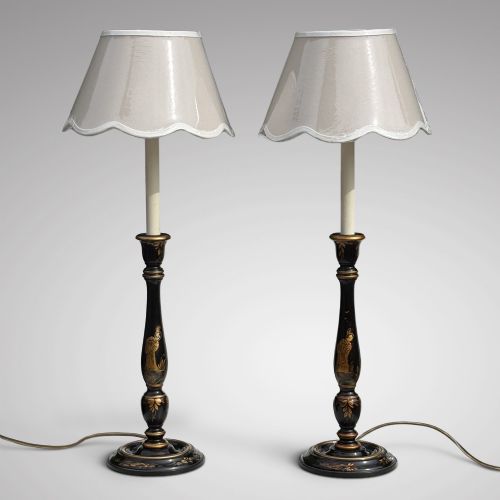
Black Lacquered Table
When you search for a black lacquered table, you enter a world of polished surfaces, gilt scenes, and centuries of cross-cultural design.
Black Lacquered Table
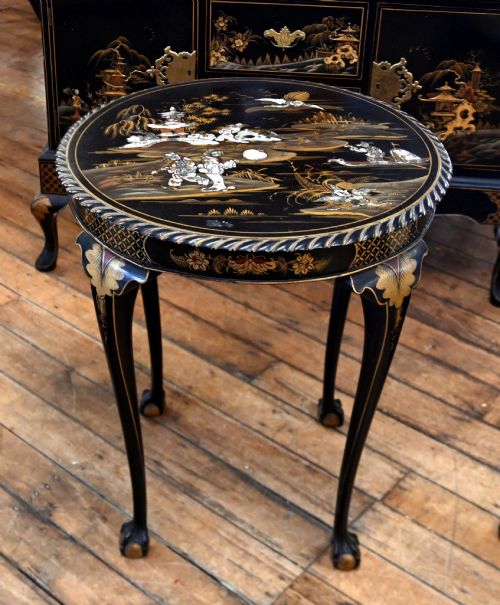
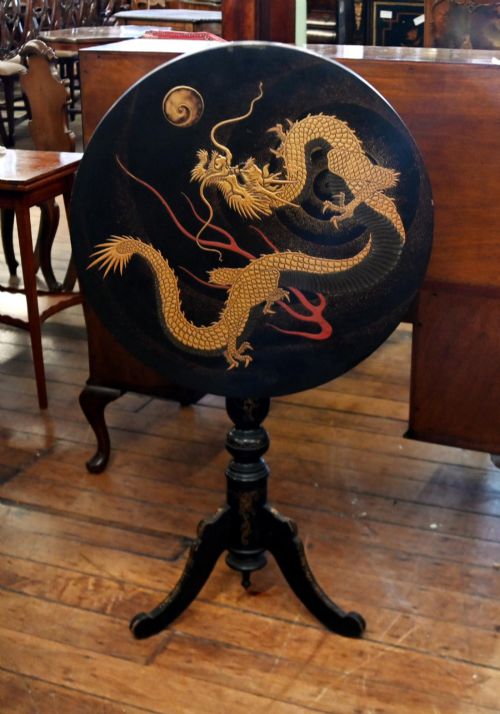
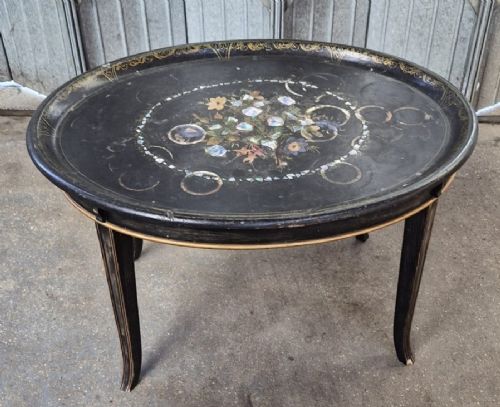
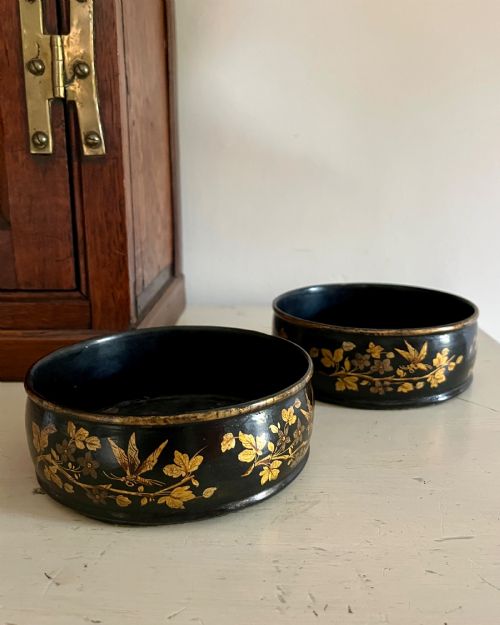
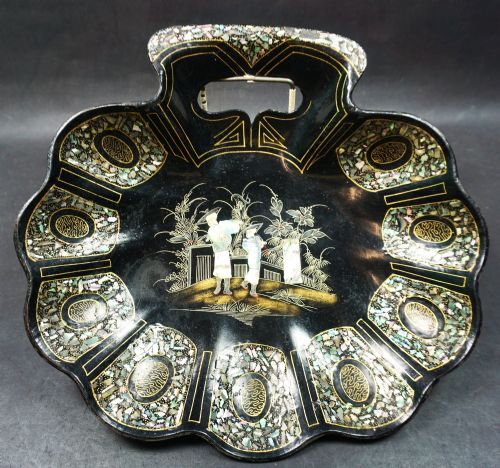
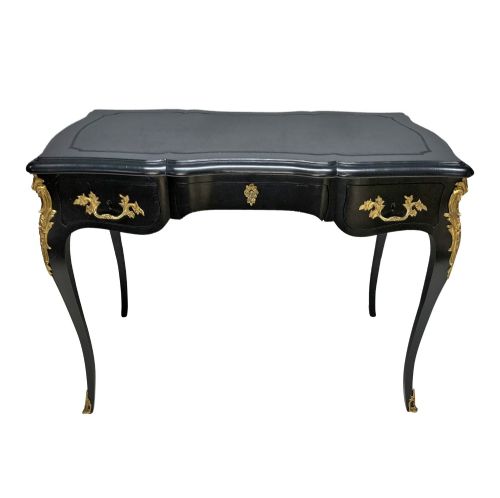
A black lacquered table encompasses everything from compact Victorian papier-mâché wine stands to expansive Regency Chinese export work tables and low Japanese Meiji period examples. Buyers frequently encounter side tables, coffee tables, and nests of tables finished in rich dark coatings and intricate ornamental motifs.
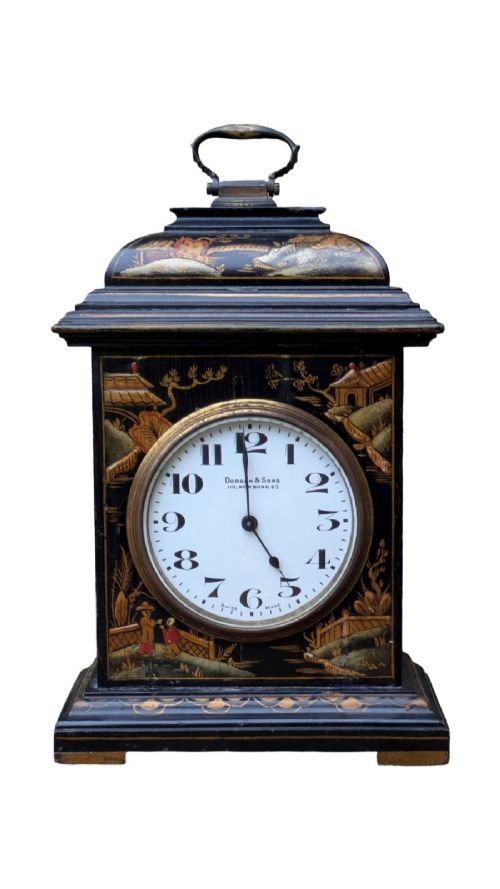
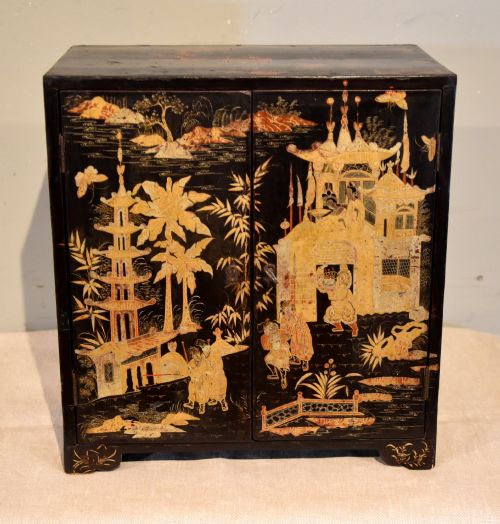
The selection ranges across several centuries, drawing heavily on nineteenth-century craftsmanship alongside early twentieth-century interpretations. English Regency models and Edwardian Chinoiserie variations appear regularly, each offering a distinct silhouette adapted for domestic display.
Origins span both European workshops creating Japanned items and Asian export centres producing specialised lacquerware for Western markets. These origins dictate whether a piece follows classical Western furniture forms or incorporates traditional Eastern structural formats.
What varies in quality
Quality rests in the depth and resilience of the lacquer finish, where superior examples exhibit smooth, even applications without cracking or lifting across the wooden or papier-mâché core. The execution of the painted and gilded decoration further distinguishes finer studio work from standard production pieces.
The precision of the joinery and the integrity of supplementary materials, such as integrated marble tops, brass gallery rails, or securely fitted hardware, separate utilitarian items from exceptional decorative commissions.
Black Lacquered Table Retail Price Guide 2026
Typical asking prices for black lacquered table among the pieces listed under this phrase on Sellingantiques today, from the lower quarter to the upper quarter. They describe what is for sale here now, not the wider market.
Some nineteenth-century tables served clandestine sewing circles, hiding threads and needles beneath elaborate Oriental landscapes.
Elliott London·Maison Bagues·Louis Majorelle
The Black Lacquered Table Glossary
- Chinoiserie
- European decorative style reflecting Chinese artistic influences, characterised by whimsical figures, pavilions, and natural motifs rendered in gold or paint on a dark ground.
- Japanning
- European imitation of East Asian lacquerwork, utilising specialised varnishes and heat treatments to build up a hard, dark surface on furniture.
- Papier-mâché
- Composite material made from paper pulp or layers of paper reinforced with glue, moulded into trays or table tops before being lacquered and painted.
- Ormolu
- Gilded bronze or brass mounts applied to furniture for decorative effect and edge protection.
- Tilt-top
- Table construction featuring a mechanism that allows the top to pivot vertically for compact storage when not in use.
Black Lacquered Table: Frequently Asked Questions
Where should I place a black lacquered table?
These tables function effectively as focal points in drawing rooms, studies, or reception spaces where their reflective surfaces catch natural and artificial light. Pairing them with neutral upholstery allows the dark finish and gilt decoration to stand out without overwhelming the room.
Smaller formats such as nests of tables or occasional stands offer flexible placement beside seating, while larger coffee and side tables anchor central conversational groupings.
How can I tell the period of a Chinoiserie table?
Examine the construction methods beneath the lacquer, including dovetail joints, tool marks, and wood species, which help distinguish eighteenth-century exports from Victorian or Edwardian revivals. Stylistic shifts in the painted figures and floral borders also provide clues, with earlier Georgian and Regency pieces showing different compositional rhythms compared to later twentieth-century interpretations.
Reviewing accompanying materials like brass hardware, papier-mâché cores, or marble inserts further clarifies whether a piece originates from the nineteenth century or the art deco era.
What is the difference between Japanning and true lacquer?
True lacquer utilises natural resin harvested from Asian trees of the Toxicodendron genus, applied in numerous thin layers that cure through humidity to form a durable, waterproof surface. Japanning represents a European adaptation developed to mimic this exotic finish, using shellac, varnishes, and resin mixtures baked onto wooden substrates.
While both techniques produce a glossy black ground suited for decorative gilding, European Japanning often exhibits different ageing characteristics and crackled crazing patterns over time.