


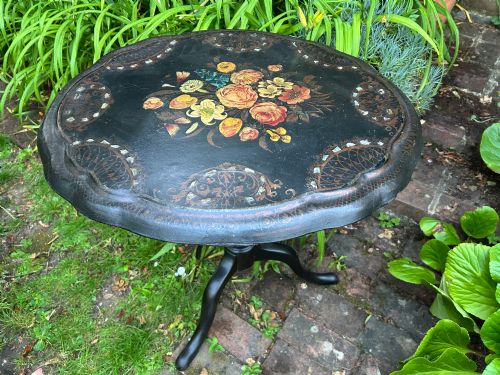


Lacquered Occasional Table
A lacquered occasional table brings a rich, hand-finished surface and decorative depth to a room, drawing on centuries of global design traditions.
Lacquered Occasional Table
A lacquered occasional table brings together compact forms and layered surface decoration, serving as a versatile piece for lamps, drinks, or display. When searching for a lacquered occasional table, a buyer encounters diverse formats ranging from folding tray tables and tilt-tops to multi-tiered stands and nesting sets.
The pieces appearing on this page span the eighteenth, nineteenth, and early twentieth centuries, reflecting changing tastes in British and international interiors. Victorian and Regency examples sit alongside early twentieth-century interpretations, showing how makers continually returned to black, red, and polychrome lacquer finishes.
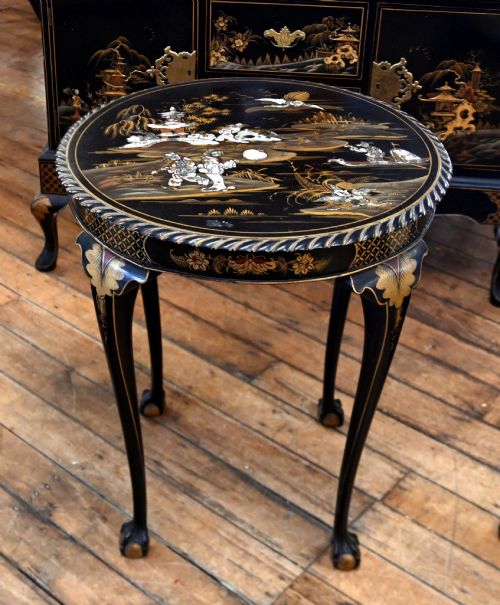
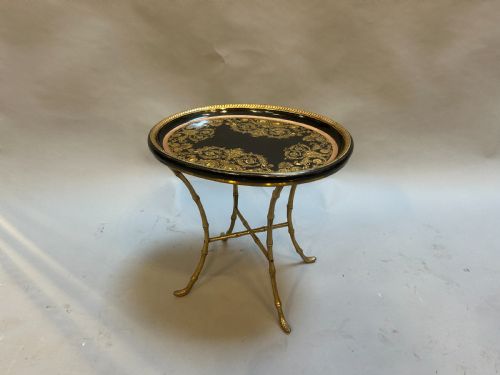
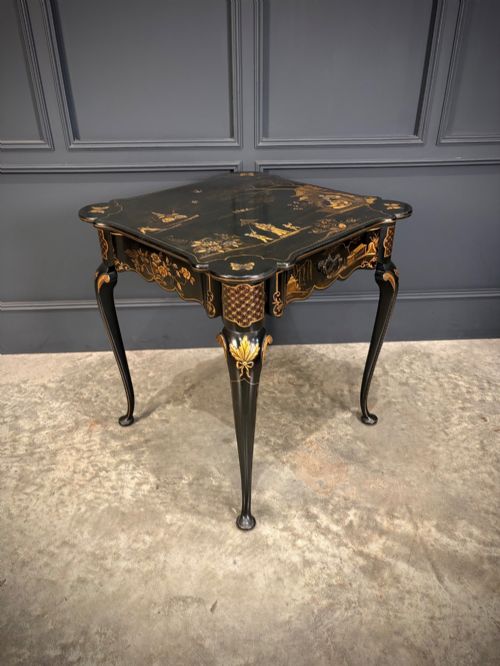
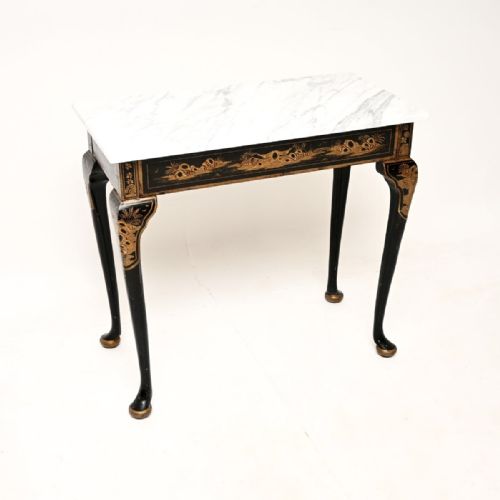
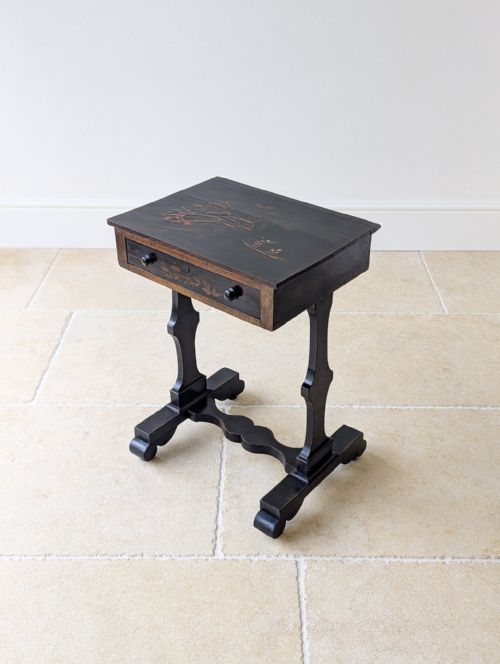
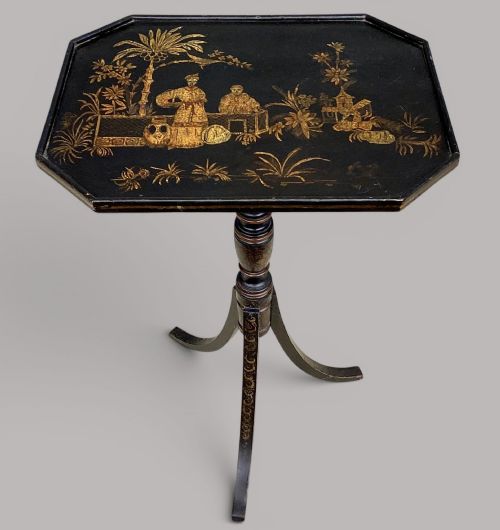
Forms include side tables, wine tables, card tables, and work tables, often constructed in the Chinoiserie style or utilising bamboo frames. These tables adapt easily to modern rooms while carrying the distinct aesthetic of past decades.
How They Were Made
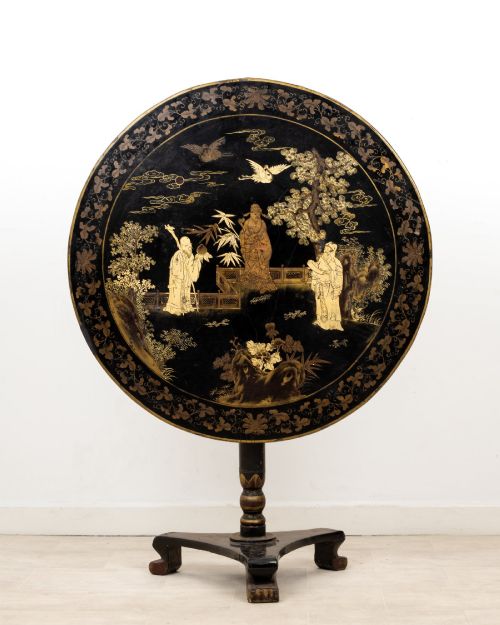
The construction of these pieces relies on a foundation of wood, papier-mâché, or bamboo, built to support multiple applications of lacquer and decorative paint. Artisans applied successive coats of lacquer, often finished with gold leaf, parcel gilt, or hand-painted details depicting traditional motifs.
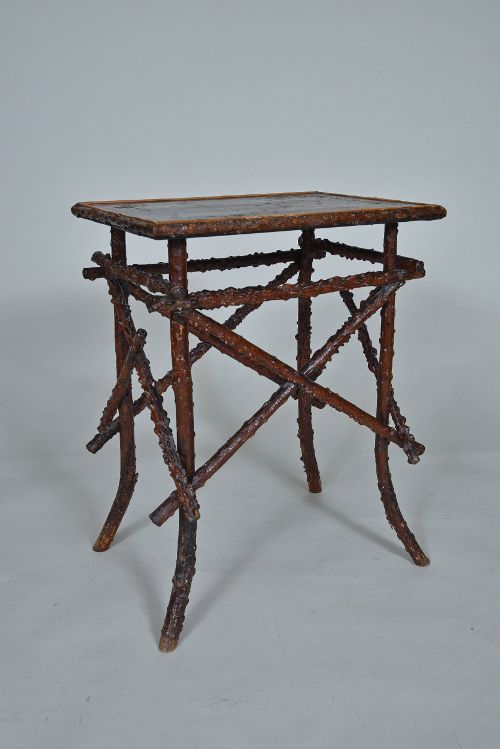
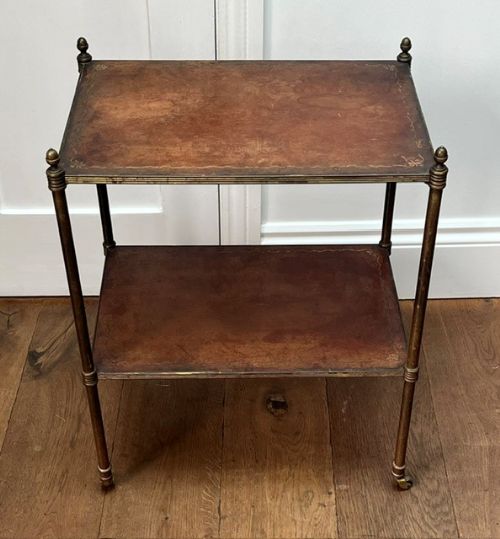
Metal elements such as brass appear alongside tooled leather inserts and marble tops, adding structural contrast and tactile variety to the tables. Where bamboo or rootwood forms the frame, construction methods draw on specialised joinery to accommodate natural materials.
Lacquered Occasional Table Retail Price Guide 2026
Typical asking prices for lacquered occasional table among the pieces listed under this phrase on Sellingantiques today, from the lower quarter to the upper quarter. They describe what is for sale here now, not the wider market.
Listings feature periods spanning from the 18th century through the Regency, Victorian, and Edwardian eras up to the 1930s.
What Varies in Quality
The depth and execution of the surface finish distinguish the finer examples from simpler production, particularly in the intricacy of the gilt work and painted scenes. A well-preserved lacquer surface shows careful layering and minimal disruption over time.
Stability and integrity of the underlying structure, whether solid wood, papier-mâché, or bamboo, govern the durability of the piece. Quality also shows in the crispness of turned supports, the fit of nesting tables, and the precision of hardware such as brass mountings.
Mallett of London·Charles Tozer
The Lacquered Occasional Table Glossary
- Chinoiserie
- European decorative style imitating Chinese artistic traditions, characterised by painted figures, landscapes, and pavilions on lacquered surfaces.
- Papier-mâché
- A composite material made from paper pulp or layers of paper bound with glue, pressed into moulds and hardened to form smooth tabletops and trays.
- Tilt-top
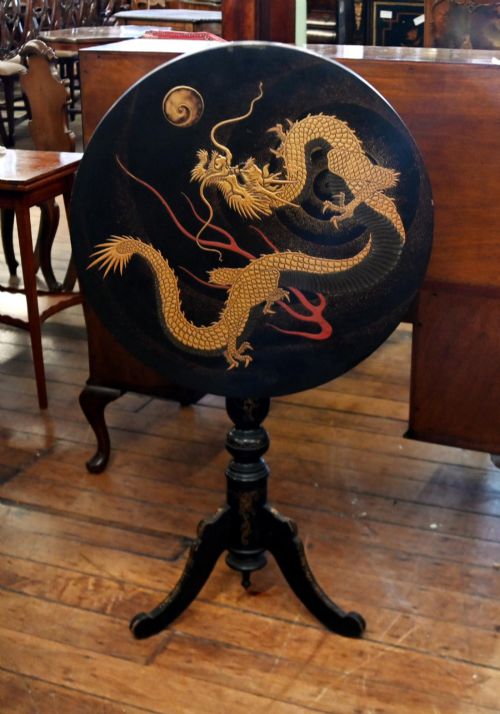
- A table mechanism allowing the surface to pivot to a vertical position when not in use, saving space in smaller rooms.
- Etagere
- A set of open shelves or tiers used for displaying small objects, appearing in several two-tier table designs.
- Parcel gilt
- Portions of an object highlighted with gold leaf or gold paint, contrasting against a black, red, or ebonised ground.
Lacquered Occasional Table: Frequently Asked Questions
How do I care for a lacquered table?
Keep these pieces out of direct sunlight to prevent the lacquer from fading or drying out over time. Dust gently with a soft, dry cloth and avoid using chemical cleaning products.
Place protective mats under hot mugs or damp glasses to safeguard the delicate surface finish. Regular, gentle maintenance preserves the painted details and sheen.
Can I use an occasional table for daily use?
These tables handle light daily use, such as holding a lamp, a book, or a cup of tea. Their compact size makes them easy to move around a room as needed.
Avoid overloading them with heavy objects or placing them in high-traffic hallways where they might be knocked. Treating them with reasonable care ensures the structure and finish remain intact.
What is the difference between Chinoiserie and Japanese styles here?
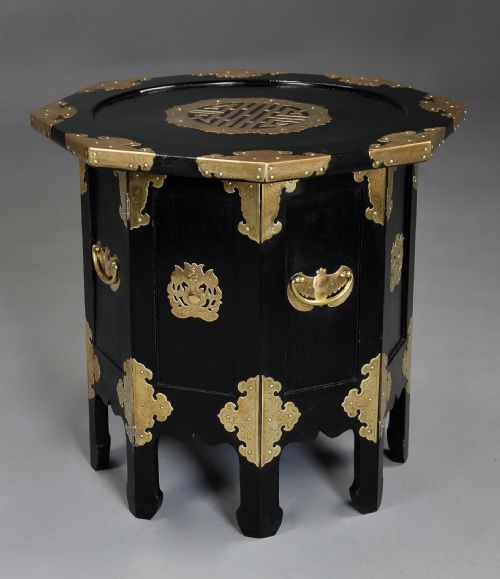
Chinoiserie reflects European interpretations of Chinese motifs, featuring pavilion scenes, figures, and gilt landscapes on dark or red lacquer. Japanese influences, appearing in Meiji period pieces, draw on indigenous woodcraft and distinct decorative flora.
Both traditions rely on detailed surface work but differ in their specific visual vocabulary and regional origins. Examining the motifs helps identify which design tradition influenced the maker.
How do I identify a Victorian papier-mâché table?
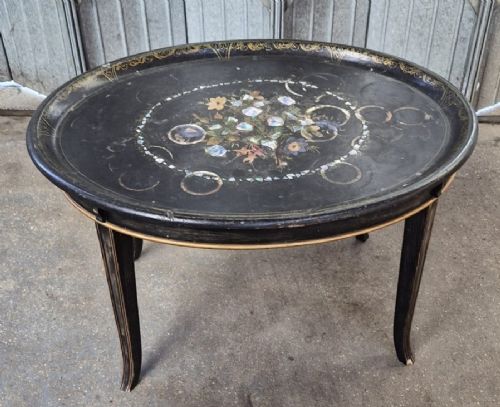
Victorian papier-mâché tables feature a rigid, smooth composite top that often rests on a turned wooden pedestal or later stand. The surface typically displays deep black lacquer inlaid with mother-of-pearl or painted floral details.
Lifting or inspecting the underside reveals the matte dark backing characteristic of nineteenth-century production. These pieces combine lightness with surprising structural resilience.