





Black Lacquered Tray Table
These black lacquered tray tables combine deep polished surfaces with sturdy stands, offering a practical yet striking centrepiece for any room.
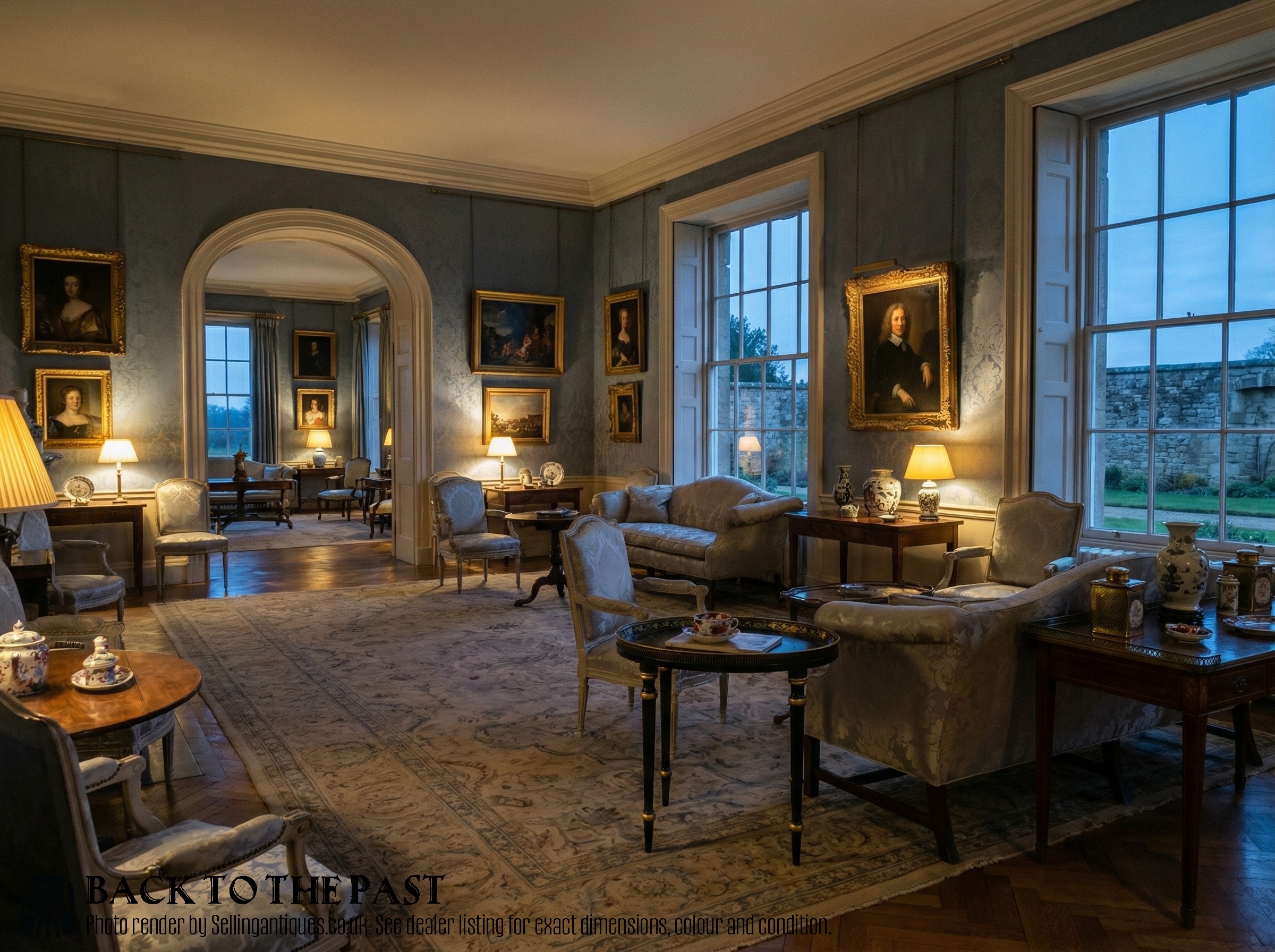
Black Lacquered Tray Table
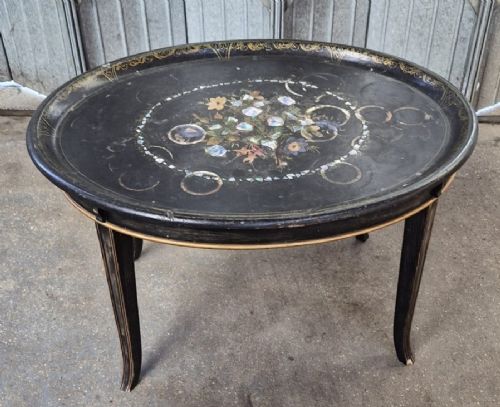
A black lacquered tray table brings together a portable serving tray and a dedicated support stand, forming a versatile piece of furniture used across various periods. When searching for a black lacquered tray table, buyers encounter formats ranging from low coffee tables to taller serving stands.
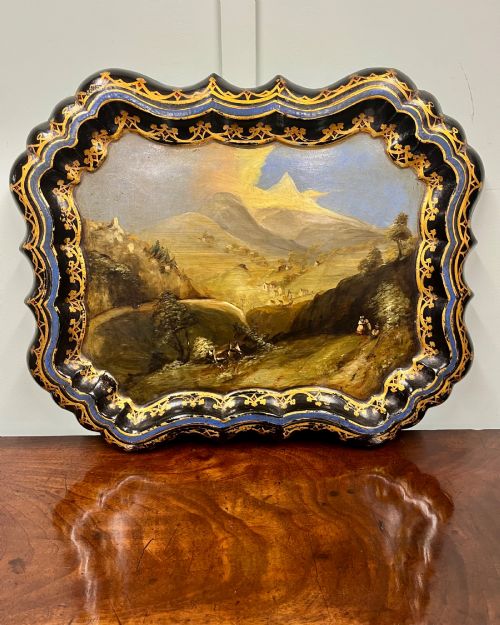
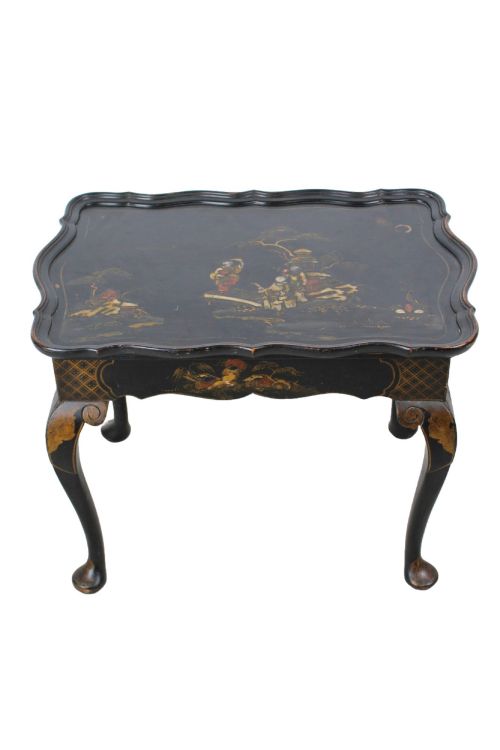
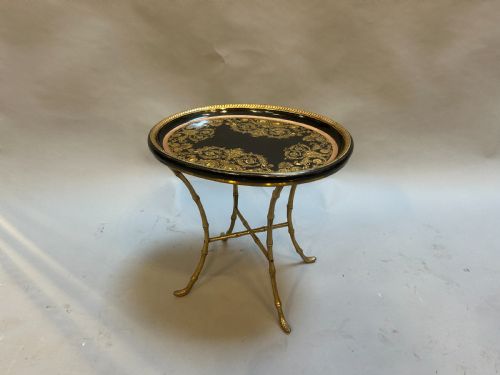
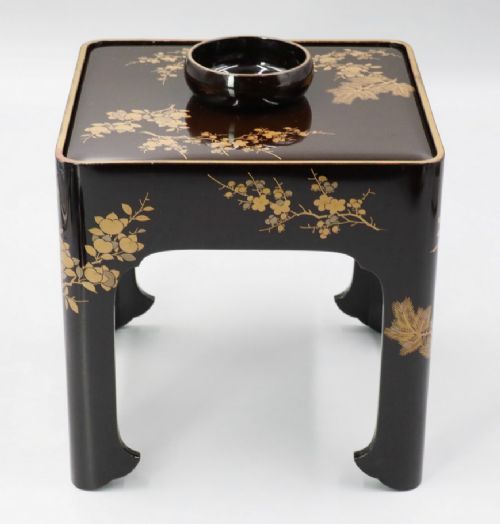
The pieces seen here span the eighteenth, nineteenth, and early twentieth centuries, drawing heavily on Victorian and Regency aesthetics as well as Japanese Meiji and Taisho influences. English workshops produced many of the papier-mâché and wood examples, often incorporating elaborate Chinoiserie decoration.
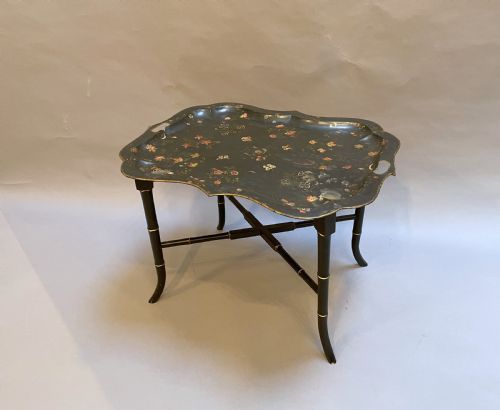
Most examples pair a removable tray top with a folding or fixed wooden stand, though some items integrate the tray directly into the frame as an occasional or coffee table. The resulting variety accommodates both traditional drawing rooms and modern living spaces.
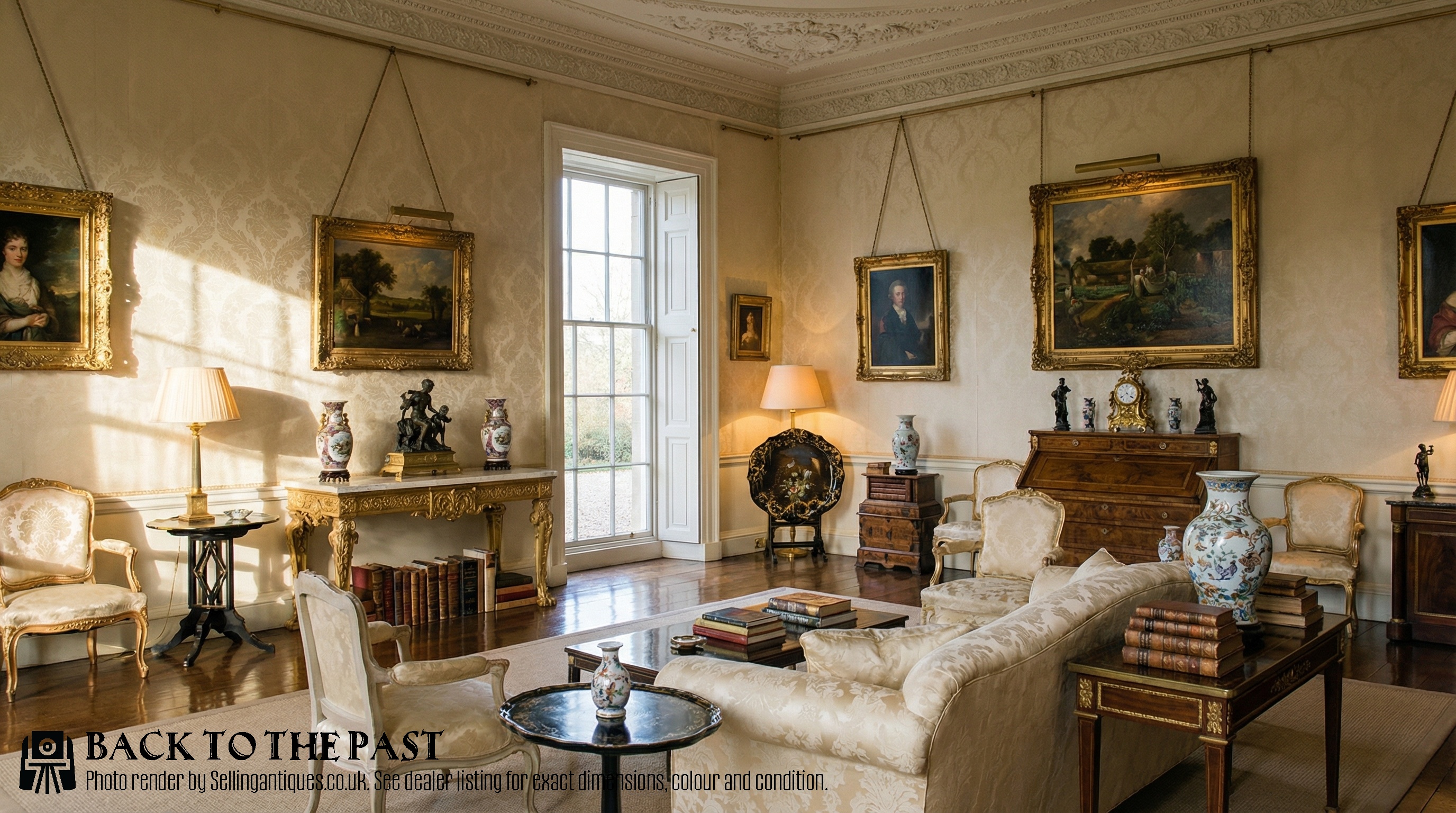
Materials and construction methods
Craftsmen built these tables using timber, papier-mâché, and metal toleware, applying layers of dark lacquer to achieve a glossy, resilient finish. Papier-mâché trays required pressing and drying multiple layers of paper pulp before smoothing and sealing the surface.
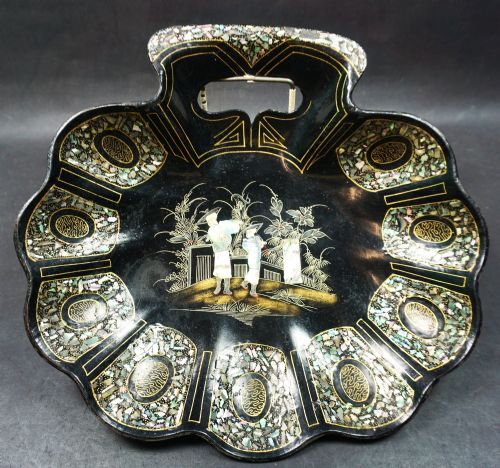
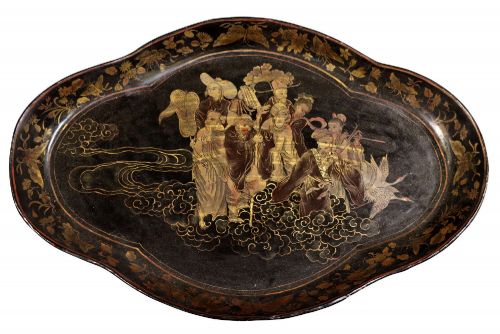
Makers embellished the dark backgrounds using gold leaf, gilt, and hand-painted motifs, frequently depicting oriental landscapes, flora, and figures in the Chinoiserie style. Brass and iron fittings occasionally reinforced the stands and tray edges.
Stands were fashioned from ebonised wood, walnut, or iron, designed either as bespoke folding supports or later adaptations tailored to fit antique trays.
Black Lacquered Tray Table Retail Price Guide 2026
Typical asking prices for black lacquered tray table among the pieces listed under this phrase on Sellingantiques today, from the lower quarter to the upper quarter. They describe what is for sale here now, not the wider market.
Several trays double as portable drinks butlers, proving that Victorian hosts enjoyed refreshment close at hand just as much as modern collectors do.
Distinctions in craftsmanship and condition
Quality rests heavily on the crispness of the hand-painted detailing and the depth of the lacquer finish, where skilled workshops achieved a smoother, more uniform sheen. The intricacy of the gold leaf application and the preservation of delicate Chinoiserie scenes separate standard items from finer examples.
The integrity of the underlying material, whether wood, papier-mâché or metal toleware, dictates structural longevity and resistance to surface cracking. Tables retaining their original matching stands generally command greater interest than those paired with later or replacement bases.
Jennens & Bettridge·Henry Clay
The Black Lacquered Tray Table Glossary
- Papier-mâché
- A composite material made from paper pulp or layers of paper mixed with glue and resin, pressed into moulds and baked until rigid. It provided a lightweight yet durable base for painted trays.
- Toleware
- Painted or lacquered sheet metal utensils and decorative objects, often produced in tinplate. It served as a robust alternative to wood or papier-mâché for serving trays.
- Ebonised wood
- Timber treated with a chemical stain or finish to imitate ebony. This dark treatment defined many nineteenth-century display and occasional tables.
- Japaning
- A European imitation of East Asian lacquerwork involving layers of varnish and heat curing. The technique produced a hard, glossy black surface often decorated with raised metallic designs.
Black Lacquered Tray Table: Frequently Asked Questions
Are the trays detachable from the stands?
Many traditional examples feature a completely removable tray resting unattached on a folding or rigid support stand. This design reflects their original dual purpose for serving and display.
Some later or alternative formats integrate the tray permanently into the frame to function strictly as a coffee or occasional table.
How do I care for black lacquer?
Keep these surfaces away from direct sunlight and excessive moisture to prevent fading and cracking of the lacquer finish. Dust gently with a soft, dry cloth without applying harsh chemical polishes.
Wax can be used sparingly on wooden frames, but consult a conservator before treating aged lacquer or gilded sections.
What is papier-mâché furniture?
Papier-mâché furniture utilises compressed paper pulp treated with oils and resins to create a remarkably tough, lightweight foundation. Makers decorated these smooth surfaces with lacquer and gold leaf.
This technique allowed nineteenth-century artisans to fashion durable serving trays and table tops with intricate decorative schemes.
How do I date a tray table?
Dating relies on examining the materials, the style of the painted decoration, and the construction of the stand. Regency and Victorian pieces often show distinct Chinoiserie motifs and specific stand joints.
Signatures or stamps on the underside, where present, help attribute pieces to specific makers or workshops.