




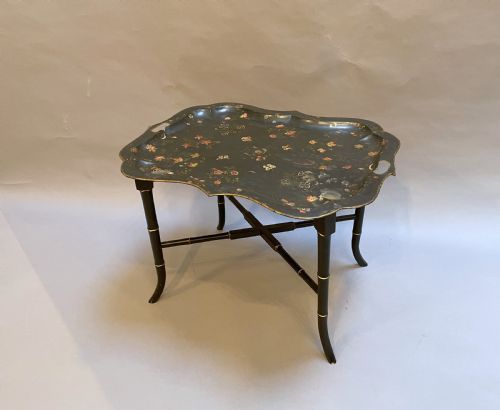


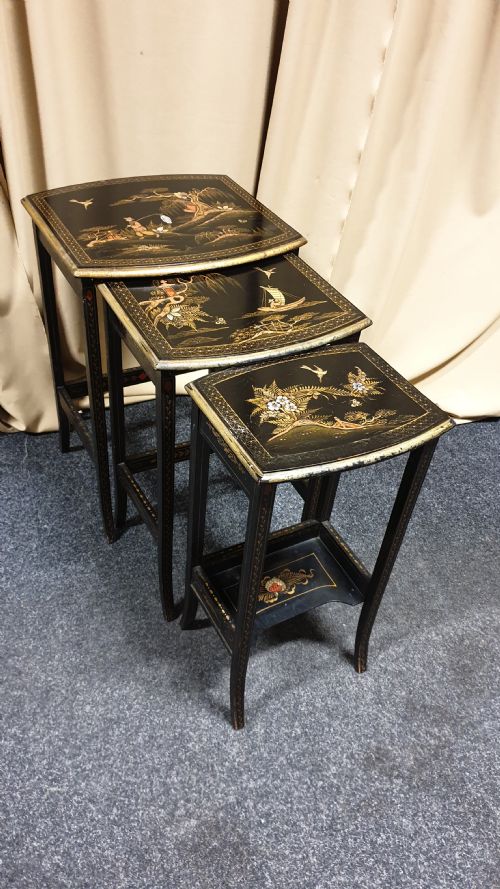


Japanned Coffee Table
A japanned coffee table brings layered lacquer and painted chinoiserie scenes into a room, offering a functional surface with centuries of decorative history.
Japanned Coffee Table
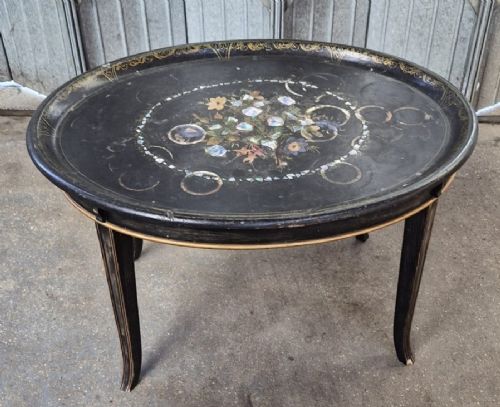
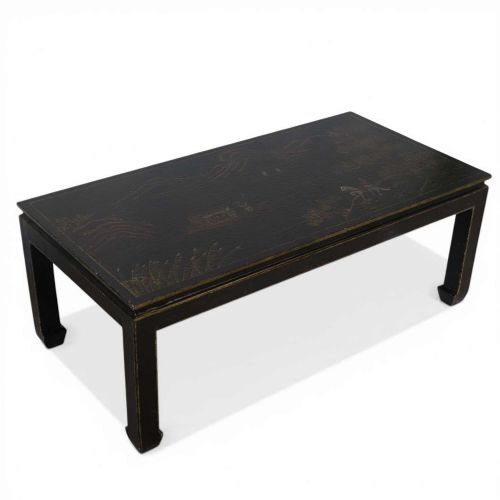
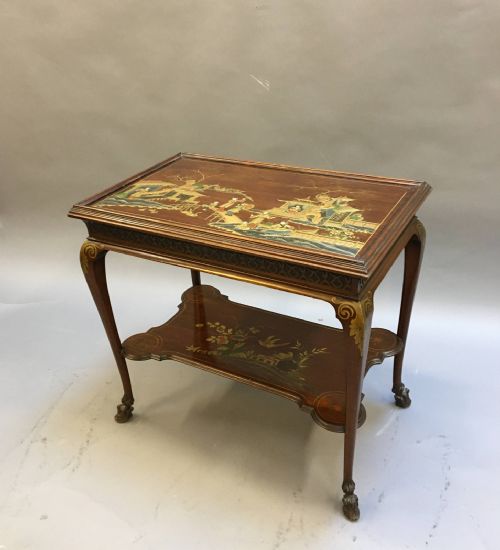
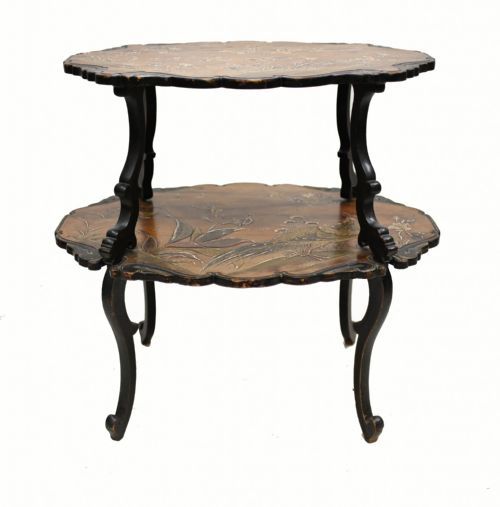
When you search for a japanned coffee table, you encounter a mix of low occasional surfaces, nesting sets, and antique trays mounted upon later stands. These pieces translate earlier decorative traditions into practical formats suited to modern interiors.
The selection on this page relies heavily on early twentieth century examples alongside nineteenth century items, Regency pieces, and eighteenth century trays adapted for table use. Forms range from single coffee tables to nests of tables and etagere designs.
Chinoiserie and Victorian styles dominate the aesthetic, frequently incorporating black or ebonised grounds adorned with gold leaf and pictorial scenes. These surfaces draw directly on historic lacquer techniques developed to mimic Asian imports.
How they were made
Construction combines traditional cabinet making with specialised surface decoration using wood, papier-mache, and toleware. Wooden frames, ebonised wood, and hardwoods provide stable foundations for the finished tops.
The distinctive finish relies on layers of lacquer, paint, and gold leaf applied to create raised or flat pictorial details. Artisans built up these decorative schemes through meticulous painting and varnishing processes.
Japanned Coffee Table Retail Price Guide 2026
Typical asking prices for japanned coffee table among the pieces listed under this phrase on Sellingantiques today, from the lower quarter to the upper quarter. They describe what is for sale here now, not the wider market.
Listings feature periods spanning from the eighteenth century through the 1930s, utilising materials including papier-mache, lacquer, gold leaf, and ebonised wood.
What varies in quality
Quality rests in the crispness of the painted scenes and the depth of the lacquer surface. Finer examples display intricate brushwork and rich application of gold leaf that retain their clarity across the entire top.
The relationship between the tray and its stand dictates the structural integrity of pieces adapted from older serving components. A well proportioned stand matches the period and character of the tray it supports.
Jennens & Bettridge·Henry Clay
The Japanned Coffee Table Glossary
- Japanning
- European imitation of East Asian lacquerwork using layered varnishes and paints. This technique produced glossy dark finishes often decorated with gilt figures and landscapes.
- Chinoiserie
- European decorative style reflecting Chinese artistic influences. It appears frequently on furniture through fanciful motifs of pavilions, figures, and flora.
- Papier-mache
- Material formed from compressed paper pulp and binding agents, moulded and baked to create rigid trays. Makers used this smooth substrate for detailed painting before mounting the pieces on stands.
- Toleware
- Painted or enamelled sheet metal items such as trays and vessels. These metal surfaces served as table tops when placed upon folding or fixed stands.
- Etagere
- Open tiered shelving unit or table designed for display. These pieces provide multiple surfaces arranged vertically.
Japanned Coffee Table: Frequently Asked Questions
Are these tables original coffee tables?
Many examples began life as serving trays or larger furniture forms before being adapted onto stands at a later date. This practice preserved decorative trays for domestic use.
Purpose-built occasional tables and nest sets also appear alongside tray tables, reflecting changing interior requirements across the nineteenth and twentieth centuries.
How do I care for a lacquered surface?
Keep these tables away from direct sunlight and excessive moisture to protect the delicate lacquer and painted details. Use soft cloths for dusting and avoid chemical cleaning products.
Placing coasters and mats on the surface helps prevent heat marks and scratches on the historic finish.
What is the difference between japanning and lacquer?
True lacquer utilises sap from Asian trees, whereas European japanning employs varnishes and shellac applied over a prepared ground. Both techniques achieve a durable, glossy decorative surface.
Japanning developed as a Western response to the high cost and scarcity of imported Asian lacquer furniture.
How do I date a papier-mache tray table?
Examination of the underside, fixings, and the style of the painted decoration helps establish the period of the piece. Eighteenth century examples often show distinct material density compared to Victorian pieces.
The presence of maker stamps or paper labels provides direct evidence of the workshop of origin.