

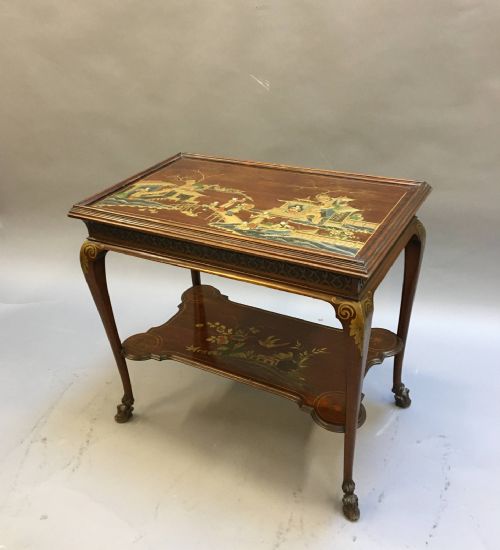
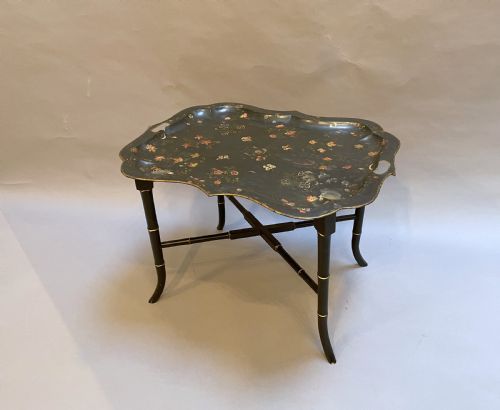


Antique Lacquer Coffee Table
An antique lacquer coffee table brings hand-painted scenes and deep glossy finishes directly into a living space, combining utility with decorative art.
Antique Lacquer Coffee Table
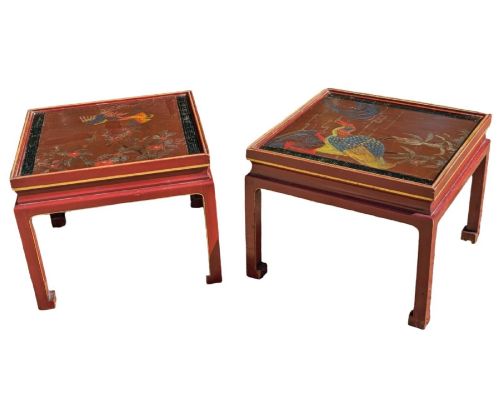
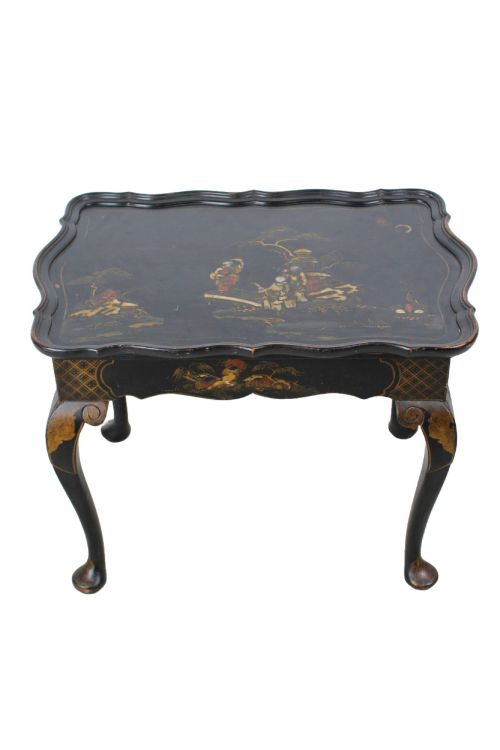
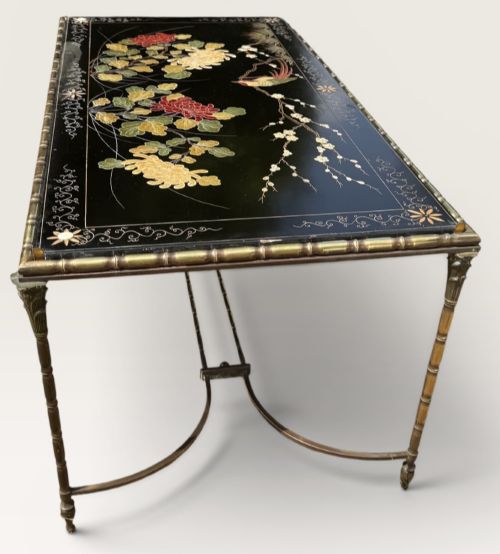
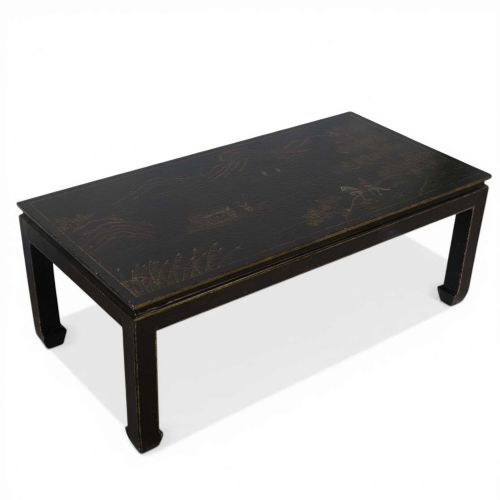
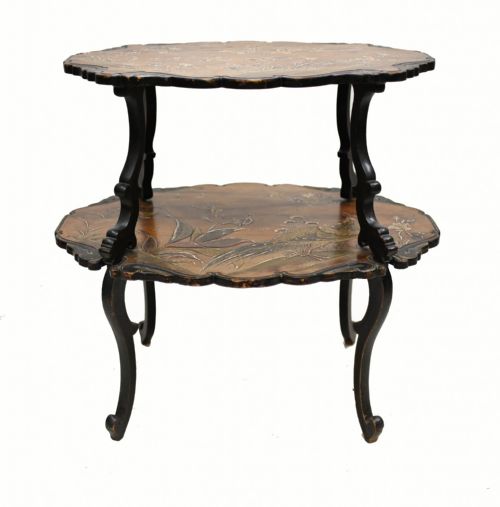
When you search for an antique lacquer coffee table, you encounter a diverse group of low tables adapted from earlier serving trays, nests, and low furniture forms. These pieces span the nineteenth and early twentieth centuries, drawing heavily on Chinoiserie, Regency, and Edwardian design traditions.
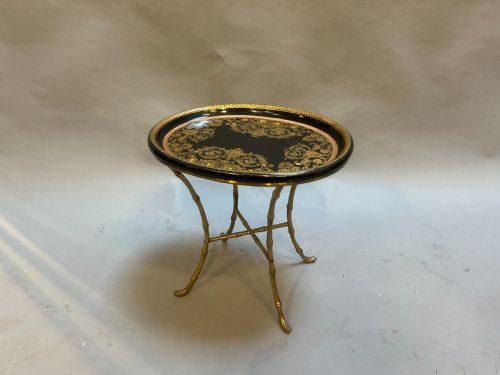
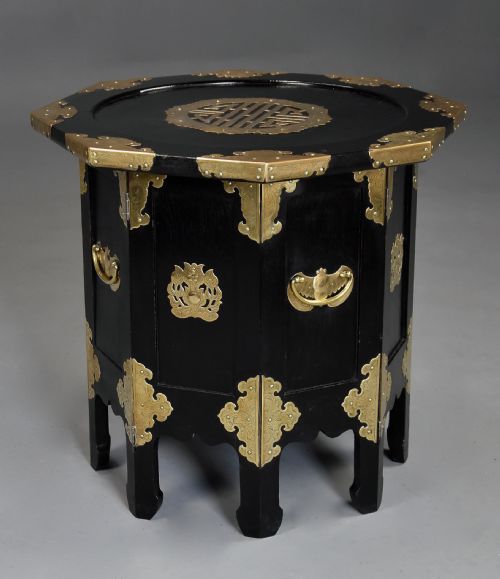
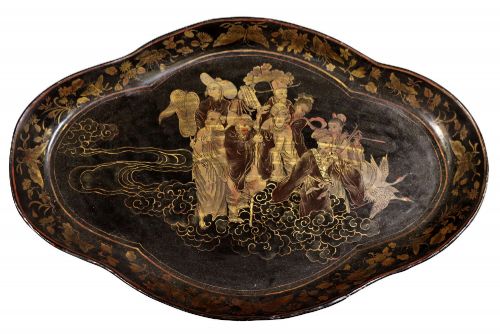
The most common form you will meet on this page is the tray table, where a deep papier-mâché or wooden serving tray rests upon a low support stand. Alongside these, the selection includes nests of occasional tables, low Burmese and Japanese tables, and English Japanned designs from the nineteen-thirties.
Origins vary widely across the inventory, encompassing English interpretations of Asian styles, French Louis XV revival pieces, and authentic items sourced from China, Japan, and Burma. Each piece demonstrates how makers transformed everyday utility items into decorative focal points through meticulous surface decoration.
Materials and construction methods
Makers built these tables using traditional woods, compressed papier-mâché, and ebonised frames, applying multiple layers of lacquer to create a hard, lustrous surface. Papier-mâché trays provide a remarkably smooth, durable base that accepts intricate painted detailing without warping.
Artisans built up the visual depth using hand-applied paint, gold leaf, and gilt highlights to render elaborate scenes of figures, landscapes, and floral motifs. Many examples integrate separate tray tops with later wooden stands, adapting historical serving trays into functional low tables for domestic use.
Several trays spent decades serving tea before discovering a second career as coffee tables.
Factors determining quality
Quality rests upon the crispness of the hand-painted decoration and the depth of the lacquer finish. Superior examples display finely detailed figures, gold leaf work, and well-preserved surface layers rather than flat, uniform printing.
The structural integrity of the base and the harmony between the top and the stand dictate the overall standard of the piece. Makers such as Jennens and Bettridge achieved superior results through advanced papier-mâché techniques and meticulous artistry that endure across generations.
Jennens and Bettridge·Henry Clay
The Antique Lacquer Coffee Table Glossary
- Chinoiserie
- European decorative style reflecting Chinese artistic influences, frequently seen in landscapes and figures depicted on lacquer surfaces.
- Japanning
- European imitation of Asian lacquerwork involving layered varnishes and painted designs, often finished to a high gloss.
- Papier-mâché
- Composite material made from paper pulp or sheets mixed with glue and resin, pressed into moulds and baked to form durable trays.
- Ebonised
- Wood treated with a dark stain or finish to simulate the appearance of solid ebony.
- Toleware
- Painted or enamelled metalware items, occasionally adapted into table tops.
Antique Lacquer Coffee Table: Frequently Asked Questions
What is an antique lacquer coffee table?
An antique lacquer coffee table is a low table featuring a lacquered surface, often created by placing a historical serving tray onto a custom stand. These tables frequently display hand-painted Chinoiserie scenes and glossy finishes.
Originating across the nineteenth and early twentieth centuries, they repurpose traditional serving trays and nest formats into functional furniture for modern living spaces.
How were tray tables used historically?
Historically, large lacquered trays served elite households for carrying tea, beverages, or food before being placed onto low folding stands when not in active service.
Over time, many of these trays found permanent marriage with dedicated wooden stands, transforming portable serving pieces into permanent low tables for the drawing room.
How do I care for a lacquer table?
Care for a lacquer table requires dusting gently with a soft, dry cloth and keeping the surface away from direct sunlight and excessive heat. Avoid using chemical sprays or abrasive cleaners that can damage the delicate varnished layers.
Using coasters and mats protects the historic surface from moisture rings and scratches, preserving the integrity of the original paintwork.
How can I tell the period of a lacquer table?
Dating a lacquer table involves examining the materials of the top, the construction of the stand, and the style of the painted decoration. Nineteenth-century pieces often utilise heavy papier-mâché bases, while later Edwardian and nineteen-thirties examples reflect changing tastes in wood selection and Japanning.
Maker signatures, where present, provide definitive clues to the exact workshop and decade of production.