


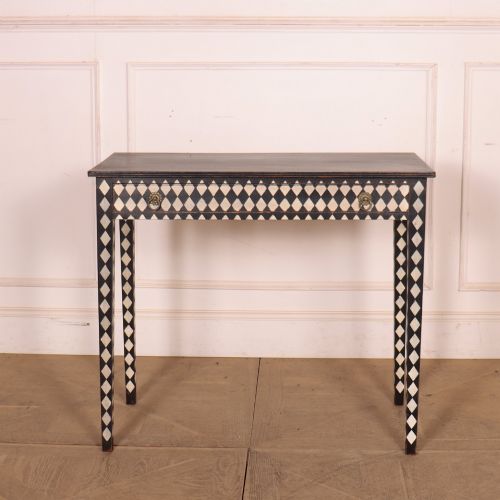
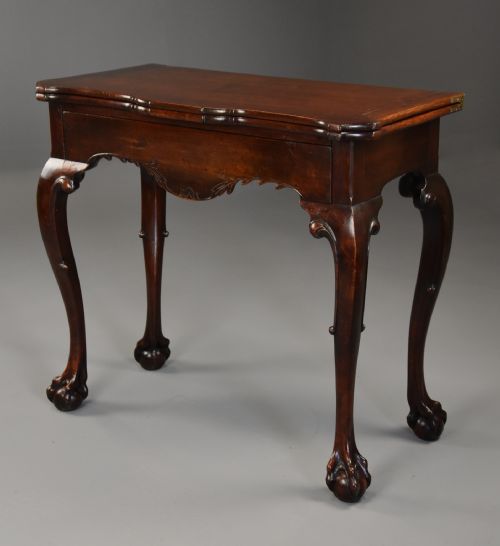


Black Wood Console
A black wood console delivers dark elegance to an interior, bringing striking contrast and architectural form to a hallway or reception room.
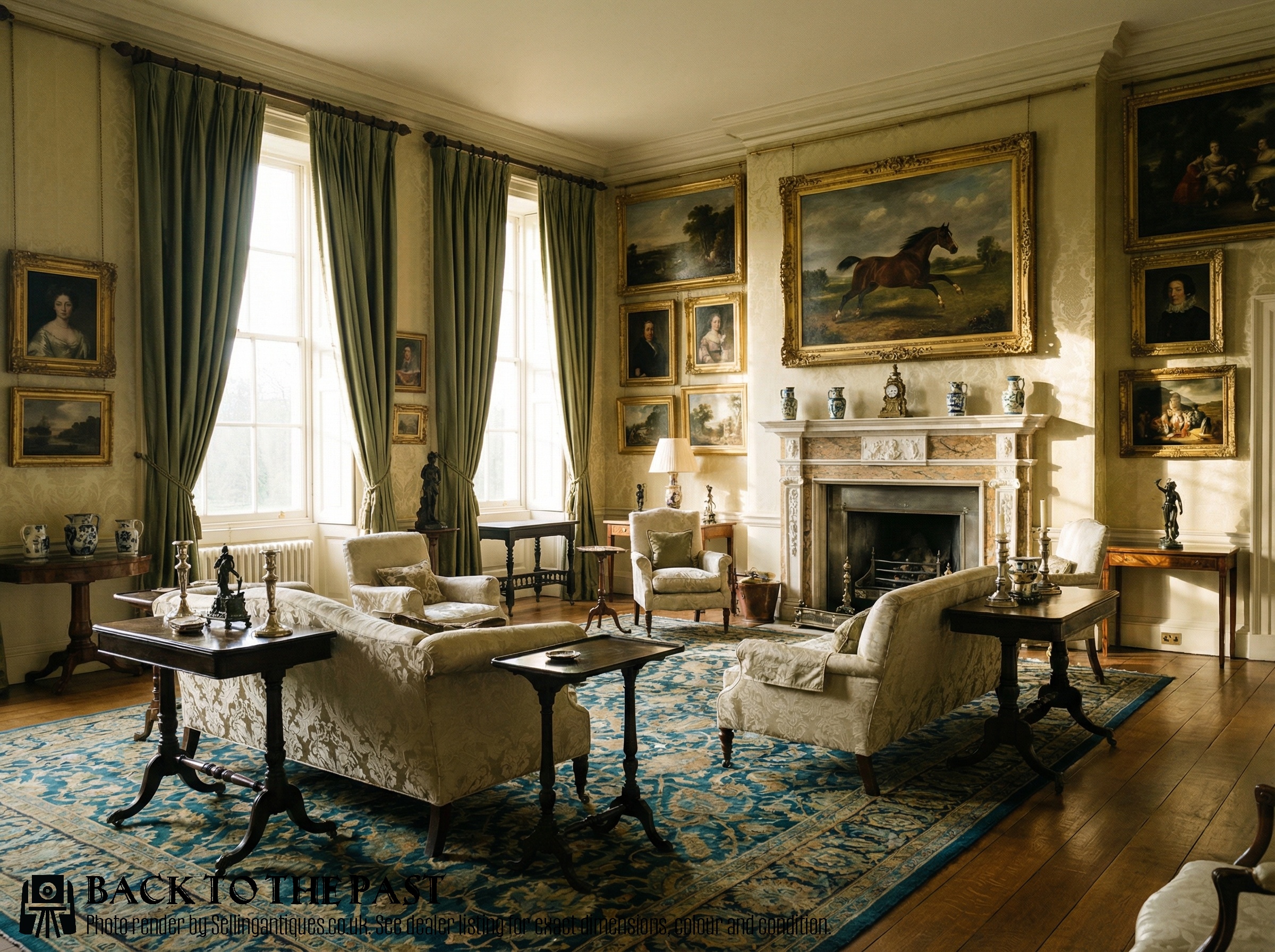
Black Wood Console
A black wood console encompasses dark-finished or painted tables designed to stand against a wall, frequently taking half-moon or rectangular forms.
You meet pieces spanning the eighteenth, nineteenth, and twentieth centuries, executed in ebonised timber, dark lacquer, or painted beech and mahogany.
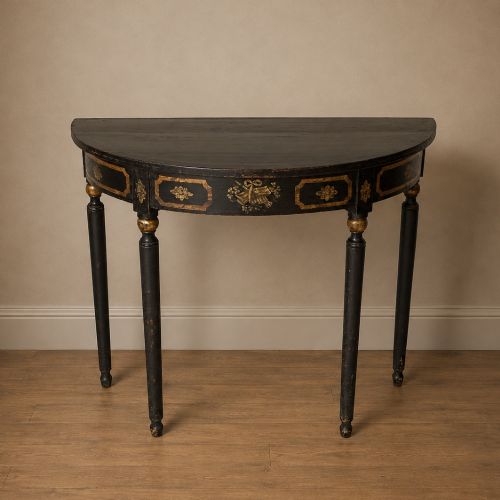
The selection ranges from restrained Regency demilune tables with parcel gilding to ornate Victorian Aesthetic Movement pieces and provincial painted examples.
Materials and Construction
Cabinet makers utilised hardwoods such as mahogany, walnut, and beech, applying dark paint, black lacquer, or ebonisation to achieve deep, light-absorbing surfaces.
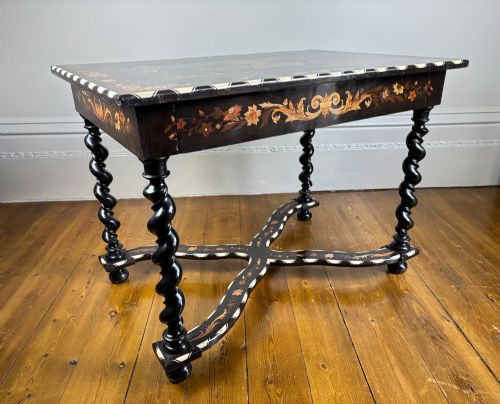
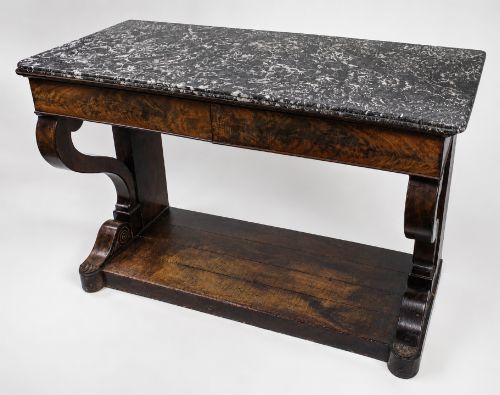
Many examples incorporate contrasting materials, pairing timber with marble tops, brass mounts, or delicate bone inlay and gold leaf detailing.
Carved decorative elements, marquetry, and parcel gilding frequently enrich the structure, showcasing traditional joinery alongside surface ornamentation.
Late nineteenth-century Black Forest tables take the remarkably literal form of seated hounds ready to hold your belongings.
Judging Quality
Quality rests in the depth of the ebonisation or paint finish and the crispness of any carved details, marquetry, or parcel gilding.
The sophistication of the design, whether following neoclassical lines or elaborate revival styles, dictates the standing of the piece.
Jenks & Woods·Henri Dasson
The Black Wood Console Glossary
- Ebonised
- Wood treated with stain, dye, or polish to simulate expensive ebony. This dark finish gained immense popularity during the nineteenth century.
- Demilune
- Half-moon shaped, describing tables built to fit flat against a wall. This profile saves floor space in narrow hallways.
- Parcel Gilt
- Partially gilded with gold leaf to highlight carved motifs or mouldings. It provides a sharp contrast against dark wood surfaces.
- Marquetry
- Inlaid patterns of wood veneer or other materials forming decorative pictures or geometric designs. Craftsmen carefully fit these elements into the surface.
Black Wood Console: Frequently Asked Questions
Where should I place a black wood console?
These tables find a natural home in entrance halls, reception rooms, and narrow corridors where their shallow profile fits against the wall.
They serve as a surface for lamps and decorative objects, often paired with a mirror hung directly above.
How do I date a black wood console?
Dating relies on identifying the structural timber, the style of the legs, and the method of surface finishing.
Eighteenth-century examples often feature hand-carved details and specific regional timbers, while Victorian pieces lean towards ebonised finishes and Aesthetic Movement motifs.
Are these consoles sturdy enough for daily use?
Period console tables are constructed from solid hardwoods designed to bear weight, though wall-fixing brackets are frequently used for stability on demilune shapes.
Care should be taken with marble tops and delicate applied ornaments during placement.
What is the difference between painted and ebonised wood?
Ebonisation involves staining or finishing a timber to mimic solid ebony while often allowing the natural grain to remain subtly visible underneath.
Painted wood relies on opaque pigments, ranging from simple country finishes to elaborate black lacquer and gilt work.