



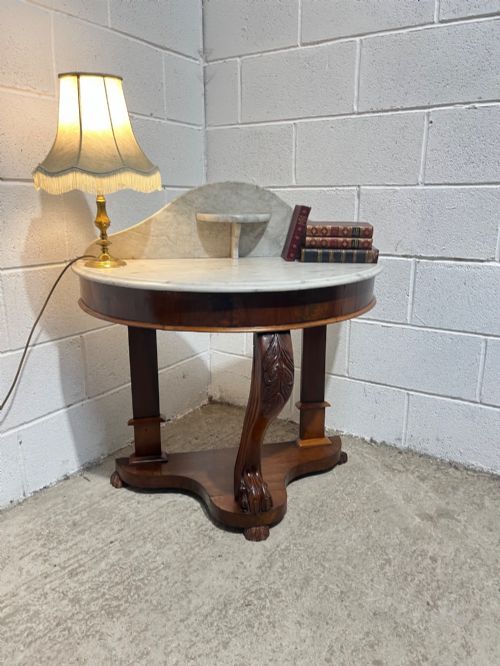
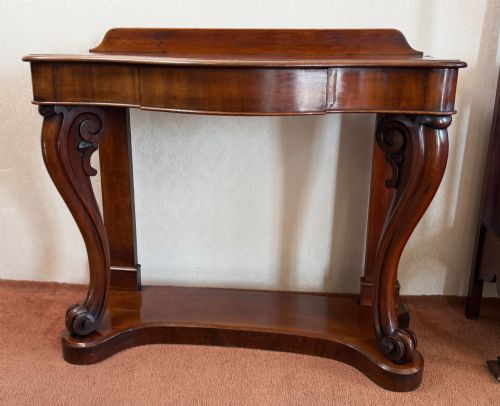
Dark Wood Pier Table
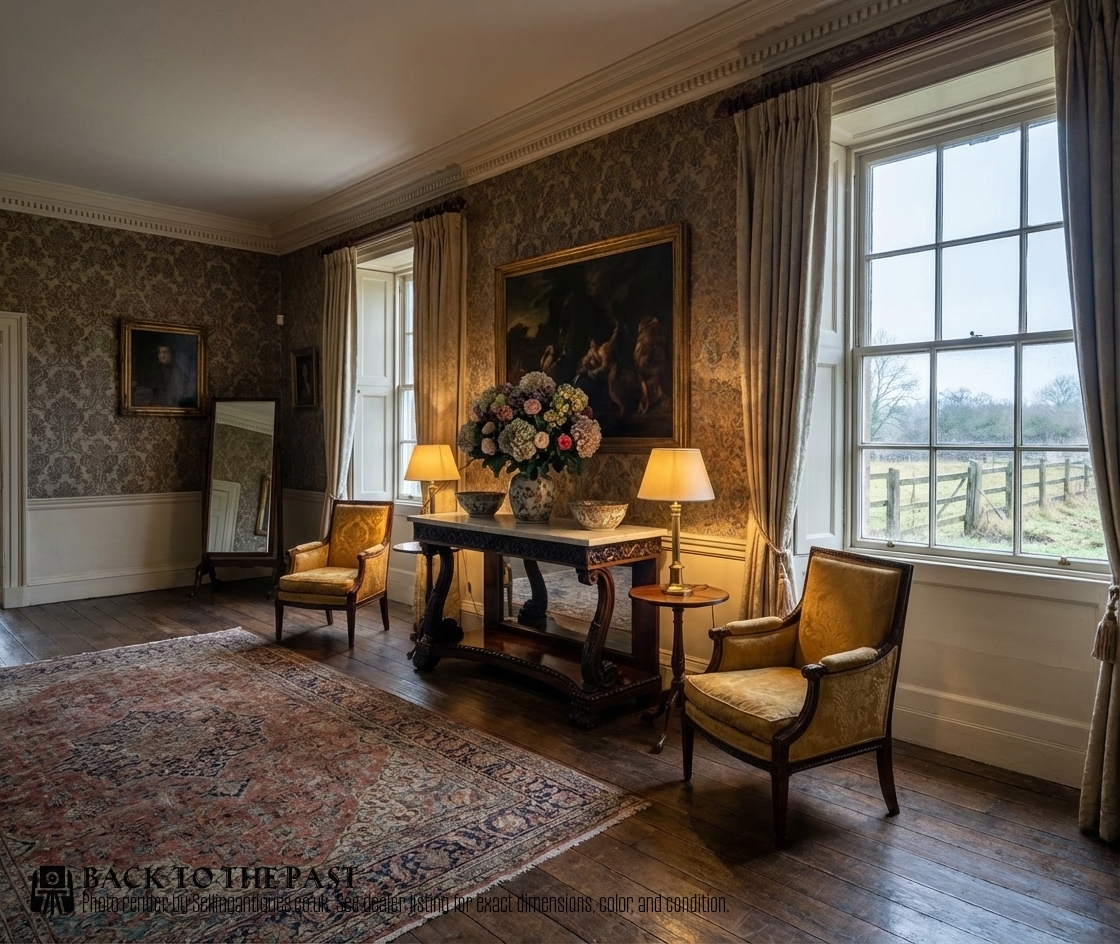
A dark wood pier table grounds a hallway or drawing room with solid mahogany, rosewood, and cool marble.
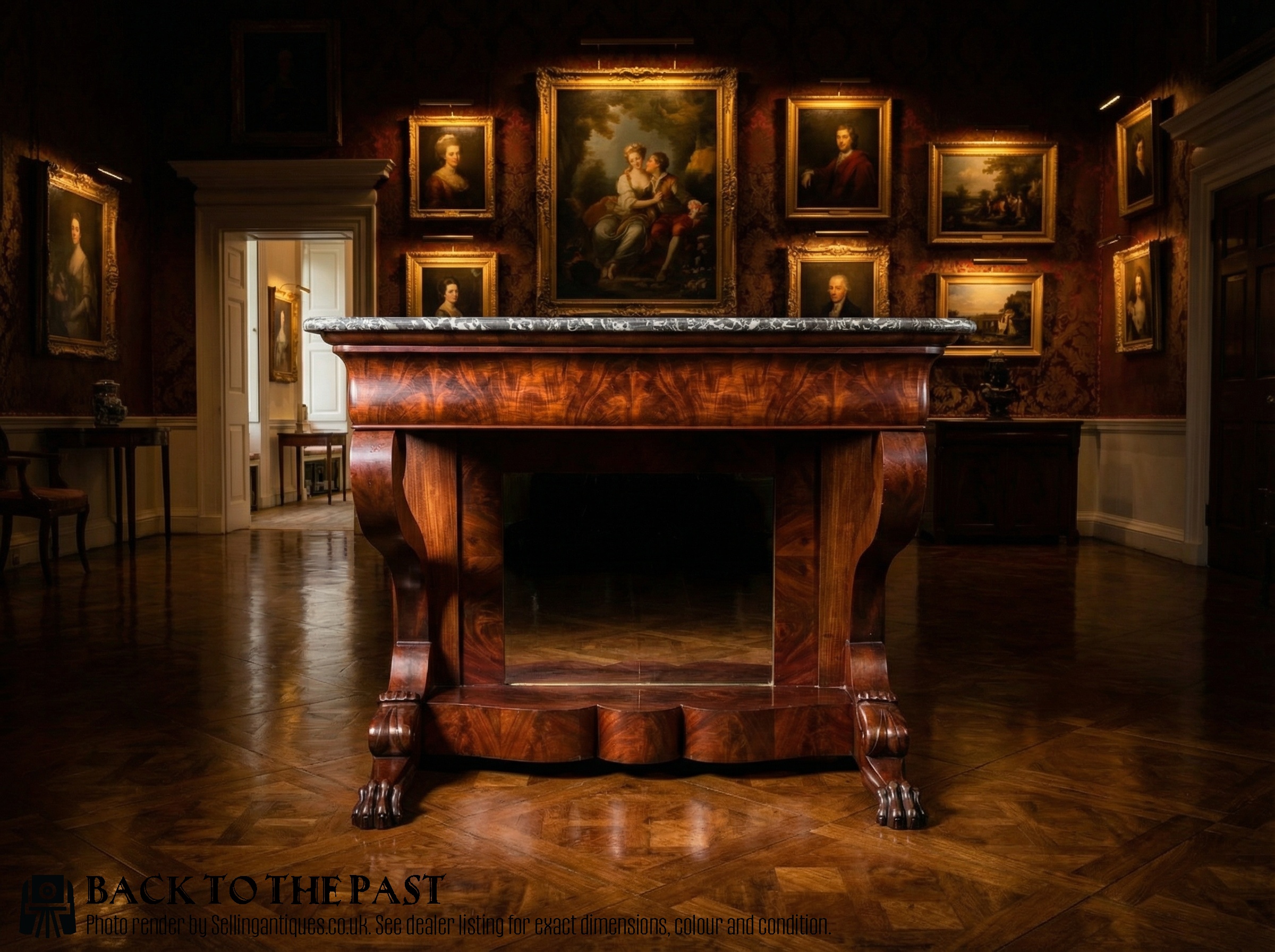
Dark Wood Pier Table
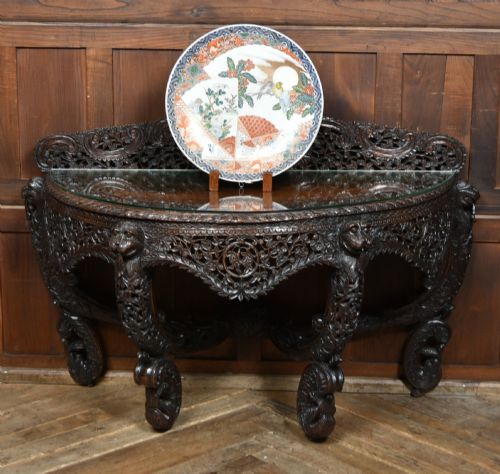
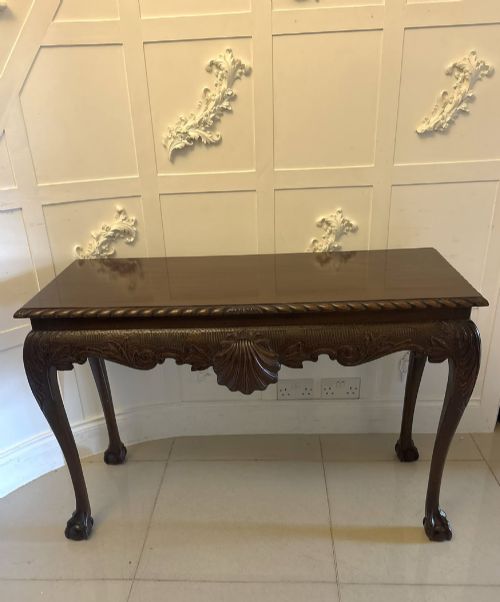
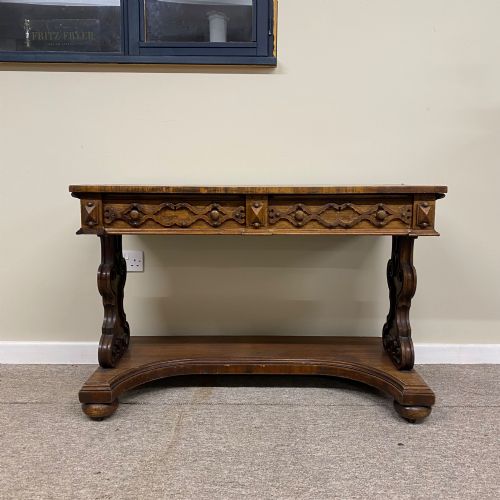
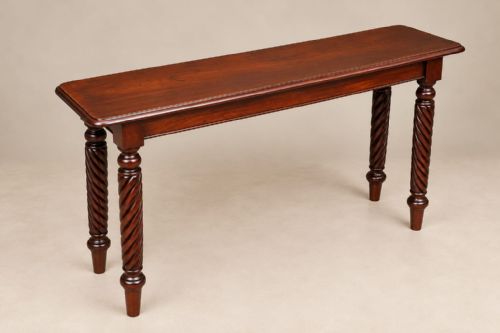
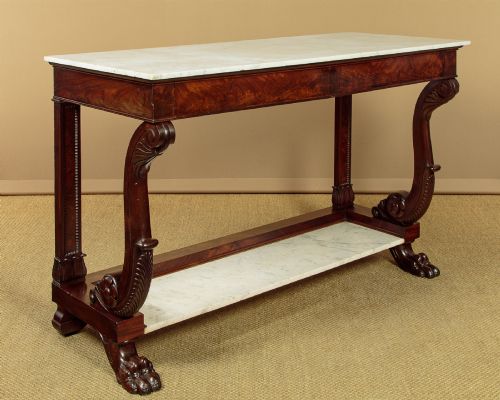
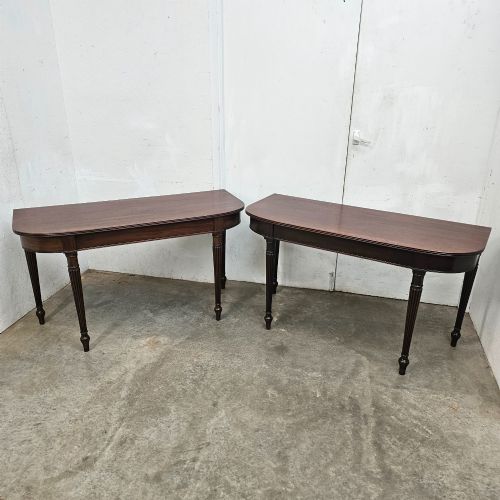
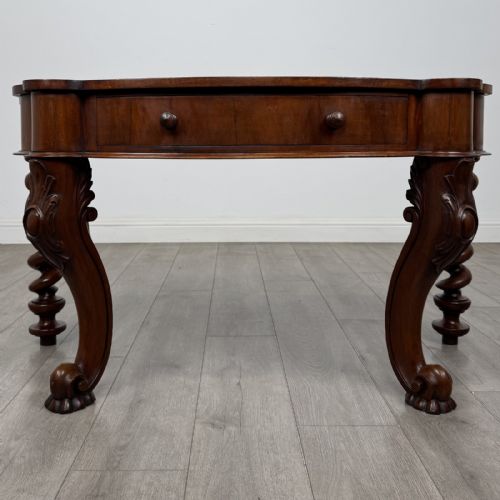
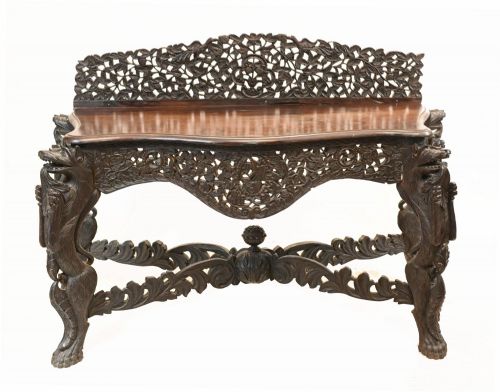
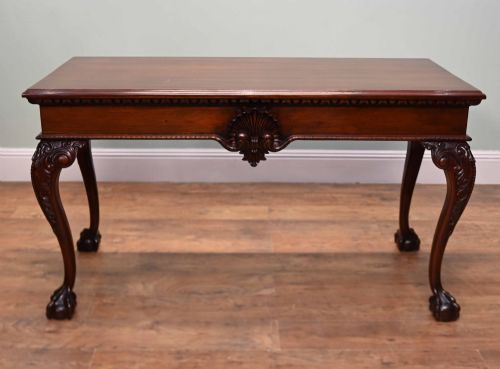
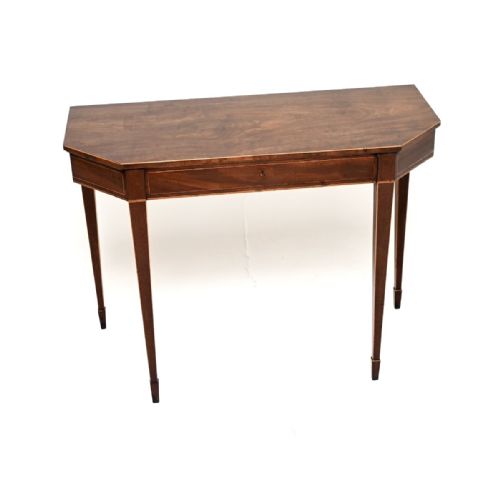
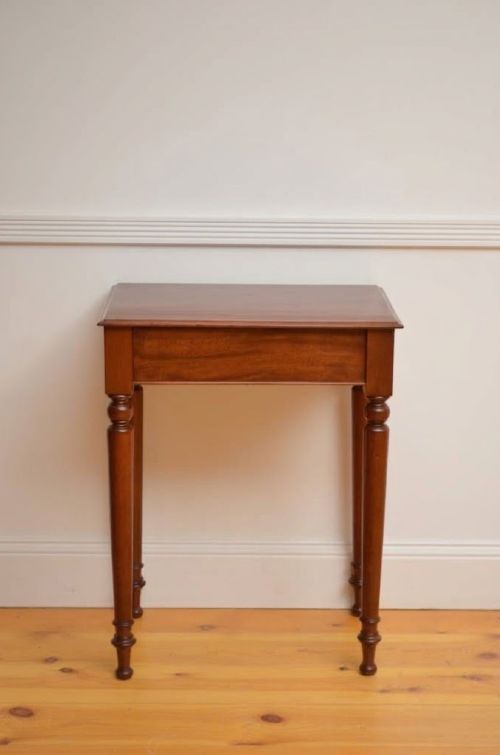
When you search for a dark wood pier table, you look for heavy side and console tables designed to stand against a wall, frequently beneath a mirror or window pier. The pieces on this page span the eighteenth, nineteenth, and early twentieth centuries, encompassing George III, Regency, Victorian, and Edwardian eras alongside French Empire and Anglo-Indian designs.
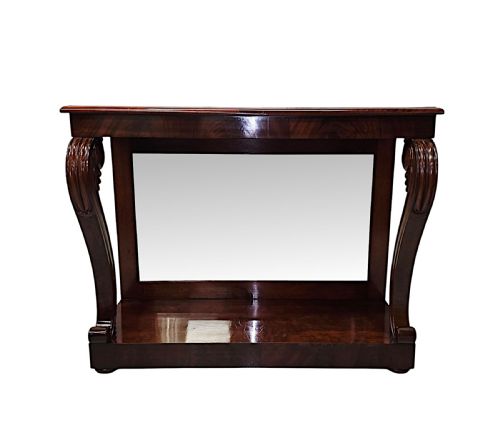
The dominant forms are console tables, demi-lune shapes, and serpentine fronts, executed primarily in rich mahogany and rosewood. Many examples pair the dark timber with inset marble tops, glass elements, or mirror backs, reflecting the formal entertaining spaces they originally inhabited.
Materials and construction
Cabinetmakers built these tables using dense timbers such as solid mahogany, flame mahogany veneer, and rosewood, sometimes applying paint to beech frames. Surfaces often incorporate heavy Italian or fossil marble slabs fitted precisely into the wooden rails.
Joinery techniques relied on sturdy frames to support the heavy stone tops, occasionally enhanced by carved ornamentation in the Neoclassical, Adams, or William IV styles. Brass mounts and mirror plates completed the assembly on more elaborate French and English examples.
Dark Wood Pier Table Retail Price Guide 2026
Typical asking prices for dark wood pier table among the pieces listed under this phrase on Sellingantiques today, from the lower quarter to the upper quarter. They describe what is for sale here now, not the wider market.
Listings feature mahogany and rosewood timber alongside marble, brass, and glass across the Georgian, Regency, and Victorian periods.
Variations in quality
Quality rests in the selection of the timber figures, such as highly grained flame mahogany or rich rosewood, and the integration of the marble top. Superior examples display crisp, hand-carved details and balanced proportions that reflect the aesthetic of their period.
The distinction between standard utility pieces and finer salon furniture lies in the harmony of the design, whether in a simple demi-lune shape or an elaborate French Empire console with a mirror back.
Gillingtons of Dublin·Robert Strahan
The Dark Wood Pier Table Glossary
- Demi-lune
- A half-moon shape common in eighteenth and nineteenth-century side and console tables designed to sit flush against a wall.
- Console table
- A table supported by brackets or legs against a wall, frequently paired with a matching mirror.
- Flame mahogany veneer
- A sliced timber finish showing a distinctive, flame-like grain pattern prized by cabinetmakers.
- Serpentine front
- A furniture front curving inward centrally and outward at the ends in a gentle wave.
Dark Wood Pier Table: Frequently Asked Questions
Where do you place a pier table?
These tables traditionally stand against the wall space between two windows, often beneath a tall hanging mirror.
In modern rooms, they work well in hallways or living spaces where a shallow footprint is required.
Are the marble tops original?
Many tables retain their heavy Italian or fossil marble tops fitted directly into the timber frame during construction.
Matching the stone to the era helps confirm its authenticity alongside the mahogany or rosewood base.
What is the difference between a console and a pier table?
While both stand against walls, pier tables specifically occupied the architectural pier between windows.
Console tables use a broader category of wall-mounted or bracketed support tables.
How do I identify a Regency piece?
Regency tables often display classical Neoclassical restraint, dark mahogany timbers, and occasionally brass inlay.
They reflect early nineteenth-century British taste drawing from Greek and Roman precedents.