





Long Sofa Table
A long sofa table brings proportion and utility to a room, offering surface space behind seating or along hallways.
Long Sofa Table
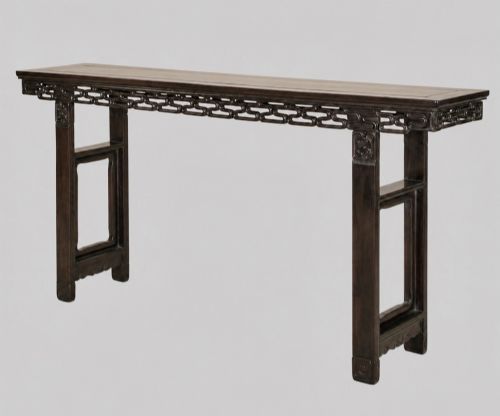
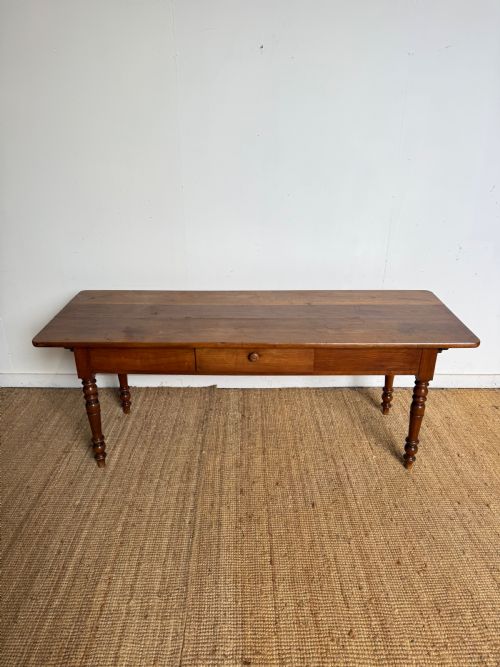
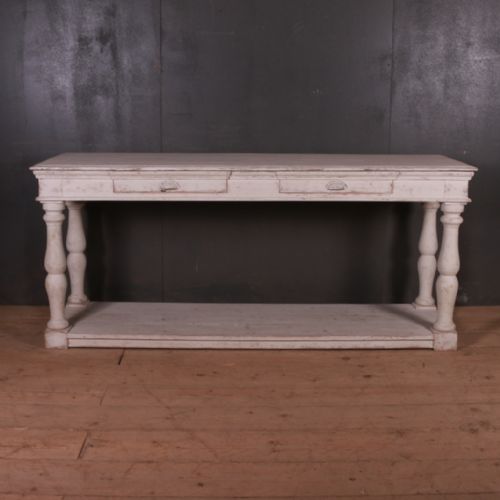
A long sofa table encompasses narrow side tables, console tables, altar tables and serving tables spanning several periods and regions. When you search for a long sofa table, you encounter forms designed to sit neatly against walls or behind furniture without blocking walkways.
The pieces on this page draw from nineteenth-century European traditions, Edwardian oak designs, and Asian craftsmanship including Qing Dynasty hardwood. You meet English oak side pieces, French painted beech consoles, and Italian walnut examples.
Makers adapted these proportions for practical tasks, producing narrow gateleg dining tables, trestle tables, and carved Chinoiserie hall tables. Oak and pine appear alongside cherrywood, elm, and hardwood.
How they were made
Cabinet makers utilised solid timbers including oak, pine, beech, and cherrywood, joining boards with traditional peg and mortise techniques. Hardwood altar tables and Chinese elm tables demonstrate regional joinery designed to stabilise long, narrow spans without modern adhesives.
Surface finishes range from natural waxed grain and polished walnut to applied paint on beech and intricate carving on Chinoiserie and Gothic underframes. Metal fittings such as brass appear on specific forms, while trestle and gateleg mechanisms provide structural support for extended surfaces.
Long Sofa Table Retail Price Guide 2026
Typical asking prices for long sofa table among the pieces listed under this phrase on Sellingantiques today, from the lower quarter to the upper quarter. They describe what is for sale here now, not the wider market.
Current listings span the eighteenth, nineteenth, and early twentieth centuries, featuring oak, pine, hardwood, walnut, cherrywood, and beech.
What varies in quality
Quality rests in the integrity of the timber selection and the precision of the underlying joinery that keeps a long surface rigid. Tables with well-balanced proportions and unwarped tops show superior initial construction from skilled workshops.
The refinement of carved detail, whether on a Gothic underframe or a Chinoiserie frieze, separates standard utilitarian tables from finer decorative pieces. Original surface treatments and patination also distinguish untouched examples from heavily restored or later painted items.
The Long Sofa Table Glossary
- Console table
- A table designed to be fixed against a wall, often supported by ornate legs or brackets rather than four freestanding posts.
- Gateleg table
- A table with hinged leaves supported by swing-out legs that fold away when the surface is reduced in size.
- Altar table
- A traditional Asian long rectangular table, often featuring high-relief carving or upturned flanges at the short ends.
- Chinoiserie
- European artistic style and decoration reflecting Chinese motifs, popular in furniture production during past centuries.
- Trestle table
- A table consisting of two or more support frames connected by a horizontal beam over which the long top rests.
Long Sofa Table: Frequently Asked Questions
Where should a long sofa table go?
These pieces fit naturally behind a sofa or along a narrow hallway where floor space is limited. Their elongated proportions allow them to hold lamps and decorative objects without obstructing movement.
They also function effectively as serving surfaces in dining rooms or against perimeter walls in reception spaces.
How do I identify an Edwardian piece?
Edwardian items typically date from the early twentieth century and frequently utilise oak or pine with restrained decoration. They reflect domestic utility and practical interior design trends of that decade.
Construction methods during this period combined traditional hand joinery with early industrial machinery.
What is the difference between a console and a side table?
Console tables historically attached to walls or relied on front supports, designed primarily for display rather than heavy weight. Side tables stand independently on four legs and generally offer more robust daily utility.
Both forms appear frequently within long and narrow dimensions.
Are these tables suitable for daily dining?
Certain variations such as narrow gateleg tables or trestle designs served functional dining purposes in smaller domestic settings. Their extended surface area accommodates place settings while maintaining a compact footprint.
Checking the leg clearance and underframe stability helps determine suitability for frequent sitting use.