
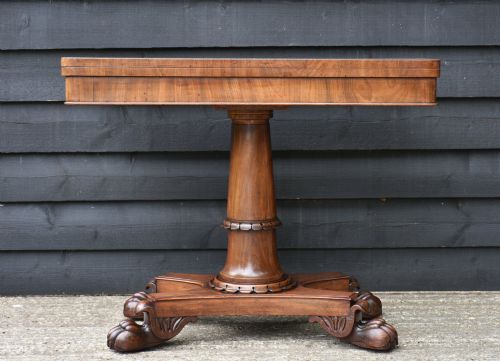
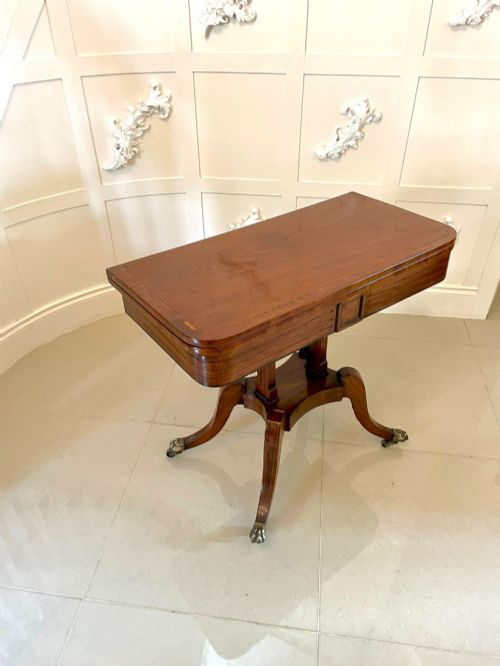
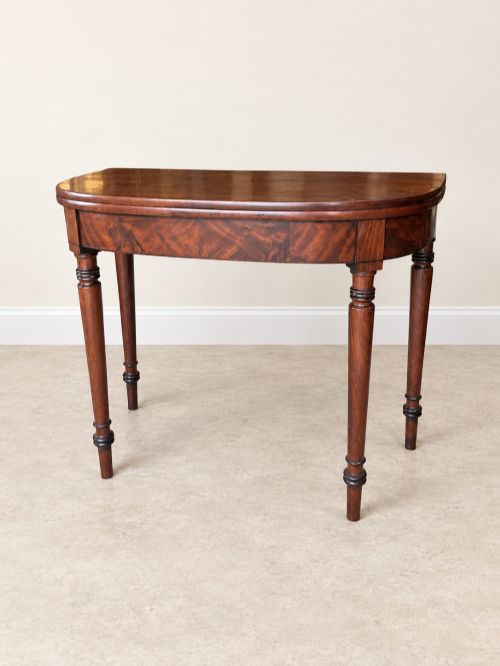

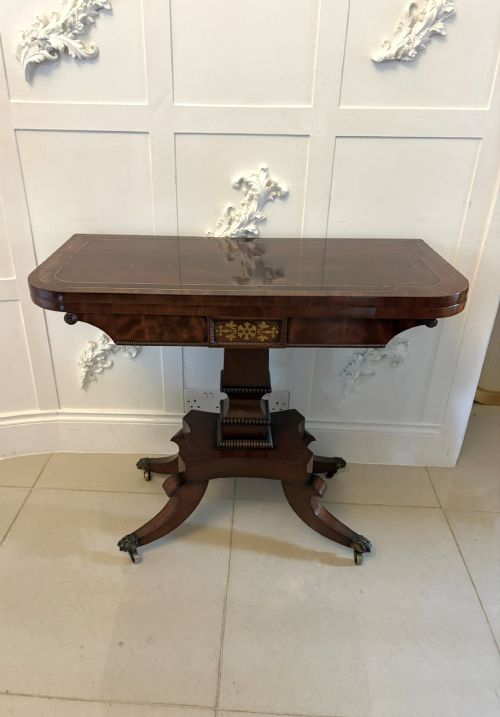
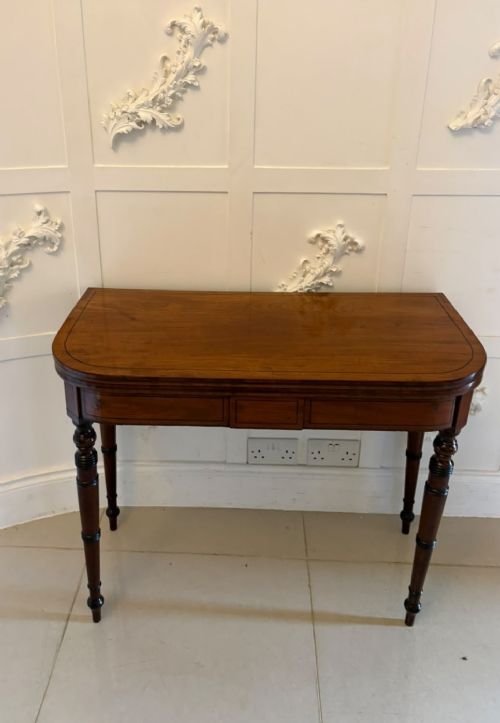
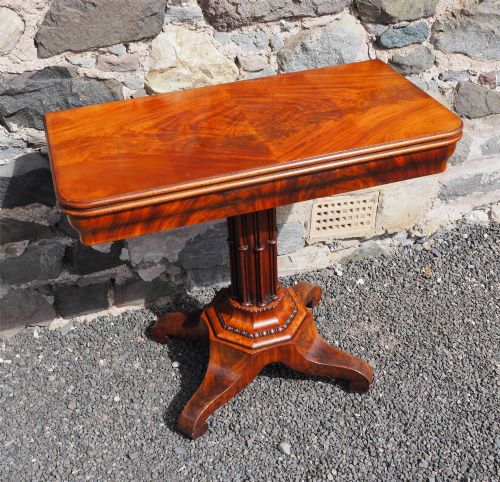
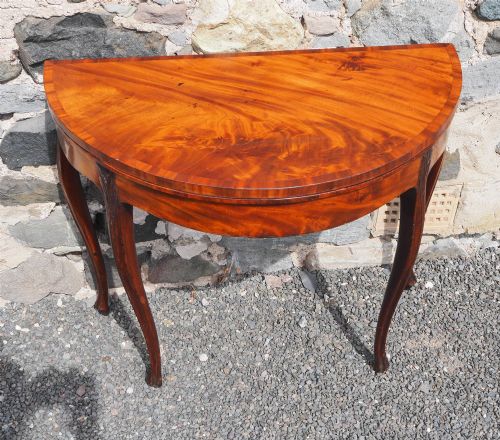
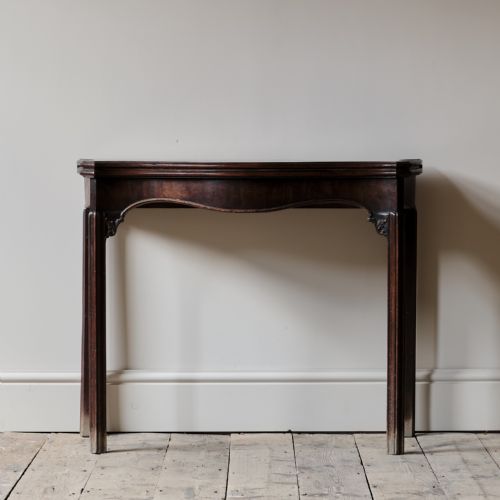
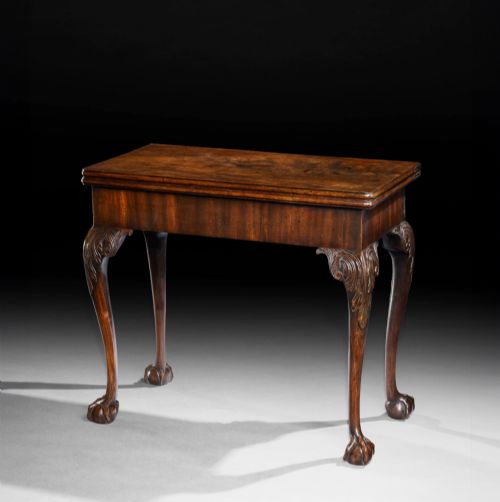
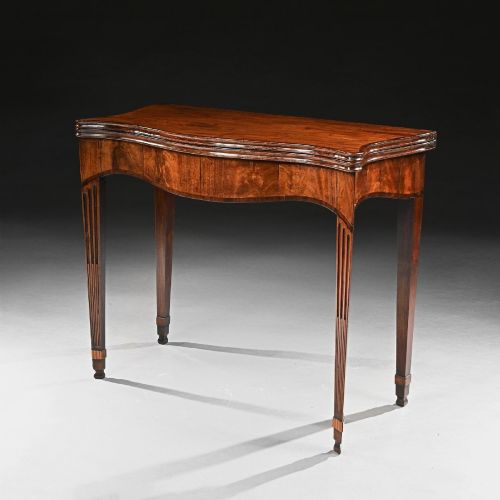
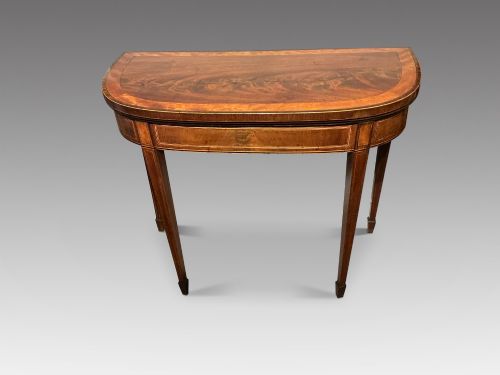
Georgian Mahogany Games Table
A georgian mahogany games table offers clever engineering and rich timber, folding from a sleek side console into a proper surface for cards or tea.
What a georgian mahogany games table is
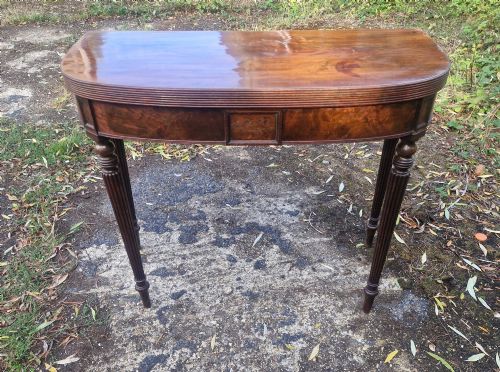
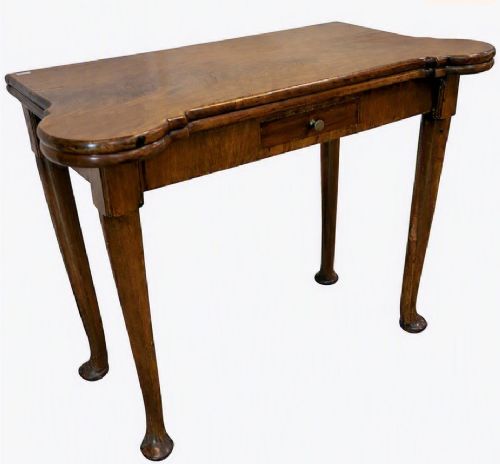
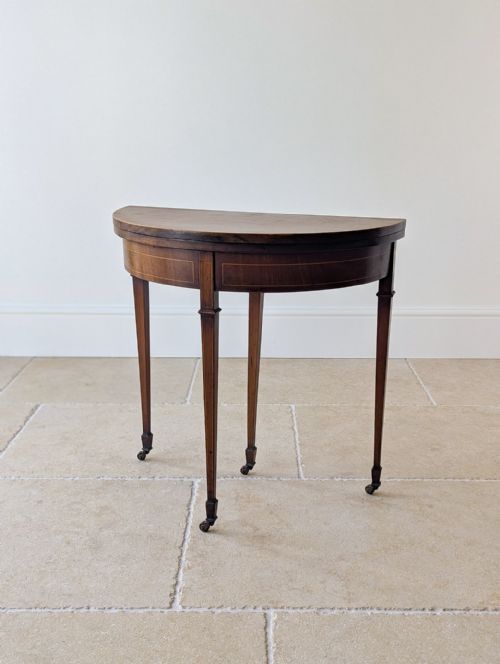
A georgian mahogany games table is a multifunctional piece designed to sit neatly against a parlour wall until cards, tea, or social gaming required a larger surface. The listings show forms ranging from straight-sided card tables to demi-lune, serpentine, and D-end consoles that unfold or pivot to reveal a baize-lined interior.
Most examples found here date across the eighteenth century and into the early nineteenth century, spanning George II, George III, and late Georgian periods. Card tables and side tables dominate the selection, often serving double duty as tea tables with clever concertina actions or fold-over leaves.
Makers and cabinet-makers of the time utilised dense, figured timber to create versatile furniture that suited both intimate drawing rooms and larger formal halls. These pieces bridge decorative console design with practical domestic utility.
How they were made
Cabinet-makers constructed these pieces primarily from solid and veneered mahogany, often selecting rich figured timber for the main top and frieze. Workshops integrated secondary woods for internal framing and structural stability.
Decorative detailing relied on precision craftsmanship, incorporating boxwood stringing, satinwood crossbanding, and subtle inlay work along the borders and edges. Joints were pinned and glued to support the weight and movement of folding leaves and concertina frames.
Retail Price Guide 2026
Typical UK retail prices for georgian mahogany games table, calculated from the Sellingantiques database of over a million retail prices indexed since 2003. This retail price guide relies exclusively on Sellingantiques data; no external sources or auction records are used, so the figures do not describe the wider market.
Several tables retain enough hidden depth inside their frames to suggest generations of lost gaming counters still rattle away in the joints.
What varies in quality
The sophistication of the folding mechanism separates standard tables from exceptional ones, with concertina actions requiring far more complex joinery than simple swivel tops. Smooth movement in the legs and frame indicates superior original construction.
The choice and figuring of the mahogany timber dictate the visual impact of the piece. Tables featuring meticulously matched veneers, fine boxwood stringing, and crisp carving along the frieze or legs represent the highest tier of cabinet-making.
The Georgian Mahogany Games Table Glossary
- Concertina action
- An expanding frame mechanism that allows the rear legs to move outward in unison with the unfolding top, providing full structural support to the open leaf.
- Demi-lune
- A half-moon shape characteristic of console tables designed to sit flush against a wall when closed.
- Crossbanding
- A border of veneer laid perpendicular to the grain of the main surface, often framed with narrow contrasting stringing.
- Boxwood stringing
- Thin lines of pale wood inlaid into grooves on the mahogany surface to create geometric borders.
- Baize
- The traditional woollen felt fabric used to line the playing surface of card tables.
Frequently Asked Questions
How do you open a folding games table?
Most tables feature a top leaf that lifts and rotates on hinges, or a concertina frame that pulls outward to support the unfolded surface. The internal compartment often reveals a shallow well for storing cards and counters.
Care should be taken to support both sides evenly when operating the mechanism, as centuries-old hinges require gentle handling rather than force.
Were these tables only used for playing cards?
While primarily built for card games like whist or quadrille, many examples functioned as tea tables or general side consoles. The dual-purpose nature made them essential for entertaining in period parlours.
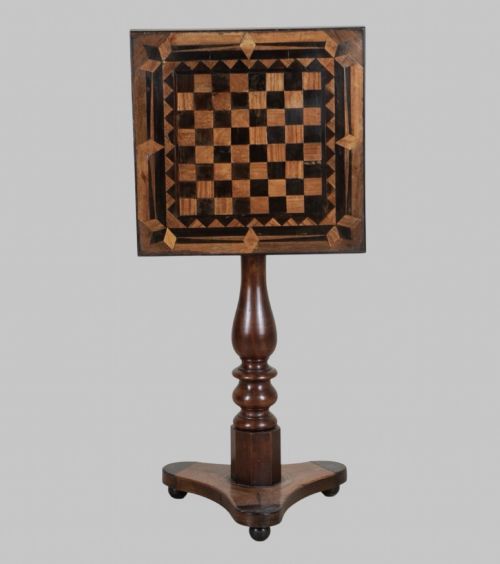
Double-action and triple-top variants allowed households to switch between serving tea and setting up gaming boards within the same evening.
Where should I place a games table in a modern home?
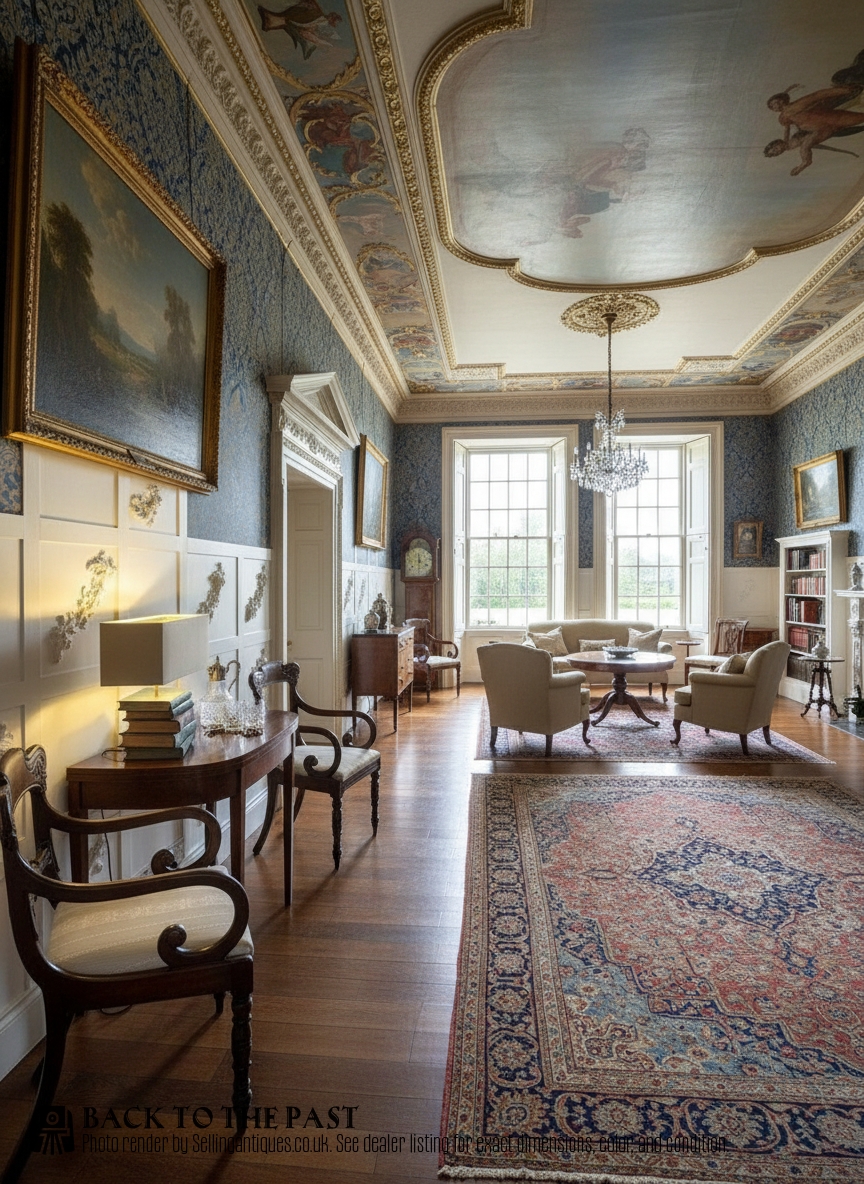
These tables sit particularly well against a hallway or living room wall in their closed console format, taking up very little floor space. They also function effectively as sofa tables or decorative side pieces beneath a mirror.
Opening the leaf transforms the piece into a striking focal point, though placing them away from direct sunlight protects the antique mahogany and veneer.