

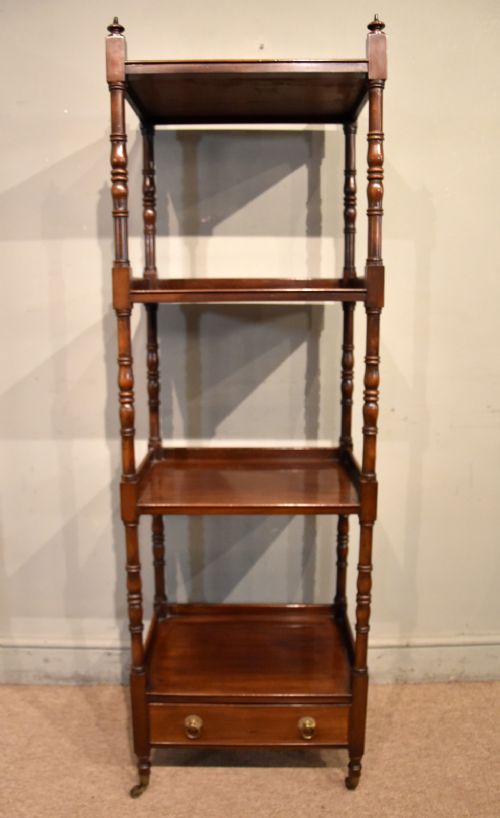
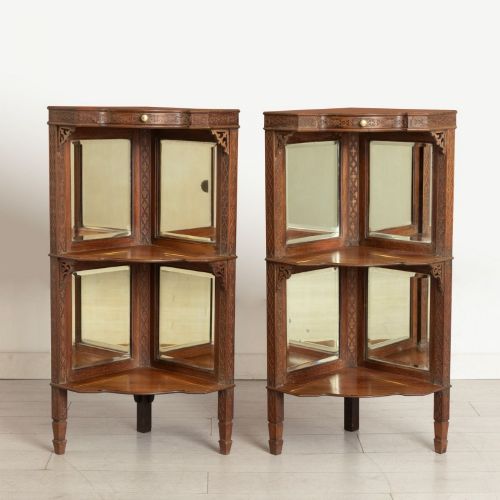


Late Victorian Etagere
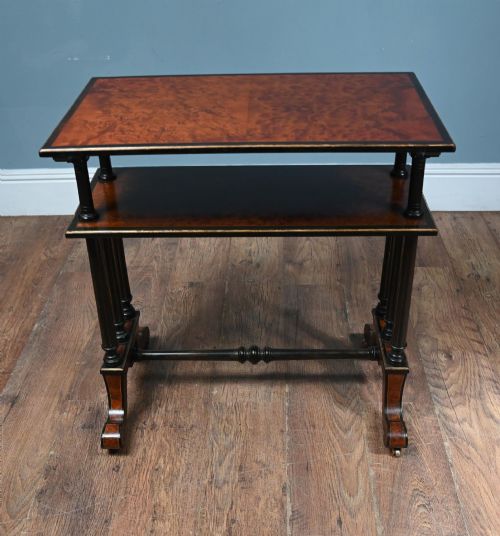
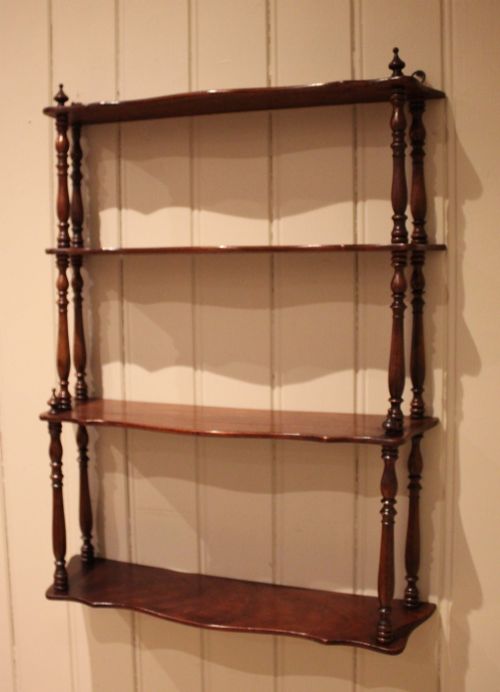
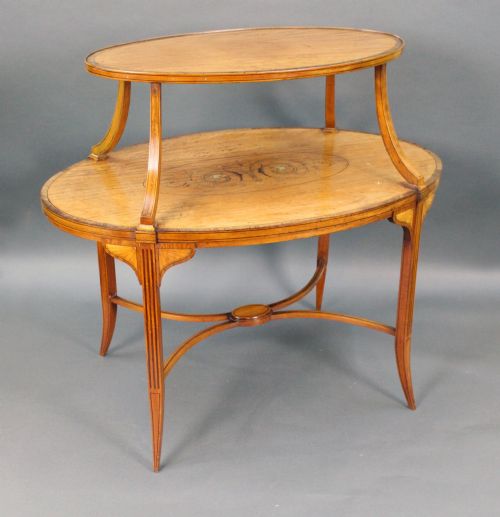
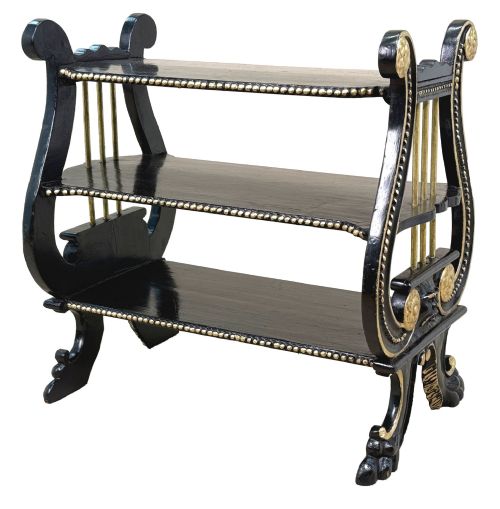
A late victorian etagere brings tiered display and open shelving to a room, offering multiple surfaces for ornaments and books.
Late Victorian Etagere
A late victorian etagere provides tiered shelving designed for display and occasional use, drawing on periods spanning the late nineteenth century and the turn of the twentieth century. These freestanding or corner pieces take forms such as etageres, whatnots, side tables, and tier tables.
The versions most frequently met on this page combine mahogany, ebonised wood, bamboo, or inlaid decoration within Victorian, Aesthetic Movement, and French Rococo Revival styles. They serve as practical display furniture that fits easily into corners or beside seating.
How they were made
Cabinet makers utilised traditional timber construction, working with solid mahogany, oak, rosewood, and ebonised wood alongside exotic materials like bamboo. Many surfaces feature marquetry inlay, burr walnut veneers, or parcel gilding.
Structural elements include turned supports, carved giltwood, glass panels, and brass or ormolu mounts that secure the multiple tiers and shelves together.
Late Victorian Etagere Retail Price Guide 2026
Typical asking prices for late victorian etagere among the pieces listed under this phrase on Sellingantiques today, from the lower quarter to the upper quarter. They describe what is for sale here now, not the wider market.
Bamboo tables bring an unexpected conservatory charm indoors.
What varies in quality
Quality rests on the crispness of the cabinet work, the selection of timber veneers such as burr walnut, and the precision of marquetry inlay. Maker attribution to firms like Edwards & Roberts also distinguishes finer workshop production from standard commercial output.
Edwards & Roberts·Leonard Wyburd For Liberty & Co
The Late Victorian Etagere Glossary
- Étagère
- A piece of furniture consisting of a set of open shelves for displaying small objects or ornaments. It typically stands on slender uprights or legs.
- Whatnot
- A multi-shelved piece of furniture used for storing or displaying books, ornaments, or china. It shares similarities in form with the etagere.
- Marquetry
- Decorative veneer work in which thin pieces of wood, shell, or ivory are fitted together to form geometric or pictorial designs. This technique decorates tabletops and tier surfaces.
- Parcel Gilded
- Partially covered with gold leaf or gilt, usually to highlight carved details or mouldings. This finish enhances specific wooden elements on the piece.
- Ormolu
- Gilded bronze or brass mounts applied to furniture for decorative effect. These metal mounts appear on French style pieces.
Late Victorian Etagere: Frequently Asked Questions
What is a late victorian etagere used for?
These pieces were designed to hold decorative objects, porcelain, and small books across their multiple open tiers. They allowed households to display collections in principal rooms without blocking light or taking up excessive floor space.
Today, they function well in similar ways, serving as corner display units, bedside stands, or occasional tables for lamps and plants.
How do you style an etagere?
Styling relies on balancing items across the different tiers, pairing taller objects on lower shelves with smaller pieces higher up. Mixing materials like ceramics, glass, and books creates visual weight.
Keeping the arrangement uncluttered lets the woodwork and marquetry inlay remain visible beneath the displayed items.
What is the difference between an etagere and a whatnot?
While both terms describe multi-tiered shelving units, etagere often implies a lighter, more decorative French influence, sometimes incorporating mirrors or marquetry. Whatnot tends to describe sturdier utility shelving.
In practice, nineteenth century makers and retailers used the terms interchangeably for similar tiered furniture forms.
How do I care for bamboo furniture?
Bamboo pieces require dry conditions and protection from direct sunlight to prevent the natural material from splitting or warping. Dusting with a soft brush keeps the joints clean.
Applying occasional light polish maintains the surface sheen without damaging the lacquer or bindings.