

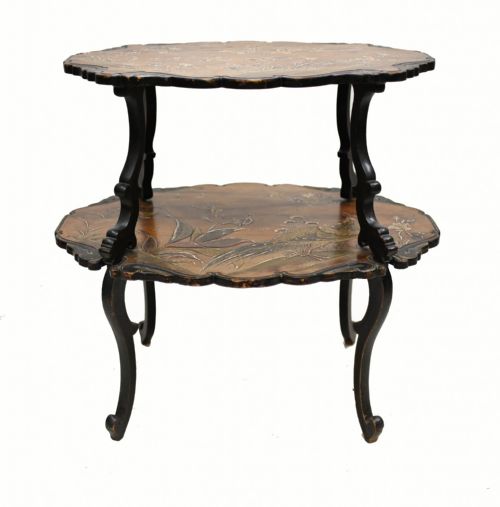


Victorian Etagere Table
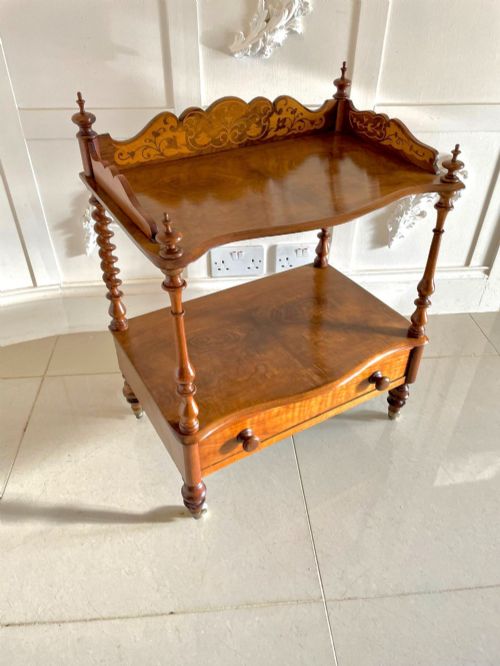
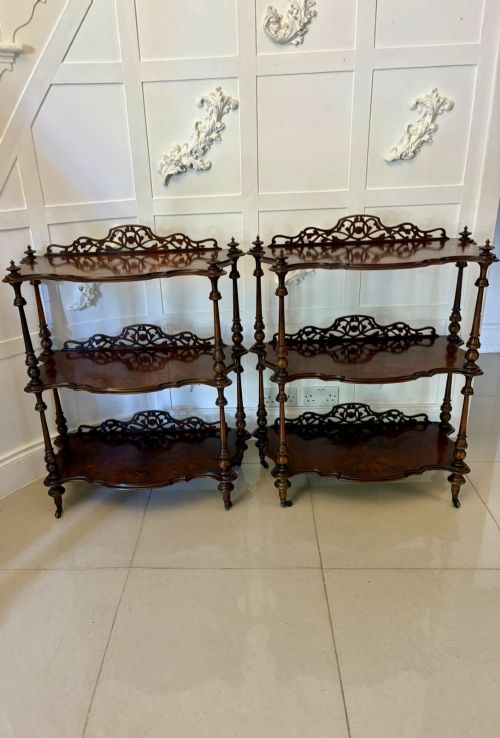
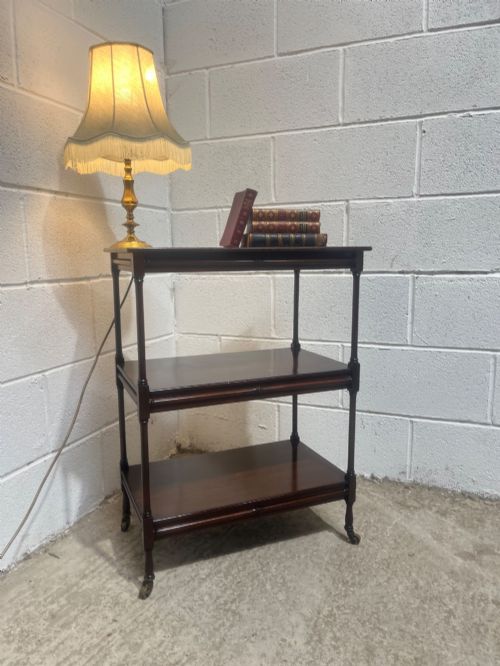
A victorian etagere table brings tiered display and surface utility together, offering layered timber shelves suited to lamps, books and small ornaments.
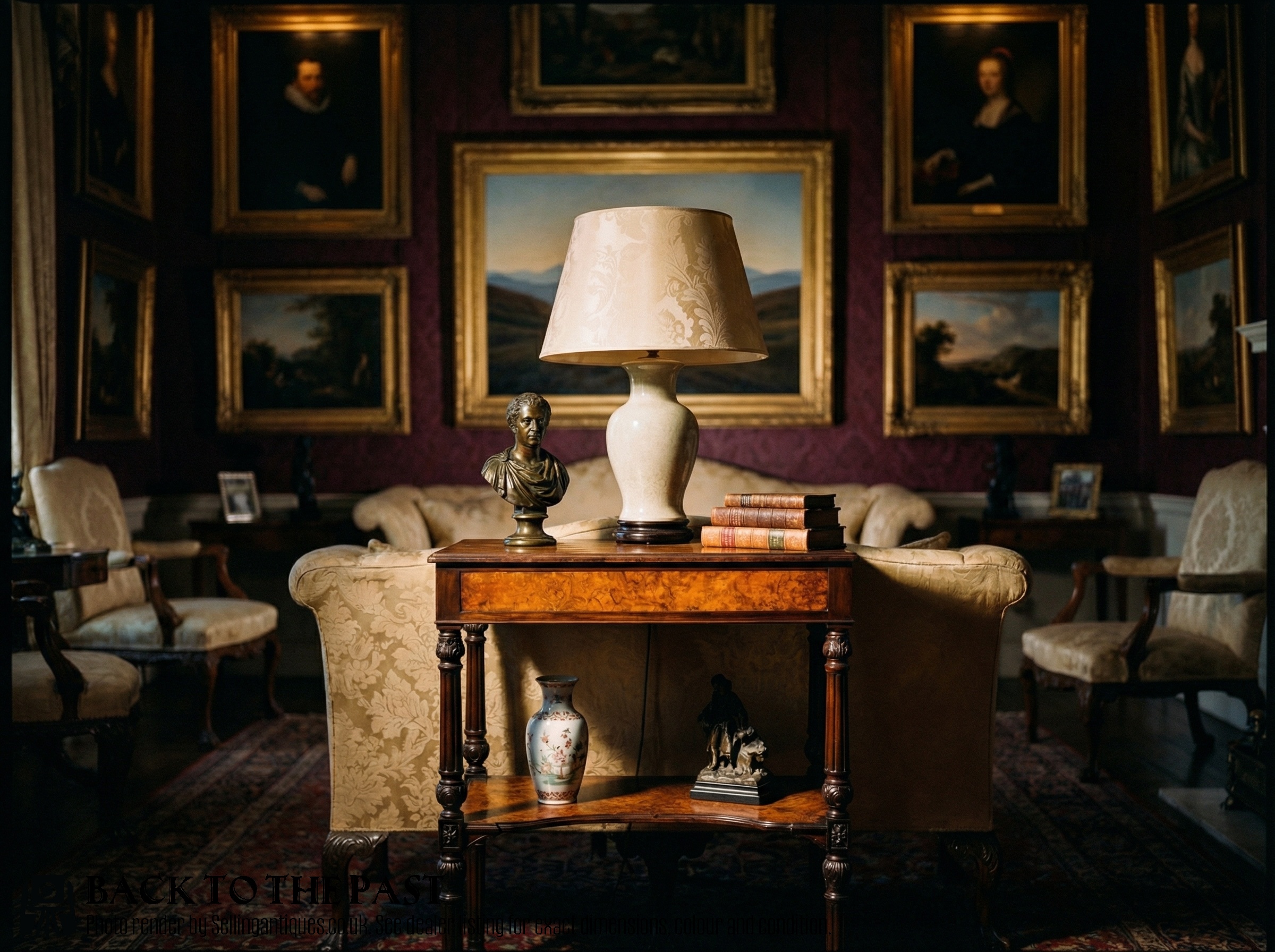
Victorian Etagere Table
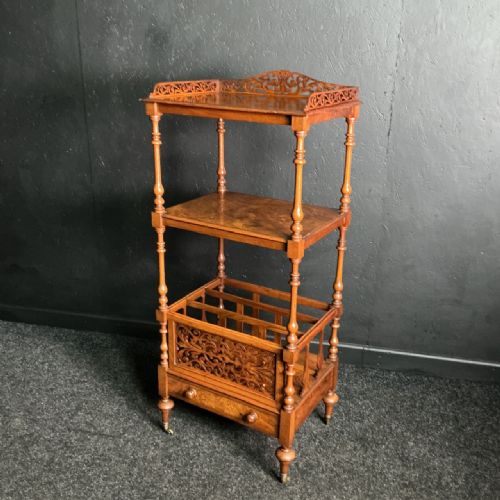
A victorian etagere table functions primarily as an open tiered display piece, combining the roles of a whatnot, side table and occasional stand. These tiered items provide multiple levels for arrangement while occupying a modest footprint on the floor.
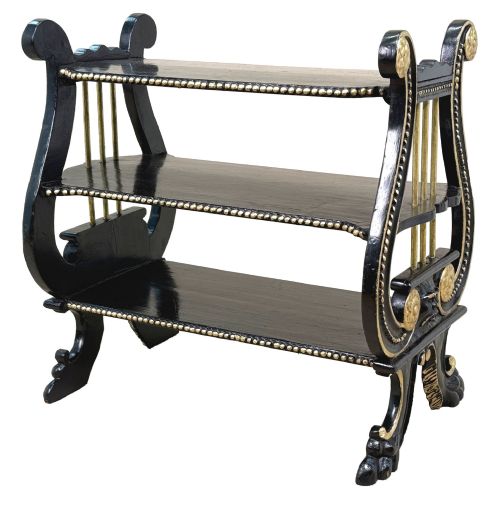
The selections encountered here span nineteenth century forms, including multi-tiered mahogany trolleys, burr walnut bedside tables and ebonised display stands. Many examples date from the Victorian decades, with occasional pieces extending into Georgian origins and early twentieth century revivals.
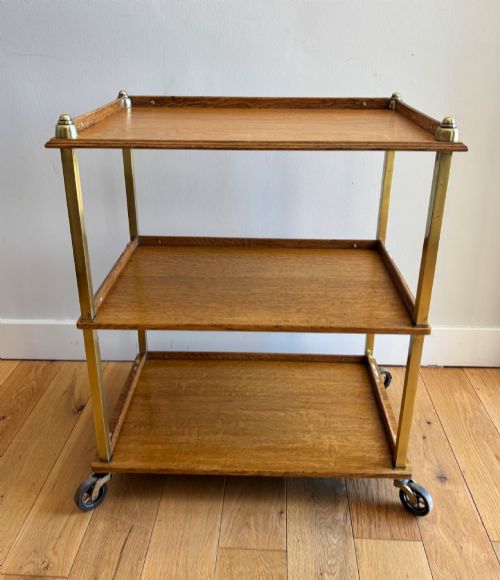
Makers and workshops utilised various timber grains and formats, ranging from slender three-tier buffets to French style marquetry trays. Buyers will find that these open structures served dining rooms, drawing rooms and private chambers alike.
How they were made
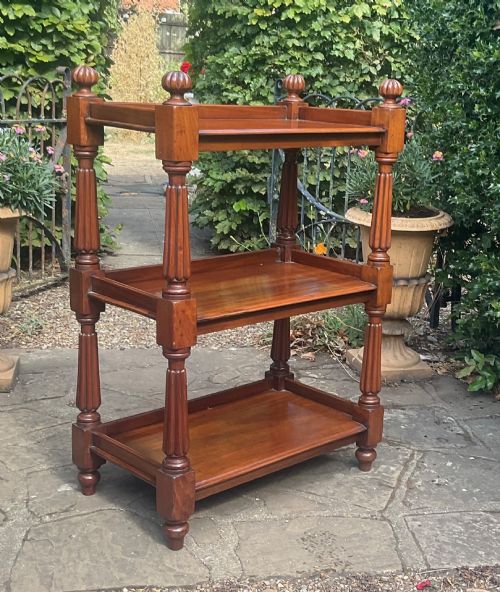
Cabinetmakers constructed these multitiered items using dense hardwoods like mahogany, walnut, rosewood and burr walnut, frequently mounting them on slender turned supports or brass castors. Surfaces often received marquetry inlay, parcel gilding, or ebonisation to mimic more costly exotic materials.
Fine examples integrate brass mounts, ormolu details and satinwood stringing to accentuate the tiered profiles. Structural rigidity relied on careful joinery between the uprights and the horizontal shelves, ensuring each tier supported display objects safely.
Some versatile nineteenth-century examples double as washstands, proving that even a basin carrier desired a touch of tiered elegance.
What varies in quality
The distinction between standard utility items and exhibition pieces lies in the choice of timber veneers and the intricacy of inlay work. Burr walnut figures and fine marquetry panels require superior craftsmanship compared to plain mahogany or ebonised deal structures.
Proportion and detailing separate fine workshop output from mass production. Well-turned columns, robust brass mounts, and balanced tier spacing indicate superior design intent by makers who paid close attention to structural harmony.
Edwards & Roberts·W. Turner Lord & Co·Leonard Wyburd For Liberty & Co
The Victorian Etagere Table Glossary
- Étagère
- A piece of furniture consisting of a set of open shelves for displaying small objects or ornaments. It originated in France and gained popularity during the nineteenth century.
- Marquetry
- Decorative veneer work formed by fitting together small pieces of wood, ivory, or shell to create pictorial or geometric designs. It is commonly found on Victorian tabletops and cabinet doors.
- Ebonised
- Wood that has been chemically or physically stained black to imitate ebony. This finish was widely utilised during the Victorian period for accentuating gilt or inlaid details.
- Ormolu
- Gilded bronze or brass mounts applied to furniture for decorative effect. It adds metallic contrast to timber surfaces on revival and high-style tables.
Victorian Etagere Table: Frequently Asked Questions
What is a Victorian etagere table used for?
These multitiered pieces were originally designed for displaying ceramics, small silver objects, and books in drawing rooms. Their open shelves allowed owners to exhibit decorative items while keeping everyday surfaces clear.
Today, they function as versatile side tables or lamp stands in modern interiors. The stacked levels provide practical display capacity without dominating the room's floor space.
How do I identify a Victorian etagere?
Look for characteristic nineteenth-century timber choices such as burr walnut, rosewood, and figured mahogany. Many examples feature three or more stepped tiers supported by turned columns or slender uprights.
Details like brass castors, marquetry inlay, and ebonised finishes further point toward Victorian manufacturing techniques. The presence of French style or aesthetic movement influences helps narrow down the specific decade of production.
Are etageres and whatnots the same thing?
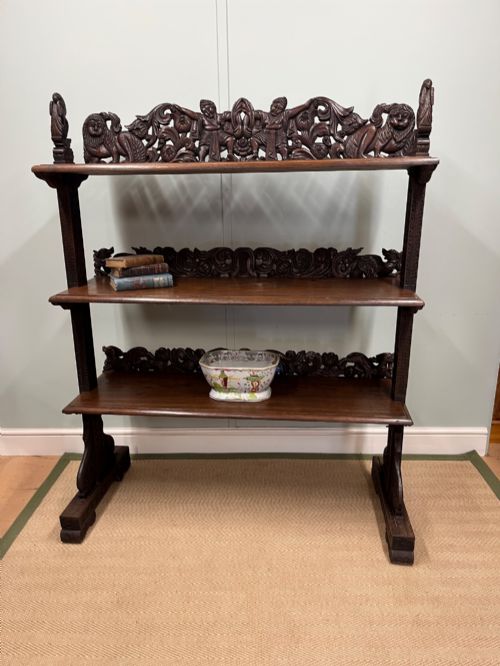
The terms are frequently used interchangeably by makers and dealers to describe open-shelved display furniture. Generally, an etagere leans toward a French decorative aesthetic, while a whatnot often denotes a British multi-tiered stand.
Both forms serve the primary purpose of vertical display and surface storage. Variations in their titles usually reflect regional naming conventions rather than a fundamental difference in utility.
How do I care for antique wood furniture?
Protect antique timber surfaces by keeping them away from direct sunlight and extreme temperature fluctuations. Consistent humidity prevents the wood veneers and marquetry inlay from drying out and lifting.
Apply a quality beeswax polish occasionally to nourish the grain and maintain the finish. Avoid using modern silicone-based sprays, which can damage historic polished surfaces over time.