




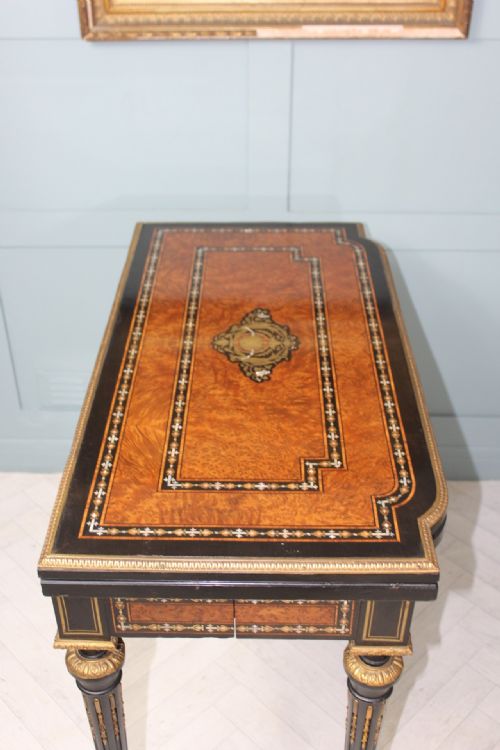

Amboyna Side Table
An amboyna side table brings warmth and rich grain to a room through its use of this exotic burl timber.
Amboyna Side Table
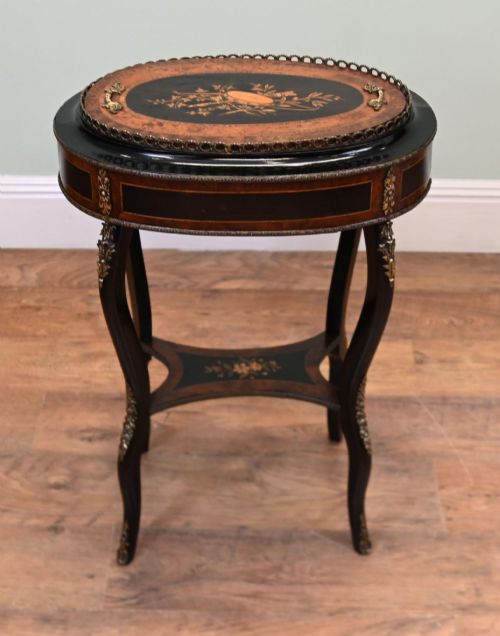
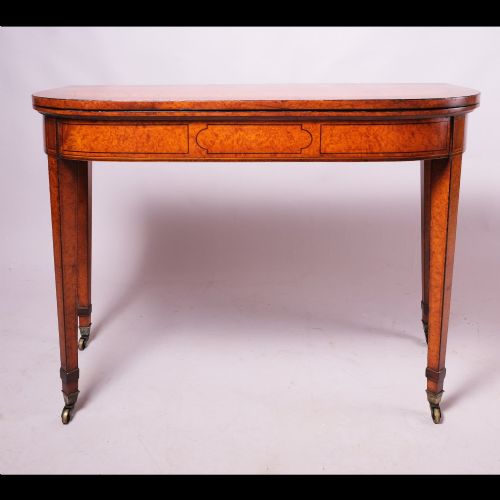
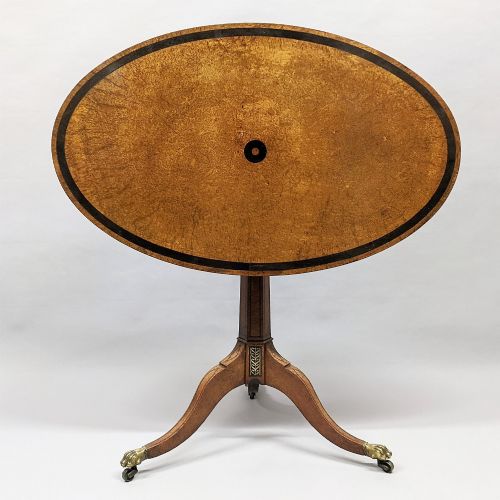
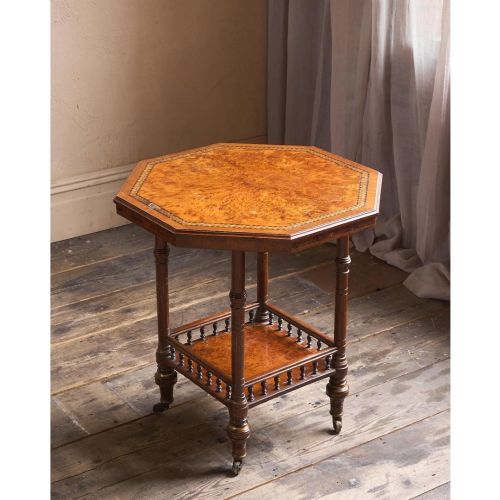
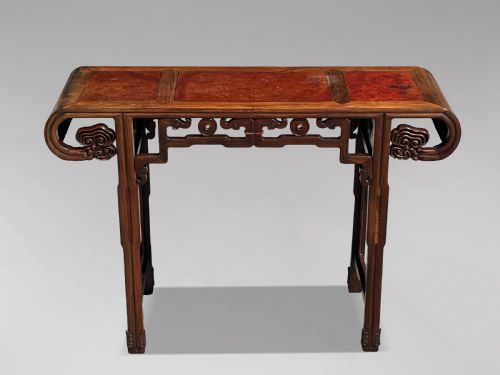
An amboyna side table is a compact surface encountered across nineteenth century periods, spanning Regency, Victorian, and French Napoleon III styles. These pieces function as occasional tables, wine tables, etageres, and lamp tables.
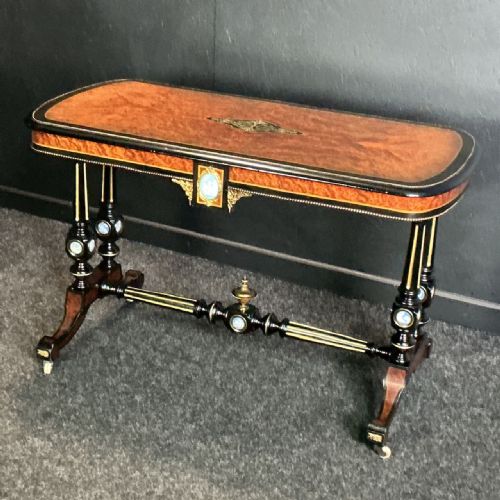
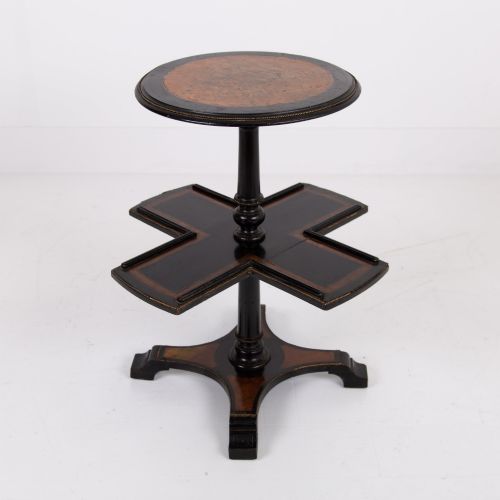
The material appears alone or combined with walnut, kingwood, rosewood, ebony, and ebonised wood. Surviving examples include freestanding formats, pairs, and occasional tripod designs.
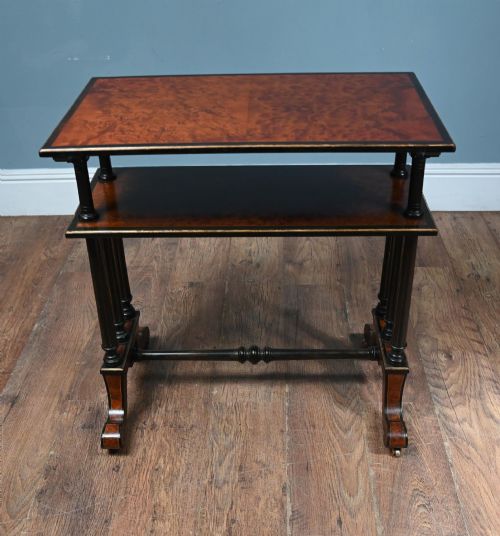
The form adapts to various interior requirements, functioning beside seating as a lamp table, workspace, or display surface. Buyers meet these items in forms ranging from simple occasional tables to multi-tiered etageres.
How they were made
Cabinetmakers utilised amboyna veneer applied over a secondary wood substrate to display the distinctive speckled burl grain. This technique allowed workshops to cover surfaces with the decorative timber while maintaining structural stability.
Makers integrated contrasting materials such as brass mounts, parcel gilt, and ebonised wood to frame the figured veneer. Wood frames were shaped into tripod bases, turned columns, and multi-tiered etagere structures.
Amboyna Side Table Retail Price Guide 2026
Typical asking prices for amboyna side table among the pieces listed under this phrase on Sellingantiques today, from the lower quarter to the upper quarter. They describe what is for sale here now, not the wider market.
Listings feature nineteenth century pieces incorporating brass, parcel gilt, and ebonised wood alongside amboyna veneer.
What varies in quality
The visual impact of an amboyna side table rests on the selection and matching of the veneer. Dense, evenly distributed burl figure commands attention, whereas sparser grain patterns alter the overall presence of the piece.
Integration of secondary woods, such as walnut or ebony, and the crispness of brass detailing separate standard production from superior cabinet work. The precision of the joinery on tripod bases and etagere tiers dictates the structural longevity of the table.
Gillows
The Amboyna Side Table Glossary
- Amboyna
- A fragrant, highly figured burl wood harvested from the Pterocarpus indicus tree, native to Southeast Asia. Cabinetmakers prized its warm reddish-brown colour and intricate knot patterns for luxury furniture veneers.
- Veneer
- A thin slice of decorative wood applied to a stable underlying timber base. This technique allowed craftsmen to utilise expensive exotic grains efficiently.
- Etagere
- A piece of furniture featuring multiple open shelves for displaying small objects. These tiered stands emerged in nineteenth century interiors as versatile side tables.
- Tripod base
- A support structure resting on three legs connected to a central column. This configuration provides stable footing for smaller occasional and wine tables.
- Parcel gilt
- A decorative method where specific carved or raised details are highlighted with gold leaf. It contrasts sharply against dark woods and figured veneers.
Amboyna Side Table: Frequently Asked Questions
What periods do these tables come from?
The pieces span the nineteenth century, including the Regency and Victorian eras, alongside French Napoleon III examples.
Craftsmen produced these occasional and side tables across several decades using characteristic regional design vocabularies.
Where should I place an amboyna side table?
These compact tables suit living rooms, studies, and bedrooms as lamp tables, wine tables, or bedside surfaces.
Their finished backs and freestanding formats allow them to sit away from walls as well as beside seating.
How do I care for amboyna veneer?
Keep the wood away from direct sunlight and heat sources to prevent the veneer from drying or cracking.
Dust regularly with a dry cloth and avoid harsh chemical polishes that can damage the nineteenth century finish.
What woods are paired with amboyna?
Makers frequently combined amboyna veneer with ebonised wood, walnut, kingwood, ebony, and rosewood.
These contrasting timbers framed the figured burl panels on tabletops, borders, and structural supports.