
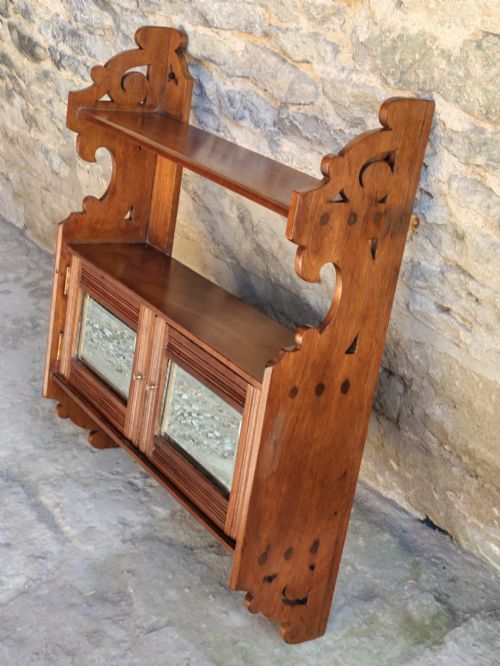


Dark Wood Mirrored Shelf
A dark wood mirrored shelf brings reflective depth and functional display space to a wall, combining timber frames with glass surfaces.
Dark Wood Mirrored Shelf
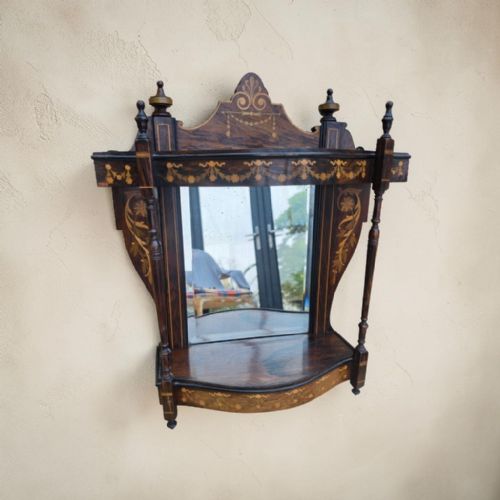
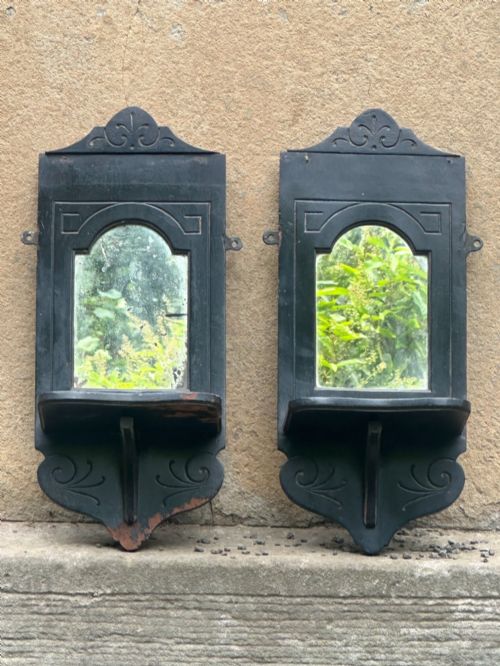
A dark wood mirrored shelf serves practical display and decorative purposes, frequently appearing in forms such as wall hanging cabinets, overmantel mirrors, and etageres with integrated ledges.
The dark wood mirrored shelf draws on periods ranging from the Regency era through Victorian and Edwardian times up to the 1930s, reflecting the aesthetic preferences of each decade.
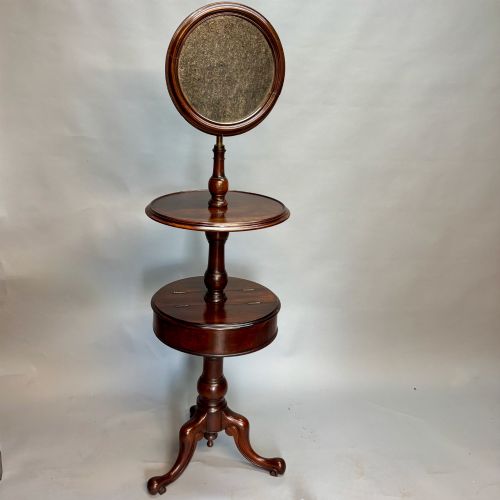
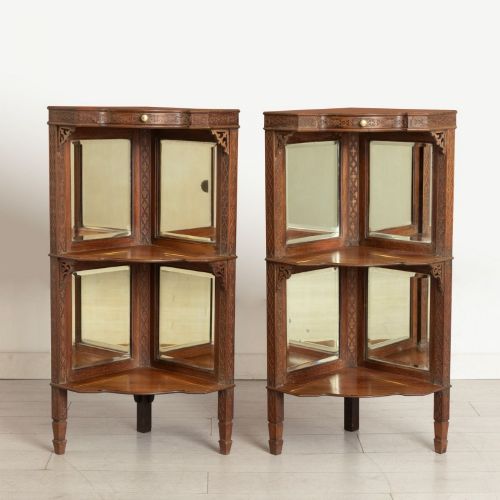
Pieces span varied object types like shaving stands, corner display cabinets, and hallway mirrors, uniting dark timber construction with functional shelving and glass panels.
Materials and construction methods
Craftsmen built these pieces using dense timbers including mahogany, rosewood, walnut, and oak, often enriching the dark surfaces with brass inlay or delicate woodwork.
Glass and mirror glass were fitted into frames using traditional joinery, creating reflective backing surfaces behind or above the functional wooden shelves.
Current listings feature materials including mahogany, rosewood, walnut, and oak across Victorian, Edwardian, Regency, and later periods.
Quality factors in construction and design
The refinement of the timber grain and the precision of inlaid details set finer examples apart from simpler utility pieces.
Stylistic coherence, such as Aesthetic Movement or French Art Deco detailing, dictates the level of design sophistication found in individual pieces.
Edwards & Roberts·Cottier & Co.
The Dark Wood Mirrored Shelf Glossary
- Mahogany
- A durable, reddish-brown tropical hardwood favoured for fine cabinet making throughout the nineteenth century.
- Rosewood
- A heavily grained, dark timber often utilised in high-status Victorian and Regency furniture.
- Overmantel
- A large mirror designed to hang specifically on the wall above a fireplace mantelpiece.
- Whatnot
- A multi-tiered piece of freestanding or hanging furniture intended for the display of ornaments.
- Inlay
- A decorative technique where contrasting materials are inserted into recessed portions of the wood base.
Dark Wood Mirrored Shelf: Frequently Asked Questions
Where should I hang a mirrored shelf?
These pieces suit hallways, reception rooms, and cloakrooms where they provide both a small surface for everyday items and a reflective glass panel to brighten the space.
Ensure the wall fixings support the combined weight of the dense timber frame and the glass mirror.
How do I identify a Victorian piece?
Victorian examples often utilise dense woods like mahogany and walnut, frequently incorporating carved details, fretwork, or inlaid patterns typical of the nineteenth century.
Construction methods from this period rely on traditional joinery techniques appropriate for heavy timber and glass combinations.
What woods were used for these shelves?
The listings show construction in mahogany, rosewood, walnut, and oak, depending on the period and the workshop that produced the item.
Dark timbers dominate these pieces, sometimes accented with brass inlay or polished to highlight the natural grain.
Are these pieces strictly for wall mounting?
While many examples are designed as wall hanging cabinets or wall mirrors with shelves, the category also includes freestanding etageres, corner display cabinets, and shaving stands.
The specific form dictates whether the piece attaches to a wall or rests upon the floor.