
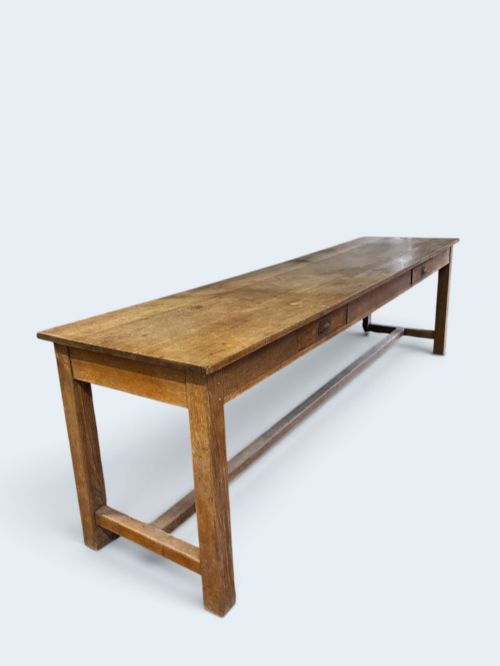
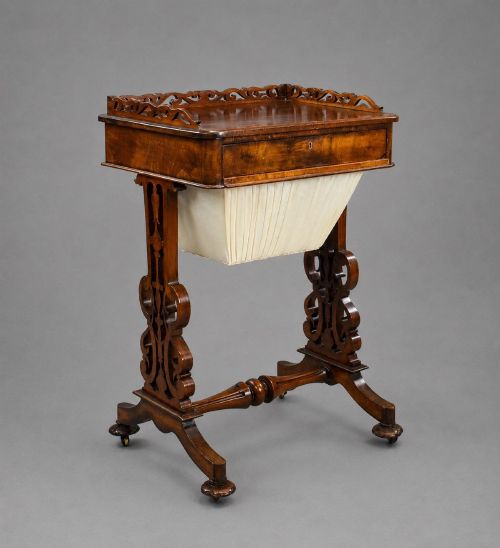
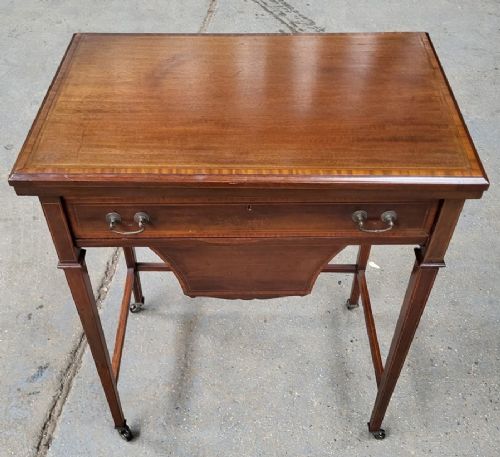
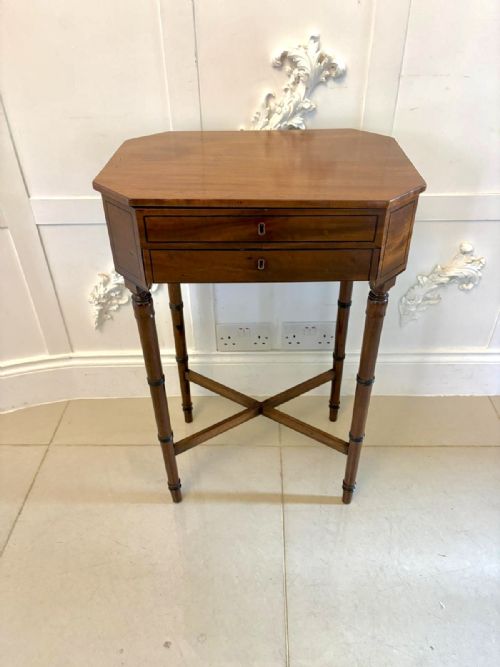


Brown Wood Worktable
These brown wood worktables combine practical storage with domestic craftsmanship, offering versatile surfaces for sewing, writing, and daily sorting.
Brown Wood Worktable
A brown wood worktable serves multiple domestic purposes, frequently doubling as a sewing table, games surface, or small writing desk. Buyers exploring this category encounter pieces designed for utility, ranging from compact Victorian needlework stands to robust Edwardian sewing tables.
The selection on this page spans from the Georgian era through the Victorian and Edwardian periods up to the 1920s. Common forms include specialised work tables, occasional tables, serving tables, and industrial workbenches originating from various European and British workshops.
Most examples rely on traditional cabinet-making formats with built-in drawers, compartments, or hanging fabric baskets intended for needlecraft. These tables integrate easily into modern rooms as bedside stands, lamp tables, or compact desks.
Materials and construction methods
Cabinet makers utilised dense hardwoods such as mahogany, walnut, and burr walnut for decorative impact on primary surfaces and tabletops. Secondary structural elements often incorporate oak, beech, and solid pine, providing a stable frame for daily utility.
Surface decoration frequently involves cross-banding, fine inlay work, and polished veneers to highlight the natural grain of the wood. Brass fittings, including castors, handles, and hinges, provide functional contrast to the dark timber tones.
Some Victorian work tables include secret compartments originally designed to hide knitting needles from unexpected guests.
Assessing quality and finish
Quality in a brown wood worktable is visible in the choice of timber veneer, such as figured burr walnut or dense mahogany, and the precision of any inlay work. Superior examples display careful timber selection where grain patterns match symmetrically across drawers and tabletops.
Construction standards appear in the joinery of the drawers and the stability of the legs or pedestals. Finer pieces retain original brass hardware, working locks with keys, and intact internal compartments designed for sewing implements.
The Brown Wood Worktable Glossary
- Cross-banding
- A border technique where strips of veneer are laid across the grain of the primary wood surface. This creates a contrasting decorative frame around tabletops and drawer fronts.
- Burr walnut
- Timber taken from a growth or burl on the walnut tree, prized for its swirling, highly figured grain patterns. It is typically sliced into thin veneers for high-status cabinet work.
- Work table
- A small multi-purpose household table equipped with drawers, drop leaves, or a suspended fabric bag for holding sewing materials and small projects.
- Inlay
- The technique of inserting pieces of contrasting wood, metal, or shell into recesses in the wooden base to form decorative patterns.
- Occasional table
- A small, movable table designed for intermittent use around a sitting room or parlor, such as for holding a lamp or books.
Brown Wood Worktable: Frequently Asked Questions
What is a brown wood worktable used for today?
These tables function well as compact bedside stands, lamp tables, or small hallway surfaces where floor space is limited. The internal drawers and compartments provide discreet storage for stationery, keys, or craft supplies.
Their historical design allows them to blend into contemporary rooms while offering practical tabletop space and organizational compartments.
How do I distinguish a Victorian work table from a Georgian one?
Georgian tables tend to feature restrained classical lines, straightforward mahogany construction, and simpler brass hardware. Victorian examples often incorporate heavier proportions, elaborate burr walnut veneers, and more complex inlaid decoration.
Examining the secondary woods inside the drawers and the style of the legs usually clarifies the period of manufacture.
Are the fabric baskets on these tables original?
Many work tables featured silk, velvet, or fabric bags suspended below drawers to hold sewing textiles. Due to age and wear, these fabrics are frequently replaced with matching period-appropriate textiles during restoration.
Buyers should examine the mounting frame beneath the drawer to see if the hanging mechanism remains in its original state.
Can I use a work table as a desk?
Many smaller work tables and writing tables provide adequate surface area for a laptop or notebook. However, buyers should check the knee clearance beneath the drawers, as sewing tables often house deep internal compartments that reduce leg room.
Occasional tables and writing formats without deep hanging baskets offer the most comfortable seating clearance.