
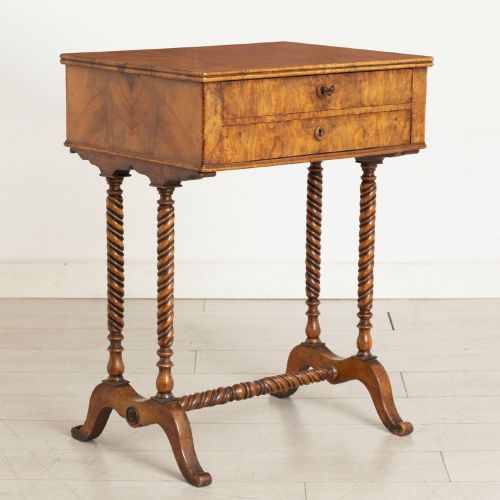
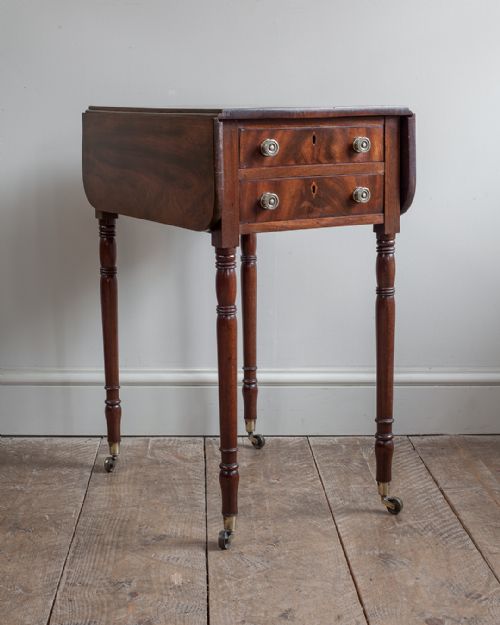
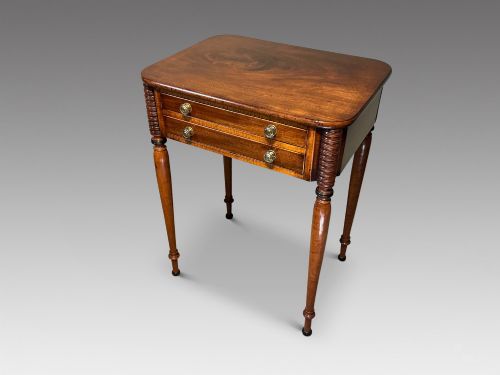
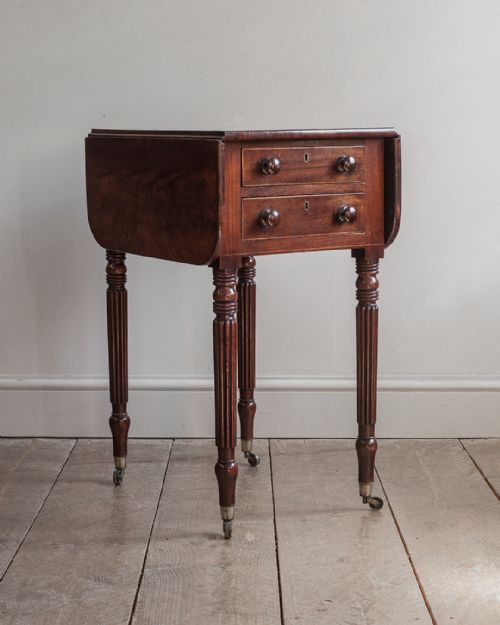


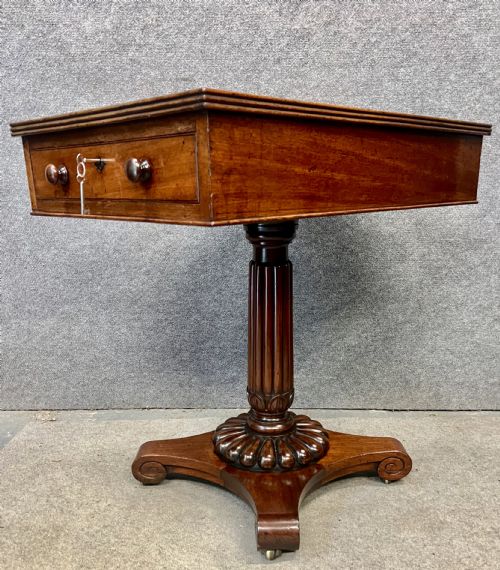


Two Drawer Sewing Table
These two drawer sewing table pieces combine clever storage with elegant surface space, offering period charm and practical daily use.
Two Drawer Sewing Table
A two drawer sewing table provides functional surface area paired with dedicated compartments, appearing in forms such as work tables, side tables, occasional tables, and drop-leaf tables. You are most likely to meet mahogany examples dating from the Regency and Victorian periods, often featuring two drawers designed for needlework and small accessories.
The construction typically incorporates rectangular tops, sometimes with drop leaves, supported by pedestals or quadruped legs. Origins span British and American workshops, ranging from the early nineteenth century through the Edwardian era.
How they were made
Cabinet makers utilised dense hardwoods such as mahogany and rosewood for the primary carcase and legs, occasionally combining maple for internal contrast. These timbers were selected for their stability and capacity to take a fine polish.
Detailing relied on contrasting veneers and linear borders, incorporating satinwood inlay and boxwood inlay alongside turned brass fittings. Structural support frequently utilised sturdy pine for secondary framing.
Some sewing tables hide their needlework origins entirely behind handsome mahogany drawer fronts designed to deceive casual visitors.
What varies in quality
The grade of timber and precision of inlay set superior pieces apart from standard workshop output. Finely figured mahogany grain and crisp boxwood or satinwood inlay indicate skilled cabinet work.
Proportion and mechanical execution define the upper tier. Smooth drawer movement, balanced pedestal bases, and well-fitted drop leaves demonstrate the maker's competency.
The Two Drawer Sewing Table Glossary
- Work table
- A small functional table equipped with drawers or compartments designed specifically for sewing and needlework supplies. These pieces often feature drop leaves to extend the surface area.
- Drop leaf
- A hinged flap on the side of a table that can be raised to enlarge the top or lowered when space is limited. It rests upon swing brackets or fly legs for support.
- Pedestal
- A central vertical support rising from a foot or base, frequently branching into quadruped legs on larger Regency and William IV tables. This design allows maximum legroom.
- Inlay
- A decorative technique where contrasting woods like satinwood or boxwood are inserted into recesses carved into the primary timber surface. It creates geometric borders and crisp visual lines.
Two Drawer Sewing Table: Frequently Asked Questions
What is a two drawer sewing table used for?
These tables served primarily as portable workstations for needlework, embroidery, and small domestic tasks in the parlour or drawing room.
The two drawers provided concealed storage for threads, needles, and fabric scraps while the top held candles or writing materials.
How do I identify a Regency period table?
Regency pieces typically feature dark mahogany timbers, brass mounts, and robust pedestal bases supported by four curved legs.
Cleaner classical lines and restrained classical ornament distinguish this era from heavier later Victorian designs.
Are these tables practical for modern rooms?
Their compact proportions make them versatile additions as lamp tables, bedside stands, or occasional surfaces in living spaces.
The fitted drawers offer convenient hidden storage for small contemporary items like keys and stationery.
What woods were commonly used?
Mahogany forms the vast majority of surviving examples, often complemented by rosewood for richer colour and grain patterns.
Lighter contrasting woods like satinwood, maple, and boxwood provided decorative stringing and inlay details.