




Victorian Sewing Desk
A victorian sewing desk combines the intimate craft of needlework with the formal elegance of nineteenth-century domestic furniture.
Victorian Sewing Desk
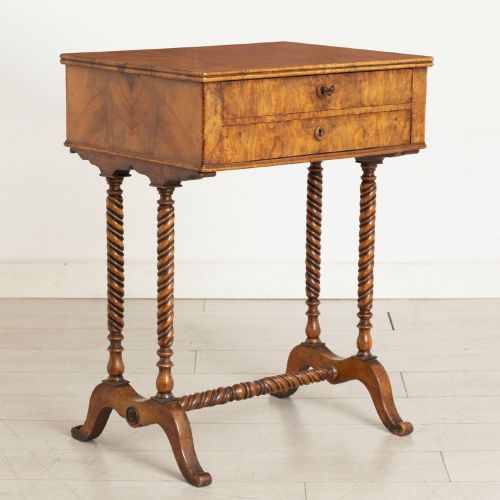
A victorian sewing desk operates as a specialised piece of domestic furniture designed to house needlework materials, threads, and small accessories. Most examples encountered here date from the nineteenth century, spanning periods from William IV through to the late Victorian era, with occasional Edwardian items.
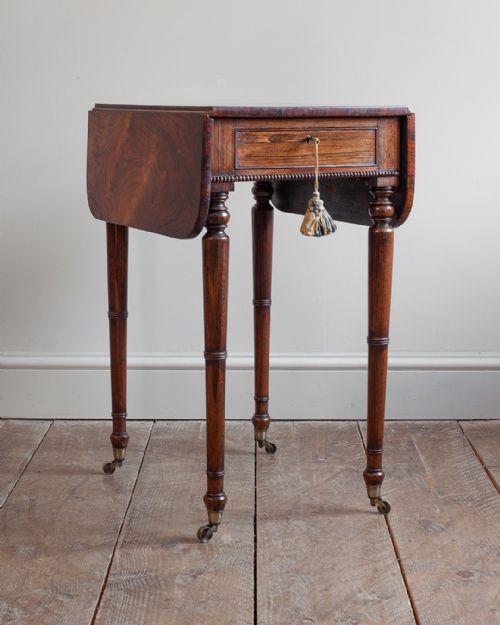
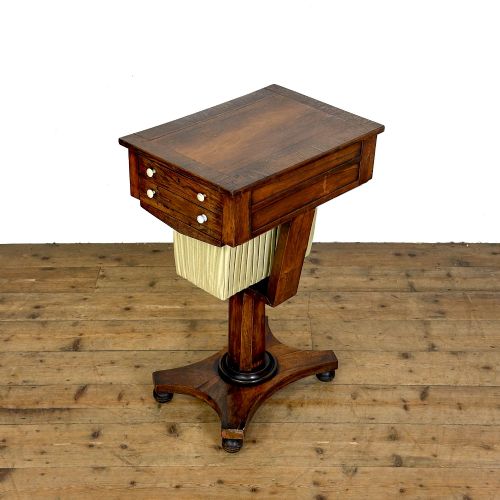
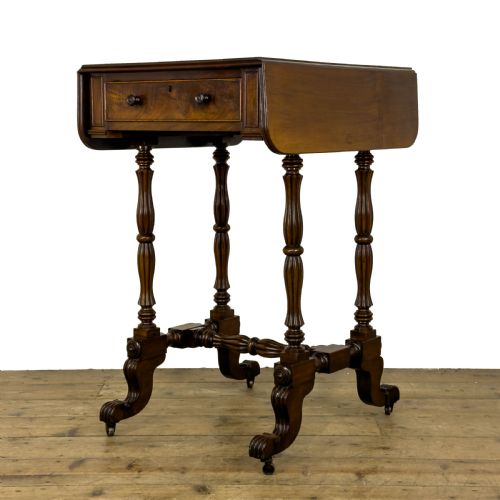
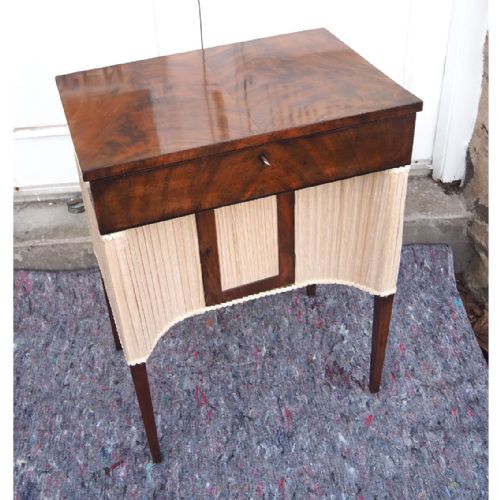
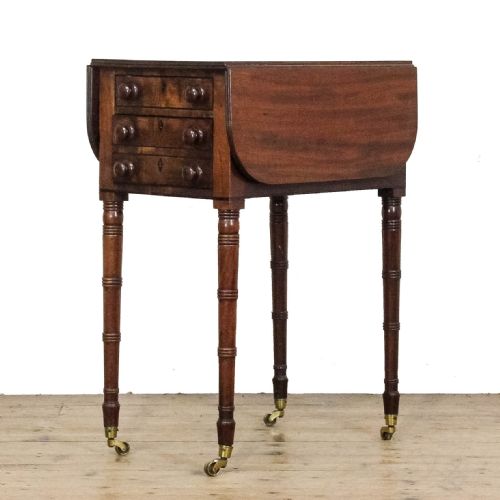
The primary forms take shape as work tables, sewing tables, and Pembroke or drop-leaf designs equipped with fitted interiors, drawers, and under-bags. Walnut, rosewood, and mahogany form the predominant structures, frequently enhanced by marquetry inlay or burr veneers.
Makers adapted these pieces for multiple domestic tasks, resulting in hybrid items that double as writing tables, occasional tables, or dressing tables. The buyer finds compact side tables alongside substantial metamorphic pieces incorporating leather inserts and compartments.
Materials and construction
Cabinetmakers utilised dense hardwoods such as mahogany, rosewood, and walnut for the primary framework and exterior surfaces. Burr walnut and flame mahogany veneers provided decorative grain patterns across table tops and drawer fronts.
Secondary construction relied on brass fittings, drop handles, and silk or fabric components for the internal sewing bags suspended beneath the drawers. Inlaid stringing in lighter woods often bordered the primary timber panels on finer examples.
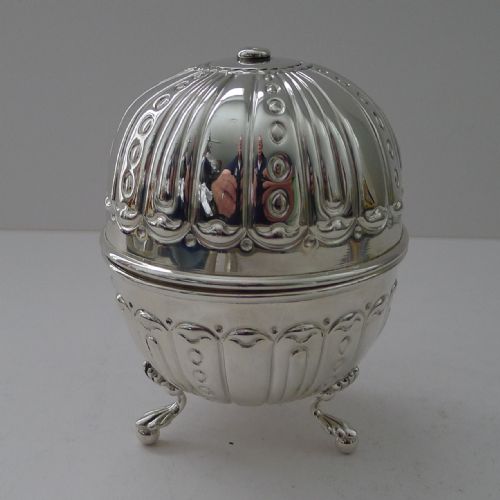
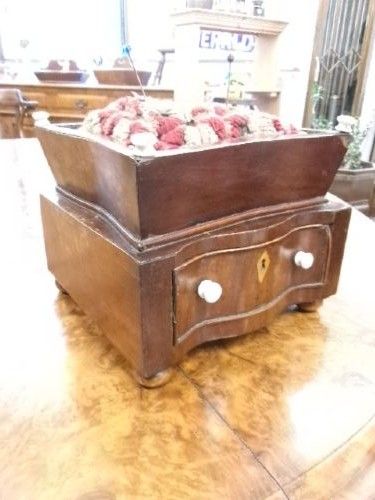
Silver novelty pin cushions took the form of miniature cars, foxes, ducks, and spiders to amuse the Victorian sewer.
Judging quality in work tables
The selection of timber veneer dictates the initial visual impact, with choice burr walnut and figured mahogany commanding greater presence than plain stock. Precision in the marquetry inlay and the tightness of the joinery reveal the cabinetmaker's skill.
Internal organisation sets superior pieces apart, notably the presence of original fitted compartments, lidded boxes, and functioning locks with matching keys. The integrity of the drop-leaf mechanisms and the smoothness of sliding drawers indicate enduring structural health.
Waring & Gillow·Holland & Son
The Victorian Sewing Desk Glossary
- Pembroke table
- A small occasional table featuring two hinged drop leaves on opposing sides. It often includes a single drawer and tapering legs.
- Work table
- A nineteenth-century term for a small table dedicated to needlework and domestic crafts. These typically incorporate internal compartments and an under-mounted fabric bag.
- Burr walnut
- Timber sliced from walnut tree growths, producing an intricate and swirling grain pattern. Cabinetmakers used it extensively for high-status Victorian table tops.
- Drop leaf
- A hinged flap on a table top that lifts to extend the surface area. It rests on folding wooden brackets or swing legs when raised.
- Marquetry
- Decorative veneer work forming pictorial or geometric patterns using various woods. Craftsmen applied it to the tops of writing and sewing tables.
- Poudreuse
- A French dressing table equipped with a folding mirror and internal compartments for cosmetics and personal items. Some Victorian examples double as sewing desks.
Victorian Sewing Desk: Frequently Asked Questions
What is a victorian sewing desk?
A victorian sewing desk is a compact nineteenth-century table built with internal compartments for storing threads, needles, and fabric scraps. Many feature drop leaves and suspended silk work bags.
Cabinetmakers designed these items for domestic needlework and correspondence, combining utility with decorative cabinet woods like rosewood and walnut.
How were work tables used?
These tables served as mobile workstations for women managing household mending, embroidery, and correspondence in the drawing room. The fitted interior kept small tools organised while the top provided a clean surface for writing or sewing.
Drop leaves allowed the furniture to expand during use and contract to save space against a wall when idle.
Where should I place one?
A work table suits a living room or bedroom as an occasional table, side table, or small desk. Their finished backs and polished timber surfaces allow them to sit freestanding or against a wall.
Keep them away from direct sunlight and strong heat sources to protect the delicate wood veneers and polish.
How do I spot a William IV piece?
William IV furniture, dating from the 1830s, generally displays heavier proportions, bold mahogany or rosewood grains, and robust pillar supports on platform bases. Carved scrollwork and recessed panel details often distinguish this era from later Victorian designs.
Drawer construction and secondary timbers inside the table help confirm the manufacturing period.
Are sewing tables and writing desks the same?
While distinct in primary purpose, many nineteenth-century examples combined both functions by incorporating leather-lined writing slides and inkwell compartments alongside sewing trays. Makers responded to domestic demands for versatile furniture that accommodated multiple pastimes in a single room.
Examining the interior layout reveals whether needle storage or writing space took priority in the design.