




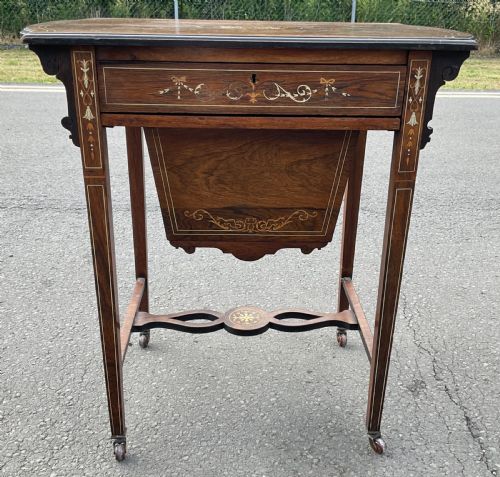


Ladies Needlework Box
These ladies needlework box pieces are compact wooden containers and tables made to hold sewing gear, offering practical storage with period charm.
Ladies Needlework Box
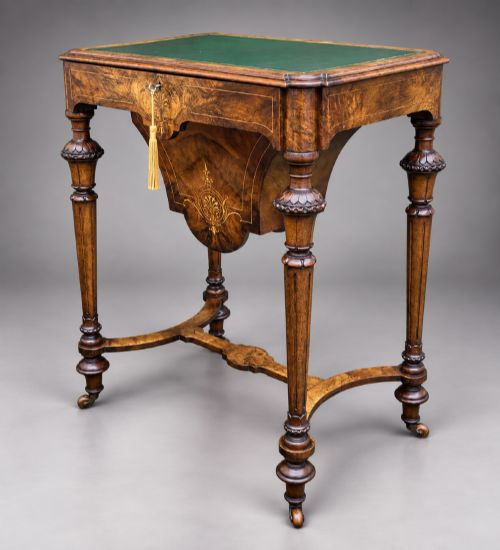
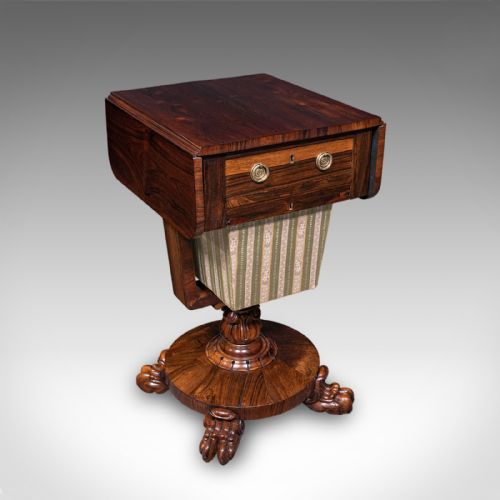
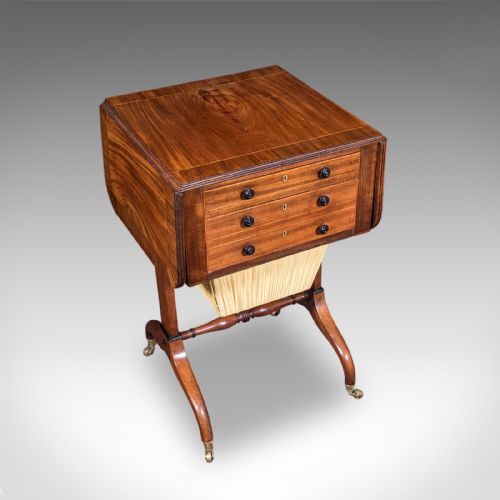
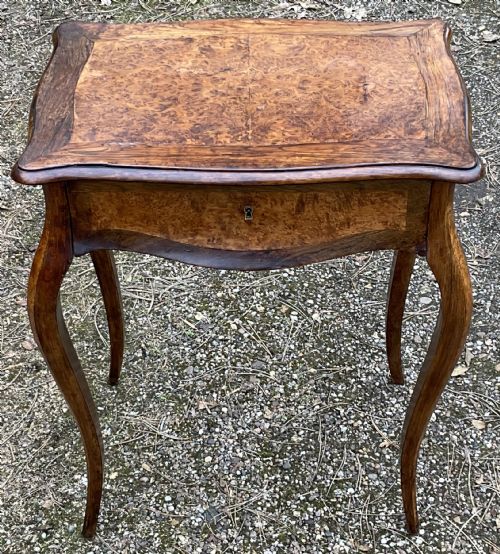
When you search for a ladies needlework box, you encounter a range of forms designed for sewing and needlecraft, from table-top caskets to larger work tables. The selection spans the nineteenth century and the Edwardian era, featuring pieces in mahogany, rosewood, burr walnut, and satinwood. These items often incorporate drop leaves, fitted interiors, and compartments intended for threads, needles, and tools.
The most common versions on this page are work tables from the Regency and Victorian periods, alongside small table-top boxes. Many examples originate from English workshops, with occasional pieces showcasing Irish yew wood or specialised decoration such as Tunbridge Ware and marquetry. Buyers find items ranging from simple sewing boxes to elaborate parlor tables with writing and hobby surfaces.
What Varies in Quality
Quality depends heavily on the selection of timber veneers and the precision of the cabinetwork. Finer examples display carefully matched burr walnut or flame mahogany grains across the surfaces, whereas simpler items utilise plain woods. The complexity of the internal fittings also marks a difference, with superior pieces offering elaborate compartmentalised trays and intact silk or velvet linings.
Decorative elements set apart the standard production from the exceptional. Fine marquetry, painted satinwood panels, and specialised surface treatments like Tunbridge Ware require advanced craftsmanship. The condition of the original brass hardware and the smoothness of drop leaf mechanisms further distinguish the higher tier of these pieces.
Some work tables secretly double as writing desks, proving that Victorian needlework required substantial paperwork.
Waring & Gillow
The Ladies Needlework Box Glossary
- Work Table
- A freestanding table with storage specifically designed for sewing and needlework. These typically include a fabric bag or a wooden box beneath the top.
- Tunbridge Ware
- A type of decorative woodwork characterised by mosaic designs made from tiny wood blocks. Artisans created detailed pictorial or geometric patterns using naturally coloured woods.
- Marquetry
- The art of applying pieces of veneer to a structure to form decorative patterns and pictures. Craftsmen cut various wood types to fit together precisely on the exterior surface.
- Drop Leaf
- A hinged flap on a table that can be raised to extend the surface area or lowered when space is limited. This mechanism allows work tables to adapt to smaller rooms.
- Satinwood
- A durable timber with a golden sheen used extensively for fine cabinetmaking and decorative inlay work. It provides a bright surface for painted motifs and contrasting borders.
Ladies Needlework Box: Frequently Asked Questions
What is a ladies needlework box?
A ladies needlework box is a specialised container or table created to store sewing tools, threads, and fabrics. These pieces date primarily from the nineteenth and early twentieth centuries.
They range from small portable caskets to substantial freestanding work tables with fitted interiors and drop leaves.
How were sewing tables used?
These tables served as functional furniture for domestic needlecraft, providing a dedicated space for mending and embroidery. Many included writing surfaces or compartments for letters alongside sewing gear.
Ladies kept them in parlors and sitting rooms where handwork took place during the day.
Where do these pieces originate?
The pieces listed originate predominantly from English workshops spanning the Regency, Victorian, and Edwardian eras. Regional variations include Irish yew wood examples from the mid-nineteenth century.
Cabinetmakers utilised local and imported timbers like mahogany, rosewood, and walnut for construction.
How do I identify the period?
Period identification relies on wood choices, furniture styles, and construction techniques. Regency pieces often feature classic proportions and rosewood veneers, while Victorian examples introduce burr walnut and elaborate revival styles.
Edwardian items frequently display lighter satinwood and inlay work characteristic of the Sheraton Revival.