
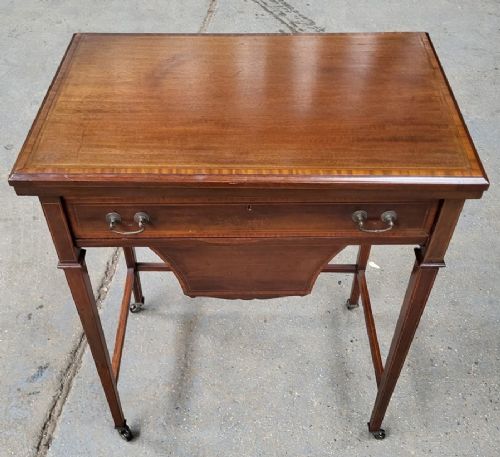


Brown Wood Needlework Table
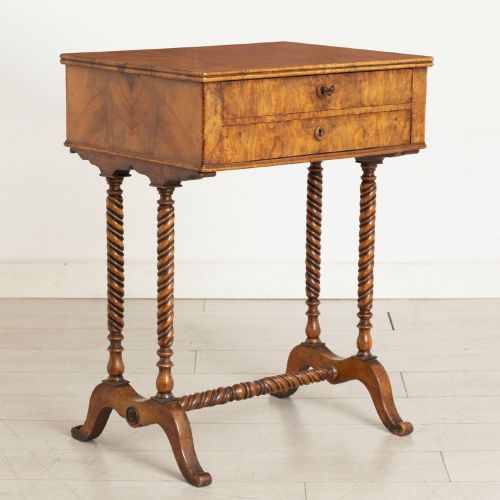
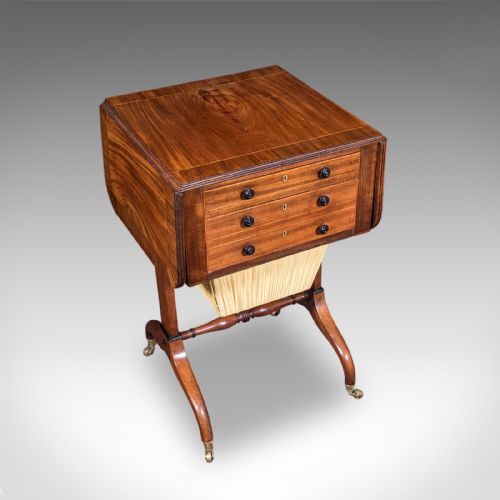
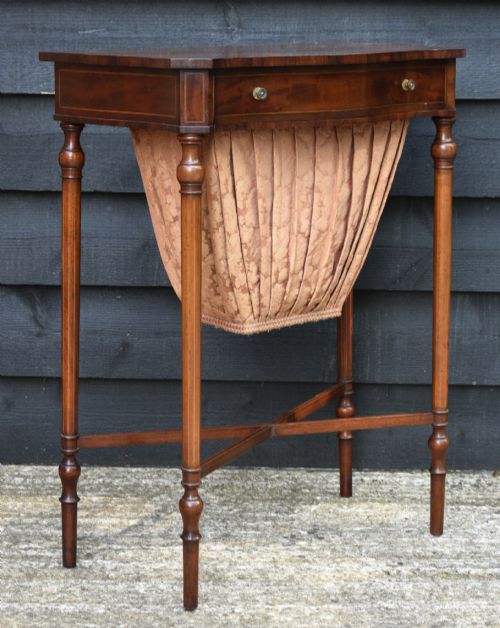
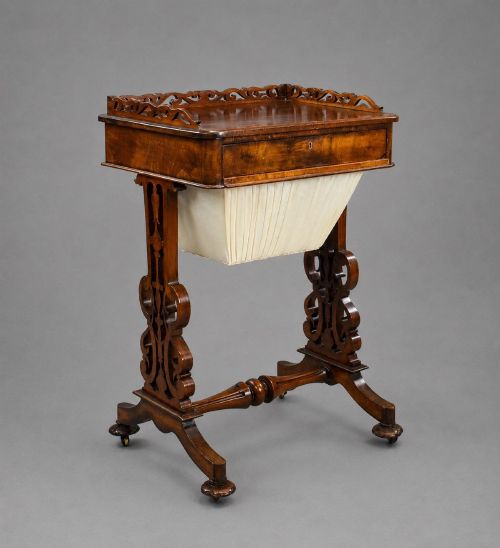
A brown wood needlework table combines domestic utility with refined cabinetmaking, providing a dedicated space for sewing implements alongside a graceful surface for the parlour.
Brown Wood Needlework Table
A brown wood needlework table is fundamentally a specialised piece of antique furniture designed to house sewing supplies, threads, and textiles, frequently doubling as a writing or occasional table. The examples available here span the Regency, Victorian, and Edwardian eras, encompassing diverse regional variations such as Anglo-Indian, French, and Irish productions.
Most frequently, you will encounter pieces executed in mahogany, walnut, or burr walnut, often featuring drop leaves, hinged lids, or fitted internal compartments designed for domestic handcrafts. Forms range from trumpet tables with octagonal bodies to serpentine-fronted occasional tables and compact drop-leaf sewing desks.
Originating in domestic settings where needlework occupied the hours of the household, these tables reflect the social habits of the nineteenth and early twentieth centuries. They bridge the gap between utilitarian storage and decorative parlour furniture, utilising rich timbers to display grain and colour.
What varies in quality
Quality in a brown wood needlework table rests upon the selection of timber figures, such as the richness of burr walnut or the depth of flame mahogany, paired with the precision of any wood inlay. Superior pieces exhibit harmonious proportions, clean lines, and integrated design where the internal sewing compartments match the exterior finish.
Some nineteenth-century tables cleverly hide chessboards beneath their sewing lids, proving that domestic handcrafts occasionally required a competitive distraction.
Waring & Gillow
The Brown Wood Needlework Table Glossary
- Burr walnut
- A prized timber harvested from the wart-like growths on walnut trees, yielding complex, swirling grain patterns. It was heavily utilised during the Victorian era for high-status occasional furniture.
- Drop leaf
- A hinged flap on either side of a table top that can be raised to extend the surface or lowered when space is restricted. It allows small tables to adapt to varying room layouts.
- Cross-banding
- A decorative technique where a border of veneer is laid around the perimeter of a tabletop with the grain running perpendicular to the centre. This frames the primary timber and demonstrates fine cabinetwork.
- Trumpet table
- A form of nineteenth-century work table featuring an octagonal or rounded body that flares outward from a slender stem toward the base. It typically opens to reveal a fitted interior above a fabric sewing bag.
Brown Wood Needlework Table: Frequently Asked Questions
What is a needlework table used for?
These tables were designed to hold sewing gear, threads, and fabrics within internal compartments, drawers, or suspended bags. The top surface also functioned for writing, games, or displaying decorative objects in the parlour.
Today, they serve equally well as compact occasional tables or bedside chests, offering discreet storage for modern small items while retaining their historic character.
How do I tell a Regency table from a Victorian one?
Regency tables, dating from the early nineteenth century, generally feature cleaner architectural lines, classical proportions, and rich mahogany or burr ash timbers. They often lean towards restrained elegance with brass paw feet or reeded pillar supports.
Victorian examples, produced from the mid-nineteenth century onward, tend to be more ornate, frequently utilising burr walnut, elaborate marquetry, and trumpet-shaped pedestals. Edwardian pieces later still often showcase lighter satinwood and delicate inlay work.
What woods are typical for these tables?
Mahogany is prevalent across the Georgian and Regency periods, valued for its deep reddish-brown tone and structural stability. Walnut and burr walnut dominate the mid-Victorian era, prized for their rich, swirling grain patterns.
Other examples incorporate exotic materials such as padouk in Anglo-Indian pieces, satinwood in Edwardian designs, or arbutus and yew in Irish Killarney ware.
Are the fabric bags original?
The hanging silk or fabric bags beneath the work tables were subject to heavy wear and deterioration over time. Consequently, many surviving tables have replacement linings that match the historic style of the piece.
Examining the attachment points and framing around the bag opening helps determine whether the textile element retains its original configuration or has been professionally restored.