


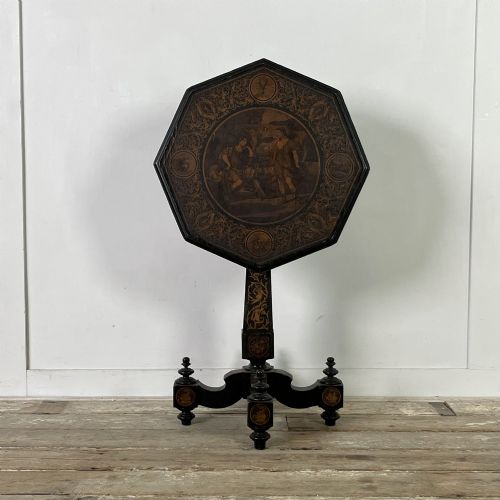


Antique Tripod Work Table
An antique tripod work table is a versatile piece designed for sewing and small tasks, combining a pillar base with a practical storage top.
Antique Tripod Work Table
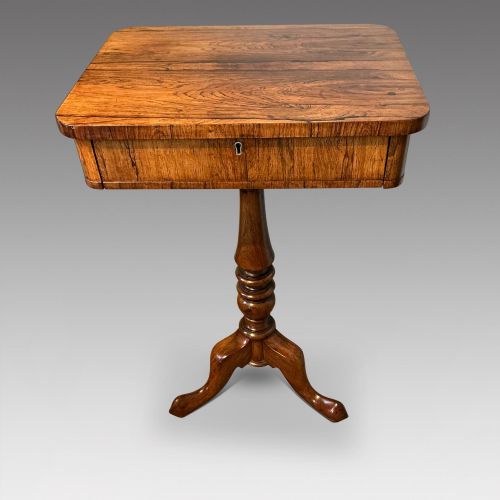
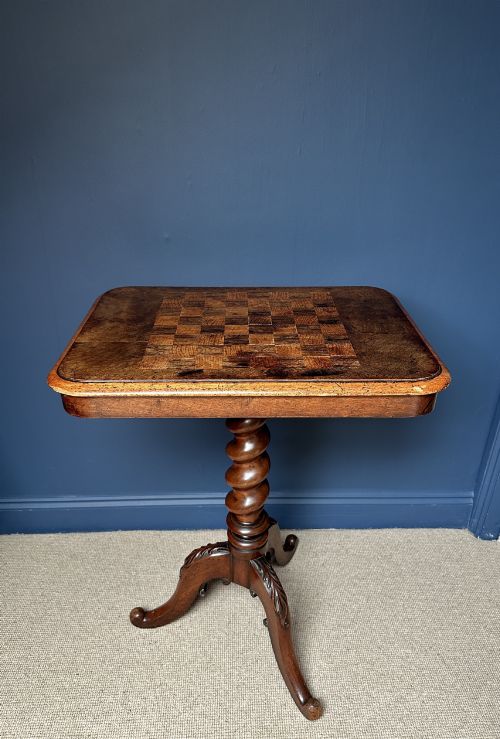
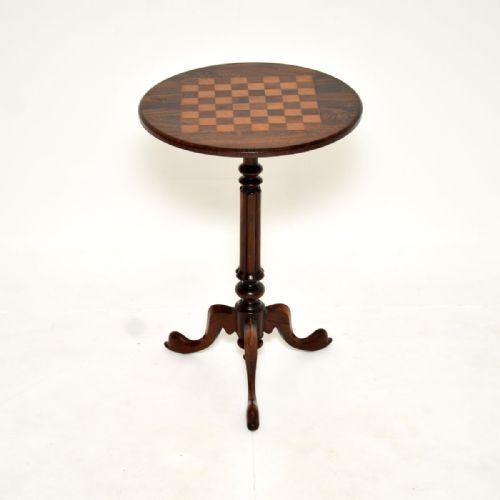
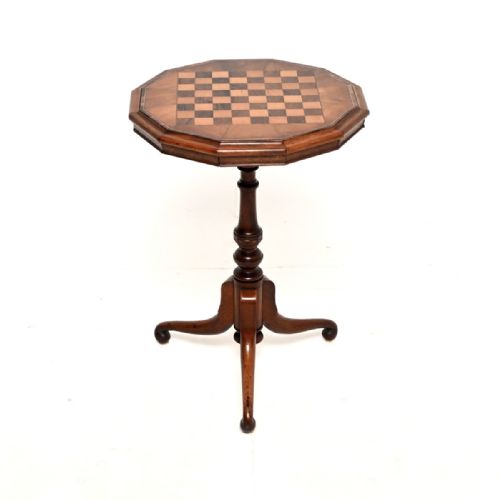
An antique tripod work table serves as a compact surface paired with a compartment or bag for needlework and small crafts. Buyers selecting an antique tripod work table frequently encounter Victorian and Regency specimens featuring hinged lids or drop flaps.
The form often integrates secondary uses such as chess boards, writing surfaces, or reading slopes alongside the primary sewing box compartment. Mahogany and rosewood dominate the selection, supported by a central pillar resting on three splayed feet.
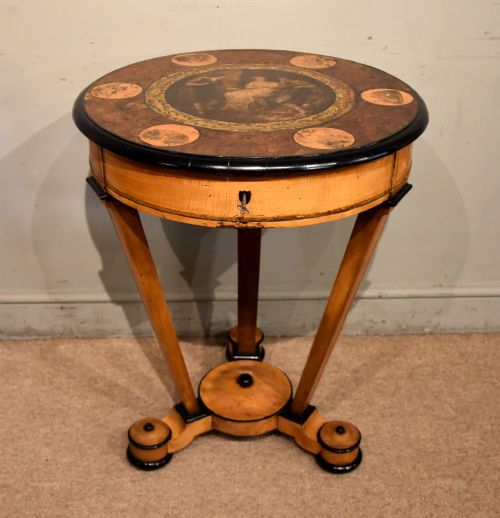
Makers adapted the design for domestic parlours and drawing rooms, ranging from modest turned supports to elaborate marquetry finishes. Surviving examples demonstrate how nineteenth-century households accommodated functional hobbies within formal interior schemes.
Assessing craftsmanship and finish
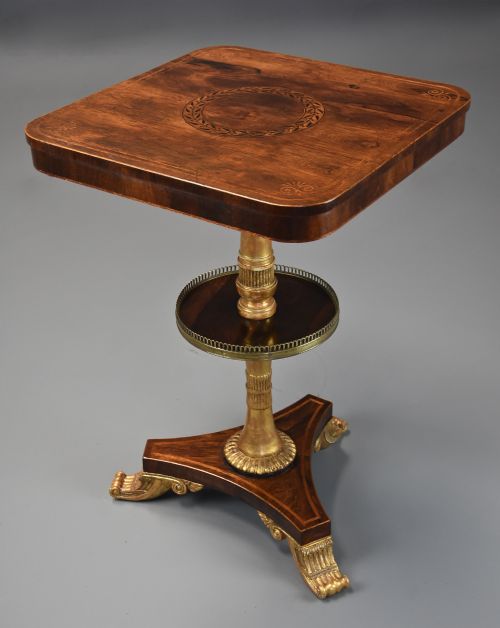
Quality rests upon the selection of timber veneers and the precision of the wood inlay or marquetry work across the top. Finely figured rosewood, burr walnut, and neat brass mounts indicate a higher standard of manufacture.
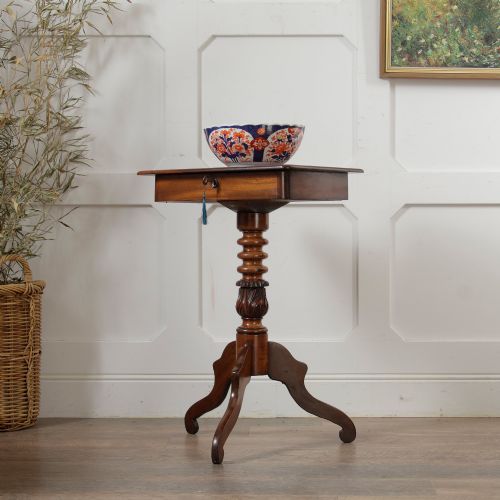
Structural stability depends on the tight fitting of the pillar into the tripod base and the smooth operation of internal storage boxes or drawers. Superior pieces retain crisp carving on the pedestal and well-fitted interior compartments.
Some sewing tables hide tiny wooden spool holders that spin as if the maker expects you to thread a needle right now.
The Antique Tripod Work Table Glossary
- Tripod base
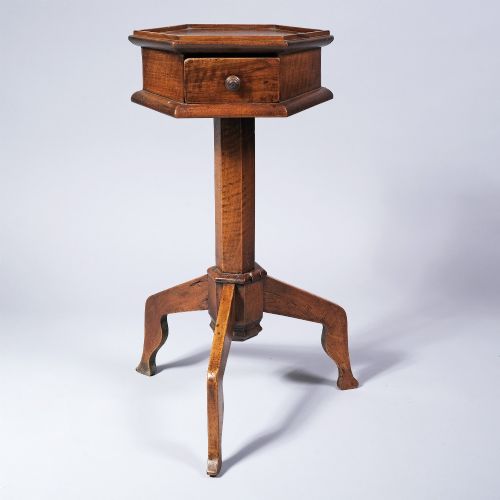
- A support structure comprising three splayed feet connected to a central vertical pillar. This design provides stability on uneven floors while occupying minimal floor space.
- Work table
- A small domestic table fitted with compartments, drawers, or an attached fabric bag for sewing materials. These pieces gained widespread popularity during the eighteenth and nineteenth centuries.
- Marquetry
- The art of applying decorative pieces of veneer to a structure to form intricate patterns or pictures. Craftsmen utilise various coloured woods to achieve tonal depth.
- Penwork
- A decorative technique using ink applied to wood to create fine line drawings or geometric borders. It imitates the appearance of more expensive inlay work.
- Tilt-top mechanism
- A hinge arrangement allowing the table surface to pivot to a vertical position when not in use. This mechanism enables easy storage against a wall.
Antique Tripod Work Table: Frequently Asked Questions
What is an antique tripod work table used for?
These pieces served nineteenth-century households as functional furniture for needlework, embroidery, and small crafts. The interior compartments kept threads, needles, and tools close to hand during social gatherings.
Today, buyers utilise them as compact lamp tables or side tables in living spaces. The enclosed storage remains practical for keeping small items concealed.
How do I identify a Regency period table?
Regency pieces often display classical proportions, dark rosewood or mahogany timbers, and brass inlay. The pedestal bases frequently feature bolder turned elements or carved paw feet.
Comparing the timber grain and secondary woods helps confirm the era of construction. Stylistic details align with the early nineteenth-century preference for ancient Greek and Roman motifs.
Are the fabric bags original?
The hanging silk or fabric bags beneath the work boxes experienced heavy wear and frequently require replacement. Many surviving examples retain their wooden frames while the textiles date from later restorations.
Examining the attachment points and interior lining reveals whether the fabric matches the age of the table. A replaced bag does not detract from the utility of the piece.
Can I use one as a bedside table?
The compact footprint and surface area make these tables suitable for placement beside a bed. The enclosed compartments offer convenient storage for night-time essentials.
Care should be taken with delicate veneer surfaces when placing liquid containers on the top. Using coasters protects the polish from rings and marks.