




Victorian Games Work Table
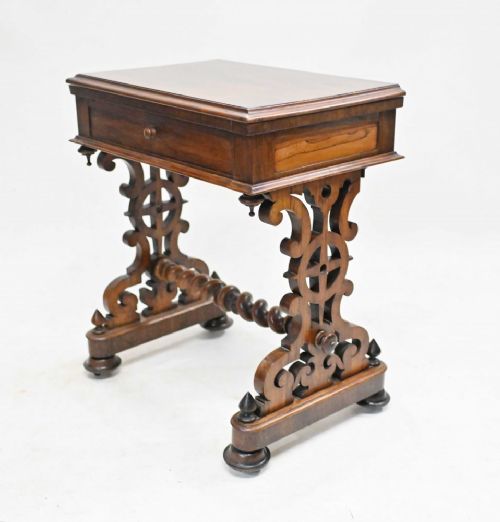
A victorian games work table combines dual-purpose leisure and sewing storage within a single refined piece of period furniture.
Victorian Games Work Table
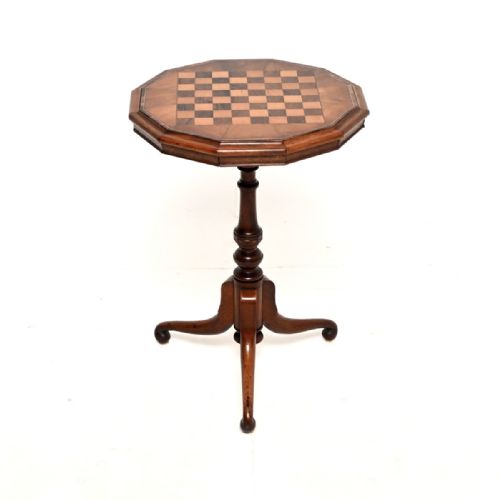
A victorian games work table unites domestic utility and entertainment, housing compartments for needlework alongside boards for chess, backgammon, or cribbage. These hybrids served as social focal points in nineteenth-century drawing rooms, where family and guests gathered for evening pastimes.
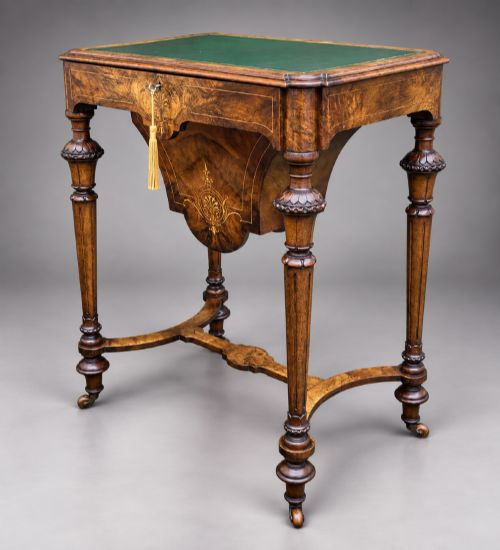
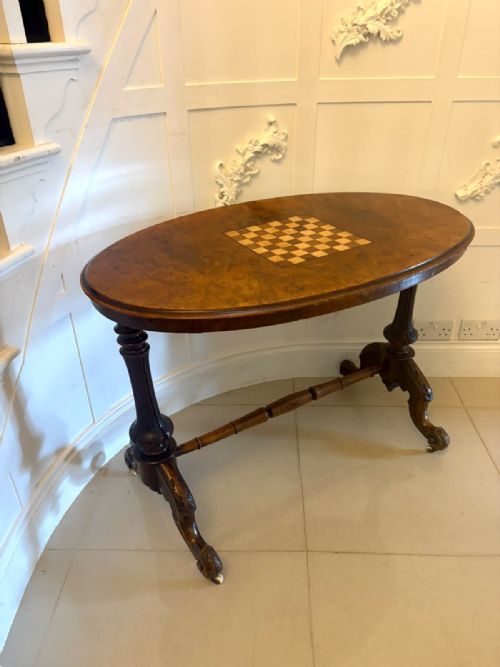
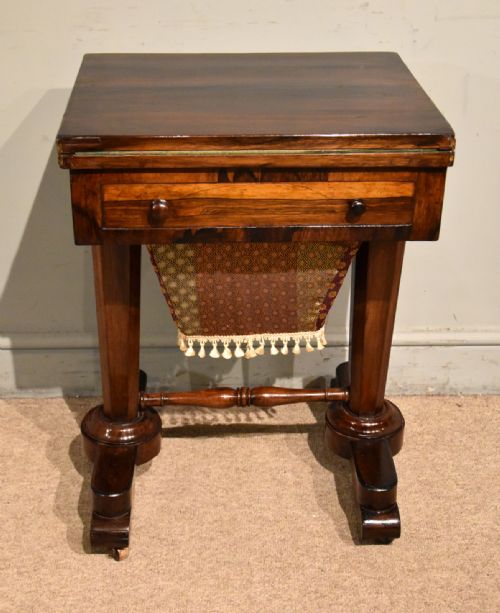
Burr walnut and rosewood dominate the selection, frequently enhanced by intricate wood inlay or floral marquetry. Most examples feature a folding or rotating top that reveals a lined playing surface, beneath which sits a fitted sewing drawer or a fabric basket for yarn.
The typical form encountered here dates from the mid to late nineteenth century, spanning eras from the Regency and William IV periods through to high Victorian craftsmanship. Alongside standard tables, occasional variations include trumpet-shaped workboxes and occasional lamp tables adapted for dual use.
Materials and construction
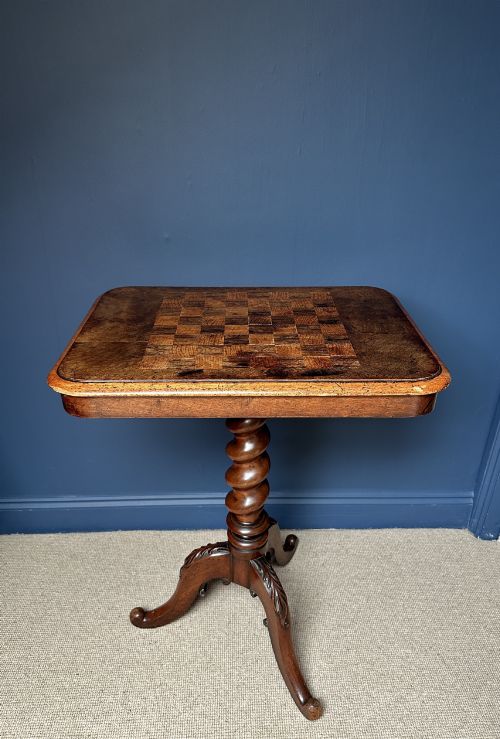
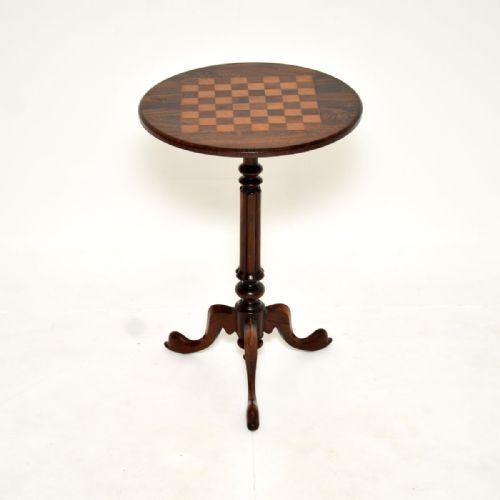
Cabinet makers relied heavily on rich timbers, applying figured burr walnut veneers or solid rosewood over secondary softwoods. Boxwood and various contrasting woods provided the fine linear details required for chess and backgammon boards.
Intricate surface decoration often involved wood inlay and marquetry, setting delicate floral motifs or geometric patterns directly into the timber tops. Fabric linings in silk or wool traditionally filled the interior compartments and sewing bags suspended beneath the main body.
Listings feature woods such as walnut, burr walnut, rosewood, boxwood, and brass, spanning the Regency to late Victorian eras.
Distinguishing quality
The sophistication of the internal fitments largely separates standard models from superior examples, particularly where compartments remain complete with original ivory or bone counters and fitted lids. Cabinet work that maintains tight joints and smooth folding mechanisms without sagging demonstrates expert original joinery.
Figuring in the burr walnut veneer and the precision of the marquetry inlay dictate visual appeal. Rich timber grain with deep chatoyancy commands greater interest than plain or heavily faded surfaces.
The Victorian Games Work Table Glossary
- Marquetry
- Decorative veneer work forming pictures or patterns by arranging small pieces of wood, shell, or ivory. This technique frequently frames the borders of gaming boards on nineteenth-century tables.
- Trumpet table
- A pedestal work table featuring an octagonal or hexagonal flared body resembling a musical instrument. The widening base conceals a deep sewing bag or wool container.
- Burr walnut
- Timber sliced from the abnormal growths on walnut trees, yielding highly swirled and mottled grain patterns. Cabinet makers prized this wood for high-status Victorian table tops.
- Foldover top
- A hinged table surface that opens outward to double its area, exposing a baize-lined playing surface or inlaid board underneath. This clever mechanism conceals the gaming boards when the furniture is closed.
- Backgammon
- A board game played with pieces moved according to the roll of dice, frequently incorporated into the reversible interior boards of these tables alongside chess and cribbage.
Victorian Games Work Table: Frequently Asked Questions
What is inside a victorian games work table?
These pieces typically conceal a fitted interior designed for sewing implements, thread, and yarn alongside compartments for playing cards, counters, and dice.
Beneath the folding top, many examples reveal dedicated boards for chess, draughts, backgammon, or cribbage, combining leisure pursuits with practical needlework storage.
How do you use a foldover games table?
The hinged top rotates and folds flat to double the surface area, exposing a baize-lined playing area or an inlaid wooden board.
Closing the surface restores the piece to a standard side table or desk suitable for everyday placement in a reception room.
How are walnut and rosewood styles told apart?
Walnut surfaces display lighter brown tones with swirling, mottled burr figures and decorative marquetry inlay in contrasting light woods.
Rosewood presents a much darker, heavier appearance with straight purplish-brown grain and minimal surface embellishment beyond natural timber figure.
Where were these tables placed in a home?
Nineteenth-century households positioned these items in drawing rooms and parlours where family members gathered for evening entertainment and handwork.
Their compact proportions allowed them to function easily as lamp tables, side tables, or occasional desks against a wall when not in active use.