


Antique Sewing Worktable
An antique sewing worktable combines practical needlework storage with refined domestic furniture, offering elegant compartmentalised storage for the home.
Antique Sewing Worktable
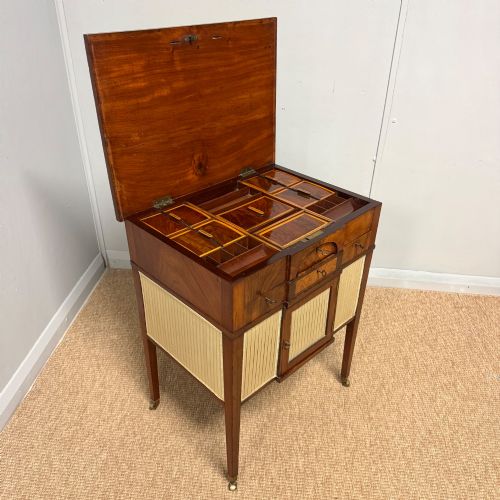
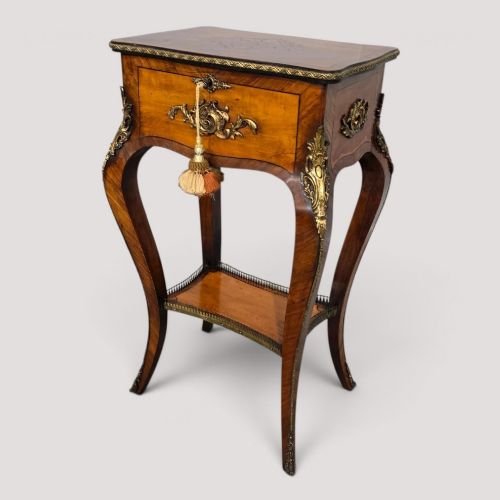
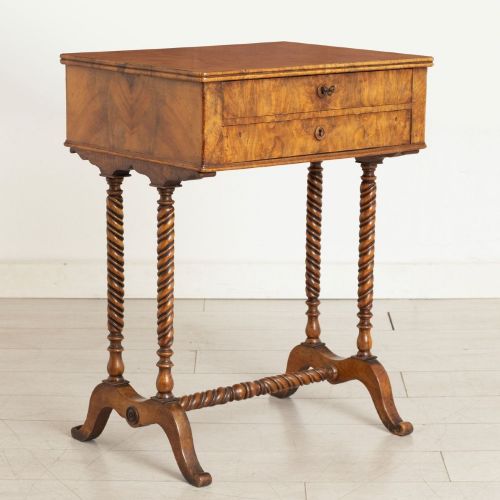
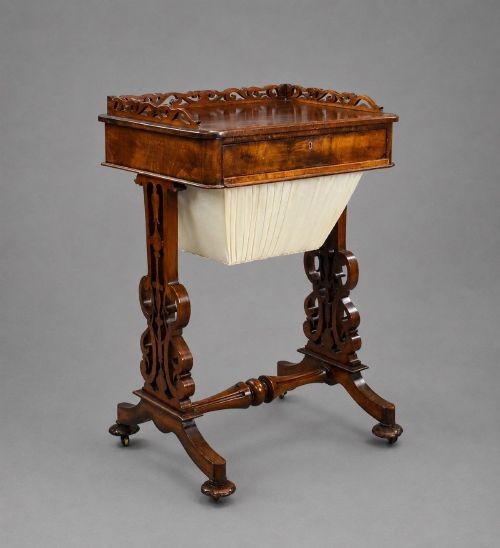
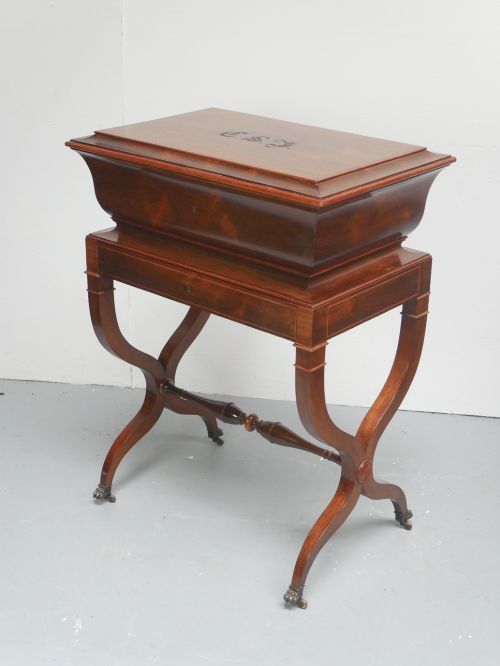
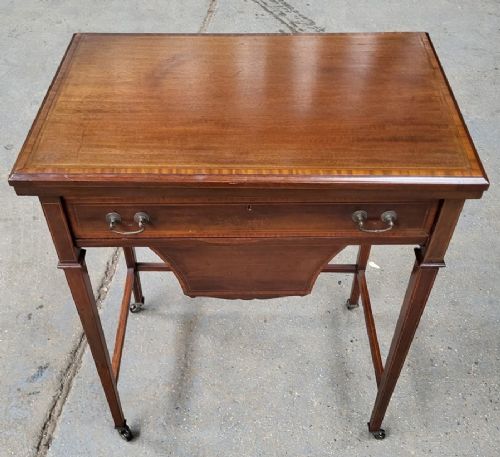
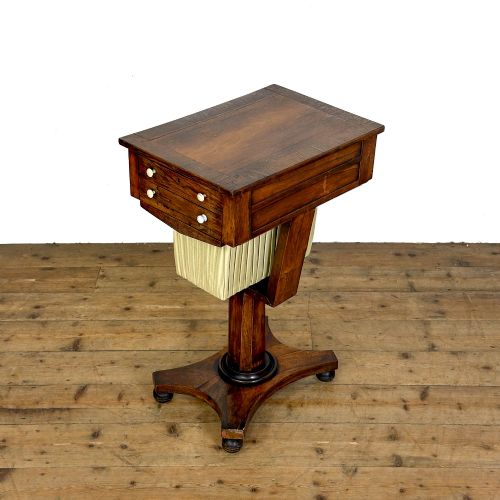
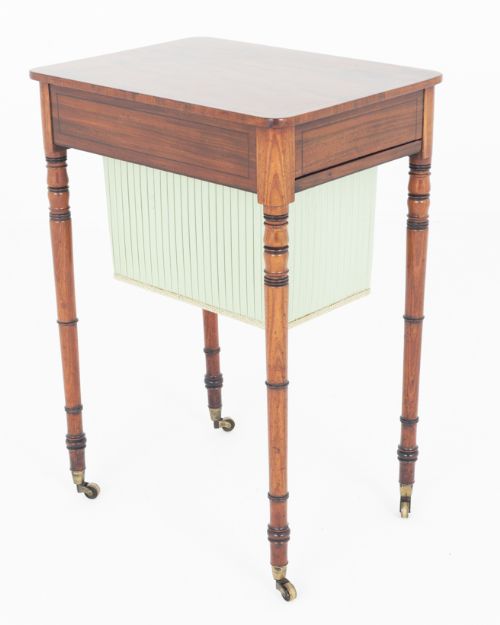
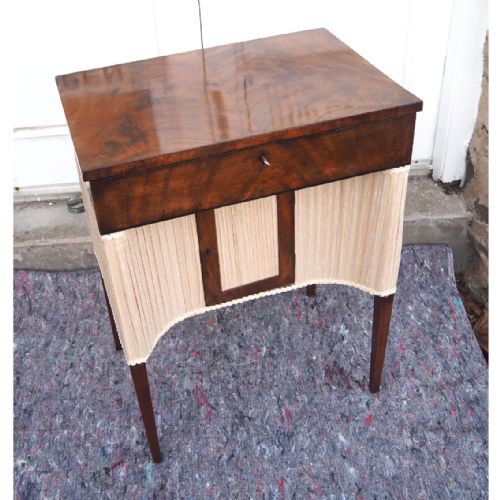
An antique sewing worktable is a specialist piece of domestic furniture designed primarily to hold needlework materials, threads and sewing tools. These tables commonly feature fitted interiors with compartments, drawers or hanging fabric bags beneath the surface to contain ongoing projects.
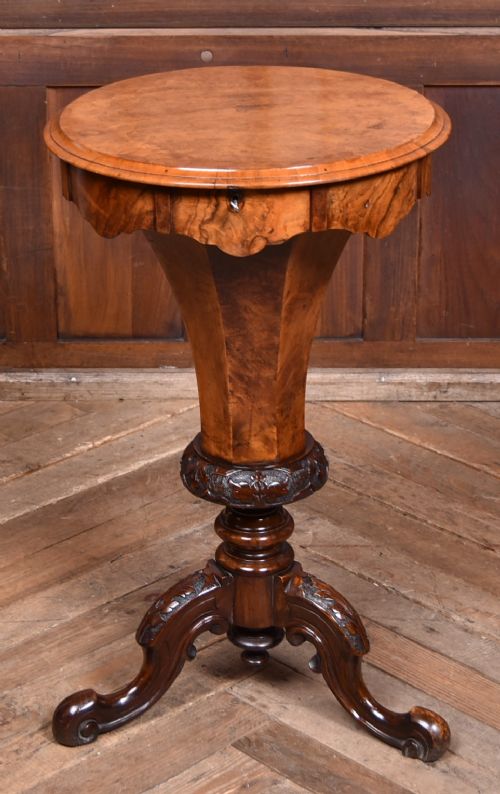
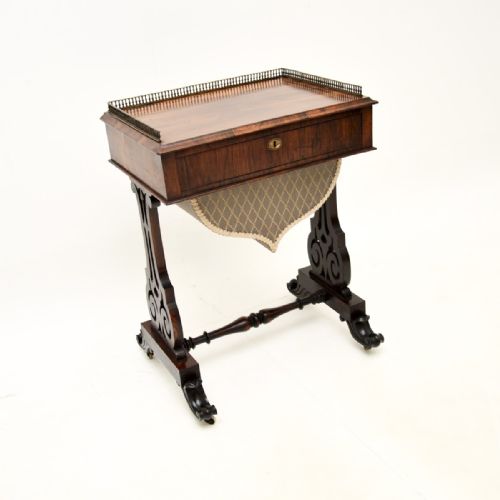
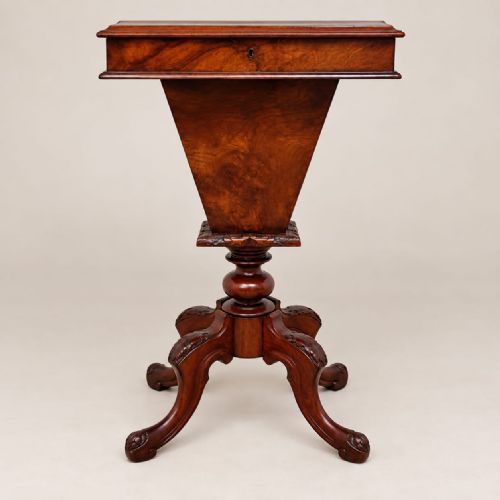
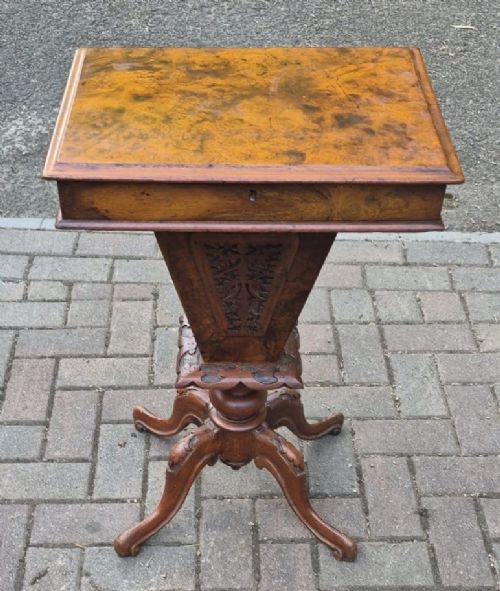
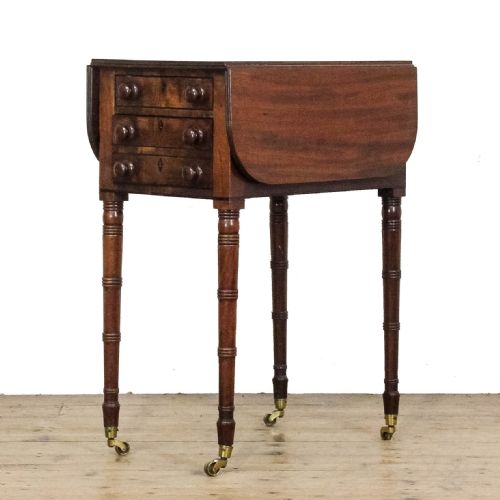
The pieces seen here span multiple historical eras from the Georgian and Regency periods through the Victorian age and into the Edwardian epoch. Victorian and Regency examples dominate the selection, showcasing varied forms including trumpet shapes, pedestal designs and Pembroke drop-leaf tables.
Beyond standard sewing functions, these items frequently double as occasional tables, games tables or small writing desks. Their versatile proportions make them well suited for use beside seating areas or as decorative side tables in a drawing room.
Materials and construction methods
Cabinetmakers utilised rich timber veneers and solid hardwoods, relying heavily on mahogany, walnut, burr walnut and rosewood. Secondary woods and decorative accents incorporate boxwood, satinwood and brass details.
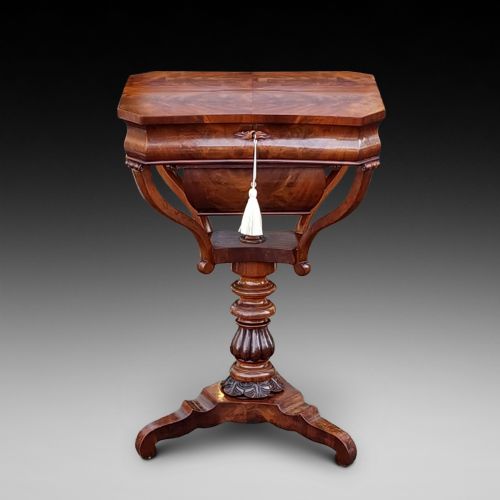
Surfaces frequently feature intricate marquetry, cross-banding or flame mahogany figuring to enhance the visual appeal of the timber grain. Interior compartments are meticulously built to house specific sewing accessories, sometimes incorporating silk or fabric storage bags.
Antique Sewing Worktable Retail Price Guide 2026
Typical asking prices for sewing worktable among the pieces listed under this phrase on Sellingantiques today, from the lower quarter to the upper quarter. They describe what is for sale here now, not the wider market.
Periods represented span the Georgian, Regency, William IV, Victorian and Edwardian eras, encompassing years from 1800 through the late nineteenth century.
Distinguishing quality and craftsmanship
Quality in these tables rests upon the selection of timber figures and the precision of the internal cabinetry. Superior examples exhibit finely matched veneers, such as burr walnut or flame mahogany, alongside cleverly engineered rising mechanisms and secret compartments.
Finer pieces demonstrate rigorous attention to detail in carved elements, joinery and hardware. The integration of multi-purpose surfaces, such as reversible chess boards or reading ledges, further elevates the sophistication of the construction.
Boothroyd Sons and Rimmer·Gillows of Lancaster·Lesage
The Antique Sewing Worktable Glossary
- Trumpet table
- A Victorian work table design featuring an octagonal or flared body widening toward the base, resembling the bell of a musical instrument. It typically houses a fabric work bag suspended underneath.
- Pembroke table
- A small rectangular drop-leaf table with hinged flaps on opposing sides, often adapted as a work table with drawers or compartments. The design dates back to the eighteenth century.
- Marquetry
- The decorative craft of applying thin pieces of wood veneer to a structure to form intricate pictorial or geometric patterns. Makers utilised contrasting timbers like rosewood and boxwood for this effect.
- Cross-banding
- A border technique where veneer is laid so that the grain runs at right angles to the central panel. This framing method is common on Edwardian and Georgian tables.
- Pedestal table
- A table supported by a central pillar rising from a platform base or claw feet. Many Regency and Victorian sewing tables utilise this balanced structural format.
Antique Sewing Worktable: Frequently Asked Questions
How were sewing worktables used?
These tables served as mobile storage stations for embroidery, knitting and sewing implements, keeping domestic needlework organised within the living quarters. The integrated boxes and bags kept ongoing textile tasks contained and discreetly hidden when guests arrived.
Many examples also doubled as games tables, writing desks or reading stands, featuring reversible tops and compartments adaptable for multiple leisure activities.
How do I style a worktable at home?
An antique worktable functions exceptionally well as a lamp table, bedside stand or side table beside a sofa. Their compact footprints allow them to fit easily into smaller spaces while introducing rich timber textures to a room.
Styling them involves keeping the surface uncluttered with a small lamp or decorative bowl, allowing the historic wood grain and clever structural details to remain visible.
How can I tell the period of a table?
Dating relies on identifying stylistic markers, timber choices and construction techniques characteristic of specific eras. Georgian and Regency pieces often feature clean architectural lines in mahogany, whereas Victorian examples tend toward heavier carved walnut, trumpet forms and burr veneers.
Internal fittings and hardware also offer clues; Edwardian pieces frequently display lighter inlaid satinwood and boxwood banding, while earlier nineteenth-century models prioritize figured rosewood and Pollard oak.