




Walnut Work Box Table
A walnut work box table brings domestic craft into the nineteenth-century parlour with fitted compartments and rich timber grain.
Walnut Work Box Table
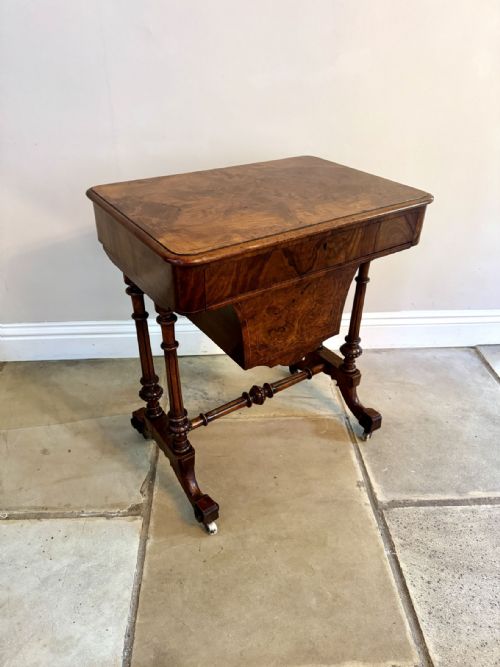
A walnut work box table combines a lidded container for sewing and needlework with a stable occasional or games surface. Most examples on this page date from the Victorian period, whilst others emerge from Edwardian and later twentieth-century workshops.
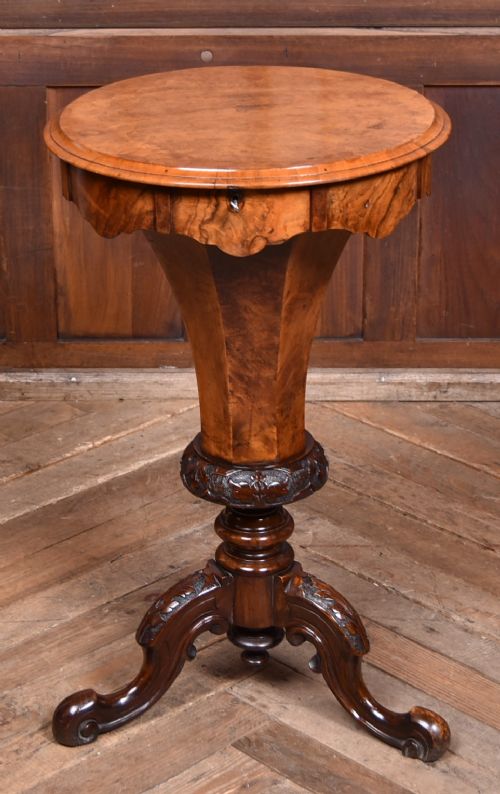
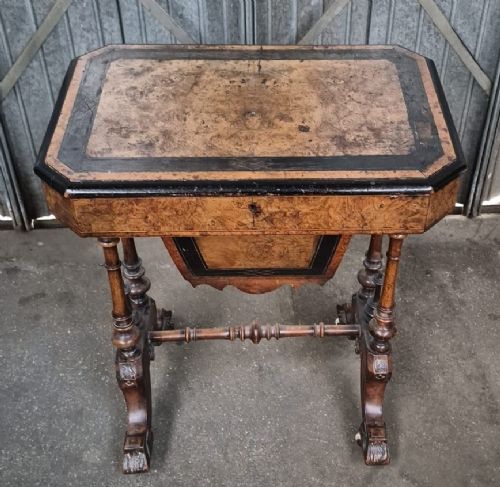
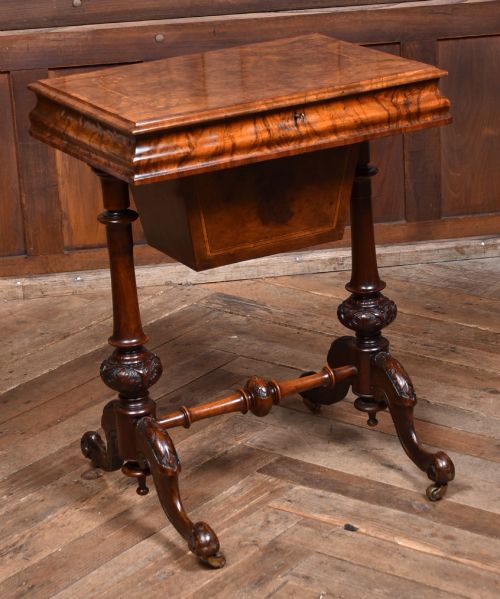
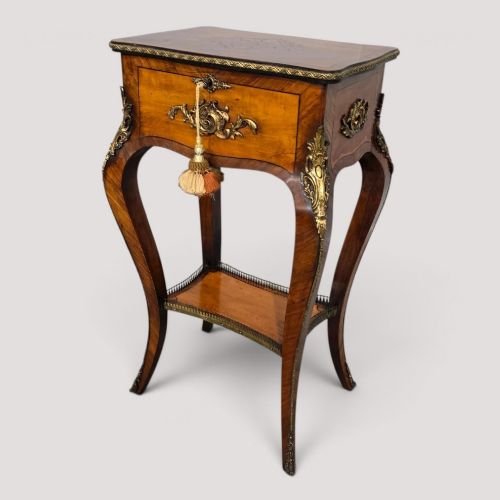
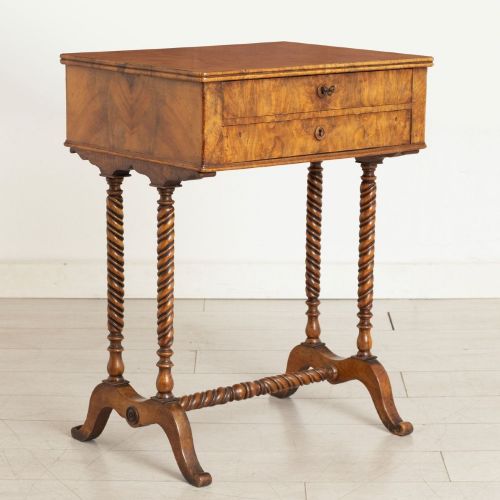
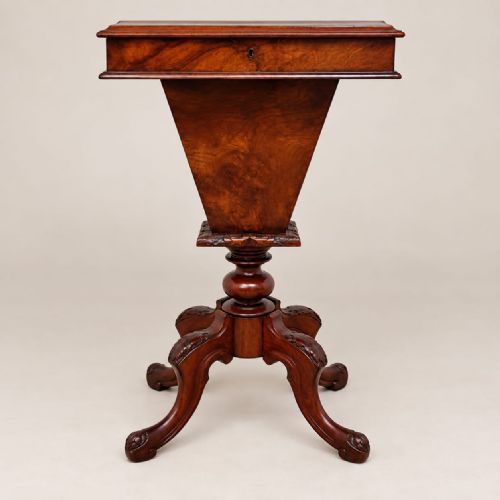
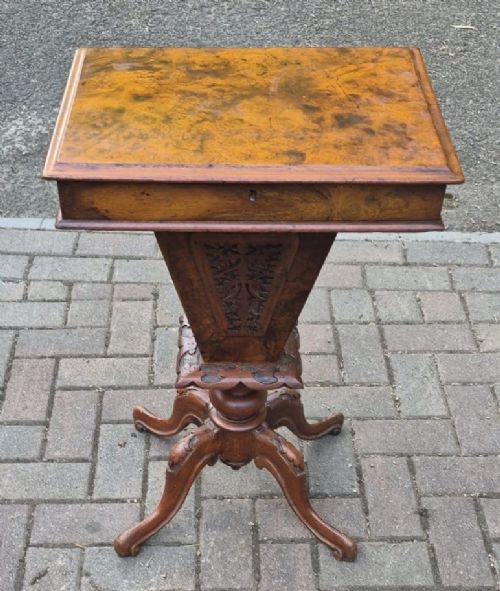
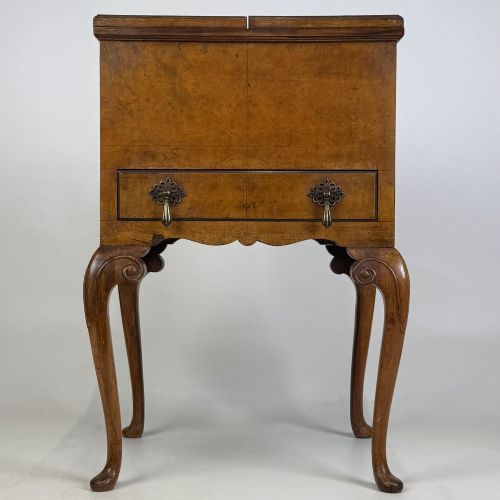
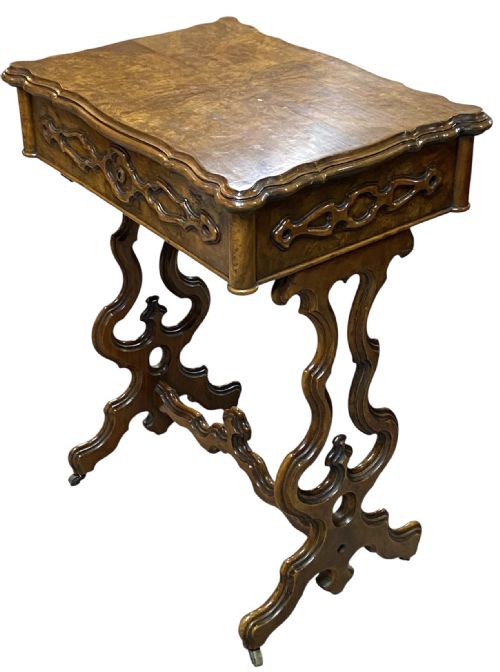
Makers shaped these pieces as trumpet forms, compactums, and rectangular side tables with fitted internal trays. They served ladies in the drawing room for holding threads, fabrics, and small personal items during social hours.
Materials and construction
Cabinet makers utilised solid walnut and decorative burr walnut veneers applied over secondary timbers to achieve rich, figured surfaces. Many incorporate boxwood inlay, marquetry, and ebonised details alongside brass hardware and internal fabric linings.
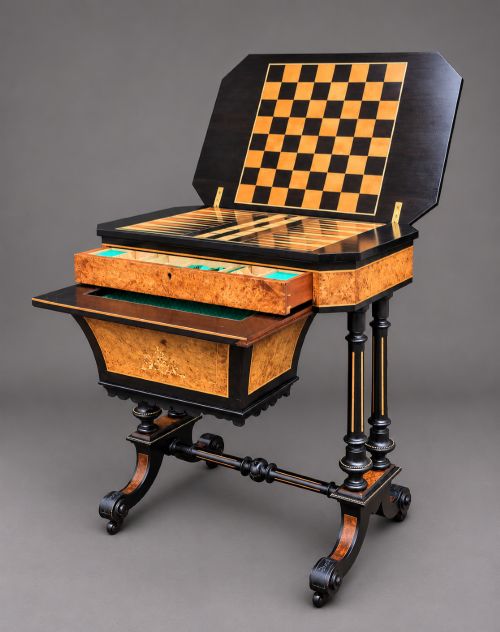
Structural supports range from carved and turned pedestals to cabriole legs and tripod bases. Tops lift or slide to reveal compartmentalised interiors designed for sewing, writing, and games.
Walnut Work Box Table Retail Price Guide 2026
Typical asking prices for walnut work box table among the pieces listed under this phrase on Sellingantiques today, from the lower quarter to the upper quarter. They describe what is for sale here now, not the wider market.
Current listings span from the eighteenth-century Spanish box through Victorian and Edwardian periods up to Art Deco pieces of 1930.
Distinctions in craftsmanship
Quality rests upon the selection of the burr walnut veneer and the precision of the marquetry and boxwood inlay. Superior pieces display crisp carving on the supports and tightly fitted internal compartments rather than plain secondary woods.
Proportion and stability separate standard utility pieces from finer salon examples. Well-balanced trumpet forms and robust pedestals indicate higher standards of nineteenth-century workshop production.
Waring & Gillow
The Walnut Work Box Table Glossary
- Burr walnut
- A veneer taken from the warted growths of walnut trees, yielding complex swirling grain patterns. It was favoured by Victorian cabinet makers for high-status table tops.
- Marquetry inlay
- Decorative patterns formed by fitting contrasting pieces of wood veneer into a prepared ground. It appears on many nineteenth-century games and work tables.
- Trumpet table
- A pedestal table featuring a widening octagonal or circular body resembling a musical instrument. The flared lower section conceals a fabric sewing bag.
- Aesthetic Movement
- A late nineteenth-century design style emphasising visual beauty over narrative function. Pieces from this movement often feature refined wood tones and subtle inlay.
Walnut Work Box Table: Frequently Asked Questions
What is a walnut work box table used for?
These tables served primarily as compact desks and sewing stations in Victorian drawing rooms. The lidded top opens to reveal fitted compartments for threads, needles, and small crafts.
Secondary surfaces often incorporate chess or backgammon boards for evening entertainment. They function today as elegant bedside or side tables with concealed storage.
How do I date a walnut work box table?
Victorian examples dominate the selection, typically identifiable by heavy burr walnut veneers, turned pedestals, and carved tripod bases. Mid-nineteenth-century pieces often feature trumpet shapes and elaborate marquetry.
Edwardian and Art Deco iterations display simpler lines, lighter satin walnut tones, or geometric framing. Hardware such as brass hinges and locks also provides clues to the manufacturing era.
Are these tables suitable for modern use?
The compact footprint and internal compartments make them practical for storing modern sewing gear, jewellery, or desk accessories. Their polished timber surfaces blend easily into contemporary living spaces.
Care should be taken to protect the veneer from direct sunlight and excessive moisture. Routine dusting preserves the historical polish of the burr walnut.
What is the difference between a sewing table and a work table?
The terms are largely interchangeable in nineteenth-century cataloguing, both denoting multi-functional furniture with internal storage. Sewing tables frequently include suspended fabric bags for wool and cloth.
Work tables often lean towards rigid wooden compartments, writing surfaces, or integrated games boards. Both types utilise figured walnut and decorative inlay to appeal to domestic buyers.