


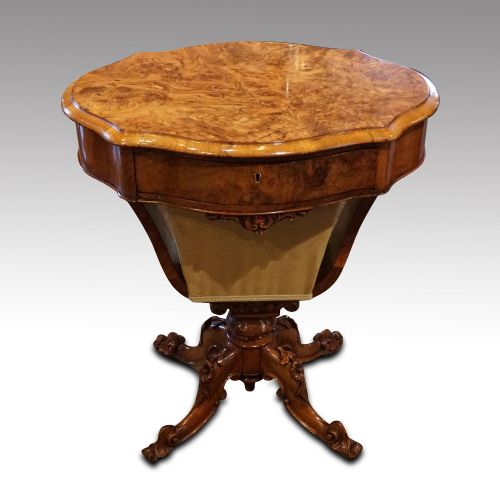

Carved Tripod Work Table
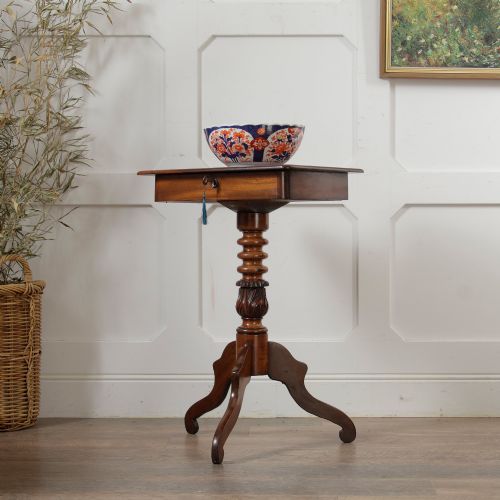
A carved tripod work table is a functional nineteenth-century sewing or occasional piece designed to hold needlework and small domestic items.
Carved Tripod Work Table
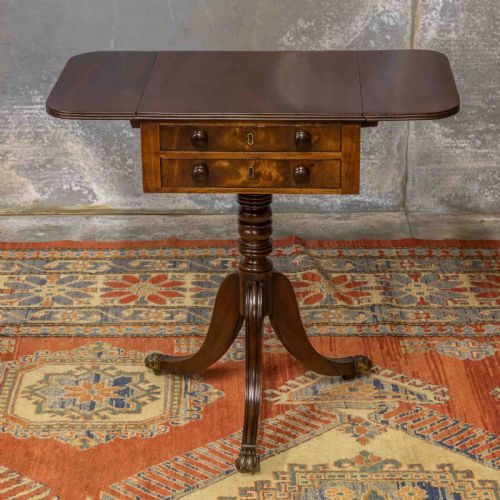
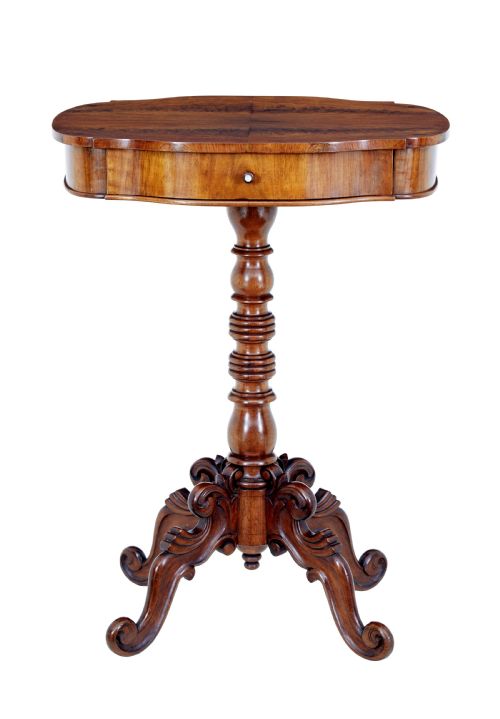
A carved tripod work table combines a slender central pedestal supported by three legs with a practical top enclosing compartments for sewing and crafts. Buyers seeking a carved tripod work table will frequently encounter nineteenth-century walnut, rosewood, and mahogany examples featuring fitted interiors beneath hinged lids.
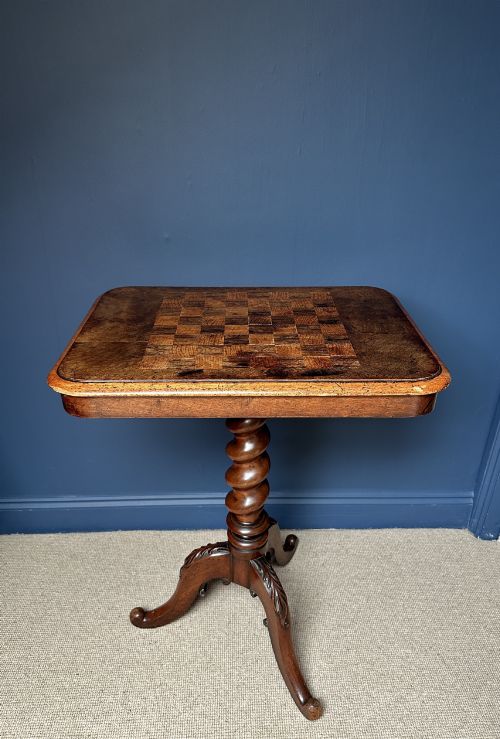
The form encompasses trumpet-shaped bodies, rectangular boxes, and occasional variations adapted for games or general side use. Most pieces on this page originate from the Victorian and Regency periods, displaying distinct regional timbers such as Irish yew wood alongside classical turned and carved pedestals.
How they were made
Cabinetmakers utilised dense hardwoods including mahogany, walnut, burr walnut, and rosewood, often enhancing plain surfaces with intricate marquetry or inlaid timber and brass details. The structural bodies rely on solid timber carcases combined with fine veneers to create rich, figured grain patterns across the lids and aprons.
Support stems utilise bobbin turning, fluted carving, or classical tripod bases jointed securely to central columns. Interior compartments incorporate fitted wooden trays and fabric storage bags suspended beneath the main working surface.
Some Victorian musical tables play a tune inside while you work on your embroidery.
What varies in quality
The refinement of the timber selection and the complexity of the surface decoration determine the standing of an individual piece. Highly figured burr walnut and elaborate rosewood marquetry represent a superior grade of construction compared to plain mahogany variants.
The crispness of the pedestal carving and the precision of the internal carpentry distinguish workshop output. Original fitted compartments and intact fabric workbags add significantly to the integrity of the piece.
The Carved Tripod Work Table Glossary
- Work table
- A small domestic table fitted with drawers, compartments, or a suspended bag for sewing materials. These items served ladies for needlework and correspondence in the parlour.
- Trumpet workbox
- A work table featuring an octagonal or flared body widening towards the base, resembling the bell of a musical instrument. This specific shape rests on a carved tripod pedestal.
- Marquetry
- The art of forming decorative patterns on a wooden carcase by applying thin veneers of various coloured timbers. Cabinetmakers used this technique to create floral and geometric motifs on tabletops.
- Tripod base
- A support structure consisting of three shaped legs radiating from a central column. This design provides stability to narrow pedestal tables.
- Pollard oak
- Timber taken from oak trees that have been pollarded, producing gnarled wood with dense, speckled grain patterns. It was favoured by Regency and nineteenth-century makers for decorative veneering.
Carved Tripod Work Table: Frequently Asked Questions
What is a work table used for?
A work table was designed for nineteenth-century domestic needlework, holding threads, needles, and unfinished sewing projects inside internal compartments and suspended fabric bags.
Beyond sewing, these pieces functioned as convenient occasional tables for lamps, books, or writing in the drawing room.
How do I identify a Victorian work table?
Victorian examples frequently utilise walnut, burr walnut, or rosewood, often displaying heavy carving, trumpet-shaped bodies, or marquetry inlay.
They generally date from the mid to late nineteenth century and reflect the era's preference for ornate domestic furnishings.
What is the difference between a work table and a sewing table?
The terms are largely interchangeable in nineteenth-century furniture, both describing small tables equipped for needlecraft and domestic handwork.
Some regional listings or specific forms might emphasise games boards or general side storage while retaining the same basic frame.
Where should I place a tripod work table at home?
A tripod work table fits well beside a sofa or armchair, functioning as a lamp table or a compact surface for everyday items.
Its small footprint allows it to sit easily in corners or halls without dominating the room space.