




Brown Walnut Needlework Box
A brown walnut needlework box is a practical domestic chest designed for sewing and crafting tools, prized for rich timber grains.
Brown Walnut Needlework Box
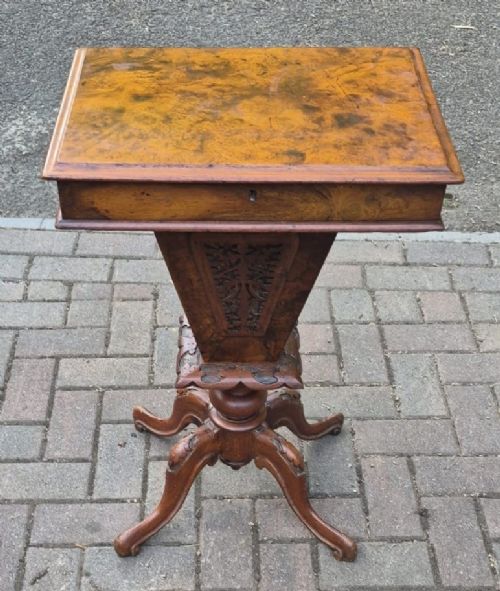
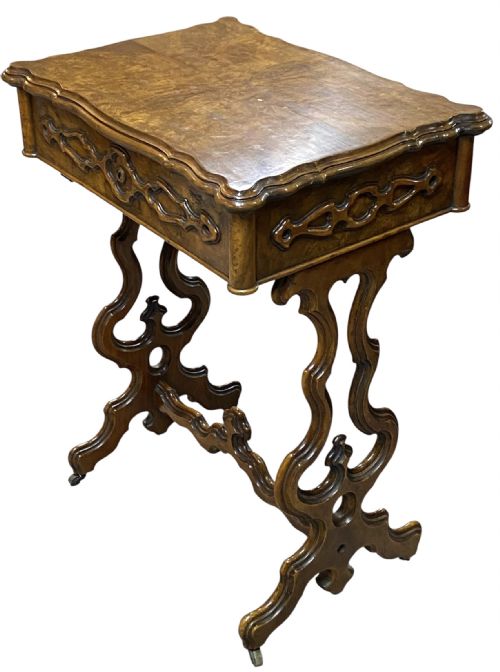
A brown walnut needlework box encompasses portable workboxes and larger freestanding sewing tables originating primarily from the Victorian and Edwardian eras. These pieces typically combine lidded storage compartments with interior trays for threads, needles, and textiles.
The most common formats on this page are the trumpet workbox and the games or sewing table, featuring turned supports or tripod bases. Makers fashioned these items from walnut and burr walnut, frequently incorporating marquetry inlay and textile linings.
What varies in quality
The distinction between standard items and superior examples lies in the selection of the timber grain, particularly the depth and figuration of the burr walnut veneer across the lid. Finely executed marquetry inlay and crisp carving on the turned supports elevate the overall standard.
Internal complexity also dictates the grade of the piece, with elaborate multi-compartment lift-out trays and intact original fabric linings demonstrating higher craftsmanship than simpler utility boxes.
Listings demonstrate that brown walnut needlework boxes span the Victorian and Edwardian periods, utilising brass, boxwood, and fabric.
Waring & Gillow
The Brown Walnut Needlework Box Glossary
- Burr walnut
- A figured timber harvested from walnut tree growths, known for swirling grain patterns. Cabinetmakers sliced this wood into thin veneers for decorative table tops and box lids.
- Trumpet workbox
- A freestanding sewing receptacle shaped like an inverted trumpet, widening towards an octagonal or circular hinged lid. This form rests upon a tripod base.
- Marquetry inlay
- Decorative patterns formed by fitting contrasting pieces of wood veneer into a primary background. Craftsmen utilised this technique to adorn table surfaces and box exteriors.
- Satin walnut
- A timber variant displaying a warm, light brown tone with subtle grain variation. Makers occasionally employed this material for Edwardian sewing tables.
- Tripod base
- A three-legged support structure commonly found beneath freestanding Victorian workboxes and occasional tables. This design provides stability on uneven floor surfaces.
Brown Walnut Needlework Box: Frequently Asked Questions
What is a brown walnut needlework box used for?
These pieces served as dedicated storage for domestic sewing equipment, including threads, needles, fabric scraps, and small tools. The compartments kept implements organised during periods when hand sewing was a daily household task.
Today, collectors utilise them for similar storage purposes or as decorative side tables and occasional tables in living spaces.
How do I tell a workbox from a sewing table?
A workbox is generally a smaller, portable chest designed to sit upon a desk or table, though some trumpet workboxes stand on their own floor bases. They focus primarily on lidded storage.
Sewing tables are larger freestanding items of furniture that incorporate writing surfaces, games boards, or lamp table surfaces alongside the internal textile compartments.
How do I date a walnut sewing table?
Dating relies on stylistic markers and construction methods recorded across the Victorian and Edwardian periods. Pieces featuring heavy carved supports and elaborate burr walnut typically point to mid-nineteenth-century manufacture.
Later Edwardian examples often display lighter satin walnut timbers and simpler inlaid motifs, reflecting the shift in domestic interior design towards the turn of the century.
How should I care for antique walnut furniture?
Maintain the timber by keeping the piece away from direct sunlight and extreme temperature fluctuations, which can cause walnut veneer to split or warp. Regular dusting with a soft, dry cloth preserves the polished surface.
Avoid commercial silicone sprays and excessive moisture, opting instead for traditional beeswax applied sparingly to nourish the grain.