
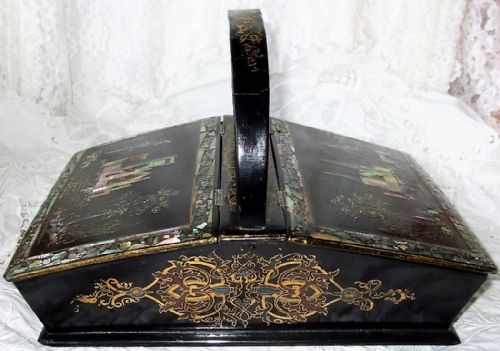


Victorian Inlaid Sewing Box
A victorian inlaid sewing box brings tactile warmth and intricate craftsmanship to a desk, holding small treasures with quiet elegance.
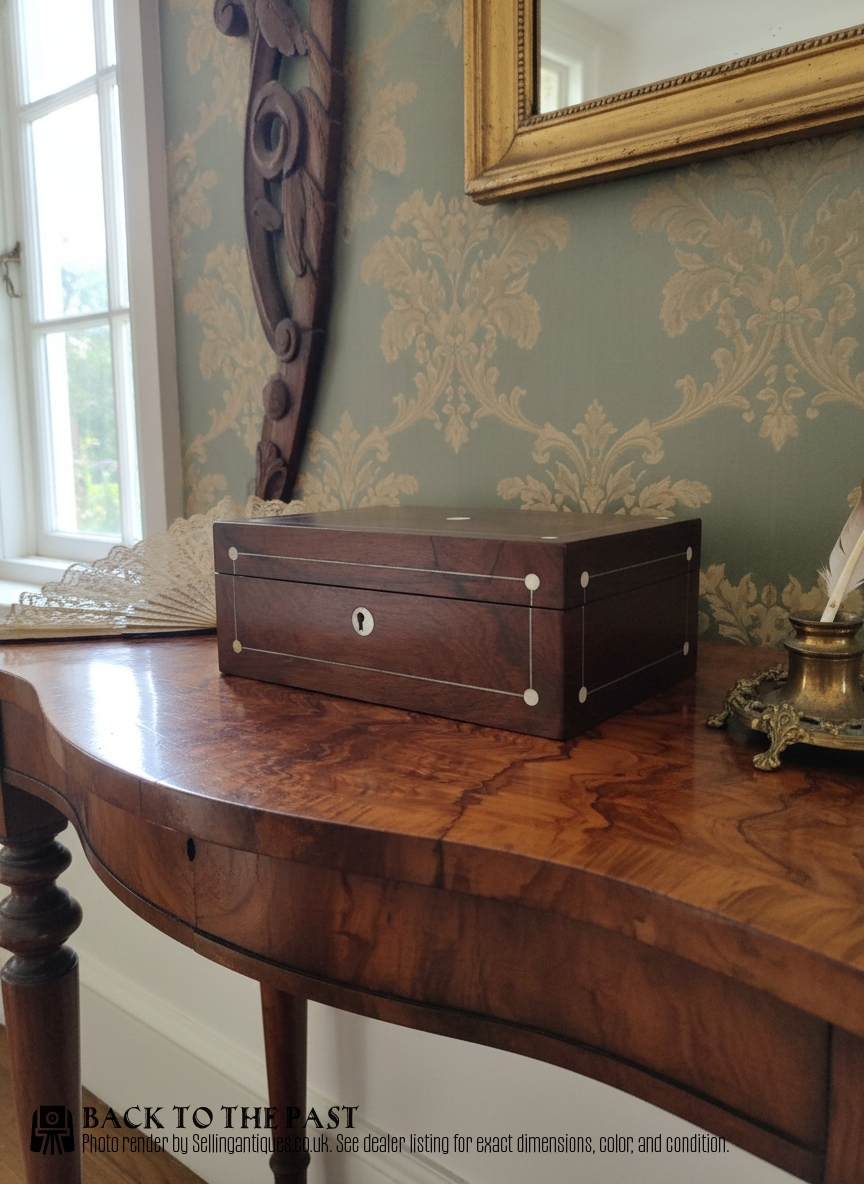
Victorian Inlaid Sewing Box
A victorian inlaid sewing box encompasses portable tabletop caskets and larger freestanding work tables designed for nineteenth-century needlework. These items frequently combine utilitarian interior compartments with decorative exterior woodwork, serving as both practical sewing companions and striking decorative objects.
Tabletop work boxes and larger trumpet-shaped sewing tables dominate the selection, often featuring fitted interiors with lift-out trays for spools, needles, and thimbles. Many examples also integrate chess or backgammon boards onto their lids, doubling as games tables for parlour entertainment.
Originating largely from the nineteenth century, these pieces showcase the era's fascination with domestic craft and exotic materials. Walnut, rosewood, and burr walnut form the structural core of most examples encountered by collectors.
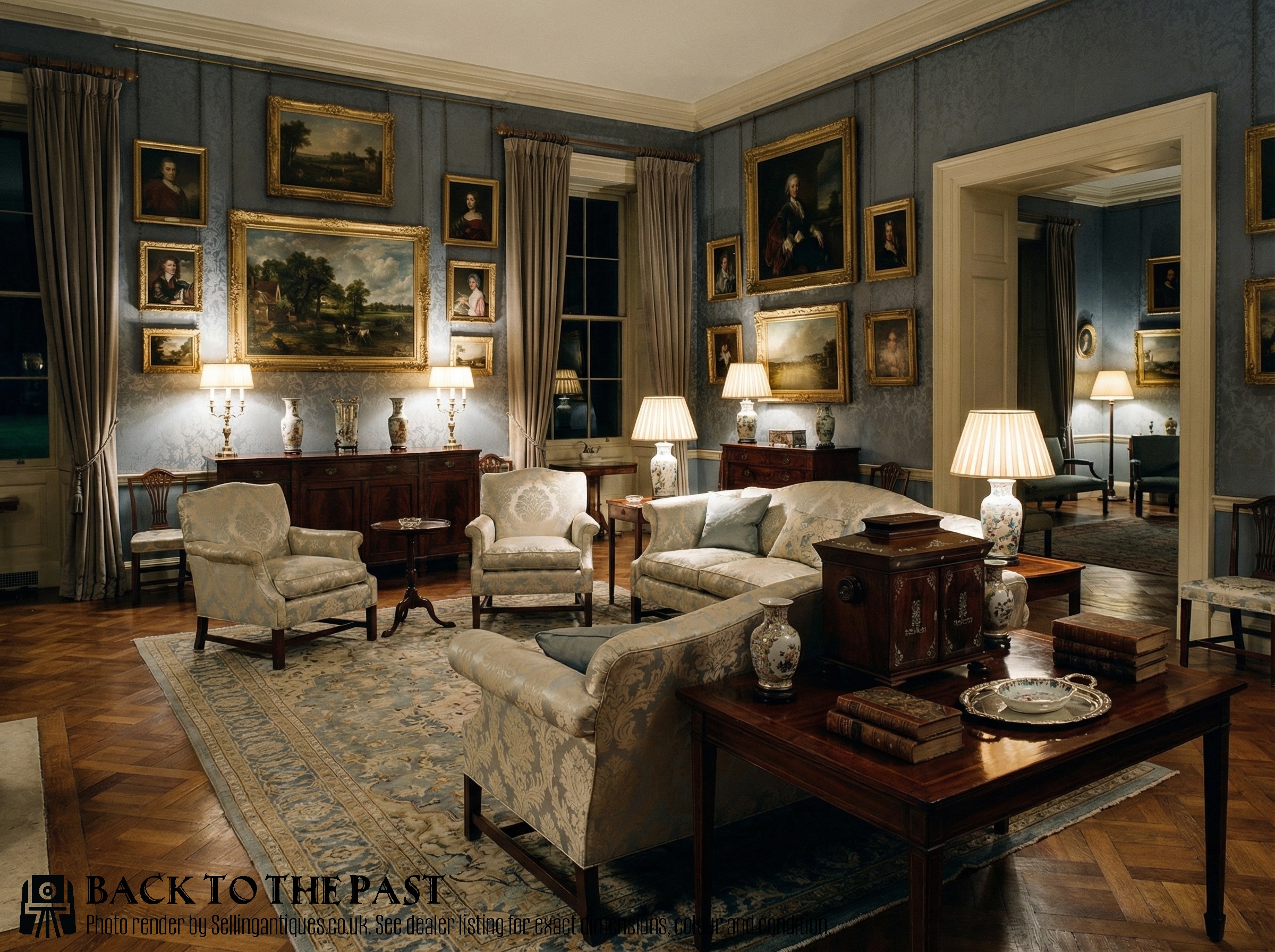
How they were made
Cabinetmakers utilised dense tropical hardwoods such as rosewood, walnut, and coromandel as stable foundations for complex surface decoration. These timbers provided rich natural grains that contrasted sharply against lighter decorative elements.
Inlay techniques defined the exterior ornamentation, incorporating contrasting woods like boxwood alongside mother-of-pearl, brass, and specialised Tunbridge ware mosaic tesserae. Artisans meticulously embedded these materials into recessed channels within the primary wood to create geometric, floral, or pictorial motifs.
What varies in quality
The precision and complexity of the surface ornamentation dictate the upper tier of quality. Fine examples display microscopic Tunbridge ware tesserae or intricate marquetry with tightly fitted joints, whereas lesser pieces rely on simpler linear stringing or painted motifs.
Interior completeness and structural integrity heavily influence the standing of an individual piece. Retaining original silk-lined fitted trays, functional locks with matching keys, and undamaged internal compartments elevates a box far above one with altered or missing interiors.
Waring and Gillow
The Victorian Inlaid Sewing Box Glossary
- Tunbridge Ware
- Woodware decorated with mosaic patterns formed from thousands of tiny coloured wood blocks. This meticulous technique created detailed pictorial views and geometric borders characteristic of Kentish workshops.
- Marquetry
- The art of applying decorative veneer pieces to a structure to form intricate designs. Craftsmen used various tinted and natural woods to achieve pictorial depth.
- Mother-of-Pearl
- The iridescent inner layer of certain mollusc shells used for flat inlay. It catches the light with shimmering pink and green tones.
- Trumpet Table
- A freestanding work table featuring an octagonal or flared body resembling a musical instrument. The tapering basket typically rests on a pillar and tripod base.
- Stringing
- Thin lines of contrasting wood inlaid into the surface of furniture. It creates subtle borders around panels and table edges.
Victorian Inlaid Sewing Box: Frequently Asked Questions
What were sewing boxes used for originally?
Victorian ladies utilised these caskets to organise needles, threads, scissors, and ongoing needlework projects during domestic leisure hours. The interior trays kept delicate implements separated and protected when not in use.
Many boxes also accommodated writing materials or served as secure receptacles for jewellery and small personal keepsakes. Their portable nature allowed owners to carry their current projects easily between rooms.
Can I use a vintage sewing box for modern storage?
These caskets accommodate modern trinkets, art supplies, or desktop stationery just as effectively as nineteenth-century sewing tools. The compartmentalized trays provide practical organisation for contemporary small items.
Placing them on desks or dressing tables allows the decorative exterior woodwork to be appreciated daily. Care should be taken to protect antique linings from moisture and heavy wear.
How do I care for antique wood and mother-of-pearl?
Maintaining these surfaces requires keeping them away from direct sunlight and sudden temperature shifts that cause wood to warp or split. Occasional application of appropriate wax preserves the sheen of rosewood and walnut.
Mother-of-pearl inlay benefits from gentle dusting without harsh chemical polishes that might damage the surrounding adhesive or wood grain. Checking interior hinges periodically ensures lids remain stable during opening.