



Inlaid Walnut Work Table
An inlaid walnut work table combines domestic utility with refined marquetry, offering a versatile surface that conceals fitted compartments for needlework and games.
Inlaid Walnut Work Table
An inlaid walnut work table serves multiple functions, frequently combining a sewing box, a games board, and a compact writing surface within a single piece of furniture. These tables date predominantly from the Victorian era, spanning the mid-to-late nineteenth century, though Edwardian and French continental examples also appear.
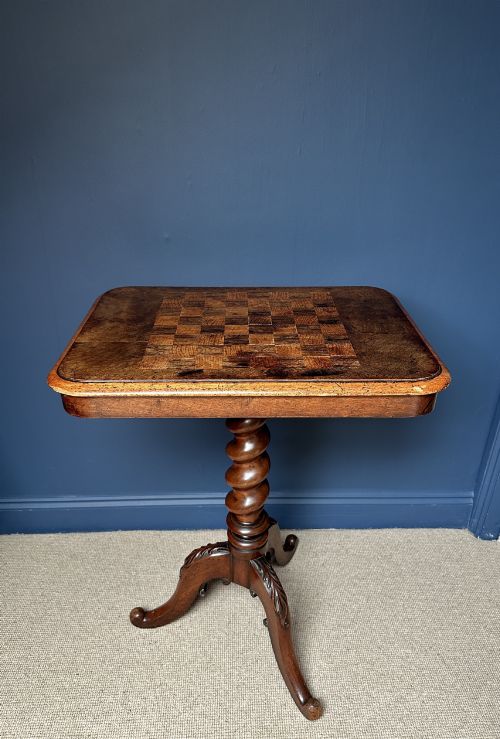
The version most commonly met on this page is the Victorian burr walnut sewing or games table, often featuring a trumpet-shaped base or turned pedestal supports. Interiors typically reveal fitted compartments, lidded wells, and a sliding wool bag designed to hold textile crafts.
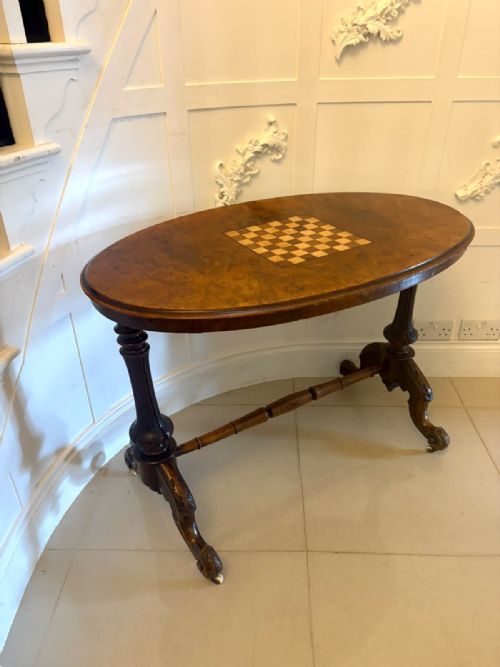
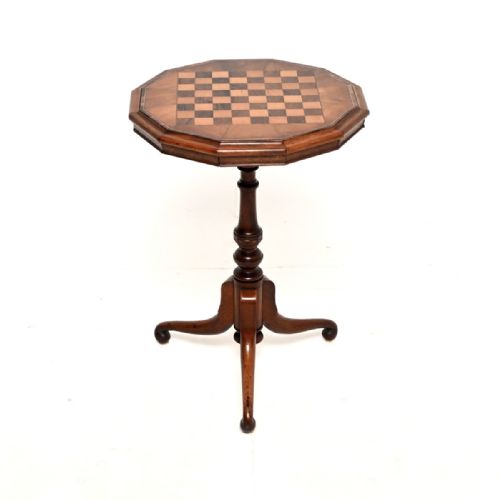
Many specimens integrate chess, draughts, or backgammon boards into the top surface via detailed wood inlay. They stand as representative examples of nineteenth-century craftsmanship tailored for the Victorian parlour.
Materials and Construction Techniques
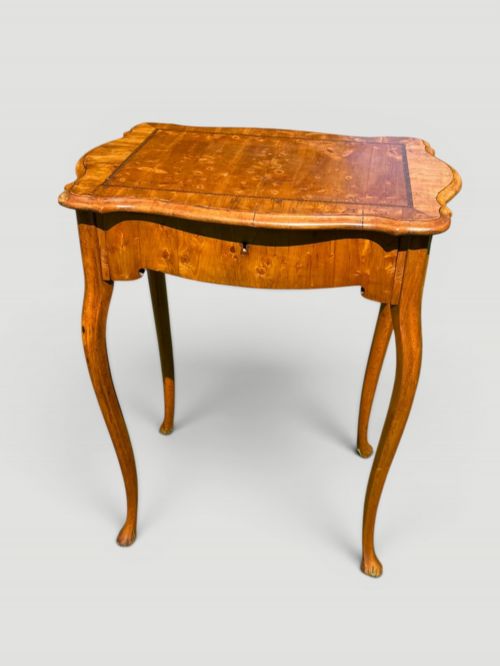
Cabinetmakers utilised walnut and highly figured burr walnut veneers applied over solid secondary timbers to construct the primary carcase. Burr walnut provides distinctive swirling grain patterns that catch the light across the table top.
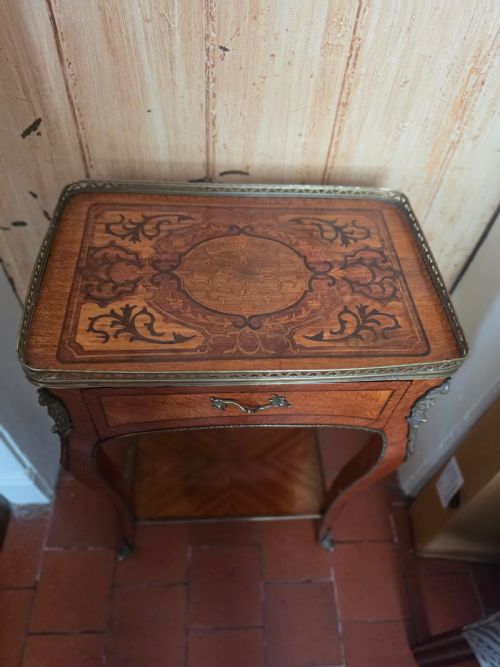
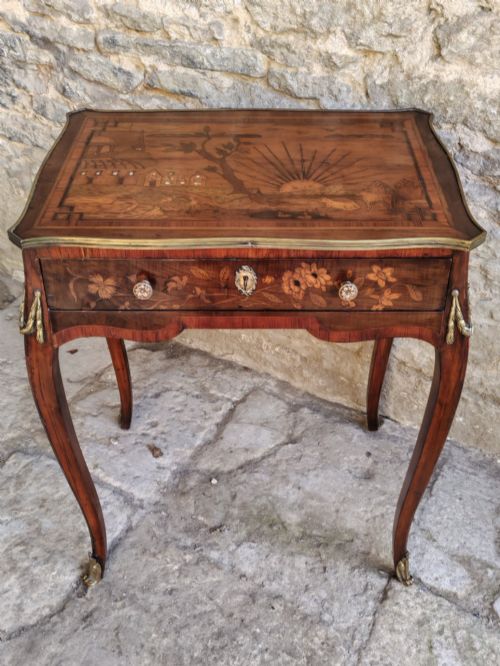
Wood inlay, marquetry, and stringing incorporate lighter contrasting timbers such as boxwood and fruitwood, sometimes augmented by Tunbridge ware mosaic panels. These decorative elements create floral motifs and geometric borders across the lids and friezes.
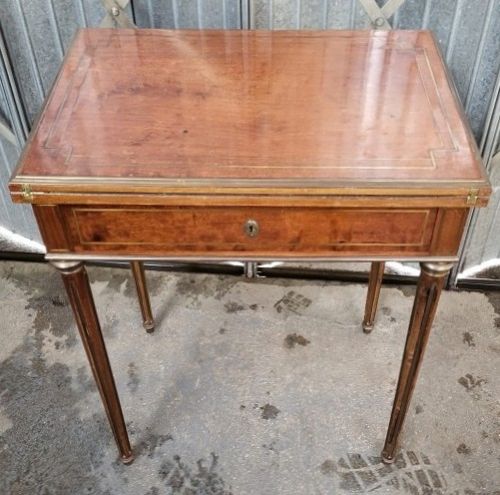
Metal accents in brass and ormolu appear on hinges, locks, and occasional mounts, while interior fittings rely on precision joinery for small drawers and lidded compartments.
Inlaid Walnut Work Table Retail Price Guide 2026
Typical asking prices for inlaid walnut work table among the pieces listed under this phrase on Sellingantiques today, from the lower quarter to the upper quarter. They describe what is for sale here now, not the wider market.
Certain specimens conceal miniature musical movements inside, turning a modest sewing box into an auditory surprise.
Distinctions in Quality and Execution
The standard of execution rests heavily upon the complexity and precision of the marquetry and wood inlay. Superior pieces display crisp, tightly fitted botanical motifs or intricate chess boards executed without visible filler.
Figure selection in the burr walnut veneer dictates visual depth, with premium examples exhibiting symmetrical, richly patterned grain across the entire top surface. Internal organisation also separates ordinary production from finer workshops, featuring fully fitted compartments and intact silk or fabric work bags.
Waring and Gillow
The Inlaid Walnut Work Table Glossary
- Burr walnut
- A veneer sliced from the gnarled growths of a walnut tree, prized for its swirling, highly figured grain patterns. It forms the primary decorative surface on the best nineteenth-century tables.
- Marquetry
- The art of applying pieces of veneer to a structure to form decorative patterns and pictorial designs. Cabinetmakers utilise contrasting timbers to achieve shaded floral details.
- Trumpet table
- A form of work table featuring a slender column expanding downwards into a flared, octagonal or hexagonal receptacle resembling a trumpet. This body contains the sewing bag and storage well.
- Tunbridge ware
- A specialised form of woodwork originating in Kent, consisting of minute mosaic tiles assembled from various natural woods to create geometric or pictorial scenes. These panels decorate specific table lids.
- Stringing
- Thin lines of contrasting timber inlaid into shallow channels on the surface of furniture to create geometric borders and panels. It defines the edges of games boards and table tops.
Inlaid Walnut Work Table: Frequently Asked Questions
What is inside an inlaid walnut work table?
Lifting the lid reveals a fitted interior containing small compartments, lidded wells, and pin cushions designed for sewing implements and needlework accessories.
Beneath these removable trays, a fabric pouch or sliding bag hangs to collect loose wool and textiles during crafting.
How do I use a games and work table?
The hinged top folds or rotates to reveal an inlaid chess, draughts, or backgammon board embedded directly into the wood surface.
When gaming concludes, the top closes back down to serve as a side table or writing surface in a reception room.
How can I date a Victorian walnut table?
Examine the timber selection, construction methods, and hardware to establish the period of manufacture between eighteen-fifty and nineteen-hundred. Mid-century examples often display richer burr walnut veneers and heavier pedestal turnings.
Later Victorian and Edwardian pieces show subtle shifts in proportion and lighter secondary woods.
Where should I place a work table at home?
These compact tables fit well beside a sofa or armchair as an occasional surface holding a lamp or small objects.
Their finished backs and detailed marquetry allow them to stand freely toward the centre of a room rather than pressed against a wall.