

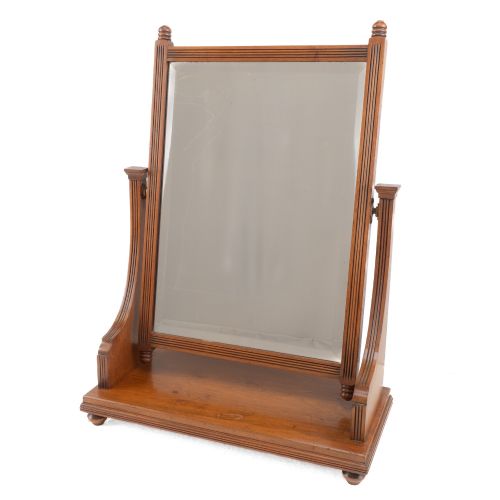
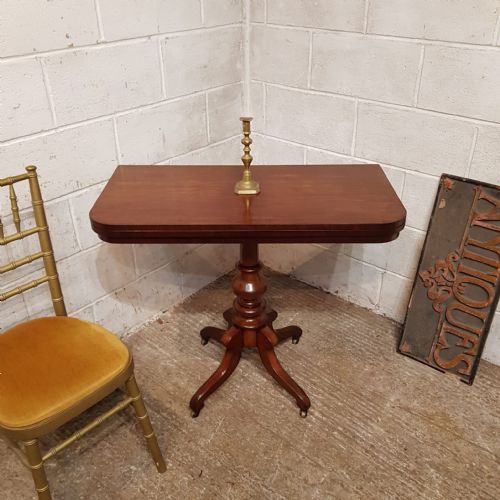


Victorian Swivel Top Table
These Victorian swivel top tables are clever folding mechanisms for cards and tea that transform everyday living spaces into formal entertaining rooms.
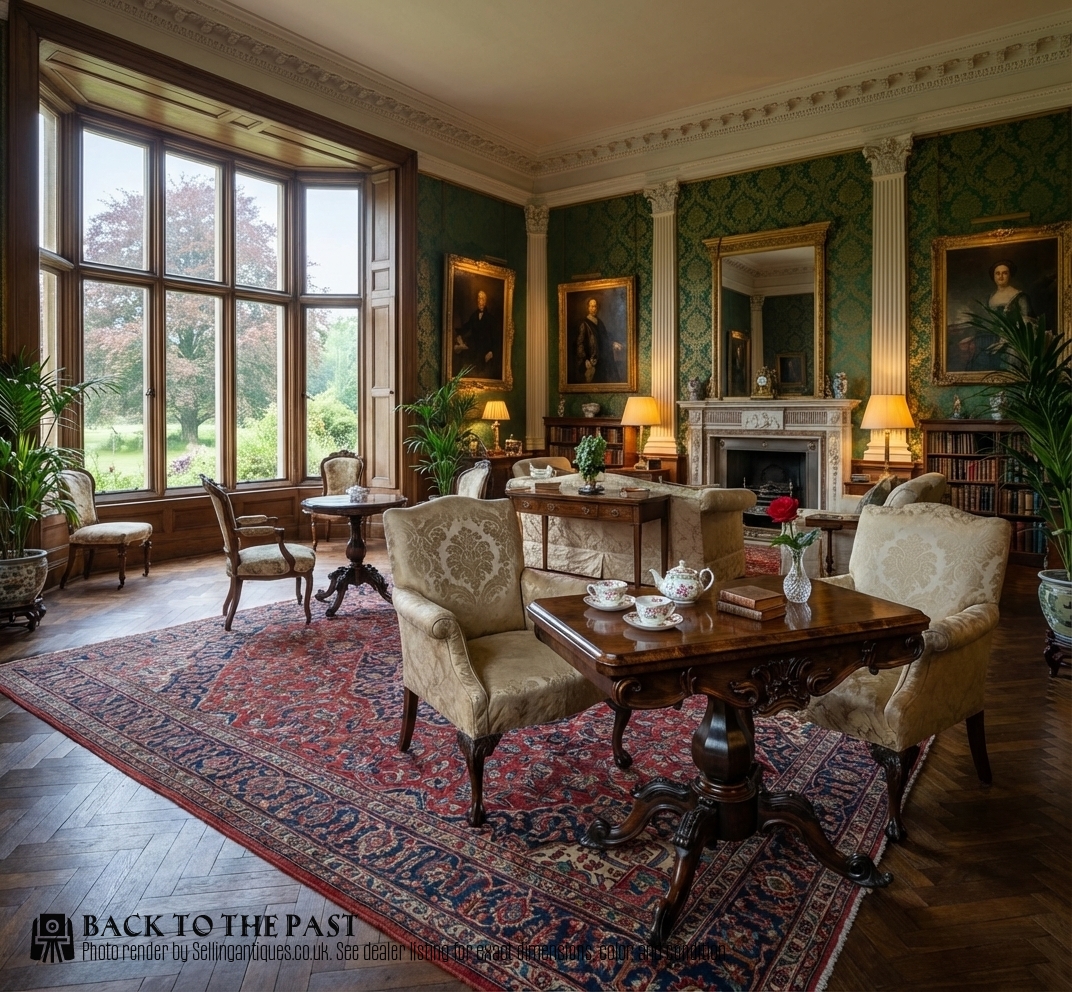
Identifying a Victorian swivel top table
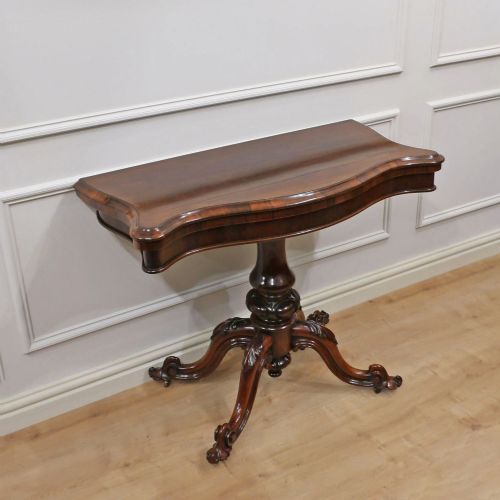
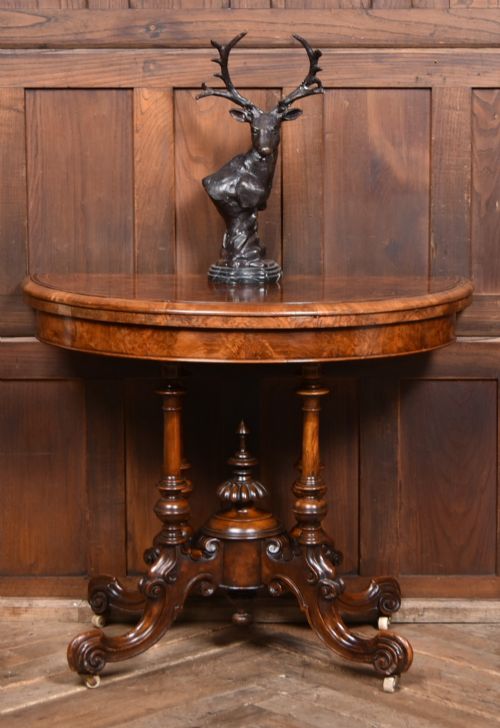
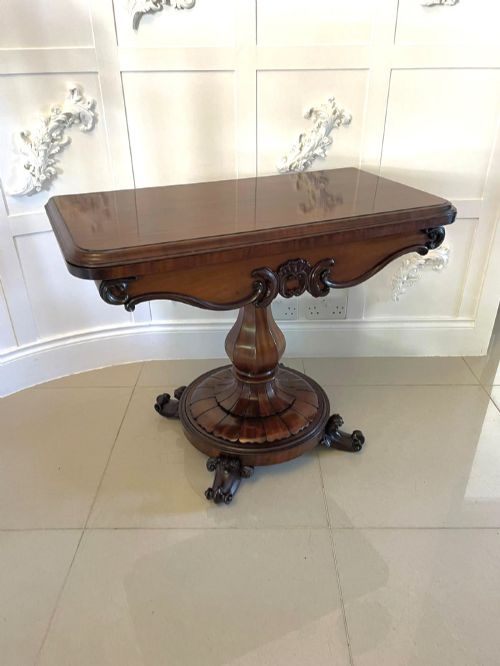
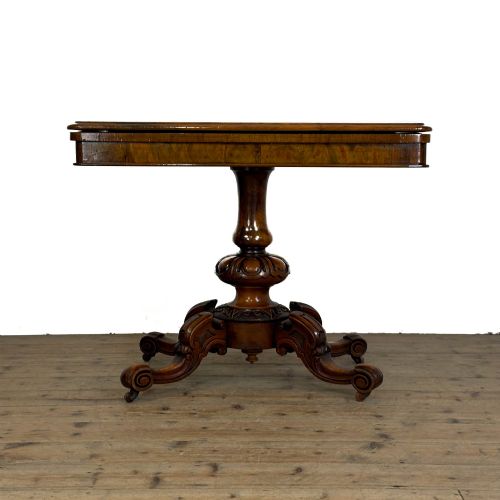
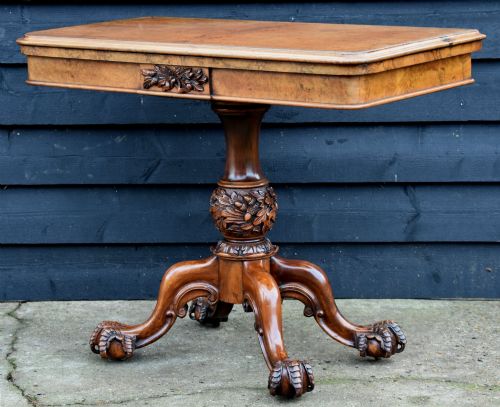
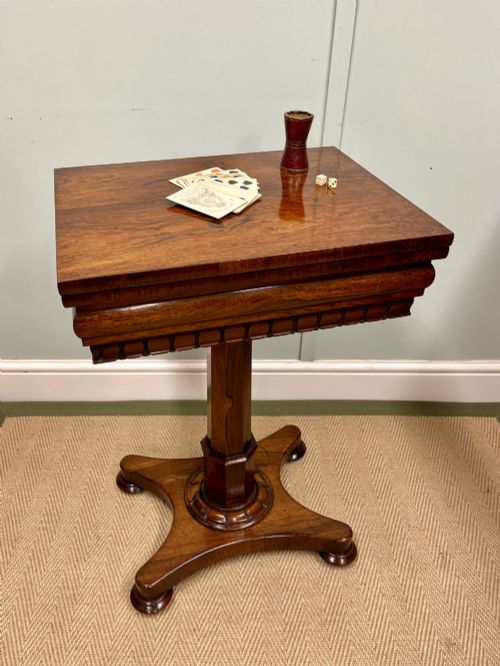
A Victorian swivel top table is a versatile nineteenth-century piece designed primarily for card games, tea, or occasional use. The top section pivots on a concealed hinge mechanism, allowing the double-leaf surface to open outwards and rest flat upon a supporting frieze or pedestal base.
The selections on this page span the Victorian era, including pieces dated to eighteen-sixty and eighteen-seventy alongside broader nineteenth-century examples. Common forms include fold-over card tables, turn-over games tables, and drop-leaf occasional tables.
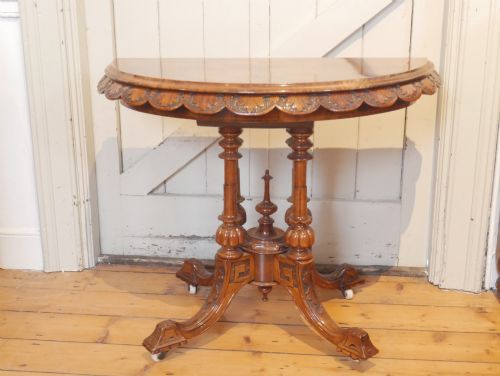
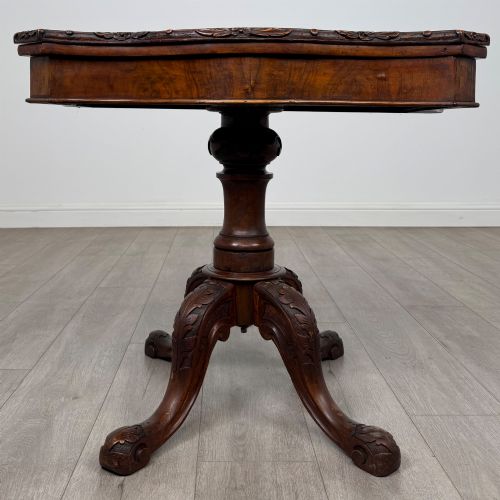
Makers utilised timber varieties such as burr walnut, mahogany, rosewood, amboyna, and ebony. Many examples incorporate decorative elements like floral marquetry and fine wood inlay to elevate the surface appearance.
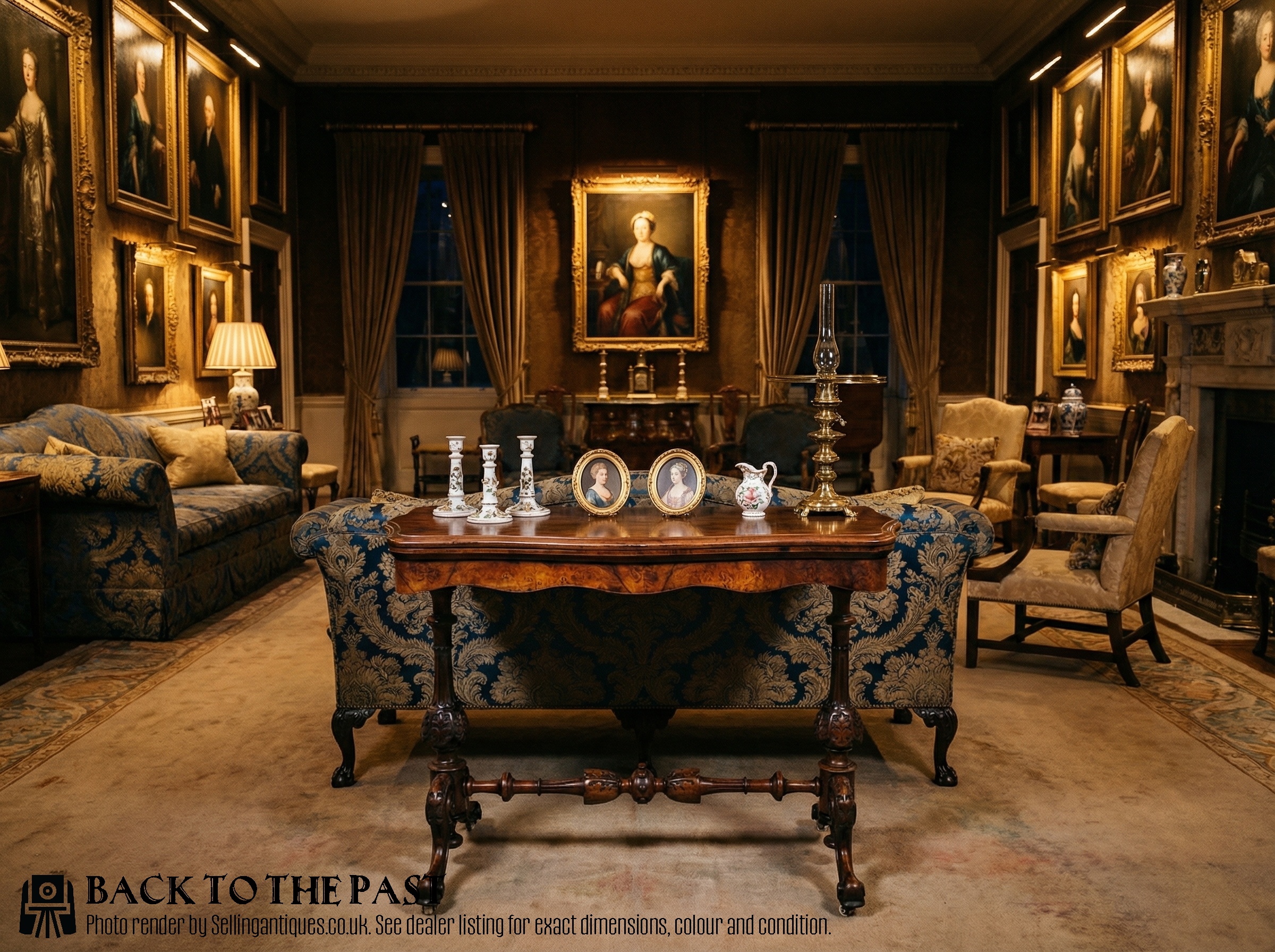
Materials and construction
Cabinet makers selected dense cabinet timbers like mahogany and rosewood for structural stability, often applying highly figured burr walnut or amboyna veneers to the primary display surfaces. These decorative veneers required expert book-matching and hand-polishing to achieve a deep lustre.
Internal mechanisms frequently incorporated brass components to ensure smooth pivoting and folding action without straining the timber joints. Secondary woods support the interior cavities beneath the folding leaves, which frequently doubled as concealed storage compartments for playing cards.
Retail Price Guide 2026
Typical UK retail prices for victorian swivel top table, calculated from the Sellingantiques database of over a million retail prices indexed since 2003. This retail price guide relies exclusively on Sellingantiques data; no external sources or auction records are used, so the figures do not describe the wider market.
Many of these tables hide secret compartments inside the frieze, thoughtfully designed to keep losing card hands out of sight.
Judging quality in a Victorian swivel top table
Quality rests in the precision of the pivot mechanism and the integrity of the timber veneers. Superior examples display seamless grain alignment when the top is unfolded, alongside crisp floral marquetry or inlay work that remains entirely flush with the surrounding surface.
The underlying timber framing dictates long-term stability, separating robust cabinet-making from weaker construction that suffers from hinge sag. Richness of natural wood colour and depth of polish distinguish standard production pieces from higher-tier workshop output.
Gregory and Co
The Victorian Swivel Top Table Glossary
- Burr walnut
- A highly prized timber grain obtained from walnut tree growths, creating intricate swirling patterns across table tops. It was widely utilised by cabinet makers during the nineteenth century for high-status furniture.
- Marquetry
- The art of applying decorative veneer pieces of different woods, metals, or shell to form intricate floral or geometric patterns. On these tables, marquetry typically adorns the outer folding leaf.
- Turn over leaf
- A hinged table top design that lifts, pivots through ninety degrees, and unfolds to double the usable surface area. This clever engineering allowed compact occasional furniture to transform rapidly into gaming or dining spaces.
Frequently Asked Questions
What is a Victorian swivel top table used for?
These pieces functioned primarily as versatile furniture for entertaining, shifting easily from compact side tables to full-sized surfaces for card games or tea.
The folding mechanism allowed households to maximise floor space in drawing rooms while keeping gaming equipment stored discreetly inside the frieze.
How do you open a Victorian card table?
The upper leaf lifts slightly to clear internal dowel pins before pivoting horizontally on a central brass swivel hinge.
Once rotated ninety degrees over the base, the folded leaf opens flat to reveal a baize-lined playing surface supported by the pivoting frame.
What woods were used for these tables?
Cabinet makers predominantly utilised mahogany, rosewood, and walnut for structural stability and rich natural colour throughout the Victorian period.
More decorative examples incorporate highly figured burr walnut veneers, amboyna, and ebony, frequently enhanced with floral marquetry or inlaid borders.
How do I date a Victorian swivel top table?
Dating relies on identifying timber choices, decorative styles, and construction methods recorded across the nineteenth century, such as eighteen-sixty and eighteen-seventy markers.
Early Victorian pieces often feature rosewood and heavier proportions, whereas later decades favoured burr walnut, marquetry, and lighter aesthetic movement influences.