



Vintage Needlework Storage
Vintage needlework storage organises your threads and implements with period timber and fitted interiors.
Vintage Needlework Storage
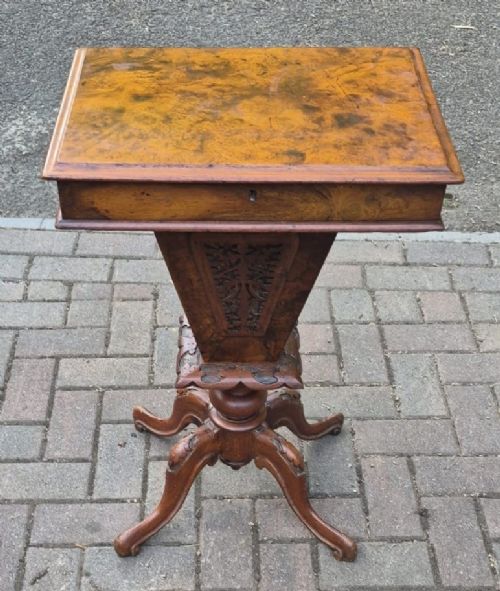
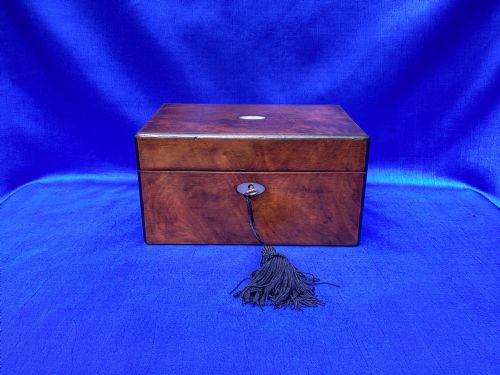
Vintage needlework storage encompasses sewing boxes, work tables, and ottomans designed to hold sewing gear. Buyers looking for vintage needlework storage find pieces from the Regency, Victorian, and Edwardian periods up to the mid-century.
The selection on this page relies heavily on Victorian examples alongside 1920 pieces and 19th Century work tables. These items range from small tabletop boxes to large tables with integrated storage.
Materials and construction
Carpenters utilised dense hardwoods such as mahogany, walnut, burr walnut, and rosewood to build these containers and tables. Brass fittings and bone accents frequently appear as hardware or decorative inlays.
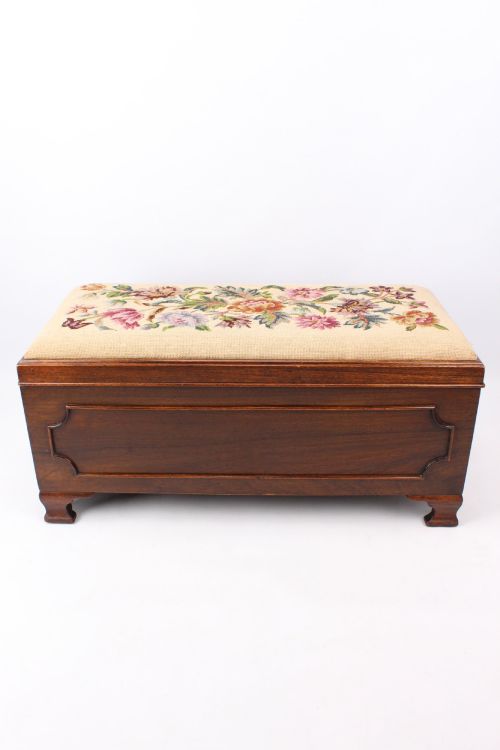
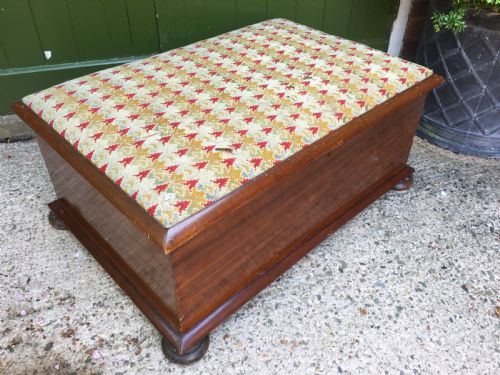
Specialised techniques include Tunbridge Ware woodwork and detailed inlay work applied to mahogany and walnut carcases. Textile elements such as gros-point needlework top the ottomans and fabric lines the internal compartments.
Some nineteenth-century work boxes hide miniature bone winders ready for your next yard of silk thread.
Assessing quality and craftsmanship
Quality rests in the selection of timbers and the precision of decorative techniques like Tunbridge Ware. Finer examples display superior wood grain figures, particularly in burr walnut and rosewood selections.
Internal organisation dictates utility, with fitted boxes offering more intricate compartments than plain tables. The preservation of original fabric tops and internal bone accessories elevates the execution of the piece.
Waring & Gillow
The Vintage Needlework Storage Glossary
- Tunbridge Ware
- Woodworking technique involving small mosaic tiles made of naturally coloured woods to form pictorial or geometric designs. It decorates the exterior of specialty boxes.
- Gros-point
- A type of needlepoint embroidery worked on canvas using a coarse wool yarn. It appears on the upholstered seats of period ottomans.
- Work Table
- A specialised table designed for sewing and needlework, typically featuring storage drawers, compartments, or an attached silk bag. These served domestic utility in the nineteenth century.
- Burr Walnut
- Timber taken from the wart or burl of a walnut tree, prized for its swirling grain patterns. It adds distinct visual texture to cabinet surfaces.
Vintage Needlework Storage: Frequently Asked Questions
What is vintage needlework storage used for?
These pieces function as dedicated containers for sewing tools, threads, and fabrics.
Today they serve as decorative storage furniture in living spaces or craft rooms.
How do I identify a Victorian sewing box?
Victorian boxes often utilise mahogany or walnut and feature fitted internal compartments for spools and needles.
Many incorporate bone details, brass locks, or intricate wood inlays typical of nineteenth-century production.
What is a work table?
A work table combines a flat surface with internal storage designed specifically for needlework tasks.
Examples from the nineteenth century frequently stand on slender legs and include partitioned drawers.
How do I care for wooden sewing boxes?
Keep wooden pieces away from direct heat sources and sudden humidity changes to protect the timber.
Apply a suitable wax polish periodically to maintain the lustre of mahogany or walnut surfaces.