

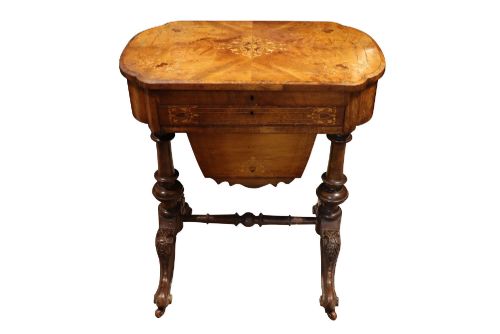
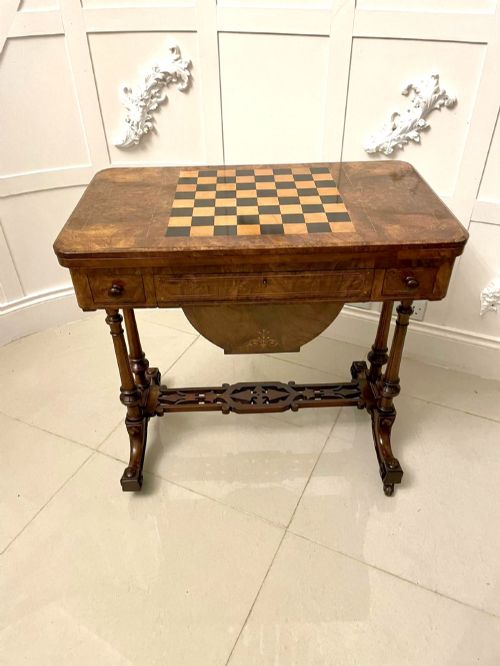


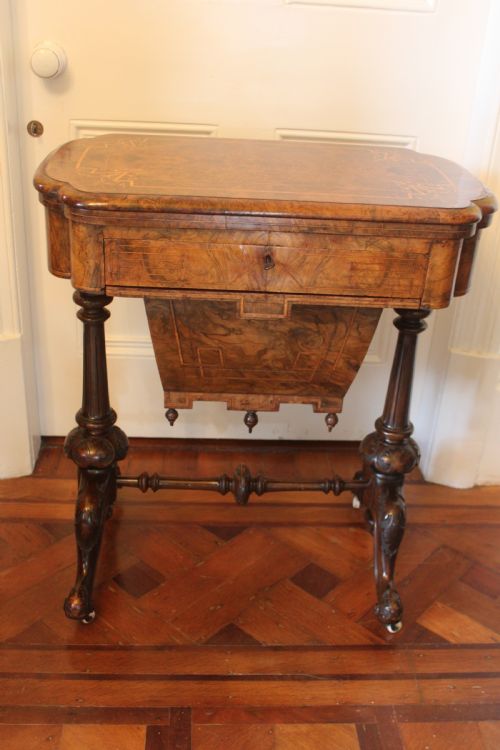
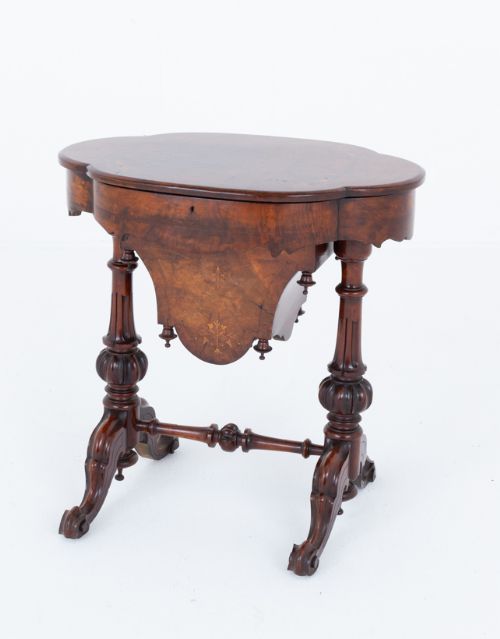

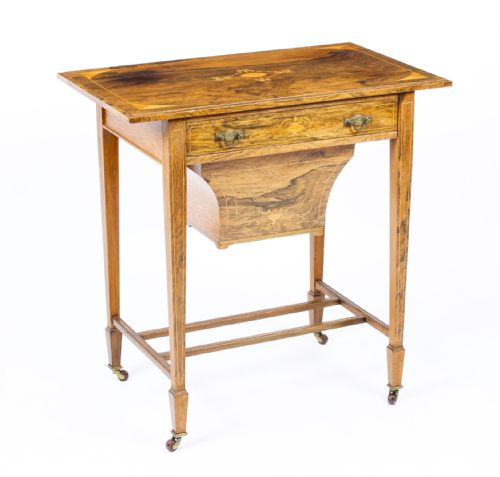
Inlaid Walnut Needlework Table
An inlaid walnut needlework table combines decorative marquetry with practical storage, offering a refined centrepiece for sewing and needlecraft.
Inlaid Walnut Needlework Table
When searching for an inlaid walnut needlework table, a buyer encounters pieces designed primarily during the Victorian and Edwardian periods. These multifunctional items serve variously as sewing tables, work tables, occasional tables, and games tables.
The most common examples on this page date from the nineteenth century, particularly the 1850s to the 1890s. They typically combine walnut and burr walnut timber with intricate surface decoration.
Makers utilised diverse forms, ranging from standard rectangular sewing boxes to trumpet workboxes and oval lamp tables. Each iteration provides a compartmentalised interior suited for traditional needlework tasks.
Assessing quality and craftsmanship
The sophistication of the marquetry and wood inlay dictates the upper tier of the range. Finer examples display precise cutting and varied contrasting timbers rather than basic linear decoration.
Overall structural integrity and the retention of original interior fittings define the distinction between standard and superior pieces. Tables that preserve their fitted sewing compartments and original fabric demonstrate higher craftsmanship.
Inlaid Walnut Needlework Table Retail Price Guide 2026
Typical asking prices for inlaid walnut needlework table among the pieces listed under this phrase on Sellingantiques today, from the lower quarter to the upper quarter. They describe what is for sale here now, not the wider market.
Listings feature walnut and burr walnut construction predominantly across Victorian and Edwardian periods.
Waring & Gillow
The Inlaid Walnut Needlework Table Glossary
- Burr walnut
- A highly prized wood cut from walnut tree growths, featuring swirling grain patterns. It forms the primary decorative veneer on nineteenth century furniture.
- Marquetry inlay
- The art of applying pieces of veneer to a structure to form decorative patterns. This technique creates pictorial or floral designs on table tops.
- Trumpet workbox
- A sewing table featuring an octagonal, flared body resembling a musical instrument. The base opens or lifts to reveal storage compartments.
- Work table
- A specialised piece of furniture designed for sewing and needlework. It typically contains internal trays and compartments for threads and needles.
- Boxwood inlay
- Light coloured wood inserted into darker walnut surfaces to create sharp contrast. It frequently outlines geometric panels and borders.
Inlaid Walnut Needlework Table: Frequently Asked Questions
What is an inlaid walnut needlework table used for?
These tables were originally designed to hold sewing equipment, threads, and needlework projects while providing a stable surface for hand crafts. The interior compartments kept small tools organised during Victorian and Edwardian domestic life.
Today, they function effectively as occasional tables in living spaces. Their internal storage also suits modern tidying needs for small accessories.
How do I identify a Victorian needlework table?
Victorian examples typically feature rich burr walnut veneers combined with intricate marquetry or boxwood inlay. They often incorporate turned pedestals or carved supports resting on tripod bases.
Construction details such as dovetailed drawers and fitted interior compartments for spools confirm the nineteenth century origin. The presence of fabric lined wells further points to dedicated sewing furniture.
Are these tables suitable for everyday use?
Solid walnut and sturdy veneer construction make these pieces durable for daily placement in a room. However, antique wax finishes require protection from excessive moisture and direct heat.
Using coasters and placing them away from radiators preserves the polished wood and delicate inlay. The internal compartments remain practical for storing small household items.
What is the difference between a work table and a games table?
A work table focuses on storage, featuring internal compartments, trays, or a fabric bag for sewing materials. A games table prioritises a folding or inlaid top designed for chess, checkers, or cards.
Some nineteenth century pieces combine both functions through reversible or rotating tops. This dual purpose allowed households to save space in formal drawing rooms.