



Victorian Tunbridge Ware Box
A victorian tunbridge ware box is a masterpiece of precision woodworking, treasured for its intricate mosaic veneer and lasting utility.

Understanding Tunbridge Ware
A victorian tunbridge ware box represents a specialised form of decorative woodwork defined by tiny mosaic tesserae assembled to form detailed geometric or pictorial scenes. These pieces span sewing boxes, writing slopes, stamp boxes, and small trinket containers designed for the Victorian desktop.
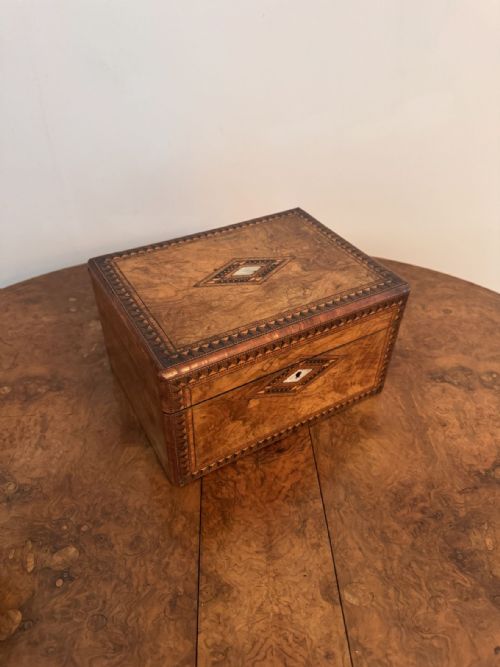
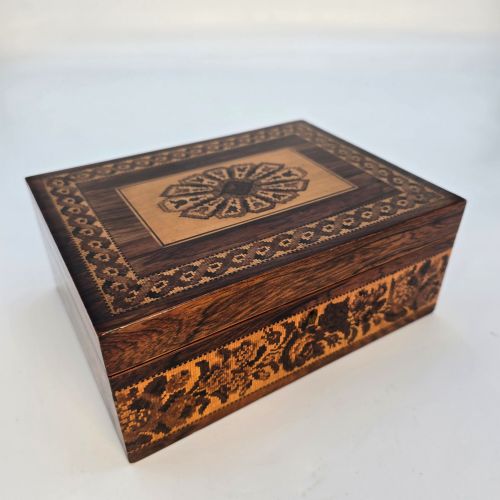
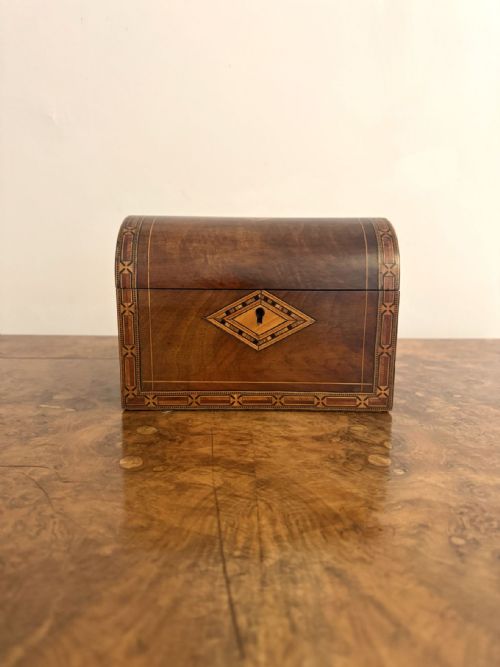
The most common examples on this page are compact trinket boxes, work boxes, and larger writing boxes fashioned from walnut, rosewood, or satinwood. These containers feature characteristic inlaid borders and lid panels that showcase the meticulous craft developed in Kent.
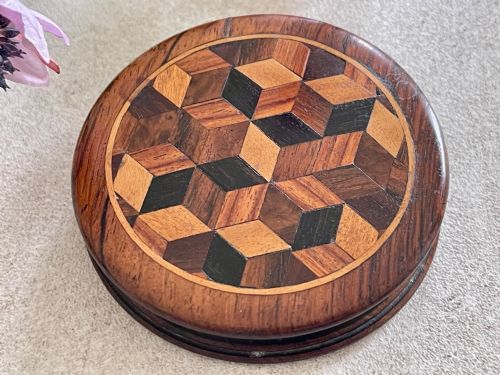
Makers utilised woods of contrasting natural colours to build up views of castles, flowers such as the oakleaf and acorn, and complex perspective cubes without relying on paint. The resulting objects serve as both functional storage and miniature canvases of British craftsmanship.
Construction and Materials
The foundation carcass of a victorian tunbridge ware box typically employs solid timbers like walnut, rosewood, or oak, which are then dressed with fine wood veneers. Mixed hardwoods provide the wide palette of natural tones required for the mosaic work.
Craftsmen glued bundles of thousands of differently coloured wood strips together, then sliced cross-sections to produce identical mosaic tiles known as mosaic veneers. These tiny blocks were painstakingly laid into recesses on the box lids and sides, often finished with geometric parquetry banding and sometimes fitted with brass hardware.
Listings show these boxes predominantly in walnut, rosewood, and satinwood, spanning utilitarian stamp boxes to large writing slopes.
Assessing Quality
Quality in a victorian tunbridge ware box rests upon the sheer density and microscopic precision of the mosaic tesserae, where finer pieces contain thousands of individual wood blocks invisible to a casual glance. The complexity of the imagery, ranging from simple geometric parquetry to fully rendered pictorial scenes like perspective cubes or floral motifs, dictates the upper tier of the craft.
The choice of primary carcass wood also influences the piece, with richly figured burr walnut, satinwood, and rosewood lifting the stature of the box beyond standard plain timber. Preservation of the fragile mosaic veneer without missing blocks or visible shrinkage cracks separates museum-grade specimens from heavily restored examples.
Barton
The Victorian Tunbridge Ware Box Glossary
- Tunbridge Ware
- A type of inlaid woodwork originating from Tunbridge Wells, characterised by mosaic designs built from thousands of tiny wood blocks.
- Parquetry
- Geometric patterns formed by the arrangement of small wood veneer pieces, frequently used to border the central mosaic panels of these boxes.
- Marquetry
- The art of applying pieces of veneer to a structure to form decorative patterns, often depicting floral subjects like oakleaves or architectural scenes.
- Tesserae
- The individual tiny blocks of naturally coloured wood sliced from bundled rods to create the mosaic pictures.
- Writing Slope
- A desk box featuring an inclined writing surface that folds open to reveal storage compartments for stationery and ink.
Frequently Asked Questions
What are victorian tunbridge ware boxes made from?
These boxes are constructed from a solid timber foundation such as walnut, rosewood, or satinwood, covered with fine wood veneers.
The defining mosaic patterns are assembled from thousands of tiny strips of mixed hardwoods, chosen for their natural contrasting colours without the use of artificial stain or paint.
How do I identify a genuine piece?
Look closely at the lid and borders for the characteristic mosaic tesserae, which reveal thousands of microscopic wood blocks when examined under magnification.
Genuine examples also feature period hardwoods like burr walnut and rosewood, and occasionally retain maker labels or specialised brass fittings typical of the nineteenth century.
What were these boxes originally used for?
Victorian households utilised these decorative containers for various specialised tasks, ranging from holding postage stamps and trinkets to storing sewing equipment and writing letters.
Larger versions served as portable writing desks or luxury keepsake chests kept prominently on parlour tables and desks.
How should I care for my box?
Keep the piece away from direct sunlight and steady heat sources to prevent the delicate wood veneers and tiny mosaic tiles from drying out and shrinking.
Maintain a stable indoor humidity and dust the intricate surface gently with a dry, soft cloth without applying modern liquid polishes.