

19th Century Trinket Box
These small receptacles offer a tangible glimpse into domestic life through intricate veneers, painted enamel, and polished stone.

19th Century Trinket Box
Buyers encountering this selection will frequently find French enamelled glass caskets from the later decades of the nineteenth century alongside British wooden boxes featuring marquetry or brass inlay. Pocket-sized snuff boxes and larger jewellery caskets also appear regularly across these periods.
How They Were Made
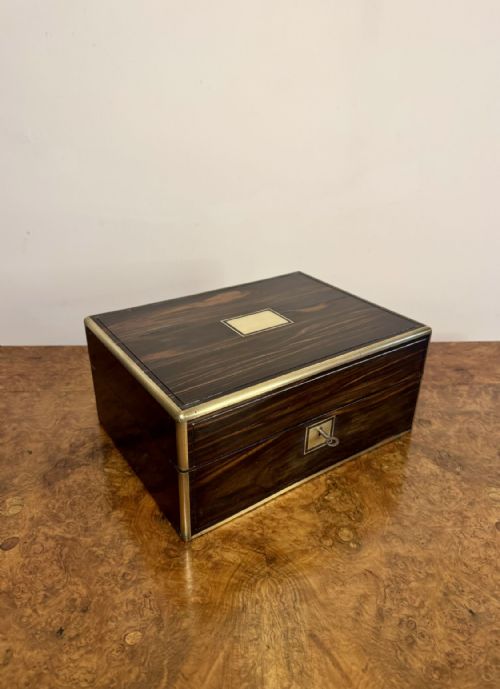
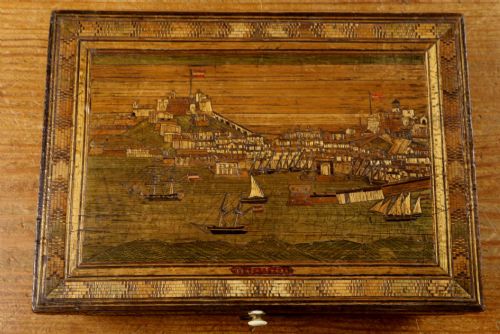
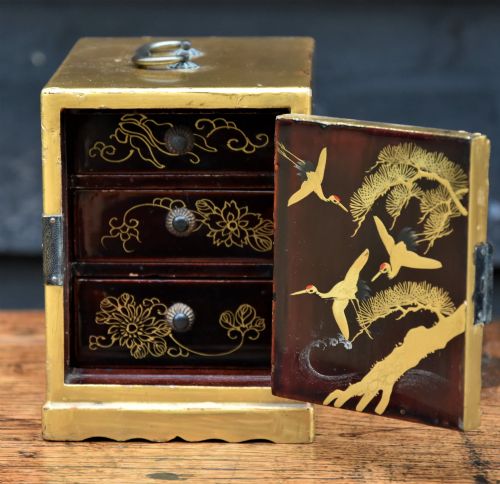
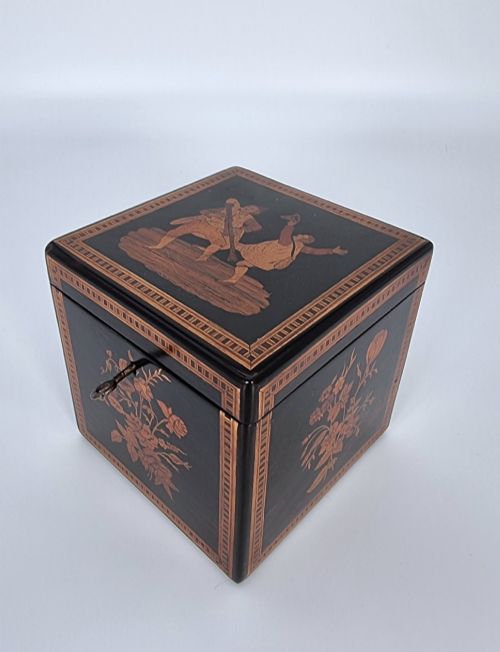
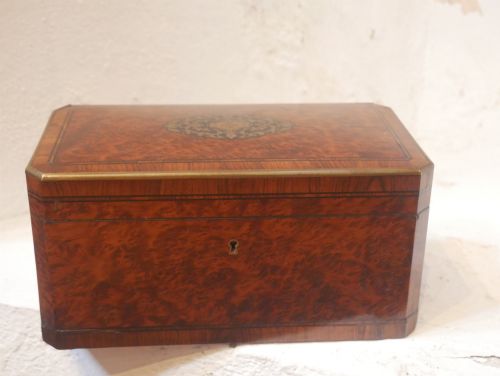
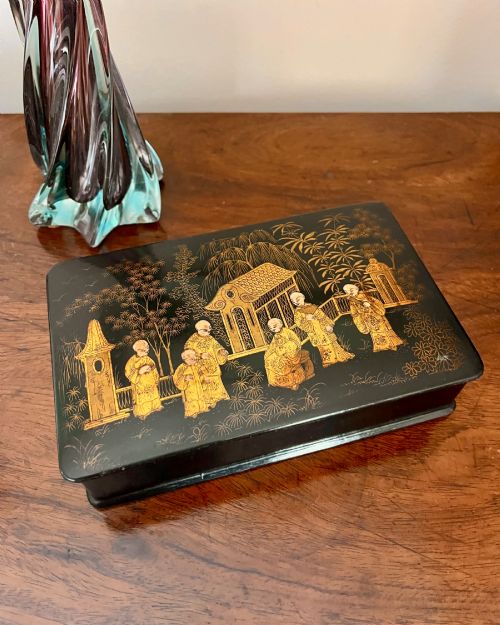
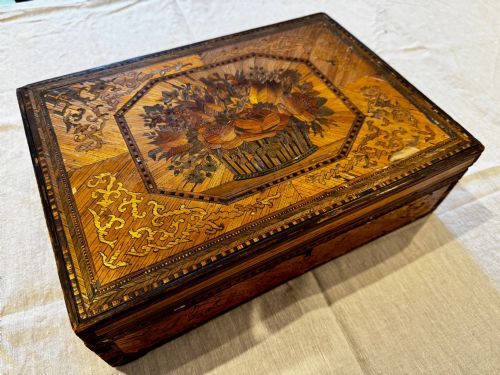
Cabinet makers utilised dense exotic timbers such as rosewood, amboyna, and ebony, frequently applying fine brass stringing, mother-of-pearl, or Tunbridge Ware mosaic wood marquetry to the surfaces. Paper-mâché and papier-mâché lacquer provided alternative moulded bodies capable of supporting rich painted scenes and dark polished finishes.
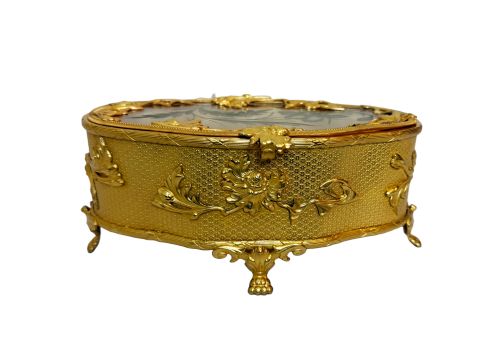
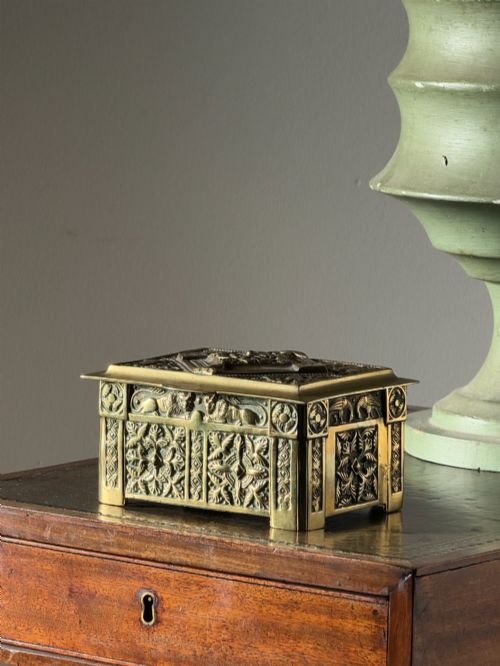
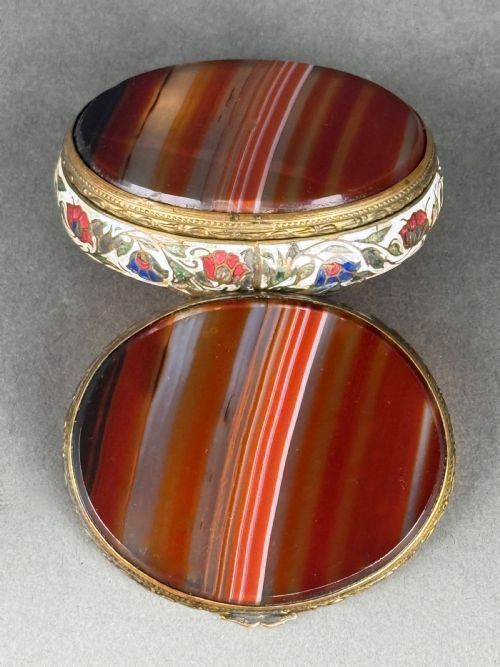
Metalwork played a central role through cast ormolu, solid silver, and gilt-brass mounts that secured glass panels or framed hand-painted porcelain plaques. Blowers and casters produced coloured glass bodies in shades of green, blue, and amethyst, which artisans then decorated with delicate white enamel detailing.
19th Century Trinket Box Retail Price Guide 2026
Typical asking prices for 19th century trinket box among the pieces listed under this phrase on Sellingantiques today, from the lower quarter to the upper quarter. They describe what is for sale here now, not the wider market.
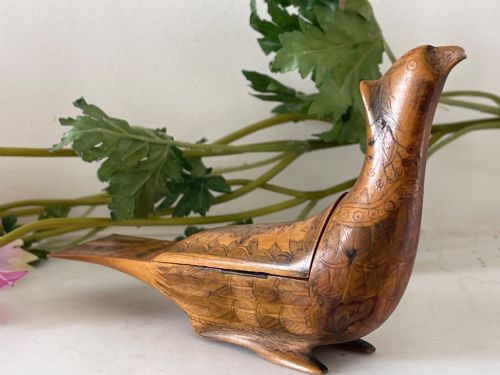
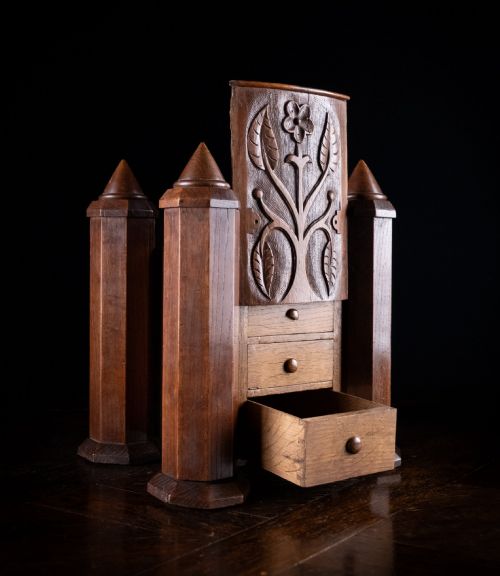
Listings feature diverse materials including solid silver, tortoiseshell, abalone shell, malachite, and carved Black Forest wood alongside traditional mahogany and rosewood.
What Varies in Quality
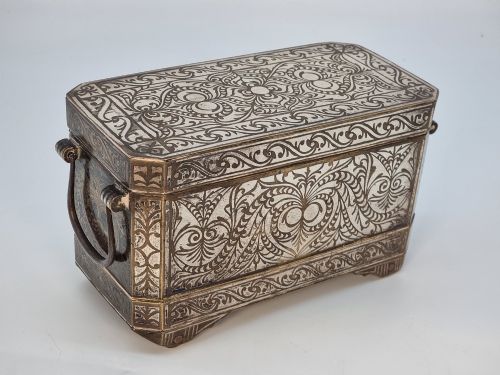
The refinement of surface decoration distinguishes ordinary containers from exceptional examples, seen in the crispness of hand-painted porcelain plaques, the precision of micro-mosaic wood inlay, and the depth of engine-turned engraving on silver and bone. Pierced ormolu mounts that fit seamlessly against glass or porcelain panels demonstrate superior manufacturing standards.
Structural integrity and internal fittings also mark the graduation of quality, reflected in working locks with original keys, neatly lined velvet or silk interiors, and balanced proportions. Pieces retaining signed maker markers or attributable workshops command greater interest among collectors.
Tahan Paris·Susse Freres Paris·Vishnyakov Workshop·Edmund Nye·George Jones
The 19th Century Trinket Box Glossary
- Ormolu
- Gilded bronze or brass mounts used extensively in French decorative arts during the nineteenth century. This technique added gleaming gilded borders and decorative feet to glass and porcelain caskets.
- Tunbridge Ware
- A distinct form of British woodwork originating from Kent utilising thousands of tiny tinted wood blocks to create intricate mosaic pictures. Boxes decorated in this style frequently depict geometric patterns or architectural landmarks.
- Papier-mâché
- A composite material made from paper pulp or layers of paper bound with glue, then moulded and lacquered. It provided a smooth, dark surface suited for painted decoration and inlay.
- Pietra dura
- An artistic technique using cut and fitted polished coloured stones to create pictorial designs. Artisans inlaid these stone plaques directly into the lids of fine marble and metal caskets.
- Engine-turned
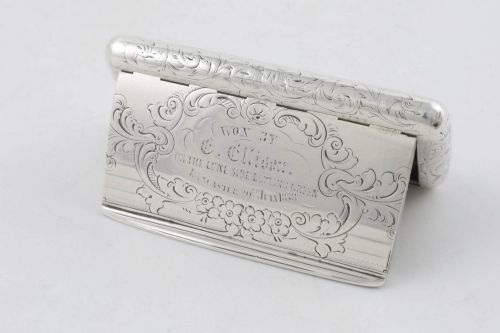
- A mechanical method of engraving precise geometric patterns onto metal, wood, or ivory using a specialised lathe. This ornamental turning created repeating textured surfaces on snuff boxes and small containers.
19th Century Trinket Box: Frequently Asked Questions
How were nineteenth century trinket boxes used?
These containers served functional roles on dressing tables, writing desks, and mantlepieces to store rings, brooches, calling cards, or loose tobacco. Wealthy households utilised specialised caskets to safeguard personal letters and small daily valuables.
Over time, their purpose shifted from purely utilitarian storage to decorative display items that reflected the owner's taste and social standing within the Victorian parlour.
How do I tell French and English boxes apart?
French pieces from this era frequently utilise bright ormolu mounts, enamelled coloured glass panels, and hand-painted porcelain inserts depicting romantic or pastoral scenes. They lean towards decorative opulence and Rococo Revival styling.
English examples tend to emphasise cabinet woods such as mahogany, rosewood, and bird's eye maple, often featuring geometric brass stringing, Tunbridge Ware marquetry, or restrained brass handles rather than heavy gilt mounts.
What is the difference between a trinket box and a snuff box?
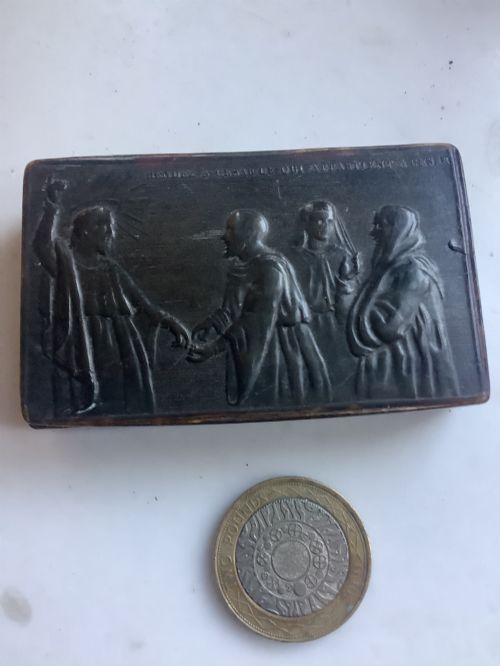
Snuff boxes are generally smaller, pocket-sized containers designed with tight-fitting lids to preserve dry powdered tobacco. They are frequently carved from horn, bone, tortoiseshell, or engine-turned wood and metal.
Trinket and jewellery boxes are larger stationary items meant to sit on a surface, featuring hinged lids, lined interiors, and more ornate exterior decoration made from glass, porcelain, or fine veneers.
How should I clean a vintage wooden jewellery box?
Maintenance requires gentle dusting with a dry, soft cloth to protect aged wood veneers, delicate inlays, and dry historic finishes. Moisture and modern chemical polishes can damage fragile paper-mâché or lift old adhesives.
Leather and fabric interiors benefit from simple air circulation rather than liquid cleaners, ensuring the structural components of the box remain stable over time.